
Coffee grounds have become one of gardening’s most repeated kitchen-waste hacks. Save your morning grounds, scatter them around a plant, and supposedly you’ll get richer soil, greener leaves, fewer pests, and happier acid-loving plants.
The reality is more useful—and a little less magical.
Some plants can benefit from coffee grounds after the grounds have been composted or sufficiently aged, especially when the soil needs more organic matter. But dumping fresh piles of used coffee grounds around blueberries, tomatoes, roses, or houseplants is not automatically helpful. Research has found that unprocessed spent coffee grounds can suppress germination and plant growth, while properly composted or aged material can behave quite differently.
So the better question isn’t simply which plants “like” coffee grounds. It’s which plants can benefit from them, in what form, and under what conditions.
What Plants Like Coffee Grounds? Quick Answer
Radishes and tomatoes have some of the more direct research showing potential benefits from aged or carefully managed spent coffee grounds. Sunflowers, spinach, and garden cress have also responded positively to composted or treated coffee-ground materials in studies.
Blueberries, azaleas, rhododendrons, hydrangeas, and gardenias are frequently mentioned because they prefer acidic soil. However, used coffee grounds are not a dependable way to acidify soil. For these plants, finished compost containing coffee grounds may contribute organic matter, but soil pH should be managed according to a soil test.
Roses can also benefit from organic matter, but there is no strong reason to treat coffee grounds as a special rose fertilizer.
The safest general rule is simple: compost the grounds first rather than repeatedly dumping fresh grounds directly around plants.
What Coffee Grounds Actually Do for Plants
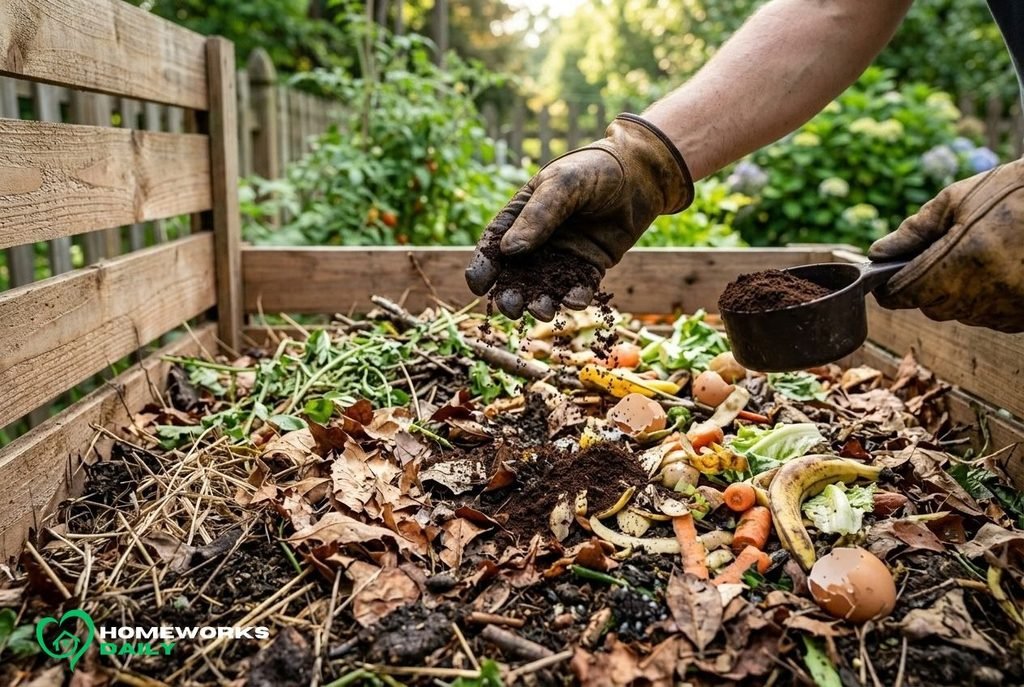
Nutrients and organic matter
Used coffee grounds contain organic material plus nitrogen and smaller amounts of minerals such as potassium, phosphorus, magnesium, and calcium. But they shouldn’t be treated as a complete fertilizer.
Oregon State Extension describes spent grounds as containing roughly 1% to 2% nitrogen along with smaller quantities of other nutrients. Washington State University likewise notes that nutrient concentrations vary considerably. Their value is better understood as an organic material and compost ingredient than as a replacement for a balanced fertilizer.
Once properly decomposed, organic materials can improve soil structure, water management, and nutrient retention. Finished compost provides those broader soil benefits without asking plants to deal with the potentially growth-inhibiting compounds found in undecomposed grounds.
Are used coffee grounds acidic?
This is where one of gardening’s most persistent myths falls apart.
Coffee itself is acidic, but brewed coffee grounds are not a reliable soil acidifier. Their pH can vary, and it changes during decomposition. Washington State University specifically advises gardeners not to assume coffee grounds will create acidic compost or significantly acidify garden soil.
University of Minnesota Extension goes even further for blueberries: it specifically says not to use coffee grounds as a pH amendment because their acidity is unreliable and large quantities would be required to substantially change soil pH.
That’s important because an acid-loving plant does not automatically equal a coffee-ground-loving plant.
Fresh vs. used coffee grounds
Most gardening research concerns spent or used grounds, meaning coffee that has already been brewed.
Don’t substitute unused ground coffee and assume it will work better. If you’re trying to recycle household coffee waste, spent grounds are the relevant material—and even those generally perform better after composting or aging.
Research has repeatedly found growth suppression when relatively fresh spent grounds are incorporated directly into soil. In one study involving broccoli, leeks, radishes, violas, and sunflowers, all five crops grew poorly when spent coffee grounds were directly mixed into the soil.
That doesn’t mean coffee grounds are useless. It means decomposition and application method matter.
11 Plants That Can Benefit From Coffee Grounds
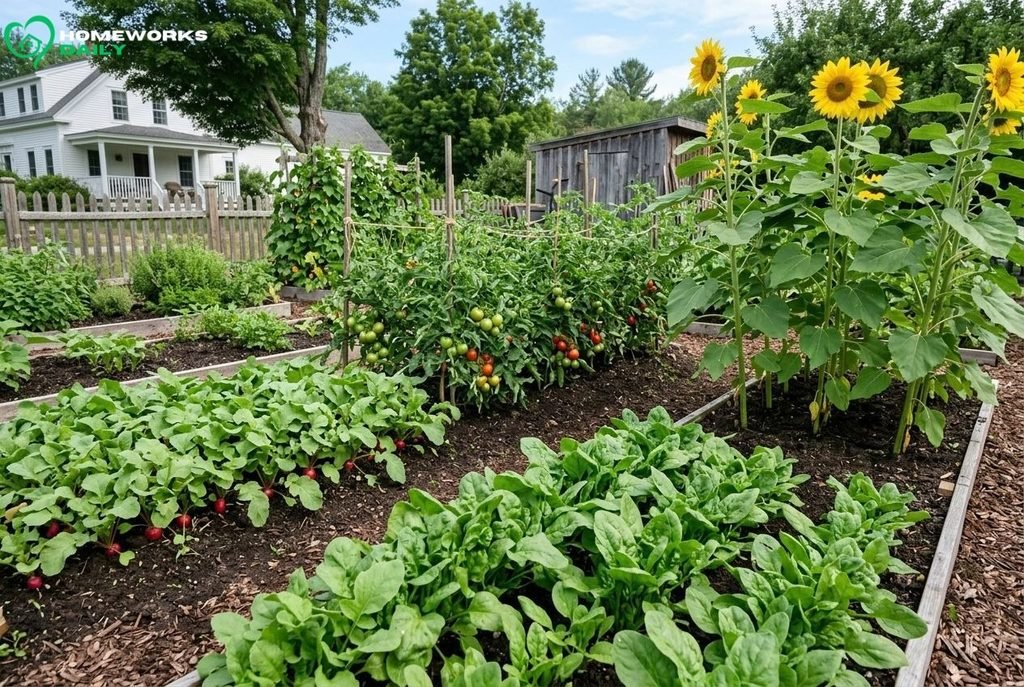
1. Radishes
Radishes provide one of the clearest examples of why blanket advice about coffee grounds can be misleading.
Research has produced different results depending on preparation and application. Direct incorporation of relatively fresh grounds suppressed radish growth in an earlier study. Later research found that sufficiently aged grounds could support growth, particularly when used as a top dressing rather than mixed heavily into the root zone. A 2024 greenhouse study also reported favorable results at a low top-dressing rate.
Best method: Aged grounds or mature compost containing grounds.
Main caution: Don’t surround germinating radish seeds with thick layers of fresh grounds.
Evidence: Moderate, but strongly dependent on preparation and dose.
2. Tomatoes
Tomatoes are constantly included on online coffee-ground lists, but fresh grounds aren’t a free tomato fertilizer.
A controlled study using aged spent coffee grounds found that the way grounds were treated mattered considerably. Grounds that had decomposed for months performed much better than relatively fresh material, and top-dressing could be less disruptive than mixing undecomposed material through the soil.
Tomatoes already benefit from well-drained soil with adequate organic matter, so mature compost is a much more predictable way to bring coffee waste into a tomato bed.
Best method: Finished compost or well-aged material.
Main caution: Avoid heavy applications of fresh grounds around seedlings.
Evidence: Moderate for properly aged grounds; poor justification for fresh direct use.
3. Sunflowers
Sunflowers are another useful reality check.
Recent research comparing raw and composted spent coffee grounds found that high concentrations of raw grounds harmed early sunflower development. Composted grounds performed much better and, under the study conditions, supported germination and early growth.
Best method: Composted grounds incorporated through finished compost.
Main caution: Raw grounds at high concentrations can inhibit seedlings.
Evidence: Moderate for composted material.
4. Spinach
Spinach has shown promising responses to processed coffee waste, although the research doesn’t justify emptying a coffee filter directly into your spinach bed.
A study using composted spent coffee grounds combined with biochar found good plant responses in spinach, including chlorophyll measurements comparable with conventionally fertilized plants under the experimental conditions.
Best method: Mature, properly prepared compost.
Main caution: The positive study used a specifically prepared compost blend, not fresh household grounds.
Evidence: Promising but limited.
5. Garden Cress
Garden cress was tested alongside spinach in the same composting research and also responded favorably to the mature coffee-ground-based compost treatment.
That makes cress another example of the main pattern you’ll see throughout this guide: decomposition can turn a problematic raw material into a useful compost ingredient.
Best method: Finished compost.
Main caution: Keep undecomposed grounds away from seeds and newly emerging seedlings.
Evidence: Promising but based on limited controlled research.
6. Blueberries
Blueberries are probably the plant most closely associated with coffee-ground advice—and one of the best examples of why gardeners should be careful with it.
Blueberries genuinely require acidic soil. University of Minnesota Extension recommends approximately pH 4.0 to 5.5 and advises testing the soil and using appropriate amendments such as elemental sulfur when pH is too high. It specifically warns that coffee grounds should not be relied on to lower blueberry soil pH.
Coffee-ground compost can still provide organic material when your soil needs it. That’s different from using coffee grounds as an acidifier.
For more ideas on home-grown fruit, see HomeWorks Daily’s guide to growing high-fiber fruits at home.
Best method: Mature compost, used according to actual soil needs.
Main caution: Don’t substitute coffee grounds for sulfur or a soil test.
Evidence: Strong evidence against relying on grounds for acidification; general compost benefits are well established.
7. Azaleas
Azaleas prefer acidic, well-drained soils rich in organic material. University of Georgia Extension gives a preferred soil pH of roughly 4.5 to 6.0.
That does not mean they need coffee grounds.
Penn State Extension notes that used coffee grounds won’t reliably acidify soil around azaleas, rhododendrons, or blueberries.
If the soil needs additional organic matter, finished compost that happened to include coffee grounds is reasonable. If the problem is high pH, use a soil test and an evidence-based acidification method.
Indoor azalea owners can also consult HomeWorks Daily’s azalea indoor-care guide for the broader watering, light, and growing-medium considerations that matter more than kitchen amendments.
Best method: Finished compost.
Main caution: Don’t use coffee grounds to guess your way toward the correct pH.
Evidence: Strong for azalea soil requirements; limited for coffee grounds specifically.
8. Rhododendrons
Rhododendrons have essentially the same coffee-ground problem as azaleas.
They prefer acidic soils with plenty of organic matter, but that doesn’t make uncomposted coffee grounds a reliable amendment. UGA describes evergreen rhododendrons as requiring moist, well-drained, acidic soil high in organic matter.
Best method: Finished compost if organic matter is needed.
Main caution: Measure soil pH rather than assuming an acidic amendment is necessary.
Evidence: Strong for soil requirements; limited for coffee-specific benefits.
9. Hydrangeas
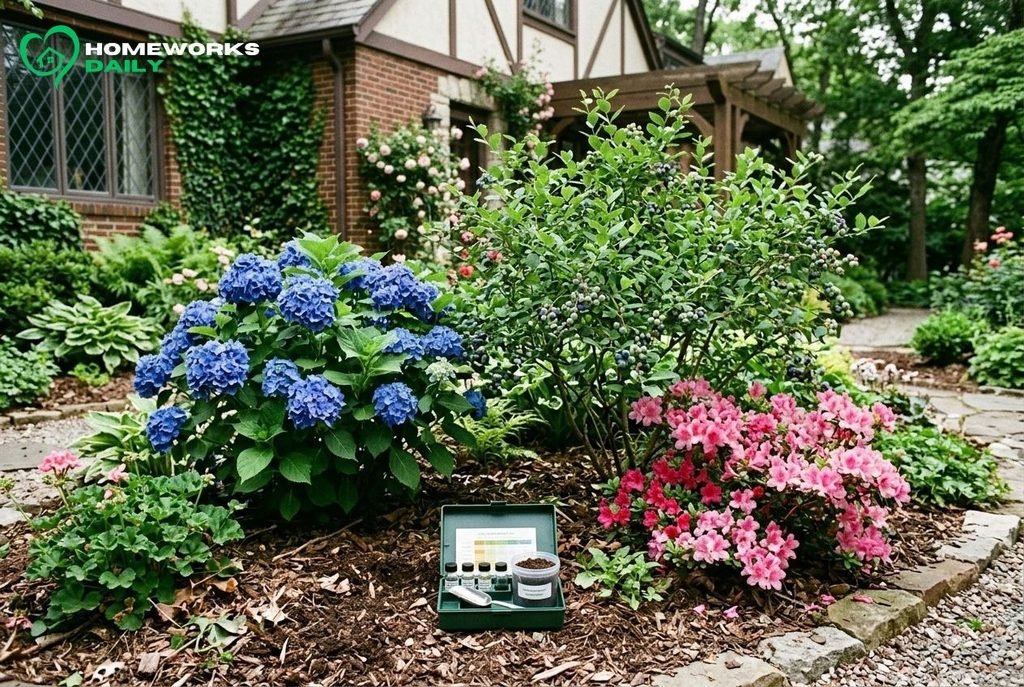
Want blue hydrangeas? Your morning coffee is not a dependable shortcut.
For bigleaf hydrangeas, flower color is tied to aluminum availability, which is influenced by soil pH. University of Georgia Extension explains that aluminum becomes more available under sufficiently acidic conditions, helping produce blue flowers.
Because coffee grounds don’t predictably control soil pH, dumping them around a pink hydrangea isn’t a precise color-changing strategy.
Best method: Finished compost when the soil needs organic matter.
Main caution: Use a soil test and recommended pH amendments if flower color is your goal.
Evidence: Strong evidence for the soil-pH mechanism; little reason to choose coffee grounds specifically.
10. Gardenias
Gardenias like acidic, humus-rich, well-drained soil, which explains why coffee-ground recommendations sound plausible.
But once again, preference for acidic soil does not prove preference for coffee grounds. Oregon State Extension specifically includes gardenias among acid-loving plants that shouldn’t be expected to receive meaningful acidification from brewed grounds.
Best method: Mature compost if the gardenia’s soil needs additional organic material.
Main caution: Correct pH problems with tested, predictable amendments rather than repeated coffee applications.
Evidence: Limited for coffee grounds specifically.
11. Roses
Roses aren’t particularly dependent on acidic soil. Illinois Extension recommends fertile, well-drained soil high in organic matter, generally around pH 6.0 to 7.0.
That makes coffee grounds useful only indirectly: when they have become part of good finished compost that improves a soil genuinely lacking organic matter.
Best method: Finished compost.
Main caution: Don’t pile fresh coffee grounds around the crown or treat them as a complete rose fertilizer.
Evidence: Strong for general organic-matter benefits; weak for any special coffee effect.
Coffee Grounds for Plants at a Glance
| Plant | Can Coffee Grounds Help? | Best Method | Main Benefit | Main Caution |
| Radish | Yes, conditionally | Aged grounds or compost | Organic matter/nutrients | Fresh grounds may suppress growth |
| Tomato | Yes, conditionally | Aged or composted | Organic matter | Avoid heavy fresh applications |
| Sunflower | Yes, after composting | Finished compost | Organic material | High raw concentrations can harm seedlings |
| Spinach | Possibly | Mature compost | Soil amendment | Evidence involves prepared compost blends |
| Garden cress | Possibly | Mature compost | Soil amendment | Keep raw grounds away from seeds |
| Blueberry | Only indirectly | Finished compost | Organic matter | Grounds aren’t a reliable acidifier |
| Azalea | Only indirectly | Finished compost | Organic matter | Test soil pH first |
| Rhododendron | Only indirectly | Finished compost | Organic matter | Don’t assume grounds lower pH |
| Hydrangea | Only indirectly | Finished compost | Organic matter | Coffee won’t reliably turn flowers blue |
| Gardenia | Only indirectly | Finished compost | Organic matter | Use proper amendments for pH |
| Rose | Yes, as compost | Finished compost | Soil structure/organic matter | Not a complete fertilizer |
The Best Way to Use Coffee Grounds in Your Garden
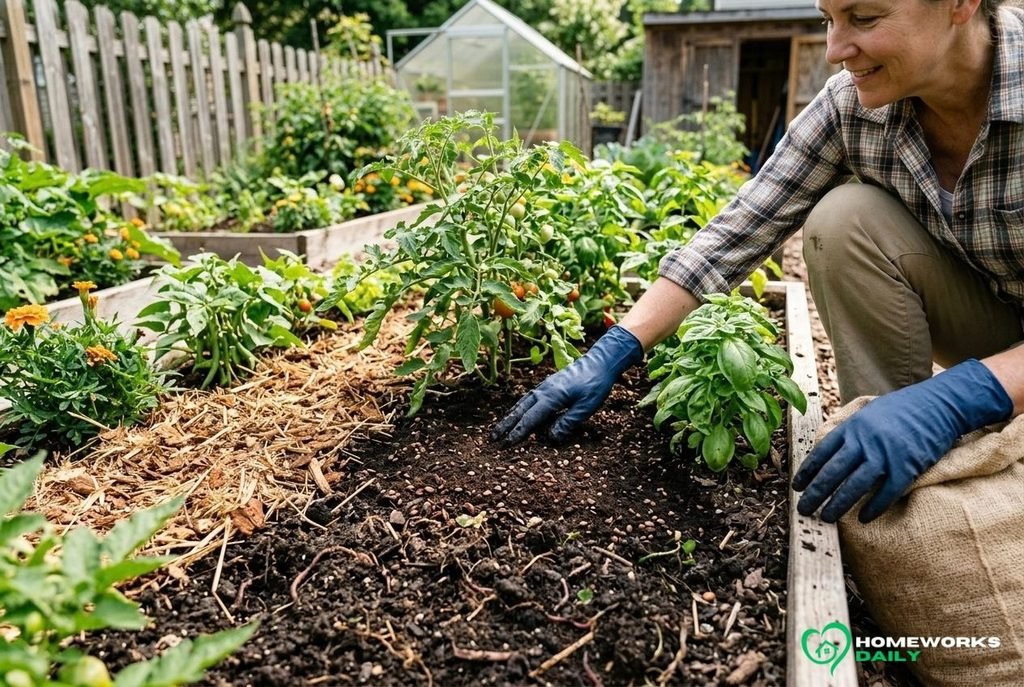
Add Them to Compost
For most homeowners, this is the easiest recommendation to follow.
Washington State University advises keeping coffee grounds to no more than about 20% of a compost pile by volume and combining them with a diversity of other compost ingredients.
Treat spent grounds as one compost ingredient, not the entire compost recipe.
Mix them with materials such as dry leaves, shredded plant material, or other appropriate “brown” ingredients so the pile has adequate structure and airflow.
Use a Thin Layer
If coffee-ground material is being used on the soil surface, don’t create a thick black carpet around the plant.
Finely textured grounds can compact, reducing air and water movement. Washington State recommends that coffee-ground material used in landscape mulching remain very thin—around half an inch or less—and be covered by a coarser organic mulch.
Mix With Other Organic Materials
Coffee grounds aren’t a balanced fertilizer, and they don’t need to dominate your soil-amendment strategy.
A diverse compost made from different organic materials produces a far more useful finished product than a pile composed mostly of coffee waste.
Watch How Plants Respond
More isn’t automatically better.
Watch for:
- Slow or stalled new growth
- Poor seed germination
- Yellowing unrelated to normal seasonal changes
- A dense or crusted soil surface
- Water sitting on top instead of soaking in
- Persistently soggy container soil
If you’ve recently been adding a lot of coffee grounds and one of these problems appears, stop adding more while you assess drainage, fertility, pH, watering, and root health.
What About Coffee Grounds for Houseplants?
Indoor containers deserve extra caution because a small pot has far less room to buffer gardening mistakes.
Wet coffee grounds placed repeatedly on top of potting mix can form a dense layer, stay damp, and make moisture management more difficult. They can also develop visible fungal growth as organic material decomposes.
Instead of spooning grounds into individual pots, compost them first.
Good houseplant care still comes down to the basics: appropriate light, drainage, watering, temperature, humidity, and fertilizer. HomeWorks Daily’s guides to growing healthy dracaena plants and croton plant care are useful examples of why correcting growing conditions matters more than adding a trendy amendment.
Plants That May Not Like Coffee Grounds
There isn’t a clean scientific list of plants that universally “hate” coffee grounds.
The bigger issue is how the grounds are prepared and applied.
Be especially cautious with:
- Seeds and newly germinating seedlings
- Young transplants with small root systems
- Plants in small indoor containers
- Plants growing in already wet or compacted soil
- Beds that already have excessive nutrients or organic matter
- Plants requiring alkaline or neutral conditions when gardeners are incorrectly trying to acidify the soil
Research has shown reduced germination or growth in several plant species exposed to undecomposed spent grounds. That makes fresh coffee grounds a poor material for seed-starting mixes.
Common Coffee Ground Gardening Mistakes
- Assuming all coffee grounds are strongly acidic. Brewed grounds are too variable to use as a predictable pH treatment.
- Piling grounds several inches deep. Fine particles can compact and interfere with air and water movement.
- Mixing large amounts directly into vegetable soil. Research has documented growth suppression from fresh spent grounds.
- Adding grounds around seedlings. Germination and early root growth can be particularly sensitive.
- Using grounds instead of fertilizer. Coffee grounds don’t supply nutrients in the predictable proportions of a fertilizer formulated for a specific crop.
- Trying to turn hydrangeas blue with coffee. Soil chemistry and aluminum availability are more complicated than that.
- Using coffee instead of testing blueberry soil. A pH test gives you actionable information; guessing doesn’t.
- Believing grounds are a proven universal pest repellent. WSU notes that broad pest-control claims aren’t well supported. One controlled study has reported reduced slug herbivory under particular coffee-ground treatments, but that’s much narrower than claiming coffee grounds repel every garden pest.
When a Soil Test Is Better Than Coffee Grounds
If a plant looks unhealthy, adding another amendment shouldn’t automatically be the first move.
A basic soil test can tell you whether pH, phosphorus, potassium, or organic matter may need attention. Those numbers give you a better foundation for deciding what to add—and what not to add.
This becomes especially important across the United States because soil conditions vary widely from one property to another. Even neighboring yards can differ because of construction fill, previous fertilizer use, irrigation water, drainage, and past landscaping.
For acid-loving plants in particular, measure before trying to change the soil.
Coffee Grounds: Helpful Soil Amendment or Overrated Hack?
Both descriptions can be true.
Coffee grounds are a useful household organic material that can be diverted from the trash and incorporated into compost. Once properly decomposed, that compost can help improve soil and support many garden plants.
What coffee grounds aren’t is a miracle fertilizer, universal pest repellent, instant soil acidifier, or guaranteed way to make every plant grow faster.
The biggest practical distinction is processed versus unprocessed.
Composted or sufficiently aged coffee grounds can become a useful soil amendment. Heavy applications of relatively fresh grounds can inhibit plants instead. That’s why the smartest use for most gardeners isn’t asking, “Which plant should I dump these grounds on?”
It’s asking, “How can I turn these grounds into good compost?”
Do that, pay attention to what your soil actually needs, and your leftover coffee can earn a useful place in the garden without becoming another gardening myth.










2 Responses