A Dracaena can seem almost effortless when you first bring one home. It has upright stems, attractive foliage, and a reputation for handling indoor conditions better than many fussier houseplants. Then, perhaps a few weeks later, the leaf tips turn brown, the soil stays wet for days, or new growth seems to have stopped.
That’s where growing dracena becomes less about following a fixed watering schedule and more about understanding what your plant is telling you.
The good news? Dracaenas are generally adaptable, long-lived houseplants. With suitable light, good drainage, sensible watering, and a warm growing environment, they can remain attractive for years.
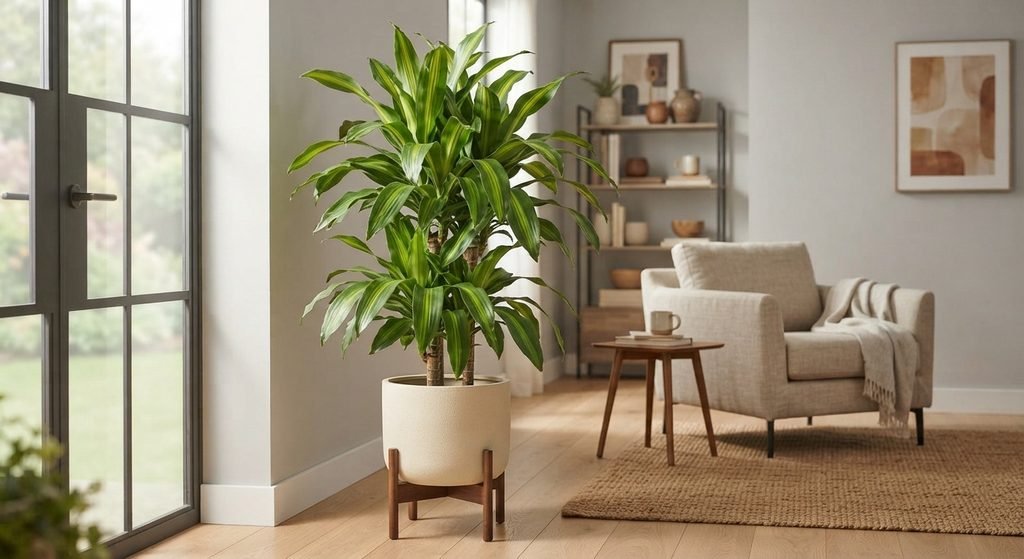
Quick Answer: What Does Dracaena Need to Grow Well?
Dracaena generally grows best in bright, indirect light, a loose well-draining potting mix, moderate watering, and warm indoor temperatures. Let the upper part of the growing medium dry before watering again, and never leave the pot sitting in excess water. Different varieties tolerate different light levels, but too little light can slow growth while excessive direct sunlight can scorch foliage.
The key isn’t to water on the same day every week. Check the soil first.
That small habit can prevent many of the problems beginners encounter with Dracaena.
Understanding Dracaena Before You Start
Dracaena is a genus containing numerous tropical and subtropical plants, several of which are popular as houseplants. Common indoor forms include Dracaena fragrans, often called the corn plant, and Dracaena marginata, commonly known as the dragon tree.
Their long, strap-like leaves and upright growth make them particularly useful in homes and offices where a plant with a strong vertical shape is wanted.
Some varieties stay relatively compact, while others can eventually become tall indoor plants. Growth is usually gradual rather than dramatic, so don’t worry if your Dracaena doesn’t produce a new leaf every few days.
Popular Dracaena Types for Indoor Growing
Some commonly encountered types include:
- Dracaena fragrans — often grown as a corn plant, with broad strap-like leaves.
- Dracaena marginata — known for narrower leaves and slender stems.
- Dracaena deremensis cultivars — popular foliage plants with attractive leaf patterns.
- Dracaena reflexa — includes several ornamental forms used as houseplants.
The care requirements aren’t identical for every species and cultivar, so identifying your plant can be useful when troubleshooting.
How Fast Does Dracaena Grow?
Dracaena is generally a slow-growing houseplant, although growth can vary considerably according to variety and growing conditions. Brighter suitable light, healthy roots, adequate nutrition, and a favorable temperature can support stronger growth.
A plant sitting in a dim corner may survive for a long time without producing much new growth. That’s an important distinction: surviving isn’t necessarily the same as actively growing.
How to Grow Dracaena Successfully
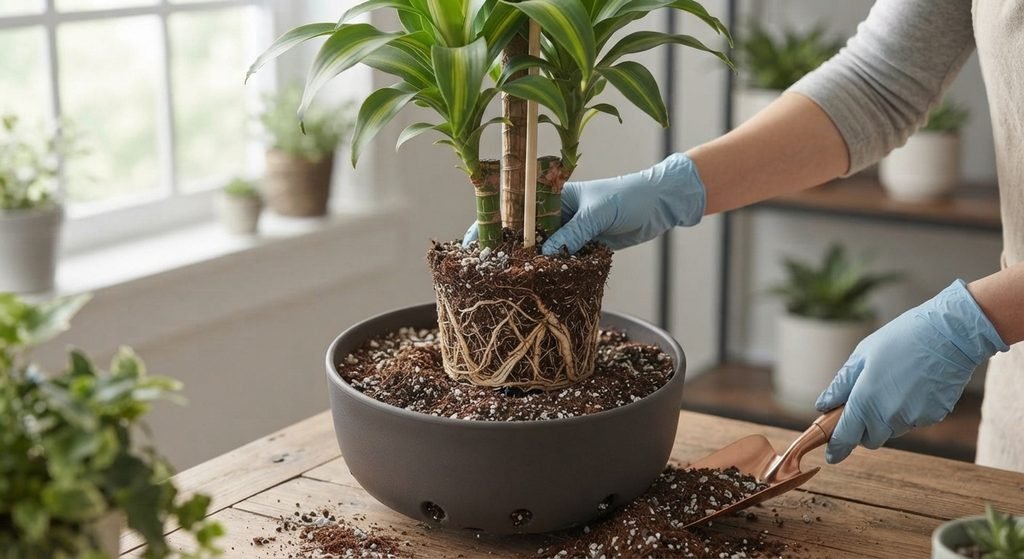
Successful Dracaena care comes down to creating a stable environment rather than constantly adjusting the plant.
Choose the Right Location
Start by choosing a spot with plenty of suitable ambient light but protection from harsh direct sunlight.
An east- or west-facing window can work well depending on the room and how strong the sunlight is. In a brighter window, sheer curtains can help soften intense rays.
Keep the plant away from:
- Strong, prolonged afternoon sun through unobstructed glass
- Cold drafts
- Heating vents
- Air-conditioning blasts
- Locations where temperatures change dramatically
A stable location is often better than moving the plant around every few days.
Get the Light Right
Bright, indirect light is a dependable starting point for many Dracaenas. However, these plants can tolerate lower-light conditions, which is one reason they’re popular indoors.
If your plant receives very little light, you may notice:
- Slower growth
- Longer gaps between leaves
- Weaker-looking new growth
- Reduced color intensity in some variegated varieties
On the other hand, intense direct sunlight can scorch foliage.
The goal is balance.
If you’re unsure, observe the plant for a couple of weeks after moving it into a brighter but filtered location rather than making several changes at once.
Use Well-Draining Soil
Good drainage is one of the most important parts of growing Dracaena.
The roots need access to moisture, but they shouldn’t remain surrounded by stagnant water. A loose commercial houseplant mix that drains readily is a practical choice. RHS also recommends a loose, fast-draining growing medium for Dracaena.
Avoid heavy soil that remains saturated for long periods.
Choose the Right Pot
The container should have drainage holes.
That sounds obvious, but it’s easy to overlook when choosing a decorative planter.
If the pot is much larger than the root system, the extra growing medium can remain wet for longer. RHS recommends moving an overcrowded plant into a slightly larger container rather than dramatically increasing pot size.
A decorative outer pot is fine, but make sure excess water can actually leave the plant’s growing container.
Water Dracaena Correctly
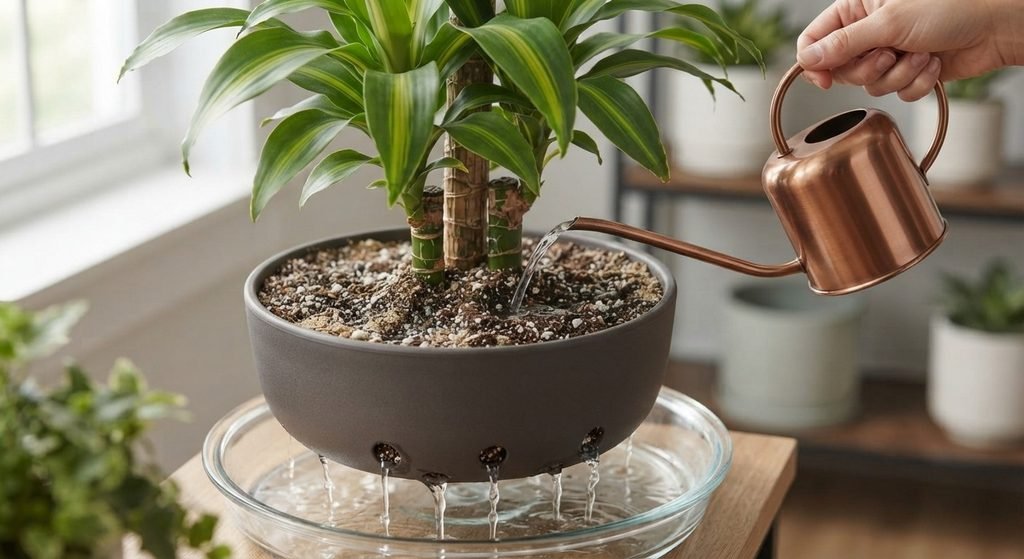
Watering is probably where most Dracaena-care confusion begins.
Instead of saying “water every seven days,” use the soil as your guide.
Check the upper portion of the soil before watering. If it feels sufficiently dry, water thoroughly and allow excess water to drain away. University extension guidance similarly recommends checking the soil rather than following a rigid calendar.
After watering:
- Water the growing medium thoroughly.
- Allow excess water to drain from the bottom.
- Empty standing water from the saucer.
- Wait until the appropriate upper layer of soil has dried before watering again.
How quickly the soil dries depends on factors such as:
- Pot size
- Light levels
- Room temperature
- Humidity
- Growing-medium composition
- Season
- Root development
That’s why two Dracaenas in different rooms may need water at different times.
Maintain Suitable Humidity and Temperature
Dracaenas are tropical or subtropical plants, so they generally appreciate warm indoor conditions.
RHS recommends keeping them in a consistently warm environment and avoiding cold drafts and hot radiators.
Dry indoor air can contribute to brown leaf tips, although it’s not the only possible cause. Tap-water minerals, fluoride, watering problems, and other environmental stresses can also contribute.
Instead of immediately assuming that every brown tip means “low humidity,” inspect the whole growing environment.
Fertilize During Active Growth
Dracaena doesn’t need heavy feeding.
A general houseplant fertilizer can support growth during periods of active development, but more fertilizer isn’t necessarily better. Excess fertilizer can contribute to salt buildup and root stress.
Follow the fertilizer label rather than increasing the dose because the plant appears slow-growing.
If growth is poor, check light, watering, roots, and soil condition first.
Dracaena Growing Requirements at a Glance
| Care Factor | What to Aim For | Common Mistake |
| Light | Bright, indirect light | Harsh direct sun or very dim conditions |
| Water | Water according to soil dryness | Following a rigid weekly schedule |
| Soil | Loose, well-draining mix | Heavy, waterlogged soil |
| Pot | Container with drainage holes | Oversized pot or no drainage |
| Temperature | Warm, stable conditions | Cold drafts or heat vents |
| Humidity | Avoid excessively dry conditions | Assuming misting fixes every problem |
| Fertilizer | Moderate feeding during active growth | Overfertilizing |
| Location | Stable, suitable environment | Constantly moving the plant |
Growing Dracaena Indoors
Dracaena is especially well suited to indoor growing because many varieties tolerate lower light than plants that demand direct sun.
Still, “low-light tolerant” doesn’t mean “no-light.”
Best Room Conditions
Look for a room where the plant receives useful natural light without being exposed to intense, prolonged direct sunlight.
A living room, bedroom, home office, or bright hallway can work if the light conditions are suitable.
Keep an eye on nearby heating and cooling equipment. A plant can be sitting near a perfectly good window but still experience stress from a hot vent or cold draft.
How to Handle Low-Light Areas
If your Dracaena is in a dim room, don’t immediately expect rapid growth.
Lower light can be enough for some Dracaenas to remain healthy, but growth may be slower. University of Maryland Extension notes that Dracaenas tolerate lower light while preferring brighter conditions.
If you’re trying to encourage more growth, gradually moving the plant toward a brighter suitable location may help.
Seasonal Changes in Indoor Care
Your watering routine may need to change throughout the year.
During brighter, warmer periods, the plant may use water more quickly. During darker or cooler periods, the growing medium may remain moist for longer.
That is another reason a calendar isn’t the best watering tool.
Check the plant and soil rather than assuming yesterday’s routine will work all year.
Common Dracaena Problems and What They Mean
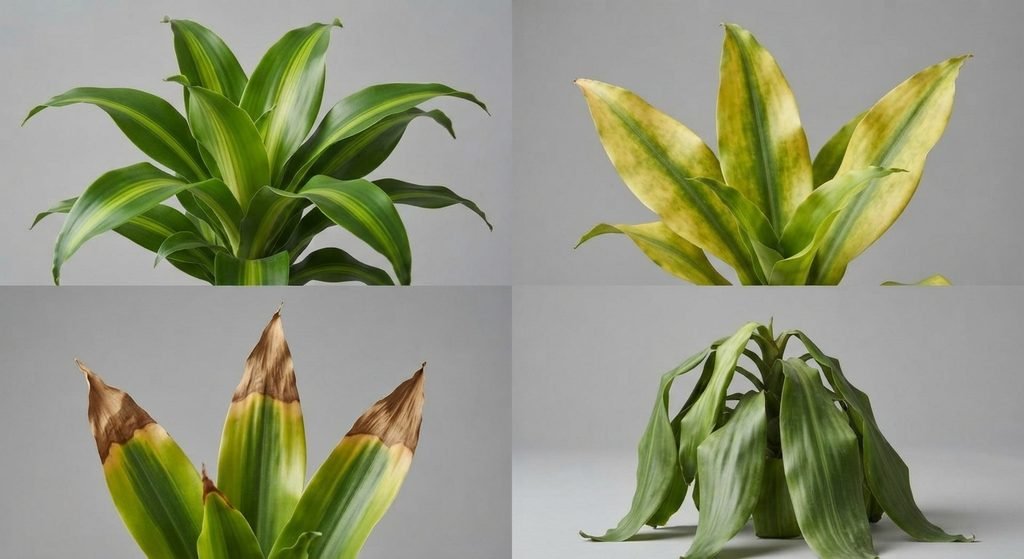
When a Dracaena develops an issue, don’t treat the symptom in isolation.
A brown leaf tip isn’t automatically a humidity problem. A yellow leaf isn’t automatically a sign that the plant needs fertilizer.
Look at the entire environment.
Yellow Leaves
Yellowing can have several causes, including excessive moisture and other forms of plant stress.
Overwatering is a particularly important possibility because overly wet soil can contribute to root problems. NC State Extension specifically identifies yellowing leaves as a possible result of overwatering.
Check:
- Is the soil staying wet for a long time?
- Does the pot have drainage holes?
- Is the container oversized?
- Is water collecting in the saucer?
- Has the plant recently experienced a major environmental change?
Don’t respond to yellow leaves by automatically watering or fertilizing more.
Brown Leaf Tips
Brown tips are common on Dracaenas and can have multiple causes.
Potential contributors include:
- Fluoride or salts in water
- Low humidity
- Underwatering
- Overwatering
- Excessive direct sunlight
- Cold drafts
- Heat sources
RHS and NC State Extension both identify several of these environmental factors, including tap-water fluoride and excessive moisture.
If your local tap water is high in fluoride or mineral content, filtered or rainwater may help in some situations.
Drooping Leaves
Drooping can be related to watering or root conditions, but the plant’s overall environment matters.
Check the soil first.
If it’s very dry, the plant may need water. If it’s saturated for a prolonged period, adding more water could make the situation worse.
Slow Growth
Slow growth isn’t automatically a problem.
Dracaenas naturally grow relatively slowly, and low light can slow them further.
If your plant has stopped producing new growth for a long time, inspect:
- Light exposure
- Root crowding
- Soil condition
- Watering habits
- Temperature
- Nutrition
- Seasonal changes
A healthy slow-growing Dracaena may simply be behaving like a Dracaena.
Pests
Common pests associated with Dracaena include:
- Mealybugs
- Scale
- Spider mites
- Thrips
- Aphids
- Fungus gnats
NC State Extension lists several of these pests and also notes that root rot can occur when soil remains excessively moist.
Inspect leaves and stems regularly, especially when bringing a new plant into your home.
Dracaena Problems: Quick Diagnosis
| Symptom | Possible Cause | What to Check | First Step |
| Yellow leaves | Excess moisture or stress | Soil and drainage | Check moisture before watering |
| Brown tips | Water quality, dry air, watering or light stress | Water source and environment | Review the complete care routine |
| Drooping | Water or root issue | Soil moisture | Determine whether soil is too dry or too wet |
| Slow growth | Low light or natural growth rate | Light and growing conditions | Improve suitable light if needed |
| Leaf scorch | Excess direct sunlight | Window exposure | Move to filtered light |
| Pest activity | Insects or mites | Undersides of leaves and stems | Isolate and inspect the plant |
How to Propagate Dracaena
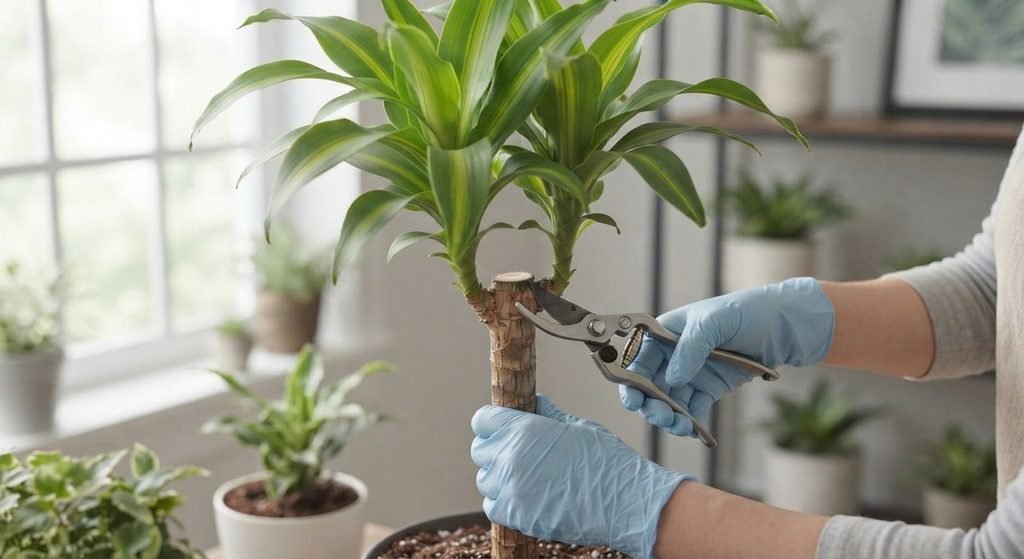
Dracaenas can be propagated through methods such as stem or tip cuttings, depending on the type.
One practical advantage is that pruning an overly tall or bare stem doesn’t necessarily mean you’ve ruined the plant. Dracaenas can respond to pruning by producing new shoots below the cut.
For a tall, sparse plant, pruning can therefore serve two purposes:
- Reduce unwanted height.
- Encourage new branching.
Use clean cutting tools and choose healthy plant material.
When and How to Repot Dracaena
Repotting isn’t something you need to do simply because a certain number of months has passed.
Consider repotting when:
- Roots have become crowded.
- The plant is clearly outgrowing its container.
- The growing medium has deteriorated.
- Drainage has become poor.
- The plant is repeatedly drying out unusually quickly because the root system fills most of the container.
Choose a pot only slightly larger than the current one.
A huge pot may look like room for future growth, but it can also hold excess moisture around a relatively small root system. RHS specifically warns against overpotting because the extra growing medium can stay wet and increase the risk of root problems.
Common Mistakes When Growing Dracena
Even an easy-care plant can struggle when small mistakes become habits.
1. Watering on a Calendar
A fixed schedule ignores changes in light, temperature, pot size, and soil.
Better approach: check the growing medium.
2. Using a Pot Without Drainage
Water needs somewhere to go.
Better approach: use a container with drainage holes and empty excess water from the saucer.
3. Putting the Plant in Harsh Sun
Dracaena likes light, but intense direct sun can damage foliage.
Better approach: provide bright filtered or indirect light.
4. Treating Brown Tips With One Solution
Brown tips can have several causes.
Better approach: investigate water quality, watering, humidity, temperature, and light together.
5. Overfertilizing Slow Growth
A slow-growing plant doesn’t necessarily need more fertilizer.
Better approach: check light and root conditions before increasing feeding.
6. Repotting Into a Huge Container
More soil isn’t always better.
Better approach: move up only modestly when the plant actually needs more room.
Signs Your Dracaena Is Growing Well
Look for a combination of healthy indicators rather than one isolated sign:
- New foliage appears gradually.
- Existing leaves retain good color.
- Stems remain firm.
- The plant isn’t repeatedly wilting.
- Soil dries at a reasonable rate between waterings.
- There are no persistent pest problems.
- Roots aren’t sitting in stagnant water.
Remember, slow growth can still be healthy growth.
Frequently Asked Questions
How do you grow Dracaena successfully?
Provide suitable indirect light, a well-draining growing medium, appropriate watering, warm conditions, and moderate feeding during active growth. Most importantly, avoid keeping the roots continuously waterlogged.
How much light does Dracaena need?
Many Dracaenas perform well in bright, indirect light and can tolerate lower light. Very intense direct sunlight can scorch the leaves, while extremely dim conditions can slow growth.
How often should you water Dracaena?
Don’t rely on a fixed weekly schedule. Check the soil first and water thoroughly when the appropriate upper layer has dried. Allow excess water to drain away completely.
Why are my Dracaena leaves turning yellow?
Yellow leaves can result from several stresses, but excessive watering is an important possibility. Check soil moisture, drainage, and the condition of the roots before changing your routine.
Why are the tips of my Dracaena leaves brown?
Brown tips may be associated with water quality, fluoride, dry indoor air, watering problems, excessive sunlight, cold drafts, or heat sources. Look at the whole growing environment rather than assuming there is only one cause.
Can Dracaena grow in low light?
Yes, many Dracaenas tolerate lower light, which contributes to their popularity as indoor plants. However, lower light generally isn’t the best choice if your goal is vigorous growth.
How can I encourage my Dracaena to grow?
Start with appropriate light, good drainage, sensible watering, and suitable temperatures. If the plant has been in very low light, improving its environment may be more useful than simply adding fertilizer.
When should I repot Dracaena?
Repot when the plant becomes root-bound or the existing growing medium and container are no longer working well. Choose a slightly larger container rather than dramatically increasing the pot size.
Can you prune Dracaena?
Yes. Pruning can control height and encourage new shoots below the cut. It can be particularly useful when stems have become too tall or bare.
Is Dracaena easy to grow indoors?
Generally, yes. Dracaenas are adaptable houseplants and many tolerate lower light, although they still need appropriate watering, drainage, and a suitable indoor environment.
Final Takeaway
Growing dracena successfully isn’t about giving the plant constant attention. It’s about getting the basics right and then resisting the urge to overcorrect.
Give your Dracaena suitable indirect light. Use a pot that drains properly. Check the soil before watering instead of following a rigid schedule. Keep the plant away from harsh sunlight, cold drafts, and heating vents. And when something goes wrong, investigate the whole environment before reaching for fertilizer or changing everything at once.
That approach is simple, but it works because it treats the plant as a living system rather than a checklist.
With steady care, your Dracaena can remain an attractive part of your indoor garden for years.