
A bathroom can have beautiful tile, a stylish vanity, and fresh paint, yet something can still feel slightly unfinished. Lighting is often the missing piece.
A hanging lamp bathroom setup can add personality, visual interest, and useful illumination—but bathrooms aren’t quite like bedrooms or living rooms. Moisture, placement, ceiling height, and electrical safety all matter.
A hanging fixture can work beautifully in the right bathroom, but the fixture must be suitable for its location, correctly positioned, and installed according to applicable electrical requirements. In the US, local authorities may enforce an adopted version of the National Electrical Code (NEC), so the exact requirements can vary by location.
Here’s how to choose one without sacrificing practicality for style.
What Is a Hanging Lamp Bathroom Fixture?
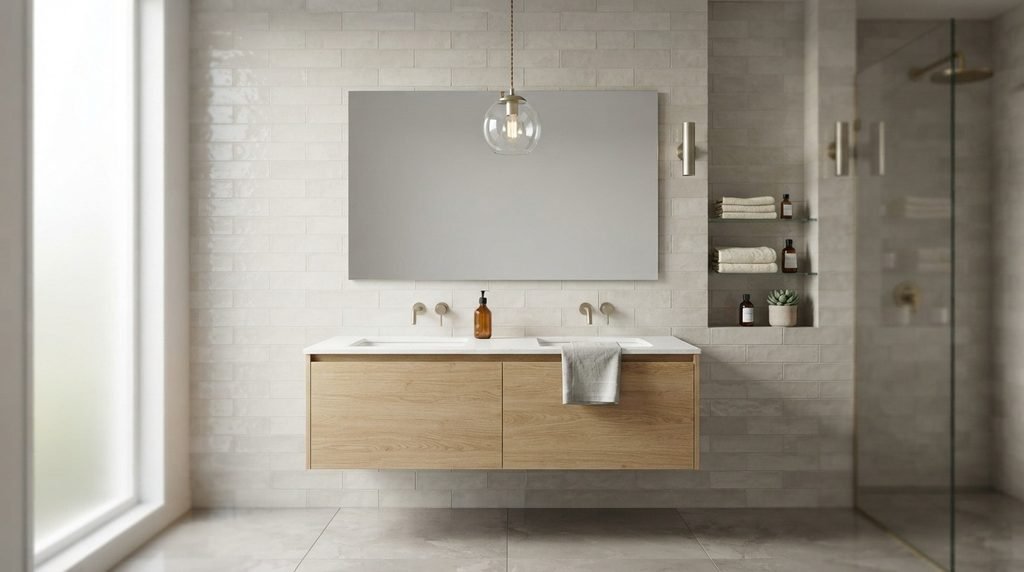
A bathroom hanging lamp is a suspended light fixture that hangs from the ceiling rather than sitting flush against it.
Depending on the design, it may resemble:
- A pendant light
- A decorative hanging fixture
- A single suspended bulb
- A small cluster of lights
- A modern glass pendant
- A minimalist metal fixture
The important distinction is that not every decorative hanging light is automatically suitable for a bathroom.
Bathrooms expose fixtures to humidity and, depending on their location, splashing water. That’s why the manufacturer’s location rating and installation requirements deserve attention before appearance.
Why Choose a Hanging Lamp for a Bathroom?
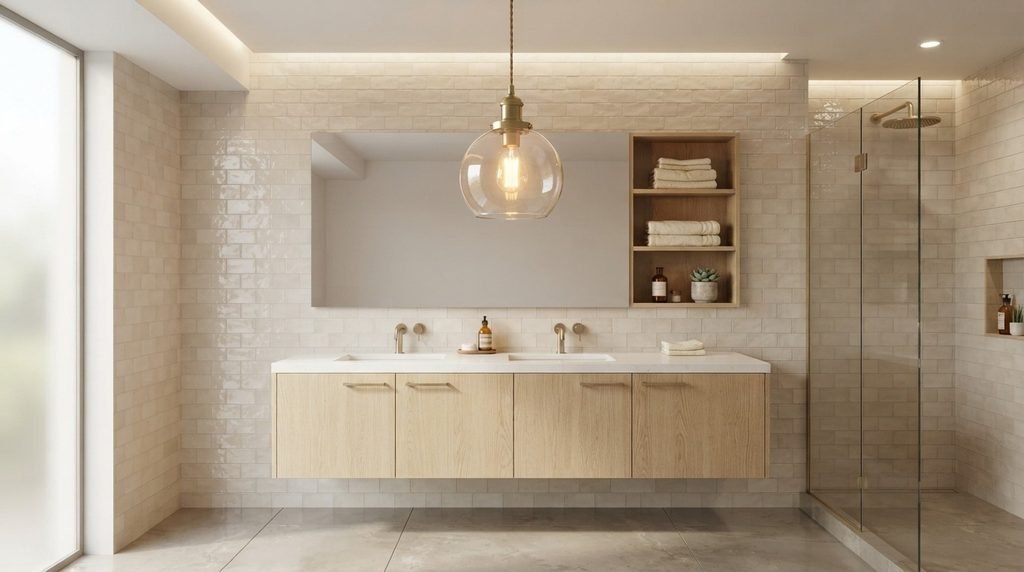
The right fixture can do more than simply illuminate the room.
1. It adds a focal point
A hanging fixture can draw the eye upward and give an otherwise ordinary bathroom a stronger design identity.
This can be particularly useful in bathrooms where the walls, flooring, and vanity already have simple finishes.
2. It can complement the vanity
A carefully selected pendant may work alongside vanity lighting to create layers of illumination rather than relying on one ceiling light.
3. It can reinforce your design style
Depending on the fixture, you can create different moods:
| Bathroom Style | Hanging Fixture Direction |
| Modern | Simple geometric pendant |
| Minimalist | Slim, understated fixture |
| Traditional | Glass or classic-shaped fixture |
| Industrial | Metal finish and simple silhouette |
| Coastal | Light, airy materials and finishes |
| Luxury | Decorative glass or sculptural design |
The goal isn’t to make the light the entire story. It should work with the rest of the bathroom.
Is a Hanging Lamp Suitable for a Bathroom?
Yes, a hanging fixture can be suitable for some bathroom applications, but suitability depends on the fixture, its location, and applicable electrical requirements.
This is where many homeowners run into trouble. A fixture that looks perfect online isn’t necessarily appropriate for a humid bathroom environment.
Before buying, check:
- The manufacturer’s installation instructions
- The fixture’s location rating
- Its intended indoor application
- Required clearances
- Installation location
- Applicable local electrical requirements
For electrical work, especially when wiring needs to be changed, a qualified electrician can help determine whether the proposed installation is appropriate.
Hanging Lamp Bathroom Safety: What Should You Check?
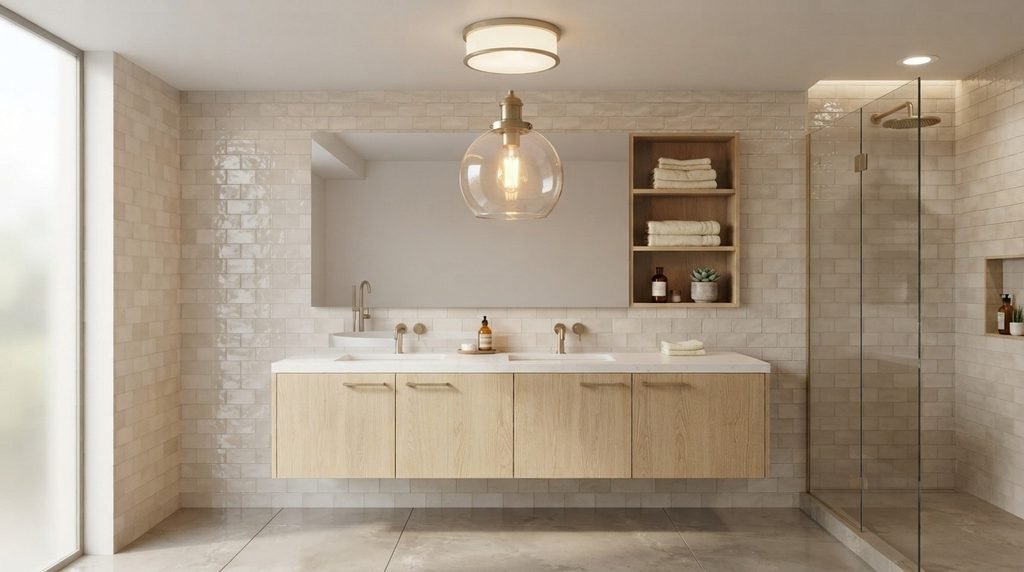
Safety should come before aesthetics.
Check the Fixture’s Location Rating
One of the most important details is whether the fixture is rated for the environment where it will be installed.
A fixture intended for a dry indoor location shouldn’t automatically be assumed to be appropriate for a bathroom.
US electrical guidance distinguishes between damp and wet locations, and fixtures used in those environments need to be appropriately marked and designed for the conditions.
Keep Water Exposure in Mind
The closer a fixture is to a shower, tub, or other source of water, the more carefully its suitability and required installation conditions need to be evaluated.
Don’t rely on appearance alone.
A sealed-looking glass shade isn’t proof that a fixture has the appropriate rating.
Don’t Ignore GFCI Protection
GFCI protection is an important part of bathroom electrical safety. The Electrical Safety Foundation International notes that GFCI protection is required for applicable bathroom receptacles under the NEC, although exact requirements depend on the applicable code and installation.
A GFCI is designed to interrupt electrical power when it detects a ground-fault condition.
If you’re unsure about the electrical setup in your bathroom, don’t guess. Ask a qualified electrician.
Where Should You Place a Bathroom Hanging Light?
Placement depends on the purpose of the fixture and the bathroom’s layout.
Near the Vanity
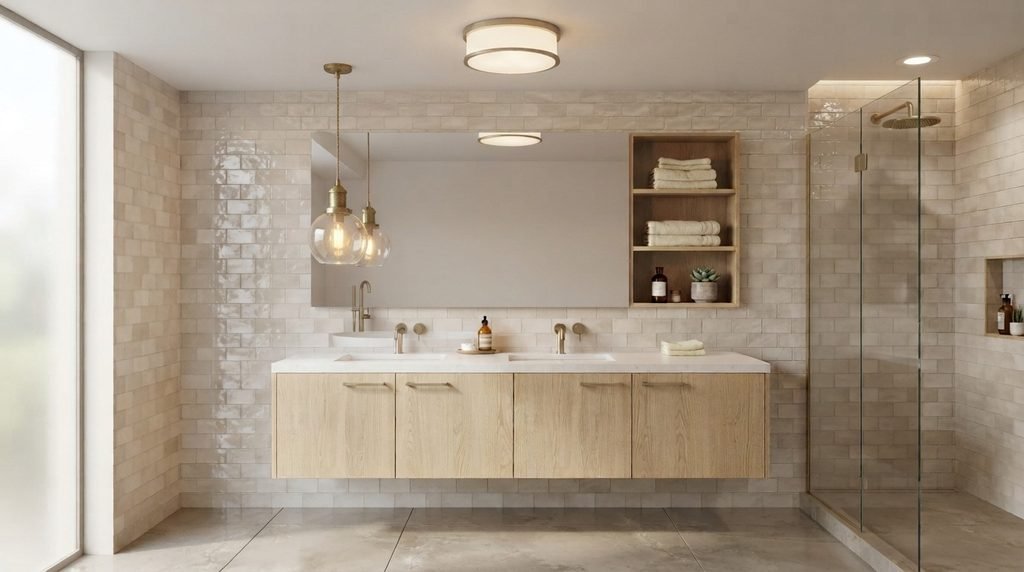
A hanging fixture can sometimes complement a vanity area, but it shouldn’t create distracting shadows or interfere with normal use of the space.
For a bathroom where grooming is important, make sure the overall lighting plan provides adequate, useful illumination—not just decorative lighting.
Away From Direct Water Exposure
A decorative hanging fixture may be more practical in an area away from direct water exposure, provided the fixture is still suitable for the bathroom environment.
In a Larger Bathroom
Larger bathrooms may provide more flexibility for decorative lighting because there’s generally more visual and physical space.
In a Small Bathroom
Small spaces require more restraint.
A large hanging fixture can quickly make a compact bathroom feel crowded. A smaller fixture with a simple silhouette may provide the visual interest you want without overwhelming the room.
How Do You Choose the Right Size?
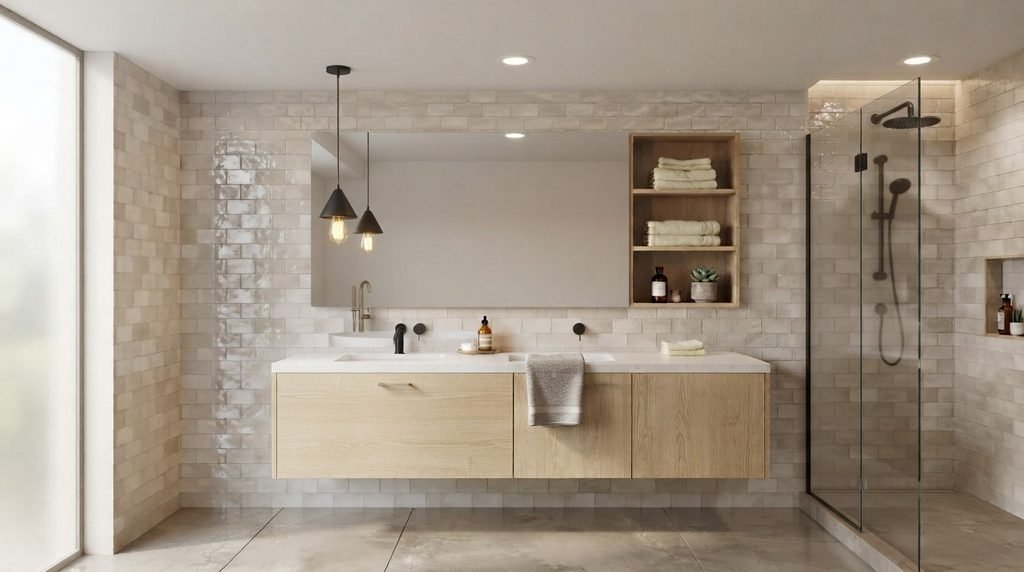
There’s no universal fixture size that works for every bathroom.
Consider:
- Bathroom dimensions
- Ceiling height
- Vanity width
- Fixture diameter
- Hanging length
- Visual weight
- Distance from other fixtures
- Door and cabinet movement
A useful approach is to look at the whole room, not just the light.
A fixture that looks beautifully proportioned in a large bathroom could feel oversized above a narrow vanity.
A Simple Rule of Thumb
Think about proportion first.
If your bathroom already contains a large mirror, substantial vanity, patterned tile, and decorative hardware, a simpler hanging light may create a more balanced result.
If the rest of the bathroom is understated, a sculptural fixture can become the visual focal point.
Hanging Lamp vs. Traditional Bathroom Lighting
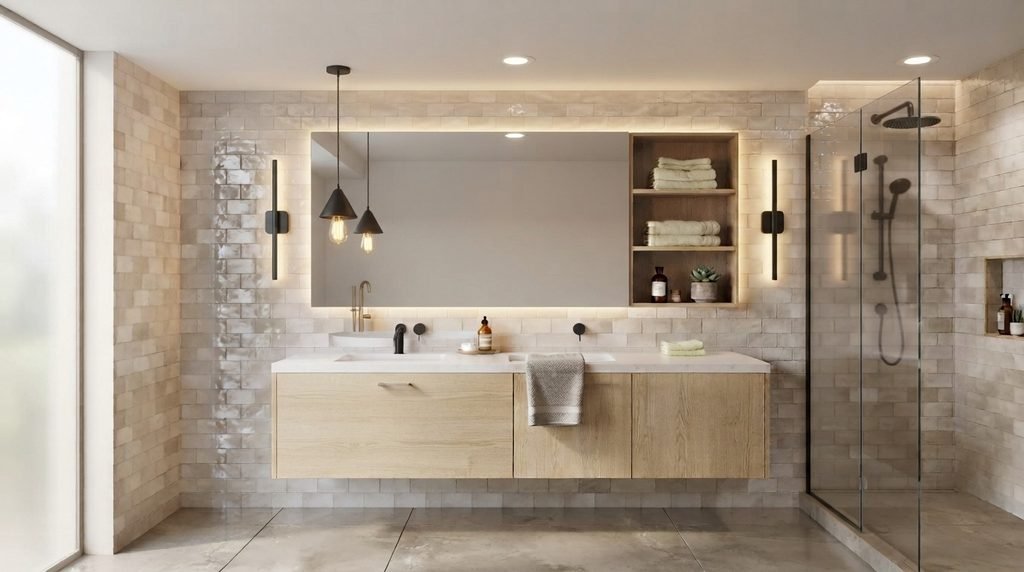
Not every bathroom needs a hanging fixture.
Sometimes a more conventional lighting solution is the better choice.
| Option | Main Strength | Best Consideration |
| Hanging pendant | Decorative impact | Placement and rating |
| Vanity light | Useful face-level illumination | Mirror arrangement |
| Recessed light | Clean appearance | General illumination |
| Wall sconce | Decorative + functional | Wall space |
| Flush-mount light | Compact | Lower ceilings |
The best lighting plan may combine several types rather than expecting one fixture to do everything.
US Department of Energy residential lighting guidance, for example, illustrates bathroom lighting using combinations such as recessed lighting and vanity lighting rather than treating one fixture as the only solution.
How to Make a Hanging Fixture Look More Expensive
You don’t necessarily need an expensive fixture to create a polished bathroom.
Focus on coordination.
Match the Finish
If your bathroom has matte black faucets, a similar fixture finish can create continuity.
Likewise, brushed metal, chrome, brass, or other finishes can work when they’re intentionally coordinated with the room.
Keep the Shape Simple
A complicated fixture isn’t automatically more luxurious.
Sometimes a clean silhouette looks more sophisticated because it doesn’t compete with everything else in the room.
Think About the Shade
Glass, frosted materials, metal shades, and other designs create different visual effects.
Consider how the shade affects the quality and direction of light—not only how it looks when switched off.
What Light Color Works Best in a Bathroom?
Light color can dramatically change how a bathroom feels.
Warm Light
Warm light can create a relaxed, cozy atmosphere.
It’s often appealing when the bathroom has:
- Warm wood
- Beige finishes
- Brass hardware
- Soft neutral colors
Cooler Light
A cooler appearance can feel cleaner and more energetic.
However, extremely cool-looking light isn’t automatically better for a bathroom.
A Balanced Approach
Think about what the bathroom is used for.
If the space needs to support grooming and detailed tasks, prioritize useful illumination and accurate color appearance rather than choosing a bulb simply because its light looks “bright.”
What About LED Hanging Lamps?
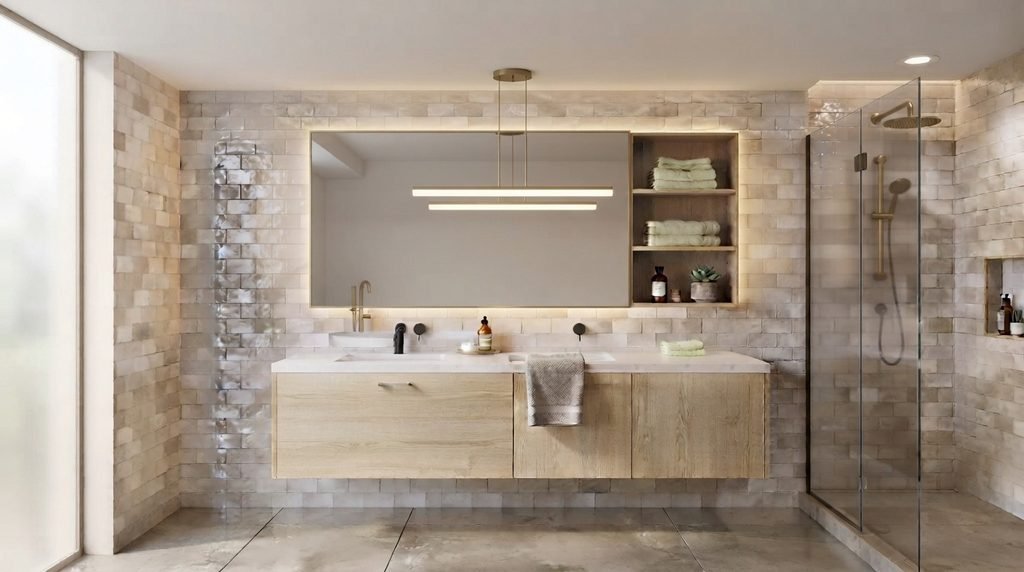
LED fixtures can be an appealing option because LEDs are widely used for energy-efficient residential lighting.
When comparing an LED fixture, don’t look only at wattage.
Pay attention to:
- Lumens
- Color temperature
- Color rendering
- Fixture compatibility
- Dimming compatibility
- Manufacturer specifications
- Expected operating environment
Lumens describe light output, while wattage describes electrical power consumption. They’re not interchangeable measurements.
Common Hanging Lamp Bathroom Mistakes
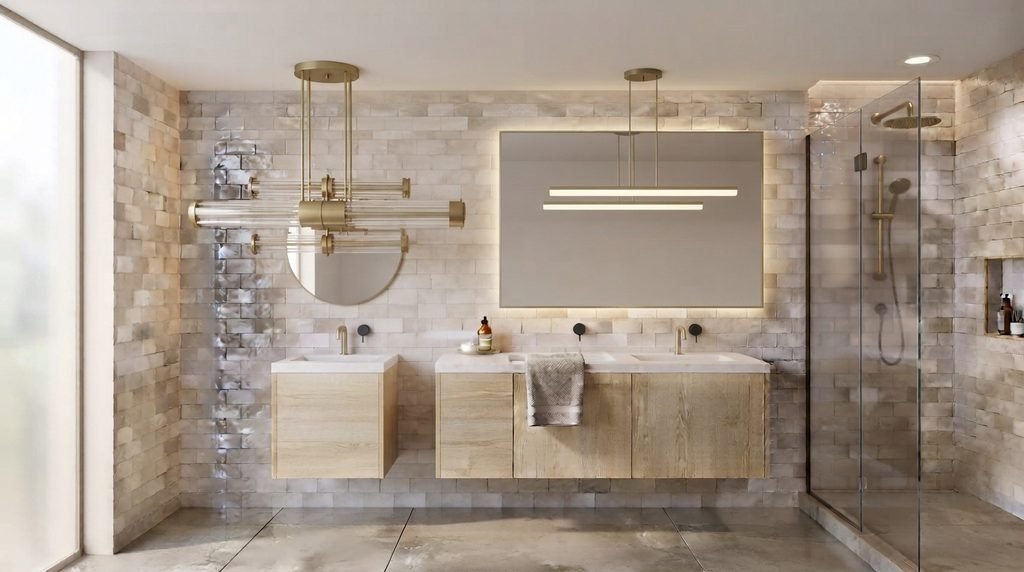
1. Buying Based Only on Appearance
A beautiful fixture isn’t necessarily the right fixture.
Avoid it: Check the manufacturer’s specifications before purchasing.
2. Ignoring the Bathroom’s Moisture
Bathrooms aren’t dry rooms.
Avoid it: Consider the fixture’s location rating and installation environment.
3. Choosing a Fixture That’s Too Large
An oversized pendant can dominate a small bathroom.
Avoid it: Compare the fixture’s dimensions with the vanity, ceiling, and room.
4. Using Decorative Lighting as the Only Light
A beautiful pendant may not provide ideal illumination for every task.
Avoid it: Consider layered lighting.
5. Guessing About Electrical Requirements
This is one area where “it should be fine” isn’t a good installation strategy.
Avoid it: Follow applicable codes, manufacturer instructions, and professional advice where needed.
6. Forgetting the Hanging Height
A fixture that’s too low can become an obstruction or look awkward.
Avoid it: Plan the height based on the room layout, fixture dimensions, and applicable safety requirements.
How Much Should You Spend?
Bathroom lighting doesn’t have to consume your entire renovation budget.
Instead of choosing purely by price, divide your priorities into three categories:
| Priority | What to Look For |
| Essential | Correct rating, compatibility, safe installation |
| Important | Size, light output, durability |
| Design | Finish, shape, decorative details |
This approach prevents a common mistake: spending most of the budget on appearance while overlooking the specifications that actually determine whether the fixture is appropriate.
Should You Install It Yourself?
If the project only involves selecting a fixture, that’s one thing.
Changing electrical wiring, modifying an existing electrical box, relocating a fixture, or dealing with bathroom electrical requirements is another.
If you’re not qualified to perform electrical work, use a qualified electrician.
The NEC establishes minimum electrical safety requirements, but the NEC itself isn’t automatically law everywhere; adoption and enforcement are handled by jurisdictions.
For that reason, local requirements should be checked rather than assuming that one rule applies identically across every US location.
How to Keep Your Bathroom Hanging Light Looking Good
Once installed appropriately, basic maintenance can keep the fixture looking its best.
- Follow the manufacturer’s cleaning instructions.
- Turn power off before cleaning an electrical fixture.
- Keep dust from building up around accessible surfaces.
- Check for visible damage.
- Don’t use cleaning products that could damage the finish.
- Have electrical problems inspected rather than attempting uncertain repairs.
If you notice damaged wiring, loose electrical components, unusual heat, or other electrical concerns, stop using the fixture and seek qualified assistance.
Frequently Asked Questions
Can you put a hanging lamp in the bathroom?
Yes, but the fixture must be appropriate for the intended bathroom location and installed according to manufacturer instructions and applicable electrical requirements.
Is a pendant light the same as a hanging lamp?
A pendant light is one common type of hanging light fixture. “Hanging lamp” is a broader, more informal description that can refer to several suspended fixture designs.
Can a hanging light go above a bathroom vanity?
It can in some layouts, but placement, fixture suitability, clearance, and the overall lighting plan all need to be considered. A qualified professional can help when electrical installation or code questions arise.
Are all bathroom light fixtures moisture resistant?
No. Don’t assume that a fixture is bathroom-safe simply because it is marketed as an indoor light. Check its specifications and location rating.
Is LED lighting good for bathrooms?
LED lighting can be an excellent option for bathrooms when the fixture is appropriate for the environment and provides the desired light output, color quality, and functionality.
Should a bathroom have more than one light?
Often, yes. Different lighting sources can serve different purposes. A decorative hanging fixture may contribute to the room’s atmosphere while vanity or other lighting provides more task-oriented illumination.
Can you use a regular pendant light in a bathroom?
Not automatically. Check the fixture’s manufacturer specifications and location rating before installing it in a bathroom.
What is the biggest mistake when choosing a bathroom hanging light?
Choosing based entirely on appearance is a common mistake. A fixture needs to fit the bathroom physically and aesthetically while also being appropriate for its electrical environment.
Final Takeaway
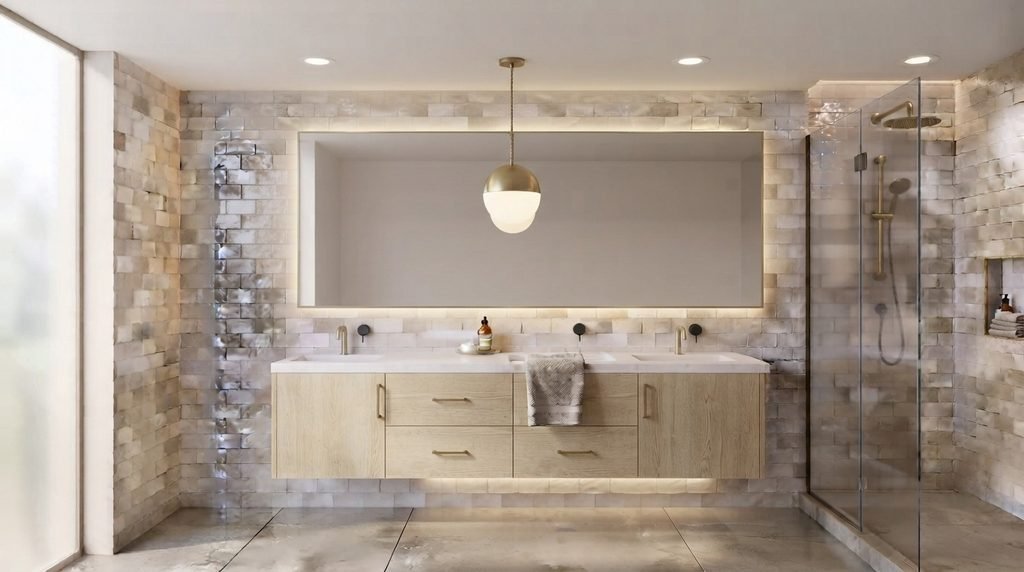
A hanging lamp bathroom design can add a surprisingly strong finishing touch to a bathroom, especially when the fixture complements the vanity, finishes, and overall style.
But good bathroom lighting isn’t just about choosing something attractive.
Check the fixture’s rating, think carefully about placement, consider moisture exposure, plan the lighting as a whole, and follow applicable electrical requirements. When wiring or code requirements are uncertain, getting help from a qualified electrician is the safer choice.
At HomeWorksDaily, the goal is to make home-improvement decisions easier by connecting design ideas with practical considerations—so you can create a space that looks good and makes sense for everyday life.











One Response