
Imagine opening a window on a pleasant spring morning. Instead of sliding a panel halfway across the frame, you turn a small handle, and the entire window swings open to welcome fresh air.
That simple difference is what makes casement windows appealing to many homeowners.
If you’re renovating an older house, planning a new build, or simply trying to make a room brighter and more comfortable, understanding Windows casement options can help you make a more informed decision. These windows have a distinctive opening mechanism, practical ventilation benefits, and a clean appearance that suits many home styles.
But are they the right choice for every room? Not necessarily. They need enough clearance to open, and the hardware, frame material, glass, and installation all affect their performance.
In this guide, we’ll explore how casement windows work, their advantages and disadvantages, how they compare with other window styles, what affects their cost, and what to check before buying.
What Are Windows Casements?

Windows casement are windows attached to a frame with hinges along one side. Instead of sliding vertically or horizontally, the movable section, called the sash, swings open like a door. Many residential models use a crank handle to open and close the sash.
Casement windows commonly feature a large glass area, making them a popular option for homeowners who want natural daylight, outdoor views, and ventilation without a bulky-looking frame.
Depending on the product, you may find them in vinyl, wood, fiberglass, aluminum, or combinations of materials. They can also be available with different glass packages, colors, finishes, and grille designs.
How Do Casement Windows Work?
The mechanism is straightforward:
- Turn the handle: A crank or operating handle moves the window hardware.
- Open the sash: The sash swings outward or, on some designs, inward.
- Control ventilation: Open the window as much as the hardware and surrounding space allow.
- Close and lock: Turn the handle in the opposite direction and engage the locking mechanism.
The precise mechanism varies by manufacturer. Before purchasing, check how the window operates and whether the handle is comfortable to use in its intended location.
Where Are Casement Windows Commonly Used?
Casement windows can work well in several parts of a home, including:
- Kitchens: They can provide ventilation near work areas, provided they’re positioned safely and have suitable clearance.
- Bedrooms: They can bring in fresh air and natural light.
- Living rooms: Larger configurations can create an open view of the yard or garden.
- Bathrooms: Privacy glass and suitable ventilation can make them useful in some layouts.
- Home offices: They can brighten a workspace while offering an outdoor view.
The best placement depends on the room’s layout, ventilation needs, local building requirements, and the direction in which the window opens.
Main Benefits of Casement Windows

Casement windows offer several practical advantages. The biggest benefit isn’t simply their appearance; it’s the combination of ventilation, daylight, and a closing mechanism that presses the sash against the frame.
1. Excellent Ventilation Potential
Because the sash swings open, casement windows can create a broad opening for fresh air. Depending on wind direction and the home’s layout, the open sash may also help direct breezes into a room.
This can be useful in kitchens, living rooms, and other spaces where natural ventilation is desirable.
Keep in mind that actual airflow depends on the opening size, outdoor conditions, room configuration, and whether other windows or doors are open.
2. Clear Outdoor Views
Casement windows can provide an expansive view because many designs use relatively narrow framing around the glass.
They may be especially attractive when you want to look out onto a garden, backyard, or landscaped area.
However, the amount of visible glass varies by model. Compare the frame dimensions and grille options rather than assuming every casement window provides the same view.
3. Potential for Lower Air Leakage
A properly designed casement window closes by pressing the sash against its seals. Hinged window types such as casements generally have lower air leakage rates than sliding windows, although the performance of an individual window depends on its design and installation.
That doesn’t mean every casement window is automatically airtight. Worn weatherstripping, poor installation, damaged hardware, or an incorrectly closed sash can still cause drafts.
Look at the specific product’s performance ratings rather than judging efficiency by window style alone.
4. Convenient Operation
Many casement windows use a crank handle, so you don’t have to lift a heavy sash. This can make them convenient for people who find vertically sliding windows difficult to operate.
Still, check the handle position and opening direction. A window behind a deep sink, for example, may be less convenient to reach than one installed in an accessible location.
5. Flexible Design Options
Casement windows are available in different sizes, frame finishes, glass types, and configurations. They can complement contemporary homes as well as many traditional designs.
You can choose simple, clean frames or styles with decorative grilles. Just remember that design options and availability differ between manufacturers.
Disadvantages of Casement Windows
Every window style involves trade-offs. Understanding the limitations before buying can help you avoid an expensive mismatch.
1. They Need Space to Open
Unlike sliding windows, outward-opening casement windows extend beyond the wall when open.
Before choosing them, check for:
- Nearby trees and shrubs.
- Exterior walkways and patios.
- Deck railings.
- Neighboring walls or structures.
- Outdoor furniture and other obstructions.
If a window opens onto a narrow walkway, the projecting sash may interfere with movement.
2. Hardware Needs Maintenance
Casement windows rely on hinges, handles, locking points, and operating mechanisms. These components may require cleaning, inspection, adjustment, or replacement over time.
Avoid forcing a stiff crank. Check the manufacturer’s maintenance instructions and investigate persistent resistance rather than continuing to turn the handle.
3. Replacement Parts May Be Model-Specific
Hardware compatibility varies by manufacturer and product line. If you’re replacing an older casement window, identify its brand and model where possible.
Before ordering a replacement, confirm the dimensions, hinge arrangement, operator type, and hardware compatibility.
4. They May Not Suit Every Budget
The total price depends on the window size, material, glass package, hardware, customization, labor, and condition of the existing opening.
A basic window may cost less than a premium custom configuration, but the opening style alone doesn’t determine the final price.
5. Emergency Egress Requires Careful Planning
In bedrooms and other locations where an emergency escape opening is required, the window must meet applicable building-code requirements.
Don’t assume that a casement window automatically qualifies. Its clear opening dimensions, opening method, location, and other requirements must be checked against local rules.
Casement Windows vs. Other Window Types
Choosing a window becomes easier when you compare how it opens, how much space it needs, and what matters most in your room.
| Window Type | How It Opens | Main Advantage | Main Limitation |
| Casement | Swings on side hinges | Broad opening and good ventilation potential | Needs clearance to swing open |
| Double-hung | Sashes move vertically | Doesn’t project outward | Only the opened portion provides ventilation |
| Sliding | Sash moves horizontally | Simple operation and no outward swing | Usually only part of the frame opens |
| Awning | Hinged at the top, opens outward | Can allow ventilation in some light-rain conditions | Needs exterior clearance |
| Fixed or picture | Doesn’t open | Uninterrupted views and daylight | No direct ventilation through the window |
These are general design differences; actual performance varies by product.
Are Casement Windows Better Than Double-Hung Windows?
Neither style is best for every home.
Casement windows may suit you if you want a wide opening, a crank-operated mechanism, and potentially lower air leakage than a typical sliding-style window.
Double-hung windows may be more practical where an outward-opening sash would obstruct a walkway or patio. Some models also allow both sashes to move, giving you flexibility in how the room is ventilated.
Compare the actual products, including their energy ratings, rather than choosing solely by appearance.
Are Casement Windows Better Than Sliding Windows?
Casement windows often provide a larger opening relative to the overall frame, while sliding windows don’t require space for a swinging sash.
If the window faces a narrow outdoor area, a slider may be easier to live with. If ventilation and a wide opening are priorities, a casement may be worth considering.
The right decision comes down to the room, the available space, and your priorities.
Which Frame Materials Should You Consider?
Frame material affects appearance, maintenance, durability, and the window’s overall thermal performance. There’s no universally best material for every home.
| Frame Material | Potential Advantages | Things to Consider |
| Vinyl | Often low-maintenance and available in different styles | Color, finish, and structural performance vary by product |
| Wood | Natural appearance and paint or stain options | Requires appropriate moisture protection and maintenance |
| Fiberglass | Can offer strength and good dimensional stability | May have a higher initial price than some basic options |
| Aluminum | Slim-frame designs and a modern appearance | Thermal performance depends on the design and thermal breaks |
| Composite | Combines materials to balance selected properties | Composition, cost, and maintenance vary by product |
Use this table as a starting point, not a final product ranking. Compare the complete window’s certified performance, warranty, maintenance requirements, and suitability for your climate.
Which Material Is Best for Your Home?
Consider your priorities first.
- If you want relatively simple maintenance, compare well-rated vinyl and fiberglass options.
- If a traditional interior finish matters most, consider wood or a suitable composite design.
- If you prefer slim, contemporary framing, investigate aluminum products designed for residential thermal performance.
Ask the supplier for the actual product specifications. Two windows made from the same material can perform differently because of their glass, frame construction, seals, and hardware.
Are Casement Windows Energy-Efficient?
They can be, but efficiency depends on the entire window system, not just the opening style.
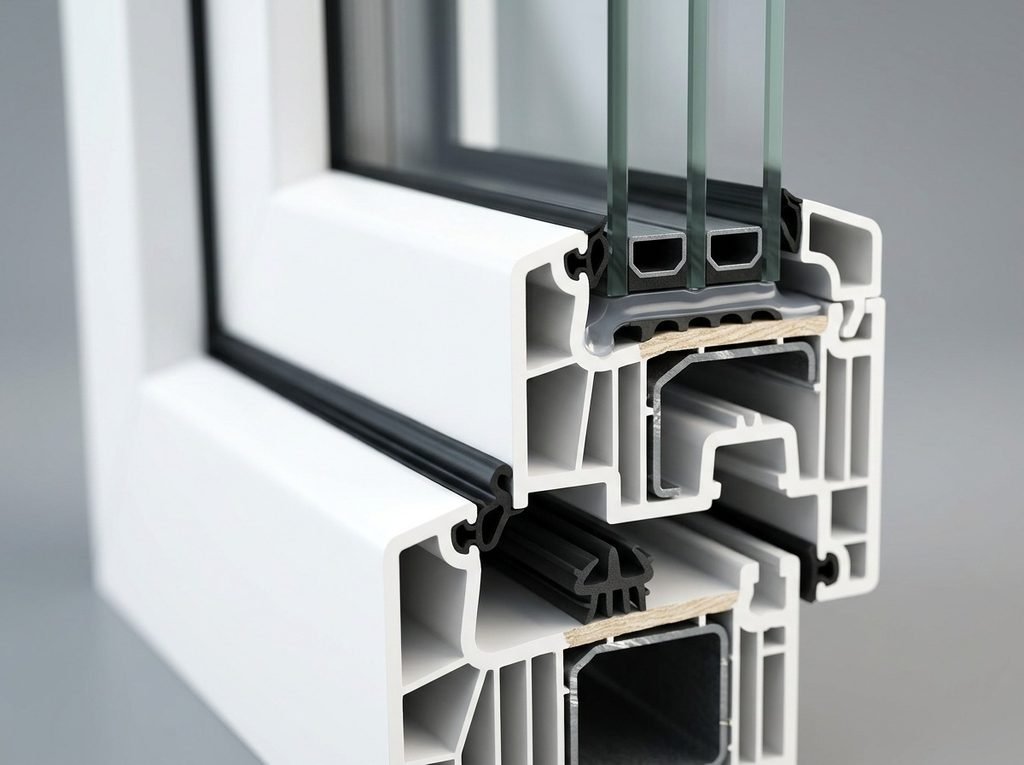
The glass, frame, weatherstripping, installation, and quality of the seals all contribute to performance. The U.S. Department of Energy recommends considering factors such as U-factor, solar heat gain coefficient, and air leakage when selecting windows.
Understand U-Factor
U-factor measures how readily heat passes through a window. A lower U-factor generally means better insulation against heat transfer.
This can be particularly important in colder climates where you want to limit heat loss during winter.
Understand Solar Heat Gain Coefficient (SHGC)
SHGC measures how much solar heat enters through a window.
- A lower SHGC generally reduces unwanted solar heat gain.
- A higher SHGC allows more solar heat to enter.
The most suitable value depends on your climate, the direction the window faces, shading, and your heating and cooling needs.
What Is Low-E Glass?
Low-emissivity, or low-E, glass has a special coating designed to manage radiant heat transfer. Depending on the product and coating, it can help reduce unwanted heat gain or heat loss while allowing visible daylight into the home.
Ask which glass package is being offered and whether it suits your local climate.
Check ENERGY STAR and NFRC Information
For US homeowners, two useful resources are:
- ENERGY STAR residential windows guidance — explains certified products and climate-related selection.
- Efficient Windows Collaborative window types — provides an overview of common window designs.
Look for applicable ENERGY STAR certification and National Fenestration Rating Council (NFRC) performance information. Check the specific product and relevant climate-zone criteria rather than assuming all casement windows qualify.
How Much Do Casement Windows Cost?

The cost of casement windows varies widely, so it’s better to compare written quotes for the same specifications than rely on a single advertised price.
Your final budget may include the window itself, labor, removal and disposal of the old unit, repairs to the opening, trim, flashing, sealing, and any required permits.
What Affects the Price?
| Cost Factor | Why It Matters |
| Window dimensions | Larger units may need more material and stronger hardware |
| Frame material | Materials differ in manufacturing cost, finish, and maintenance |
| Glass package | Double glazing, low-E coatings, and specialized glass affect the price |
| Customization | Unusual sizes, colors, and grille patterns may add cost |
| Installation | Labor depends on access, project complexity, and local rates |
| Existing frame condition | Rot, water damage, or structural repairs may increase the total |
| Number of windows | A larger project may have different per-window labor costs |
How to Compare Installation Quotes
Request at least two or three itemized quotes where practical. Make sure each quote describes the same window size, frame material, glass package, and installation scope.
Ask these questions before signing:
- Does the price include removal and disposal of the old window?
- Will the installer repair damaged framing if needed?
- Are flashing, sealing, insulation, and interior or exterior trim included?
- What are the product and workmanship warranty terms?
- Are permits or inspections required for this project?
- What payment schedule and completion timeline apply?
Be cautious about comparing a product-only price with a quote that includes full installation. They aren’t equivalent.
A useful budgeting tip: Set aside a contingency for unexpected repairs, especially when replacing older windows. You won’t know the full condition of the opening until it has been properly assessed.
How to Choose the Right Casement Windows
Choosing the right window is easier when you work through the decision in a sensible order.
Step 1: Identify the Room’s Needs
Think about what you want the window to do.
- For a living room, you may prioritize daylight and views.
- For a kitchen, convenient operation and ventilation may be more important.
- For a bedroom, consider privacy, noise, ventilation, and emergency egress requirements.
- For a bathroom, consider privacy glazing and moisture management.
The best choice is the one that works with the room rather than simply looking attractive in a showroom.
Step 2: Measure the Opening Properly
Window replacement measurements need to account for the existing opening, the installation method, and the manufacturer’s specifications.
If you’re ordering custom windows, don’t rely on a rough measurement taken from the visible glass. Have the opening assessed using the correct measurement procedure before the order is finalized.
Incorrect sizing can cause installation problems, unwanted gaps, or additional work.
Step 3: Compare Energy Ratings
Review the whole-window U-factor and SHGC, along with other available performance information.
Choose ratings appropriate for your climate and exposure. A sunny room in a hot region may need a different balance of solar heat control and insulation than a room in a cold northern climate.
Step 4: Check Opening Clearance
Picture the window fully open, not just closed.
Will the sash interfere with a walkway, a deck, a tree, or an outdoor seating area? Could an inward-opening model or another window style be more practical?
This small check can prevent daily frustration later.
Step 5: Review Hardware and Warranty
Ask about the handle, hinges, locking points, replacement parts, and maintenance requirements.
A good-looking window is less useful if its operating hardware is difficult to service or compatible replacement parts are hard to obtain.
Step 6: Confirm Installation Details
Even a high-performance window may disappoint if installed poorly. Follow the manufacturer’s instructions and pay attention to installation quality.
Your installer should explain how the opening will be prepared, flashed, sealed, insulated, and finished. The details depend on the building and installation method.
Common Casement Window Mistakes to Avoid
A little planning can save time, money, and unnecessary repairs.
Choosing by Appearance Alone
A window may look perfect in a catalog but perform poorly for your needs if the glass package, frame, or seals aren’t suitable.
Better approach: Compare performance labels, warranty coverage, and installation requirements alongside appearance.
Ignoring the Swing Direction
An outward-opening sash can collide with a railing, plant, or narrow walkway.
Better approach: Confirm the opening direction and surrounding clearance before ordering.
Assuming Every Casement Window Is Energy-Efficient
The casement design can help limit air leakage, but it doesn’t guarantee excellent overall thermal performance.
Better approach: Check the actual unit’s energy ratings, seals, and installation plan.
Overlooking Maintenance
Dust, debris, worn weatherstripping, and neglected hardware can affect operation.
Better approach: Follow the manufacturer’s cleaning and maintenance instructions and address stiffness or damaged seals early.
Accepting a Vague Quote
A low initial price can be misleading if repairs, disposal, finishing, or other essential work are excluded.
Better approach: Request a written, itemized scope of work and compare equivalent products.
Forgetting Local Building Requirements
Certain window locations have specific requirements for emergency escape, safety glazing, and other construction details.
Better approach: Confirm applicable local codes with your building department or a qualified installer before finalizing the design.
How to Maintain Casement Windows

Routine maintenance can help keep casement windows operating smoothly and protect the surrounding frame.
Use this general checklist, adjusting it to the manufacturer’s instructions.
- Clean the glass and frame: Use suitable cleaning products that won’t damage the finish.
- Inspect the weatherstripping: Look for visible wear, gaps, or signs of damage.
- Check the hinges and crank: Look for looseness, unusual resistance, or damaged components.
- Clear drainage areas: Remove dirt and debris where the design includes drainage openings.
- Check the locking mechanism: Make sure the sash closes evenly and the locks engage correctly.
- Inspect the surrounding sealant: Look for cracking, separation, or signs of moisture entry.
- Address problems early: If the window binds, leaks, or refuses to lock properly, investigate the cause instead of forcing it.
Don’t apply oil or grease indiscriminately. Some hardware requires particular lubricants, and some components shouldn’t be lubricated at all. Follow the product’s care instructions.
If you notice persistent water intrusion, deteriorating framing, or damaged hardware, consult a qualified window professional.
Are Casement Windows Worth It?
For many homeowners, casement windows are worth considering when ventilation, clear views, and convenient crank operation are priorities.
They can also be a practical choice when you want a hinged window design that closes against its frame. However, the overall result depends on the product’s construction, energy performance, installation, and maintenance.
Use this quick decision guide:
| Your Priority | What to Consider |
| Broad ventilation opening | Casement windows |
| No outward projection | Sliding or double-hung windows |
| Simple handle operation | Casement models with suitable hardware |
| Lower air leakage potential | Compare well-sealed casement and other hinged designs |
| Minimal maintenance | Compare frame materials and hardware warranties |
| Best energy performance | Compare certified whole-window ratings and installation quality |
| Unobstructed views | Compare frame width and glass area across models |
Before making a purchase, compare the total installed cost, performance ratings, warranty, and clearance requirements. Those details will tell you more about the long-term value than the window style alone.
Frequently Asked Questions About Windows Casement
1. What does “Windows casement” mean?
The phrase refers to casement windows: windows hinged along one side of the sash so that the movable section swings open, commonly using a crank handle. They’re available in different materials, sizes, and glass configurations.
2. Are casement windows better than sliding windows?
Neither is always better. Casement windows can offer a broad opening and generally have lower air leakage rates than sliding windows, while sliders don’t need clearance for a swinging sash. The best option depends on your room, climate, and priorities.
3. Are casement windows energy-efficient?
They can be, particularly when they have well-designed seals and are installed correctly. But energy efficiency also depends on the glass, frame, U-factor, SHGC, and the quality of installation. Compare the ratings of specific products before buying.
4. Can casement windows be installed in a kitchen?
Yes. They can be suitable for kitchens where ventilation and daylight are useful. Before selecting one, check whether the handle is easy to reach and whether the sash has enough clearance to open safely.
5. Do casement windows need a lot of maintenance?
Not necessarily, but they do have moving parts that require occasional inspection. Cleaning the frame, checking the weatherstripping, and monitoring the crank, hinges, and locks can help maintain proper operation.
6. Can casement windows be used in bedrooms?
Yes, provided the design and installation meet the relevant building requirements. Where an emergency escape opening is required, verify the clear opening dimensions and other applicable code provisions.
7. What affects the cost of casement windows?
Size, frame material, glazing, customization, hardware, labor, and the condition of the existing opening all affect the final price. Ask for itemized quotes that cover the same specifications and installation work.
8. How do I know which casement window to buy?
Start with the room’s needs, then compare opening clearance, frame material, glass package, energy ratings, hardware, warranties, and installation requirements. A qualified installer can help confirm measurements and local code compliance.
Final Thoughts: Make Your Window Choice Count
Choosing new windows isn’t just about changing how your home looks. It’s about making everyday spaces more comfortable, letting in natural light, and finding a design that works with your lifestyle.
Windows casement may be a strong option if you want a wide ventilation opening, clear views, and a convenient crank-operated design. Their limitations, particularly the space needed for the sash to swing open, deserve just as much attention as their benefits.
Before you commit, compare the full product specifications, check energy ratings, confirm opening clearance, and obtain detailed installation quotes. A carefully selected window can serve your home well for years, but the right choice depends on the complete package—not the style alone.
For more ideas to improve your home and outdoor spaces, explore other practical guides on HomeworkDaily.








One Response