Choosing seating for a kitchen island or home bar sounds easy—until you start comparing dozens of styles, heights, materials, and back designs.
Low back bar stools are an interesting middle ground. They can provide more support than backless stools while keeping the visual footprint relatively light. That makes them especially appealing when you want comfortable seating without making your kitchen or entertaining area feel crowded.
The catch? The right stool isn’t just about appearance. Height, clearance, seat dimensions, construction, and how you actually use the space all matter.
Here’s the simplest rule to remember: measure your counter or bar before shopping. A beautiful stool that doesn’t fit your surface is still the wrong stool.
What Are Low Back Bar Stools?
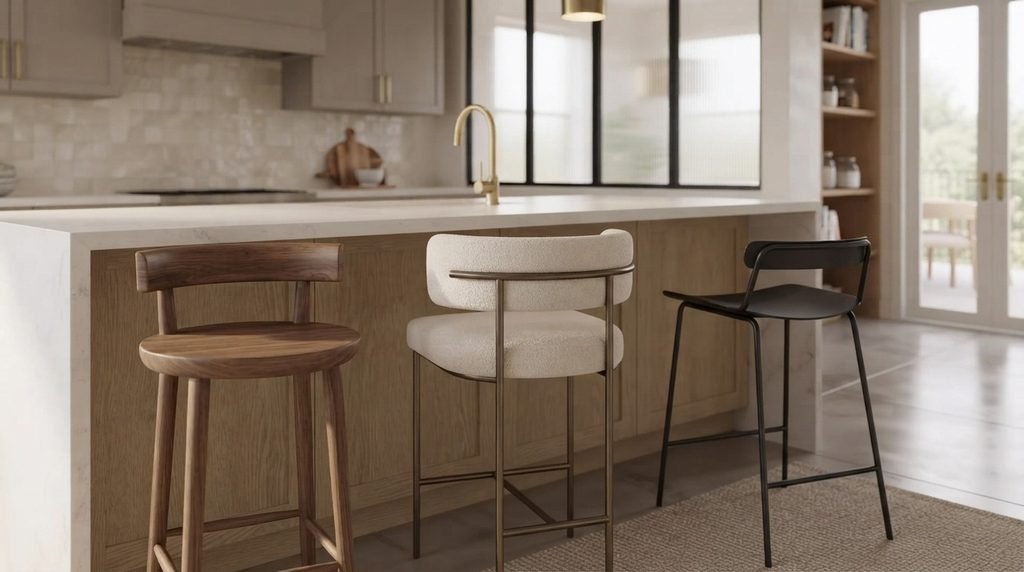
Low back bar stools are stools with a backrest that rises only partway behind the sitter rather than extending high up the back.
That design gives you a useful compromise:
- More back support than a completely backless stool
- Less visual bulk than a high-back chair
- A cleaner view across an open kitchen
- Easier integration with modern and transitional interiors
- A comfortable option for casual meals, conversations, and everyday use
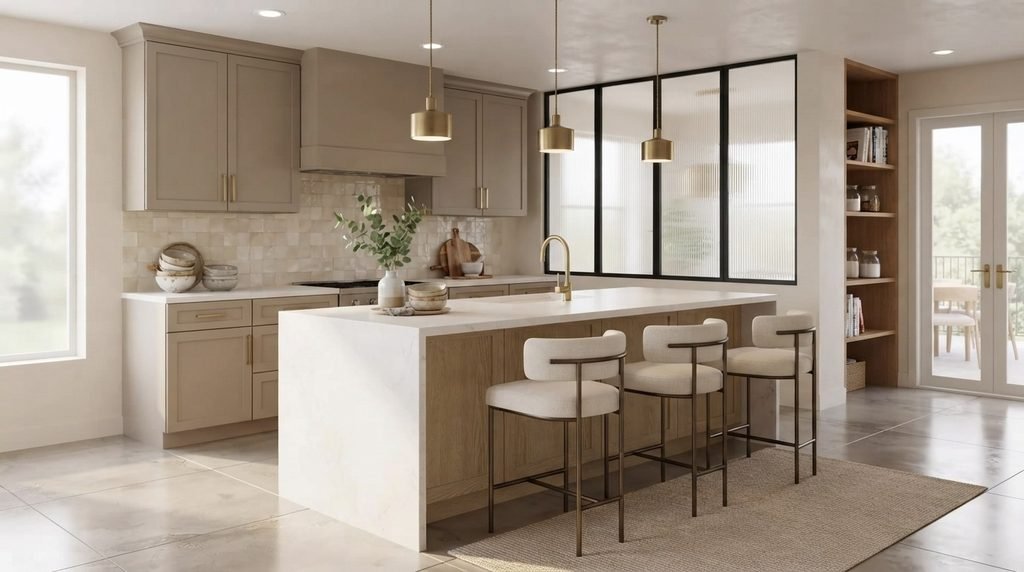
They’re particularly useful around kitchen islands where you want seating to feel intentional without turning the island into a row of oversized dining chairs.
Low Back vs. Backless vs. Full Back
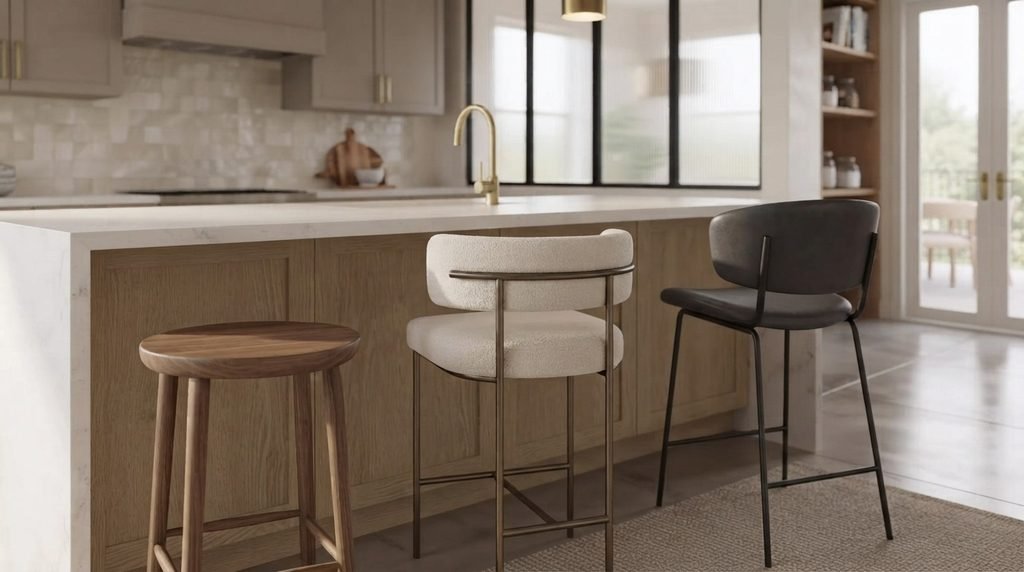
The difference isn’t simply aesthetic. Each design suits a different type of household.
| Stool Style | Main Advantage | Potential Drawback | Good For |
| Backless | Small visual footprint | Least back support | Compact spaces |
| Low back | Balance of support and openness | Less support than full-back designs | Everyday kitchen seating |
| Full back | Greater back support | Takes up more visual space | Longer sitting sessions |
| Swivel low back | Easy movement and conversation | Moving parts need more care | Social kitchens and entertaining |
Bottom line: If you want some support without making your island look heavy, a low-back design can be a practical middle ground.
Why Choose Low Back Bar Stools?
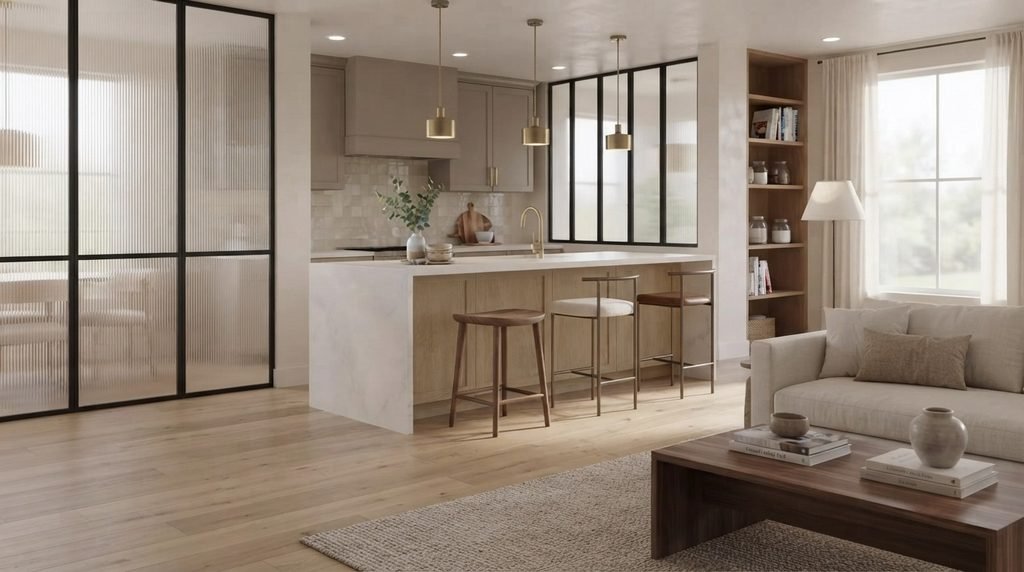
A stool can look perfect online and still feel wrong once it arrives. That’s why it’s worth thinking about how your household will actually use it.
They Keep an Open Kitchen Feeling Open
Large furniture can visually divide an open-plan kitchen.
Low-back designs generally have a smaller visual profile than taller chairs, allowing more of the countertop, backsplash, and room beyond to remain visible.
This can be particularly useful when your kitchen connects directly to a dining or living area.
They Offer More Support Than Backless Stools
Backless stools have their place, especially in very compact spaces. But if people regularly sit at your island for breakfast, homework, conversation, or a quick meal, having even a modest backrest can make the seating feel more supportive.
They Work With Many Interior Styles
Depending on the material and shape, low-back stools can work with:
- Modern kitchens
- Transitional interiors
- Farmhouse-inspired spaces
- Industrial designs
- Minimalist rooms
- Contemporary open-plan homes
The silhouette is relatively versatile, so the material and finish can do much of the decorating work.
Are Low Back Bar Stools Comfortable?
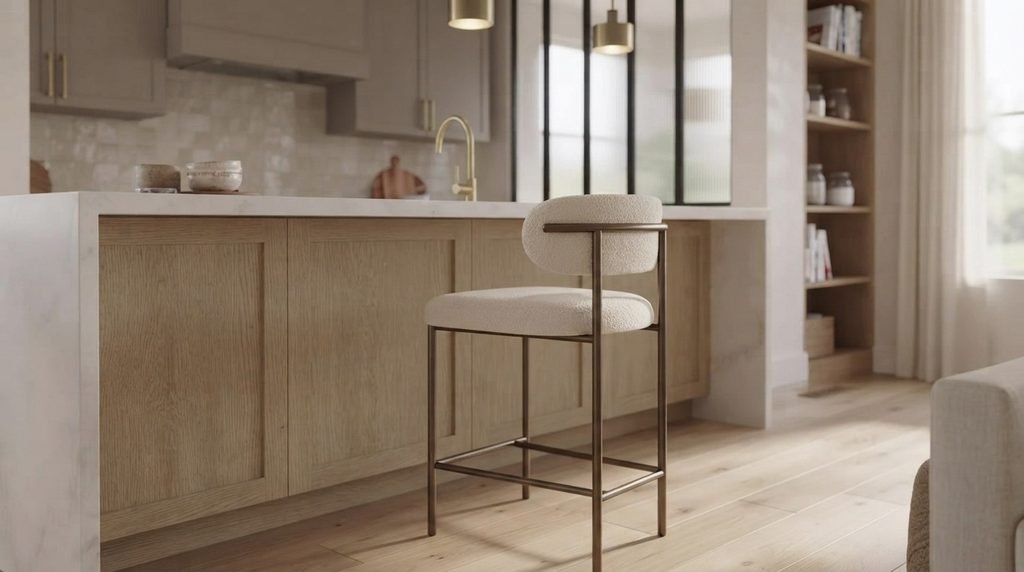
They can be very comfortable, but comfort depends on more than the backrest. Seat height, seat depth, cushioning, foot support, and available legroom all contribute to how pleasant a stool feels.
A low back doesn’t automatically make a stool comfortable—or uncomfortable.
Before buying, consider:
- Seat height
- Seat width
- Seat depth
- Cushioning
- Backrest shape
- Footrest position
- Counter clearance
- Whether the stool swivels
- How long people normally sit there
A stool used for a five-minute coffee is different from one used for family dinners or several hours of homework.
Short Sitting vs. Long Sitting
For occasional use, you may prioritize:
- Compact dimensions
- Easy cleaning
- Appearance
- Affordable construction
For longer sitting periods, comfort deserves more attention.
Look for:
- Supportive back design
- Adequate seat depth
- Comfortable cushioning
- A useful footrest
- Enough space underneath the counter
Think about the activity, not just the furniture.
How to Choose the Right Low Back Bar Stools
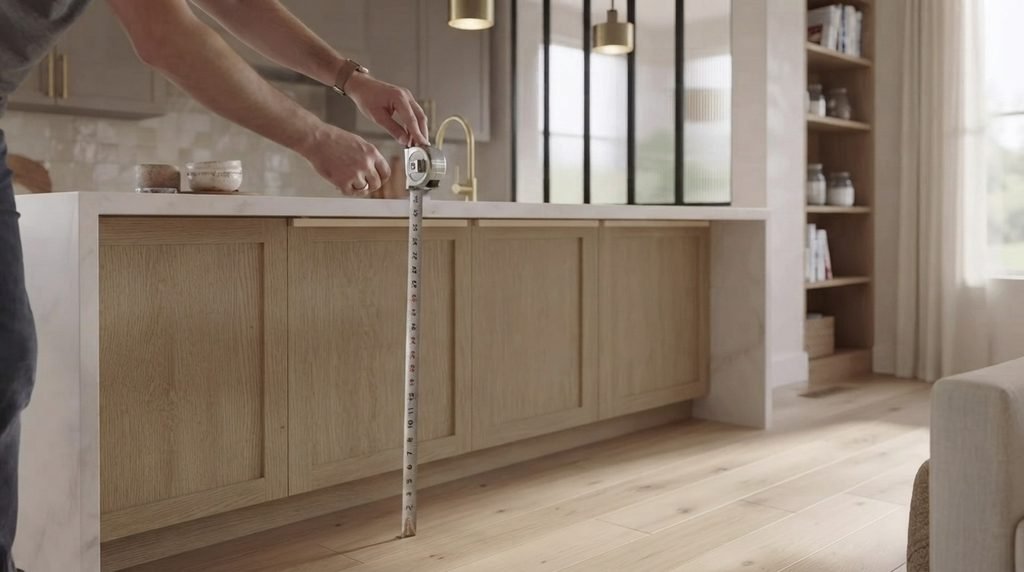
The best approach is to work from measurements outward.
Don’t start with color.
Start with fit.
1. Measure Your Counter or Bar
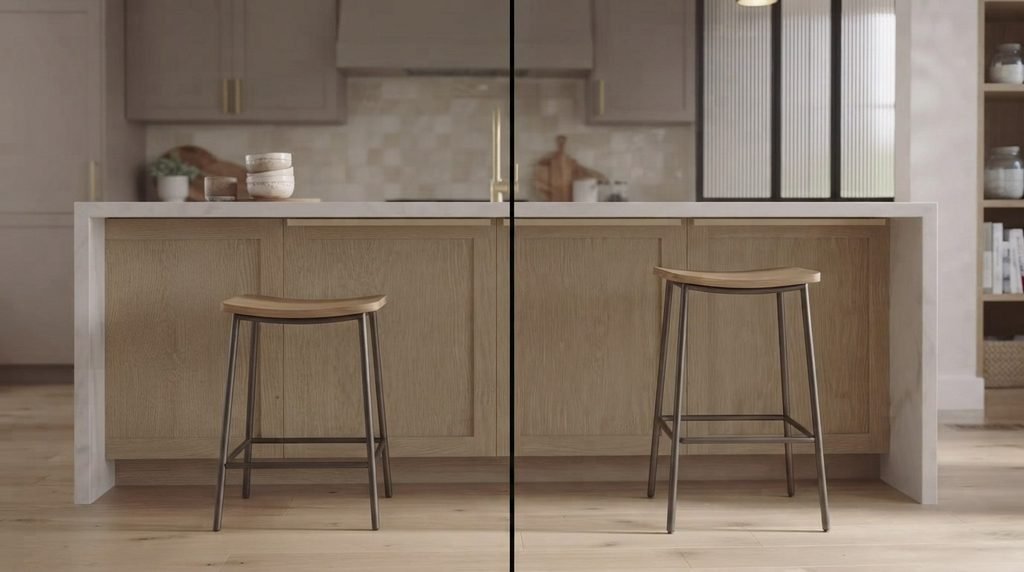
This is the step people are most likely to skip.
Measure the distance from the floor to the relevant underside of your counter or bar. Don’t assume the product label alone will tell you whether the stool fits.
Current furniture guides commonly place counter-height seating around 24–27 inches and bar-height seating around 28–30 inches, but the actual measurement of your space should be the deciding factor.
A useful starting point is approximately 10–12 inches of clearance between the seat and the underside of the surface.
Quick Height Guide
| Surface Type | Typical Surface Height | Common Seat Height |
| Standard dining table | 28–30 in | 17–19 in |
| Kitchen counter | 34–36 in | 24–27 in |
| Home bar | 40–42 in | 28–30 in |
| Extra-tall surface | 44–47 in | 33–36 in |
These are starting ranges, not universal rules. Furniture dimensions vary, and an apron, support, or other obstruction underneath the counter can change the usable clearance.
Measure your actual setup before ordering.
2. Check the Seat Width
Height gets most of the attention, but width matters when you’re trying to fit several stools along one island.
A wider seat may feel more comfortable, but it also means fewer stools can fit comfortably.
Before purchasing several stools, measure:
- The total usable length of your counter.
- The width of each stool.
- The space needed between neighboring seats.
- Any cabinets, walls, or appliances that restrict movement.
Don’t assume that because three stools physically fit, three people will actually enjoy using them.
3. Think About Seat Depth
A deep seat can feel comfortable in a dining chair but become awkward in a tight kitchen.
Why?
Because you need room to:
- Sit down
- Move your legs
- Push the stool toward the counter
- Walk behind it
- Get up without bumping nearby furniture
For narrow islands or walkways, a slimmer design can sometimes work better than a generously padded one.
4. Look at the Footrest
A footrest is easy to overlook when you’re focused on colors and upholstery.
But once you’re sitting several inches above the floor, your feet need somewhere comfortable to rest.
A well-positioned footrest can make a noticeable difference in how supported the stool feels.
This is particularly important with taller bar-height seating.
Low Back Bar Stools for Small Kitchens
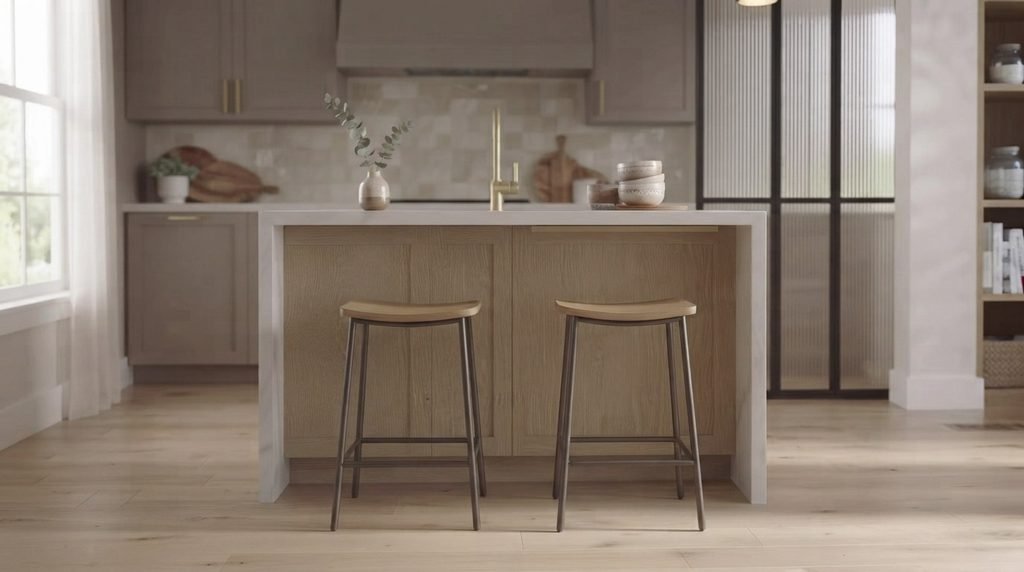
Small kitchens don’t necessarily need to give up island seating.
They simply require more careful furniture choices.
Low-back designs can work well because they provide some support without visually filling the room as much as a tall-backed chair.
For a Small Kitchen, Look For:
- Slim profiles
- Appropriate seat width
- Minimal visual bulk
- Easy-to-clean surfaces
- No unnecessary arms
- Correct seat height
- A shape that can tuck neatly under the counter
Swivel features can also be useful in some layouts, but they’re not automatically better. A swivel mechanism adds moving parts and may increase the stool’s overall cost and maintenance needs.
The smartest small-space choice is the stool that fits the room—not necessarily the smallest stool available.
What Materials Are Best?
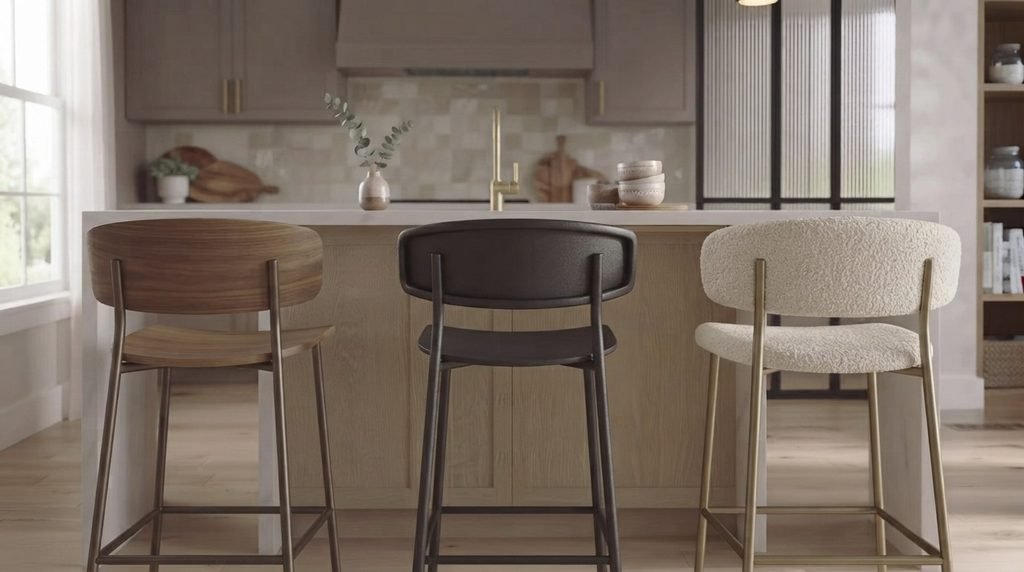
There’s no single “best” material.
The better question is:
What material makes sense for the way you use the space?
Wood
Wood can bring warmth and natural texture to a kitchen.
It’s particularly attractive in:
- Farmhouse-inspired kitchens
- Transitional spaces
- Warm minimalist interiors
- Traditional homes
Different finishes can dramatically change the appearance.
Metal
Metal stools can suit modern and industrial spaces.
They’re often visually clean and can pair well with:
- Stainless-steel appliances
- Dark cabinetry
- Industrial lighting
- Contemporary countertops
However, comfort depends heavily on the seat design rather than the frame material alone.
Upholstered
Upholstery can make a stool feel more like a proper dining seat.
That’s appealing if your island doubles as an everyday eating area.
The trade-off is maintenance. Kitchens are busy places, and spills happen.
If you have children, pets, or simply cook frequently, consider how easily the upholstery can be cleaned before choosing a fabric.
Should You Choose Swivel Low Back Bar Stools?
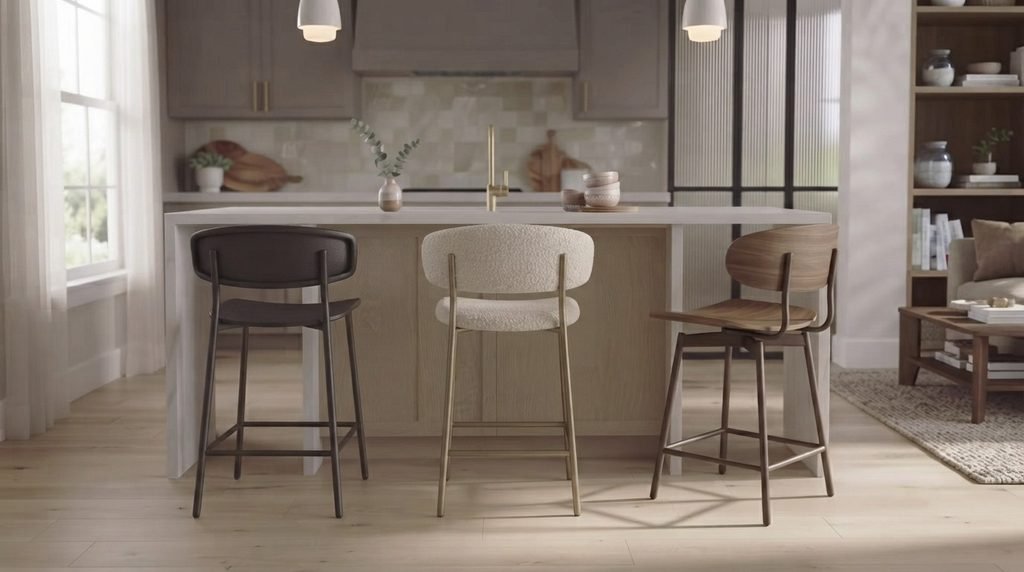
A swivel can be convenient, especially in a social kitchen.
Instead of repeatedly dragging the stool backward and forward, you can rotate to face the room.
That can be useful when:
- Talking with someone cooking
- Watching television
- Getting in and out frequently
- Entertaining guests
But don’t assume every swivel mechanism is equally useful.
Consider whether:
- The swivel returns to position
- The mechanism feels stable
- The stool has enough room to rotate
- The extra movement is actually useful in your layout
For a simple breakfast counter, a fixed stool may be perfectly adequate.
Low Back Bar Stools vs. Full-Back Stools
If you’re unsure between the two, think about support versus visual presence.
| Consideration | Low Back | Full Back |
| Visual openness | Excellent | Moderate |
| Back support | Moderate | Greater |
| Space-saving appearance | Usually better | Usually less compact |
| Casual kitchen use | Excellent | Excellent |
| Long sitting sessions | Depends on design | Often preferable |
| Open-plan rooms | Often works well | Can look more substantial |
Neither design is automatically superior.
For an open kitchen where you want the seating to blend into the room, low back may be the better visual choice.
For a space where people sit for long meals, a more supportive full-back design may deserve consideration.
Common Buying Mistakes to Avoid
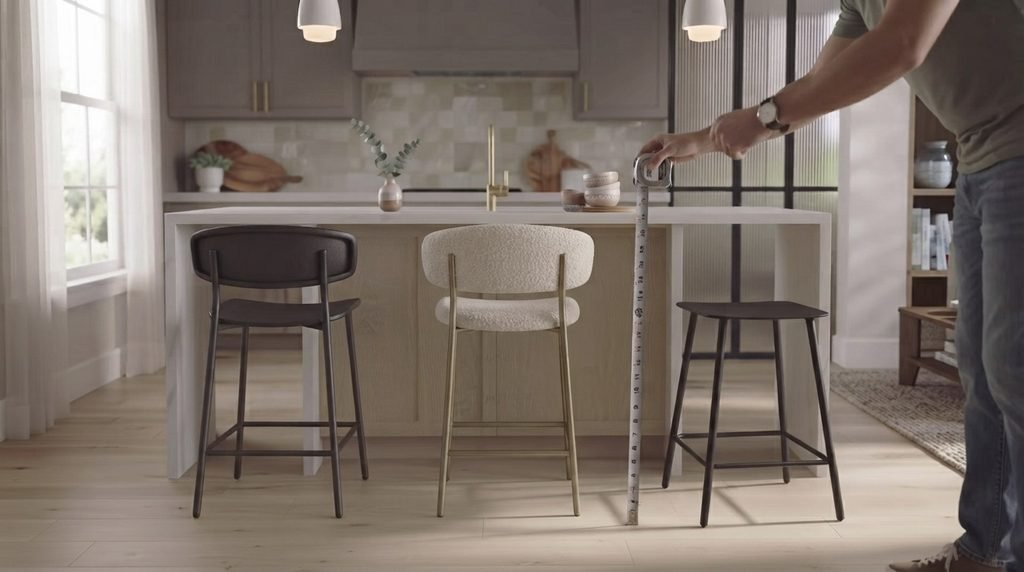
A little measuring can save you a surprisingly frustrating return.
Buying Before Measuring
This is the biggest one.
Don’t shop based solely on the words “counter stool” or “bar stool.”
Check the actual seat-height specification.
Retail categories aren’t always consistent, while the physical measurement tells you what you’re actually buying.
Forgetting the Counter’s Underside
Your countertop may be one height while the underside has an apron, bracket, or cabinet obstruction.
Measure the space your legs will actually occupy.
Choosing Style Over Comfort
A beautiful stool isn’t useful if nobody wants to sit on it.
Think about:
- Seat shape
- Back support
- Footrest
- Cushioning
- Height
before making the final decision.
Cramming Too Many Stools Together
More seats aren’t always better.
People need enough elbow and shoulder room to eat, talk, and get in and out comfortably.
Ignoring Cleaning
A light fabric may look beautiful in a showroom-style kitchen, but daily cooking can be messy.
Ask yourself:
“How much maintenance am I realistically willing to do?”
That’s often a more useful question than “Which material looks best?”
How to Make Low Back Bar Stools Look More Expensive
You don’t necessarily need the most expensive stool to create a polished kitchen.
The surrounding details matter.
Try These Design Moves
- Match the stool finish with another element in the kitchen.
- Repeat a material or texture elsewhere in the room.
- Keep stool spacing consistent.
- Avoid mixing too many unrelated finishes.
- Choose a silhouette that complements the island.
- Keep the surrounding counter visually uncluttered.
For example, a simple wood stool can feel much more intentional when its tone relates to nearby cabinetry or flooring.
Good design is often about coordination rather than price.
How to Maintain Low Back Bar Stools
Maintenance depends on the material and manufacturer’s care instructions.
In general:
Wood
- Wipe spills promptly.
- Avoid excessive moisture.
- Follow the manufacturer’s cleaning recommendations.
- Protect the finish from harsh products.
Metal
- Dust regularly.
- Wipe spills promptly.
- Use appropriate cleaners for the specific finish.
- Check joints and hardware periodically.
Upholstery
- Clean spills according to the fabric manufacturer’s instructions.
- Avoid assuming every fabric can be treated the same way.
- Vacuum or brush according to the manufacturer’s guidance.
Always follow the care instructions supplied with your specific stool.
A Simple Buying Checklist
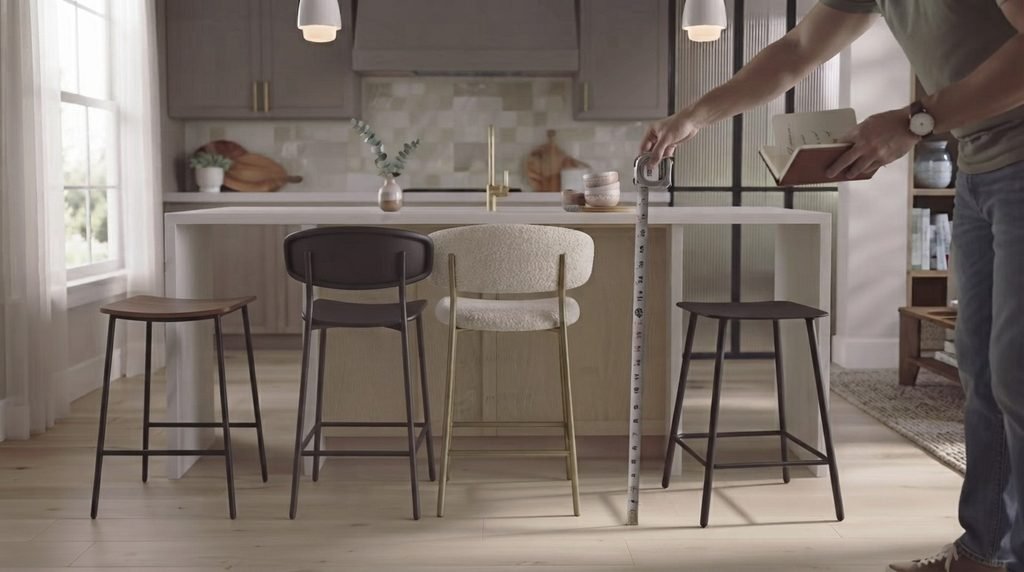
Before clicking “Buy,” run through this list:
Measure
- Counter or bar height measured
- Underside clearance checked
- Stool seat height verified
- Available width measured
- Walkway space considered
Comfort
- Seat depth feels appropriate
- Backrest provides enough support
- Footrest is positioned comfortably
- Cushioning suits your use
Design
- Finish works with the room
- Material suits your lifestyle
- Stool doesn’t visually overwhelm the kitchen
Practicality
- Cleaning requirements are manageable
- Stool can be moved easily
- Swivel feature is actually useful
- Manufacturer’s dimensions and care instructions have been checked
Are Low Back Bar Stools Good for Kitchen Islands?
Yes, they can be an excellent choice for kitchen islands when the height and dimensions are correct.
Their lower-profile backs can provide support without creating as much visual obstruction as larger chairs.
They’re especially worth considering when:
- The kitchen is open-plan.
- You want some back support.
- The island is used for casual meals.
- You want a relatively clean sightline.
- You don’t want bulky seating.
The most important factor, however, remains fit.
A beautiful low-back stool at the wrong height will still be uncomfortable.
Are Low Back Bar Stools Good for Small Spaces?
They can be. Their relatively open silhouette can make a compact kitchen feel less visually crowded.
Look for a stool with a footprint appropriate for your counter and enough room for people to move around it.
Don’t sacrifice usable legroom just to save a few inches of visual space.
What Is the Best Height for Low Back Bar Stools?
There isn’t one universal height.
For many US kitchens, a 24–27 inch seat is commonly associated with counter-height surfaces around 34–36 inches, while 28–30 inch seats are commonly used with 40–42 inch bar-height surfaces.
However, measure your actual counter and aim for an appropriate gap between the seat and underside before purchasing.
Frequently Asked Questions
Are low back bar stools comfortable?
They can be, particularly when the seat height, depth, back support, and footrest are appropriate. Comfort depends on the complete design rather than the height of the backrest alone.
What is the difference between low-back and backless stools?
Low-back stools have a partial backrest for additional support, while backless stools have no backrest. Backless designs generally have a smaller visual profile, while low-back designs offer a balance between openness and support.
Should bar stools have a back?
A backrest is useful if you expect people to sit for longer periods. For occasional seating, a backless design may be sufficient. Your household’s habits should guide the decision.
How much clearance should there be between a stool and counter?
A common starting point is around 10–12 inches between the seat and the underside of the counter, although the ideal clearance can vary based on the furniture and user.
Can low back bar stools work with a kitchen island?
Yes. They can work particularly well with kitchen islands when the stool height matches the island and there is sufficient room for knees, feet, and movement.
Are swivel stools worth it?
They can be useful when people frequently turn between the kitchen, dining area, and living space. If the stool is rarely moved or rotated, a fixed design may be simpler.
How many stools should fit at an island?
That depends on the usable length and stool width. Don’t judge by appearance alone. Allow enough personal space between seats for comfortable eating and movement.
What should I check before buying?
Start with seat height, available width, clearance, seat depth, back support, footrest design, material, and cleaning requirements. These practical details matter more than choosing a stool simply because it looks good in a product photo.
Final Takeaway
Low back bar stools can be a smart choice when you want a balance of comfort, support, and visual openness. The trick is to shop from the measurements outward: check your counter height, leave enough clearance, consider seat width and depth, and choose materials that match the way your household actually uses the space.
A stool may catch your eye because of its finish or shape, but fit is what makes it work. Take a few minutes to measure before you buy, and you’re much more likely to end up with seating that looks good and gets used every day.