A pea pod that practically begs to be picked is one of those little gardening pleasures that’s hard to beat. The vines climb, the pods fill out, and suddenly there’s something fresh and crunchy waiting right outside the kitchen door.
But there’s a catch: “snappy pea” and “snap pea” aren’t always referring to exactly the same thing.
“Snap pea” is the familiar term for edible-pod peas, while ‘Snappy’ is also used as the name of a specific pea cultivar. The ‘Snappy’ cultivar is described as a tall-vine pea producing large pods, with reported resistance to powdery mildew and an approximate maturity period of 63 days.
So, whether you’re looking for information about a specific snappy pea variety or simply want to grow delicious snap peas, understanding the difference is a useful place to start.
The short answer: Snappy or snap peas grow best in cool conditions, fertile and well-drained soil, consistent moisture, and—when you’re growing a climbing variety—reliable support. Harvesting at the right moment is what helps preserve that crisp, sweet texture
What Is a Snappy Pea?
Snappy pea can refer to the ‘Snappy’ pea cultivar, while snap pea is the broader name for a type of edible-pod pea.
Peas belong to the legume family, and several familiar garden types are grown for different purposes.
The main categories gardeners encounter include:
- English peas: The seeds are removed from the pod before eating.
- Snow peas: The flat, tender pods are eaten while the peas inside are still small.
- Snap peas: The pod is fleshy and edible, with relatively developed peas inside.
- Snappy: A cultivar name that may refer specifically to the ‘Snappy’ pea variety.
The distinction becomes important when you’re buying seeds.
A packet labeled with a specific cultivar name may have different requirements from another pea variety—even if both produce edible pods.
Snappy Pea at a Glance
| Feature | Snappy pea |
| Plant | Pea (Pisum sativum) |
| Growth habit | Tall/vining for the documented ‘Snappy’ cultivar |
| Pods | Large pods |
| Approximate maturity | Around 63 days |
| Season | Cool-season crop |
| Support | Recommended for tall vines |
| Disease note | Powdery-mildew resistance reported for ‘Snappy’ |
Days to maturity are estimates, not promises. Weather, soil, variety, and growing conditions can all affect when you’ll actually harvest.
Snappy Pea vs. Snap Pea: What’s the Difference?
Here’s the simplest way to look at it:
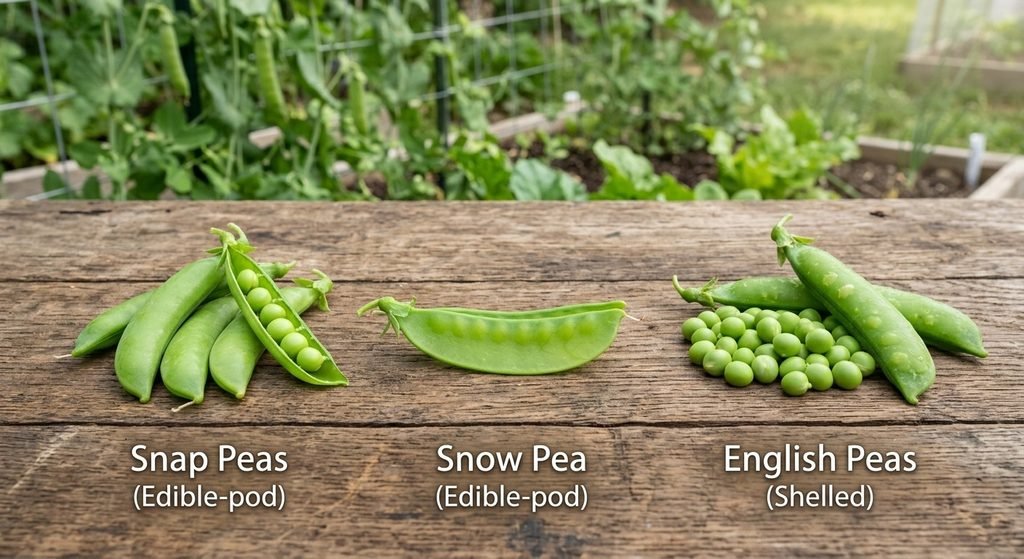
Snap pea is a type of edible-pod pea. Snappy can be the name of a particular cultivar.
That distinction prevents a surprisingly common gardening mix-up.
Snap peas are harvested for both the peas and the pod. Unlike English peas, you don’t normally shell the peas before eating them.
| Type | Pod eaten? | Main feature |
| Snap pea | Yes | Plump, crisp edible pod |
| Snow pea | Yes | Flat, tender pod |
| English pea | No | Sweet peas inside the shell |
| ‘Snappy’ | Depends on cultivar description | Specific named pea variety |
If you’re shopping for seeds, don’t rely solely on a common name. Read the variety description on the packet.
That’s where you’ll find information about plant height, maturity, disease resistance, spacing, and whether support is required.
How to Grow Snappy Pea
Growing a snappy pea plant isn’t especially difficult. The biggest trick is getting the timing right.
Peas are cool-season vegetables. They generally perform better before hot summer weather arrives, so planting too late can result in disappointing growth even when everything else looks right.
Choose the Right Planting Time
Plant peas according to your local climate rather than a fixed calendar date.
In many areas, gardeners sow peas in early spring. In mild climates, another growing window may be possible later in the year.
Consider:
- Local frost dates
- Soil temperature
- Expected temperatures
- Your particular pea variety
- How quickly hot weather arrives
Peas can tolerate cool conditions, but prolonged heat can reduce performance.
A good rule: Think about the season your pea plant wants, not simply the month printed on a gardening calendar.
Pick a Sunny Location
Choose a location with good sunlight and airflow.
A productive pea bed should also have soil that drains well.
Peas don’t appreciate sitting in saturated soil. Poor drainage can create root problems and can make otherwise healthy plants struggle.
Aim for:
- Good sunlight
- Loose soil
- Reliable drainage
- Reasonable fertility
- Consistent moisture
Prepare the Soil
Peas don’t require complicated soil preparation.
Start by loosening compacted soil and incorporating suitable organic matter if the soil structure needs improvement.
A soil pH around 5.8 to 7.0 is commonly recommended for peas.
Avoid the temptation to add large quantities of fertilizer without first considering what your soil actually needs.
Healthy soil structure is often more important than throwing more products at the planting bed.
Sow the Seeds
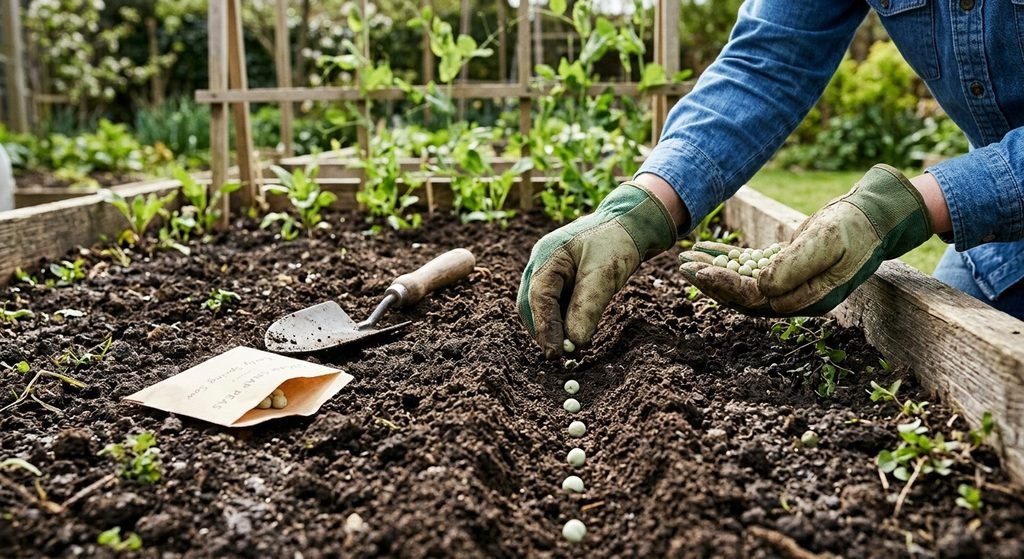
Direct sowing is generally the simplest approach for peas.
Follow the specific seed packet for spacing and depth. General pea-growing guidance commonly places seeds around 1 inch deep, although exact recommendations can vary.
After planting, keep the soil evenly moist.
Don’t let the seedbed swing repeatedly from bone-dry to soaking wet.
Does a Snappy Pea Need a Trellis?
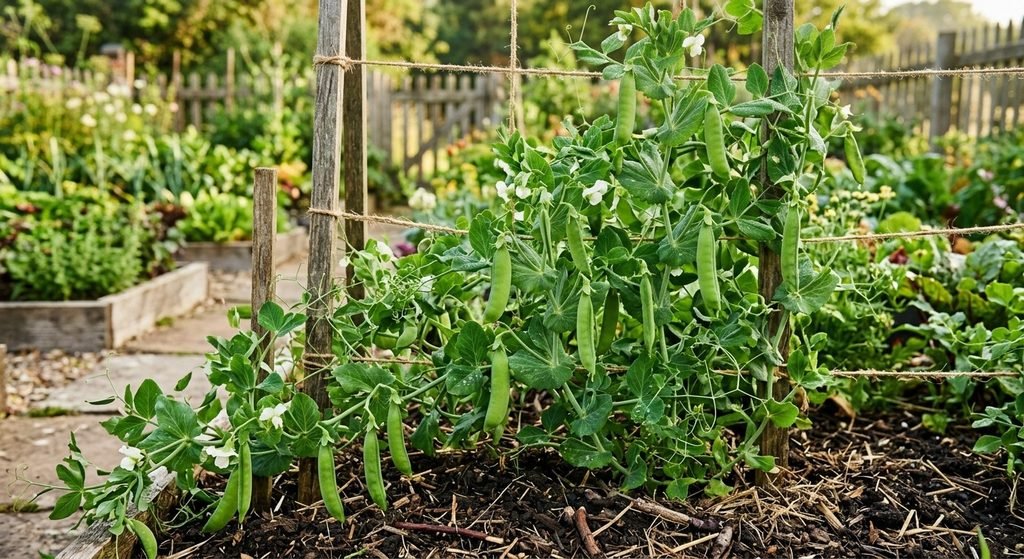
If you’re growing a tall or climbing snappy pea variety, yes—a trellis or other sturdy support is a smart choice.
Tall vines don’t stay neatly upright on their own.
Without support, they can sprawl across the soil, tangle together, and become much harder to harvest.
A trellis can help:
- Keep vines upright
- Improve airflow
- Make pods easier to find
- Reduce sprawling
- Keep foliage off wet soil
- Make harvesting more comfortable
Suitable supports include:
- Pea netting
- Garden trellises
- String supports
- Stakes
- Wire fencing
- Lightweight garden panels
Install Support Early
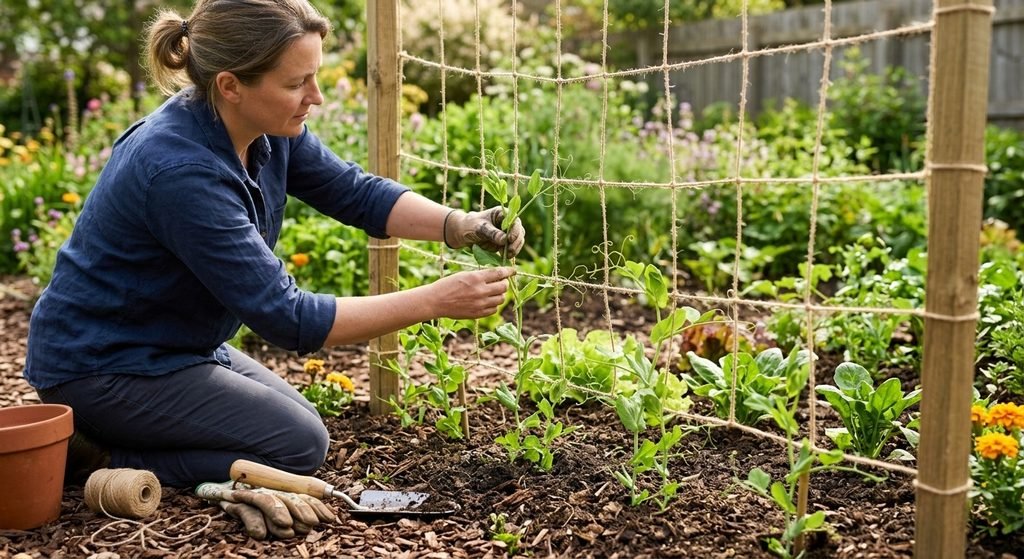
This is one of those gardening jobs that’s easier to do before you think you need it.
Once pea vines have become tangled on the ground, trying to install support underneath them can damage stems.
Put the trellis in place before the plants become large enough to sprawl.
What About Compact Pea Varieties?
Not every snap pea is a towering climber.
Some compact varieties are specifically bred to remain short enough that extensive trellising isn’t necessary.
That’s why checking the variety’s mature height is important.
If you’re gardening on a balcony or patio, a compact cultivar may be considerably easier to manage than a tall-vining variety.
How Much Sun Does a Snappy Pea Need?
Snappy pea plants generally perform best in a sunny garden location.
Good sunlight helps plants produce healthy foliage and supports flowering and pod development.
However, sunlight isn’t the only consideration.
A plant receiving plenty of sun can still struggle if:
- The soil stays waterlogged
- Temperatures become excessively hot
- The roots are damaged
- The plant lacks support
- Pests are feeding heavily
Think of sunlight as one part of the growing equation rather than a cure-all.
How Often Should You Water Snappy Peas?
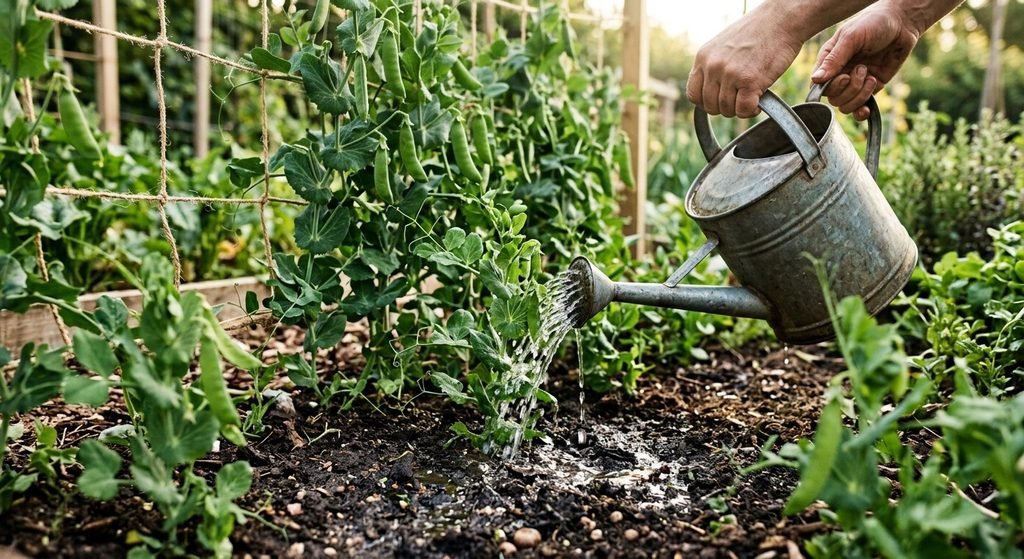
Keep the soil consistently moist but not waterlogged.
Pea plants need adequate moisture during active growth, flowering, and pod formation.
Pay particular attention during dry weather.
Instead of watering the leaves lightly every day, aim to provide moisture to the root zone when the soil needs it.
Mulch can help slow evaporation and reduce rapid moisture fluctuations.
Just keep mulch slightly away from the plant stems.
Signs Your Pea Plants May Need Water
Watch for:
- Wilting leaves
- Dry soil several inches below the surface
- Slower growth
- Poor pod development
On the other hand, persistently soggy soil is a warning sign too.
Good gardening isn’t about giving plants as much water as possible. It’s about giving them the right amount at the right time.
Should You Fertilize Snappy Peas?
Peas are legumes, so their nutrient needs aren’t identical to those of many leafy vegetables.
If your soil is reasonably fertile, heavy fertilization isn’t necessarily beneficial.
Before adding fertilizer, consider whether the problem could instead be:
- Poor drainage
- Incorrect watering
- Heat stress
- Root damage
- Pest pressure
- Disease
- Insufficient sunlight
If soil fertility is genuinely poor, use a soil test where practical and follow recommendations appropriate for your garden.
More fertilizer isn’t automatically better.
Common Snappy Pea Problems
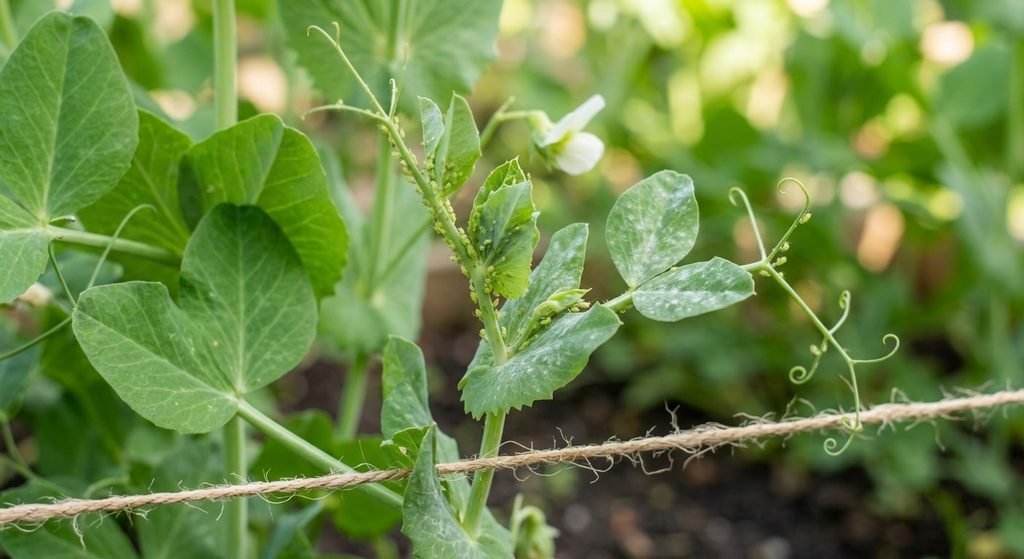
Even easy crops can have bad days.
Knowing what to look for makes troubleshooting much easier.
Powdery Mildew
Powdery mildew appears as a pale, powdery coating on plant surfaces.
Good airflow can help reduce conditions that favor fungal problems.
The documented ‘Snappy’ cultivar has been reported as resistant to powdery mildew, but resistance doesn’t mean complete immunity.
Keep plants well spaced and avoid creating unnecessarily humid, stagnant conditions around dense foliage.
Aphids
Aphids are small insects that can cluster around tender plant growth.
Inspect:
- Young shoots
- Leaf undersides
- Flowers
- Developing pods
A small pest problem is much easier to address when you notice it early.
Root Problems
Consistently wet soil can damage pea roots and contribute to root rot.
If a plant is declining despite adequate moisture, don’t automatically water it more.
Check the soil.
If it’s constantly saturated, the problem may be too much water rather than too little.
Yellow Leaves
Yellowing leaves can have several causes.
Possible factors include:
- Aging foliage
- Nutrient problems
- Water stress
- Root problems
- Disease
- Environmental stress
Look at the entire plant rather than diagnosing it from one yellow leaf.
When Should You Harvest Snappy Peas?
Harvest snappy or snap peas when the pods are plump, crisp, and tender.
This is where timing really matters.
Wait too long and the pods can become tougher and less pleasant to eat.
Check the plants frequently once pods begin developing.
Look for pods that are:
- Full but still tender
- Bright green
- Crisp
- Firm
- Easy to snap
For edible-pod snap peas, the goal isn’t necessarily to wait until the peas inside become huge.
You want the pod and peas together at a pleasant eating stage.
How to Pick Peas Without Damaging the Plant
Hold the vine gently with one hand.
Use the other hand to remove the pod.
Avoid yanking pods aggressively because you can damage the vine or nearby flowers.
Harvesting regularly also makes it easier to spot new pods before they become overmature.
What Happens If You Harvest Snappy Peas Too Late?
The pods can become tougher and more fibrous.
The peas inside may become more prominent while the pod loses some of its tender texture.
That’s why harvesting every day or two during a productive period can be worthwhile.
A pea patch can go from:
“Not quite ready” → “perfect” → “I should’ve picked those yesterday”
surprisingly quickly.
How Do You Store Fresh Snappy Peas?
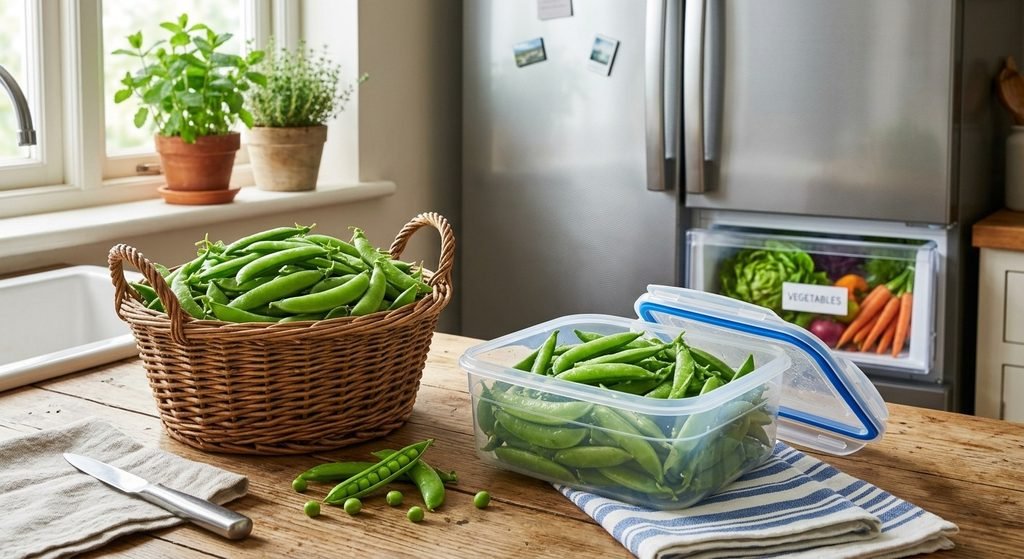
Refrigerate freshly harvested peas soon after picking and use them while they’re still crisp.
Fresh snap peas are best when their texture remains firm and juicy.
A simple storage routine is:
- Harvest the pods.
- Remove damaged pods.
- Refrigerate them promptly.
- Keep them in a suitable container or produce bag.
- Avoid unnecessary moisture buildup.
- Use them as soon as practical.
For the best quality, don’t treat freshly picked peas like a vegetable that can sit on the counter for several days.
The garden gives you the advantage of freshness—use it.
Can You Freeze Snappy Peas?
Yes, snap peas can be frozen, but blanching them first helps preserve quality.
A basic preservation process involves:
- Wash and sort the pods.
- Remove strings if required.
- Blanch the pods according to established extension guidance.
- Cool them quickly.
- Drain thoroughly.
- Package them appropriately.
- Freeze promptly.
Freezing is generally preferred over home canning or drying for edible pea pods because those methods can produce undesirable texture.
For food preservation, follow tested extension or food-safety instructions rather than improvising.
How Do You Eat Snappy Peas?
One reason snap peas are so popular is their versatility.
You can eat tender pods:
- Raw
- In salads
- With dips
- Stir-fried
- Steamed
- In noodle dishes
- With pasta
- As a vegetable side
- Added to soups
The pod and peas can be eaten together.
Raw Snappy Peas
Raw pods provide the maximum crunch.
They’re excellent as a quick garden snack or sliced into salads.
Cooked Snappy Peas
For cooked dishes, keep the cooking time relatively short if you want to preserve their crisp texture.
A quick stir-fry is often enough.
Overcooking can turn a crisp pod into something soft and dull.
Can You Grow Snappy Peas in Containers?
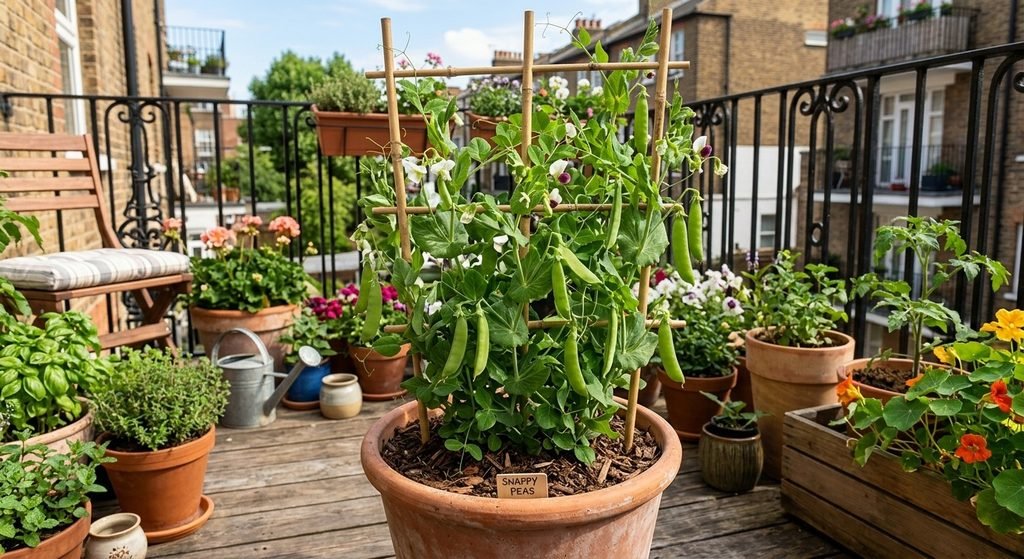
Yes, but compact varieties are usually easier for container gardening.
Before purchasing seed, look at:
- Mature height
- Growth habit
- Support requirements
- Container recommendations
- Days to maturity
A compact variety can work well in a patio pot, while a tall-vining cultivar may require a much more substantial support system.
Make sure the container has drainage holes.
A pot that holds water indefinitely isn’t doing your pea plants any favors.
Container Growing Tips
For better results:
- Use a quality potting mix.
- Choose a container large enough for the variety.
- Ensure excellent drainage.
- Place the container where it receives suitable sunlight.
- Add support early if required.
- Monitor moisture more frequently than you would in a garden bed.
Containers can dry out faster, especially during warm weather.
Snappy Pea Growing Checklist
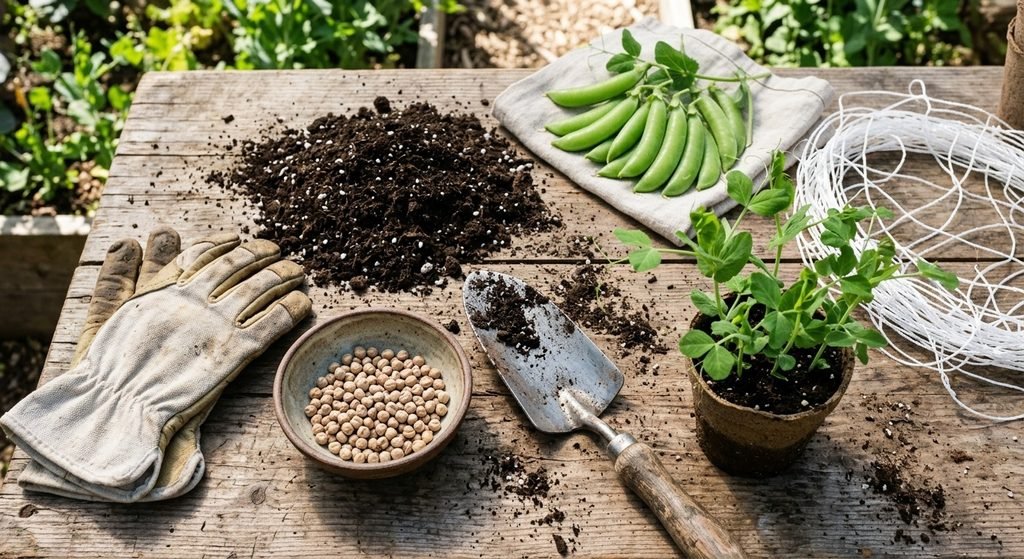
Want the short version?
Here’s what matters most:
- Choose the right variety.
- Plant during suitable cool weather.
- Use well-drained soil.
- Give plants adequate sunlight.
- Keep soil consistently moist.
- Install support early for tall vines.
- Watch for pests and disease.
- Harvest pods while they’re crisp and tender.
- Refrigerate fresh pods promptly.
- Blanch peas before freezing.
Small details add up.
A good trellis won’t compensate for waterlogged soil, and perfect soil won’t rescue plants planted into brutal summer heat. Successful gardening usually comes down to getting several basic things right at the same time.
Snappy Pea vs. Other Pea Types
| Feature | Snap/Snappy Pea | Snow Pea | English Pea |
| Pod eaten | Yes | Yes | No |
| Pod shape | Plump | Flat | Usually discarded |
| Peas inside | Developed | Small | Main edible part |
| Typical texture | Crisp | Tender and crisp | Soft when cooked |
| Common uses | Raw, salads, stir-fries | Stir-fries, salads | Side dishes, soups |
| Support | Variety-dependent | Variety-dependent | Variety-dependent |
The biggest difference is what you’re harvesting.
With snap peas, the pod itself is part of the meal.
Is Snappy Pea a Good Choice for Beginners?
Yes, especially if you choose a variety that fits your available space.
Peas are relatively approachable, but beginners often run into the same few issues:
Planting Too Late
Hot weather can arrive before the crop reaches its best production.
Ignoring Plant Height
A tall vine in a tiny unsupported garden bed can become difficult to manage.
Waiting Too Long to Harvest
Tender pods can quickly become tougher.
Overwatering
More water isn’t always better.
Neglecting the Trellis
Support is much easier to install before vines become tangled.
Get those details right and growing peas becomes considerably more straightforward.
Frequently Asked Questions About Snappy Pea
What is a snappy pea?
Snappy pea may refer to the named ‘Snappy’ pea cultivar, while snap pea is the broader term for edible-pod peas. The exact characteristics depend on the variety you’re growing.
Are snappy peas the same as snap peas?
Not necessarily. Snap pea is a category of edible-pod peas, while ‘Snappy’ can be a specific cultivar name.
Always check the seed packet for the exact variety.
Do snappy peas need a trellis?
Tall, vining varieties generally benefit from sturdy support. Compact varieties may need little or no trellis.
Check the mature plant height before planting.
When should I harvest snappy peas?
Harvest when the pods are plump, crisp, and tender. Don’t wait until the pods become tough or overly mature.
Can you eat snappy pea pods?
If you’re growing an edible-pod snap pea variety, yes, the pod and peas are eaten together.
Can snappy peas be grown in pots?
Yes. Compact varieties are particularly suitable for containers, while tall varieties may need a larger container and sturdy support.
How much sun do snappy peas need?
They generally perform best in a sunny location, although exact requirements can vary by variety and climate.
Can snappy peas tolerate frost?
Peas are cool-season crops and can tolerate some cold conditions, but young plants and developing crops can still be affected by severe or prolonged freezes.
Can you freeze snappy peas?
Yes. Blanching before freezing is recommended to help maintain quality.
Why are my snappy pea leaves turning yellow?
Yellowing can result from several issues, including water stress, nutrient problems, aging leaves, root problems, disease, or environmental stress. Examine the plant and growing conditions before choosing a treatment.
Final Takeaway
Growing a snappy pea doesn’t have to be complicated. Give the plants cool-season conditions, well-drained soil, consistent moisture, and sturdy support when needed, and they’ll have a much better chance of producing healthy, tender pods.
The biggest difference often comes down to timing. Plant at the right time, watch for pests and disease, and harvest the pods while they’re still plump, crisp, and tender. If you’re growing in containers, choose a compact variety that matches your available space.
With a little planning and regular harvesting, snappy peas can be a rewarding addition to a home vegetable garden—and a delicious one, too.