An azalea covered in bright flowers can instantly make a room feel more alive. It looks effortless—until a few days later, when the flowers begin to fade, the leaves curl, or the soil seems to dry out almost overnight.
That’s when many gardeners discover an important truth: indoor azaleas aren’t quite like ordinary houseplants.
They prefer cool conditions, bright but suitable light, consistently moist soil, good drainage, and adequate humidity. Once those basics are right, caring for an azalea becomes much less mysterious.
This guide to azaleas indoor care explains exactly what your plant needs, how to water it, where to place it, what soil to use, and what to do when leaves or flowers start showing signs of trouble.
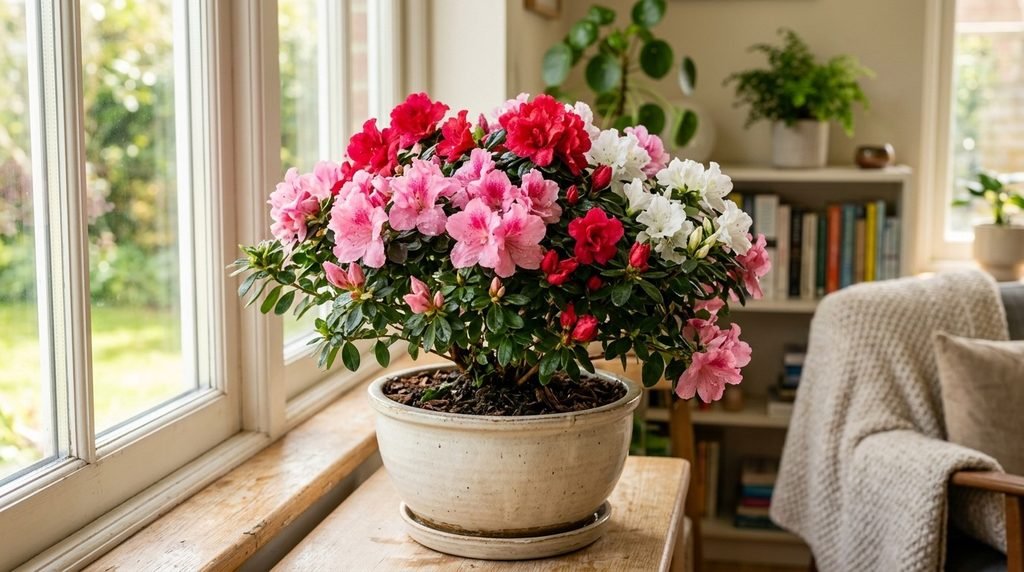
The Bottom Line
Successful indoor azalea care depends on keeping the plant’s environment stable.
Focus on these essentials:
- Give it bright light without prolonged harsh sunlight.
- Keep the soil consistently moist, but never permanently waterlogged.
- Use an acidic, well-draining growing medium.
- Keep the plant in a cooler location away from heaters.
- Provide reasonable humidity.
- Feed lightly during active growth.
- Remove faded flowers.
- Watch regularly for pests and signs of stress.
The biggest mistake is usually not neglect. It’s giving an azalea conditions that are too hot, too dry, or too inconsistent.
Can Azaleas Grow Indoors?
Yes, azaleas can grow indoors, particularly the florist or indoor azaleas commonly sold as flowering potted plants.
Many indoor azaleas belong to Rhododendron simsii and related hybrids. They’re valued for their compact growth and spectacular flowers.
However, these plants can be more demanding than typical houseplants. The Royal Horticultural Society recommends cool, bright, humid conditions and warns that indoor azaleas can deteriorate in hot, dry environments.
That explains why a plant can look fantastic in a garden center and struggle after being moved into a warm home.
Indoor Azaleas vs. Outdoor Azaleas
Not every azalea is intended to spend its entire life inside.
Landscape azaleas are generally selected for outdoor growing, while florist azaleas are commonly sold as indoor flowering plants.
Before moving an indoor azalea outdoors, identify the plant and consider your local climate. A plant sold as a temporary indoor display may not have the same cold tolerance as an outdoor landscape cultivar.
Which Azaleas Are Suitable for Indoor Growing?
Look for plants specifically labeled as:
- Indoor azaleas
- Florist azaleas
- Potted azaleas
- Rhododendron simsii cultivars
When buying one, inspect the plant carefully.
Choose a specimen with:
- Healthy green foliage
- Plenty of unopened flower buds
- No obvious insects
- No widespread leaf discoloration
- Moist but not saturated soil
- A container with drainage
A healthy starting plant makes indoor care much easier.
Azaleas Indoor Care: The Basic Requirements
Indoor azalea care isn’t complicated because the plant needs dozens of things.
It’s challenging because it doesn’t tolerate extremes particularly well.
A warm room, dry air, intense sunlight, and inconsistent watering can combine to create problems surprisingly quickly.
Let’s break down the essentials.
How Much Light Does an Indoor Azalea Need?
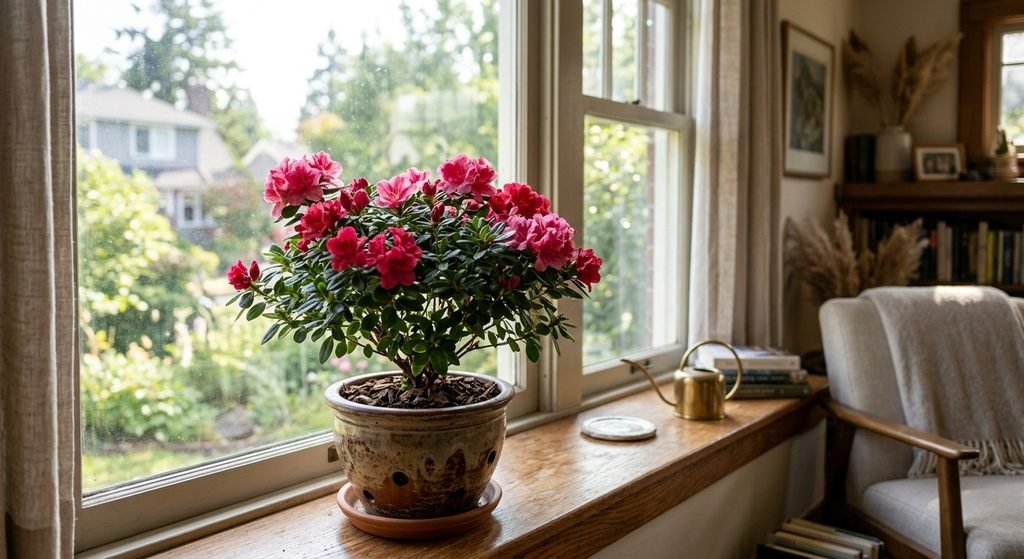
An indoor azalea needs plenty of bright light, but prolonged intense sunlight and heat can stress the plant.
A bright window can be an excellent location, particularly if the light is filtered or moderated.
Good options include:
- A bright east-facing window
- A bright location with filtered daylight
- A window where the plant receives morning sun
- A spot slightly away from very intense afternoon sunlight
Watch the plant and its surroundings.
A window may provide excellent light but become extremely hot during the afternoon. In that case, moving the azalea slightly away from the glass can make a significant difference.
Signs Your Azalea Needs More Light
Watch for:
- Weak or stretched growth
- Poor flowering
- Fewer flower buds
- Generally dull-looking foliage
Signs of Excessive Sun or Heat
Possible warning signs include:
- Scorched foliage
- Rapidly drying soil
- Brown leaf edges
- Wilting despite moist soil
The goal isn’t maximum sunlight.
It’s bright light without excessive heat stress.
What Temperature Is Best for an Indoor Azalea?
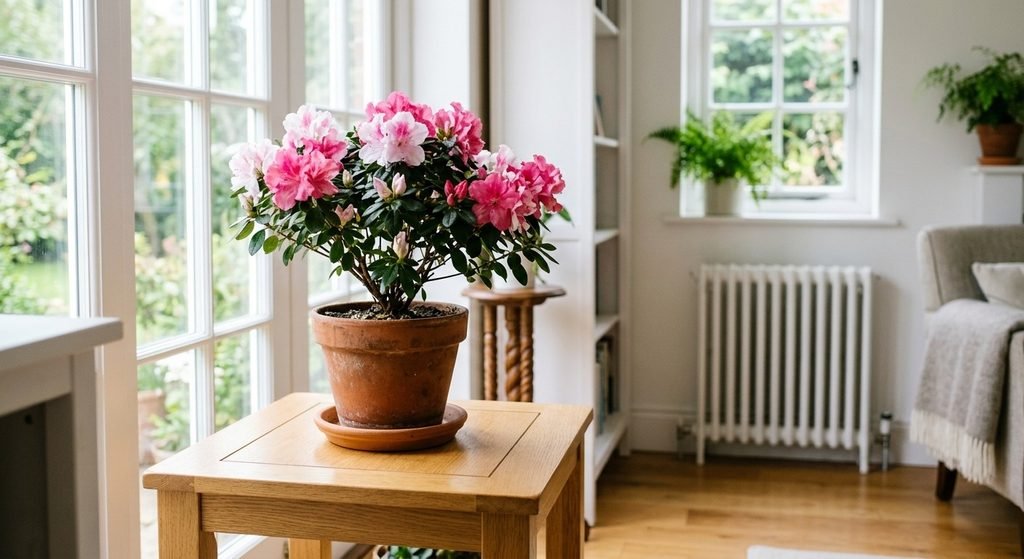
Azaleas generally prefer cooler conditions than many common houseplants.
The Royal Horticultural Society gives cool temperature ranges for indoor azaleas, with approximately 10–15°C (50–59°F) suggested for certain flowering indoor azaleas and around 13–16°C (55–61°F) for plants being grown on.
You don’t have to make your entire house cold.
Instead, pay attention to where the plant sits.
Avoid placing it directly beside:
- Radiators
- Space heaters
- Fireplaces
- Heating vents
- Hot appliances
- Very warm windows
A bright, cool room can be far more suitable than a warm room with dry air.
Do Indoor Azaleas Need Humidity?
Yes, azaleas generally perform better when the surrounding air isn’t excessively dry.
Indoor heating can dramatically reduce humidity, especially during colder months.
If the air is dry, consider:
- Running a room humidifier.
- Grouping plants together.
- Using a pebble tray with the pot elevated above the water.
- Moving the azalea away from heating vents.
Avoid relying on frequent leaf misting as the only humidity solution. Wet foliage that stays damp for extended periods can create its own problems.
Good humidity should go together with reasonable air circulation.
How Often Should You Water an Indoor Azalea?
Water when the growing medium is beginning to dry, and don’t allow the root ball to become completely dry.
This doesn’t mean watering automatically every two or three days.
Indoor conditions vary.
A plant in a cool room may use water slowly. One near a bright window in a warm room may dry much faster.
How to Check Before Watering
Before reaching for the watering can:
- Feel the growing medium.
- Check whether it’s still moist.
- Look at the foliage.
- Consider how quickly the pot has been drying recently.
- Make sure the drainage holes are open.
When the medium is beginning to dry, water thoroughly.
Allow excess water to drain away.
Don’t leave the pot sitting in collected water.
Why Letting an Azalea Dry Out Is a Problem
Azaleas can react badly to drought.
A severely dry root ball can lead to:
- Wilting
- Leaf drop
- Brown foliage
- Flower-bud problems
- General plant stress
Sometimes the soil becomes so dry that water runs down the sides of the pot without properly wetting the root ball.
If that happens, the plant may need gradual rehydration rather than simply a quick splash of water.
Why Overwatering Is Also Dangerous
Here’s the tricky part.
An azalea likes moisture—but that doesn’t mean it likes sitting in saturated soil.
Constantly waterlogged growing medium can reduce oxygen around the roots and contribute to root problems.
So remember:
Moist is good. Permanently soggy is not.
This balance is one of the most important parts of indoor azalea care.
What Water Is Best for Indoor Azaleas?
Water quality can matter, especially if your household water is very hard or alkaline.
The Royal Horticultural Society recommends rainwater for indoor azaleas and notes that hard water can contribute to problems because of its alkalinity.
If rainwater is available and safely collected, it can be a useful option.
If you use tap water, pay attention to long-term changes in the plant.
Persistent yellowing shouldn’t automatically be treated with fertilizer. Water quality, soil pH, drainage, and root health may all deserve attention.
What Soil Is Best for Indoor Azaleas?
Azaleas prefer acidic growing conditions and need a growing medium that drains well while retaining enough moisture.
A quality ericaceous compost or potting mix designed for acid-loving plants is a sensible choice.
Look for products labeled for:
- Azaleas
- Rhododendrons
- Camellias
- Blueberries
- Other acid-loving plants
The exact ingredients can vary, but the important principles are the same:
Acidic + moisture-retentive + well-draining.
Why Soil pH Matters
Azaleas don’t simply need nutrients.
They need those nutrients to remain available under suitable soil conditions.
An alkaline growing medium can interfere with nutrient availability and contribute to yellowing.
Adding more fertilizer isn’t always the answer.
Sometimes the better solution is correcting the growing environment.
How to Fertilize Indoor Azaleas
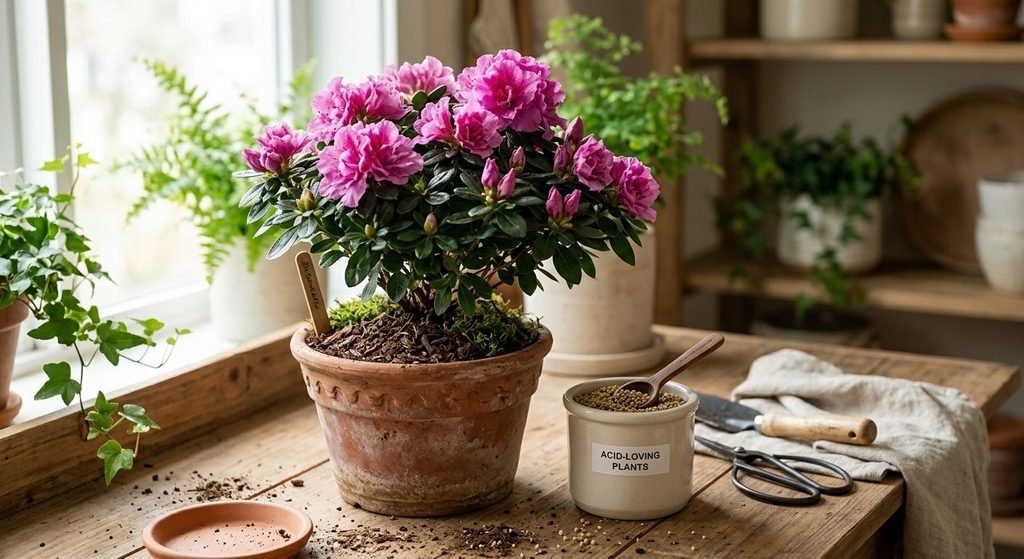
Indoor azaleas generally need modest feeding rather than heavy fertilization.
Feed during active growth using a fertilizer appropriate for acid-loving plants and follow the product’s instructions.
Avoid the temptation to fertilize every time the plant looks unhappy.
If the problem is:
- Poor light
- Dry roots
- Waterlogged soil
- Excessive heat
- Unsuitable soil
fertilizer won’t solve the underlying issue.
When Should You Fertilize?
A reasonable approach is to focus feeding on periods of active growth and reduce unnecessary feeding when the plant isn’t actively growing.
After flowering, the plant can benefit from appropriate care as it develops new growth.
Always follow the fertilizer label for dilution and frequency.
Can Too Much Fertilizer Hurt?
Absolutely.
Excess fertilizer can contribute to salt buildup and root stress.
More fertilizer doesn’t automatically mean more flowers.
In fact, overfeeding can make an already stressed plant worse.
What to Do After an Indoor Azalea Finishes Blooming
This is the moment when many people give up on their azalea.
Don’t.
The flowers may be finished, but the plant isn’t necessarily finished.
After flowering:
- Remove faded flowers.
- Continue providing good light.
- Keep the soil appropriately moist.
- Maintain suitable temperatures.
- Feed appropriately during active growth.
- Prune lightly if necessary.
- Check whether repotting is actually needed.
The Royal Horticultural Society recommends removing dead flowers and notes that light pruning can be carried out after flowering.
Should You Prune an Indoor Azalea?
Light pruning after flowering can help maintain the plant’s shape.
Remove:
- Dead growth
- Weak or damaged shoots
- Unwanted long growth
- Spent flowers
Avoid aggressive pruning into old woody stems unless you know the plant can recover from it.
Why Is My Indoor Azalea Losing Leaves?
Leaf drop can result from watering problems, heat, environmental changes, or other stresses.
Don’t diagnose the problem from the leaves alone.
Check the soil and the plant’s location at the same time.
Possible Causes of Leaf Drop
The soil is too dry:
The plant may be experiencing drought stress.
The soil stays saturated:
Poor drainage or excessive watering can damage roots.
The room is too hot:
High temperatures can stress an azalea and increase moisture loss.
The air is too dry:
Low humidity can worsen stress, especially in heated rooms.
The plant has recently moved:
A sudden change in temperature, light, or moisture can cause adjustment stress.
There are pests:
Inspect leaves and stems carefully.
Some older leaves may also naturally drop as the plant replaces older foliage.
Why Is My Azalea Not Blooming?
If your azalea produces leaves but no flowers, don’t immediately reach for more fertilizer.
Potential causes include:
- Insufficient light
- Poor growing conditions
- Excessive heat
- Water stress
- Unsuitable temperatures
- Inadequate nutrition
- The effects of commercial forcing
Flowering azaleas sold in stores may have been grown under controlled conditions specifically to flower at a particular time.
That means the next flowering cycle at home may not look exactly like the first one.
Patience matters.
Common Indoor Azalea Problems
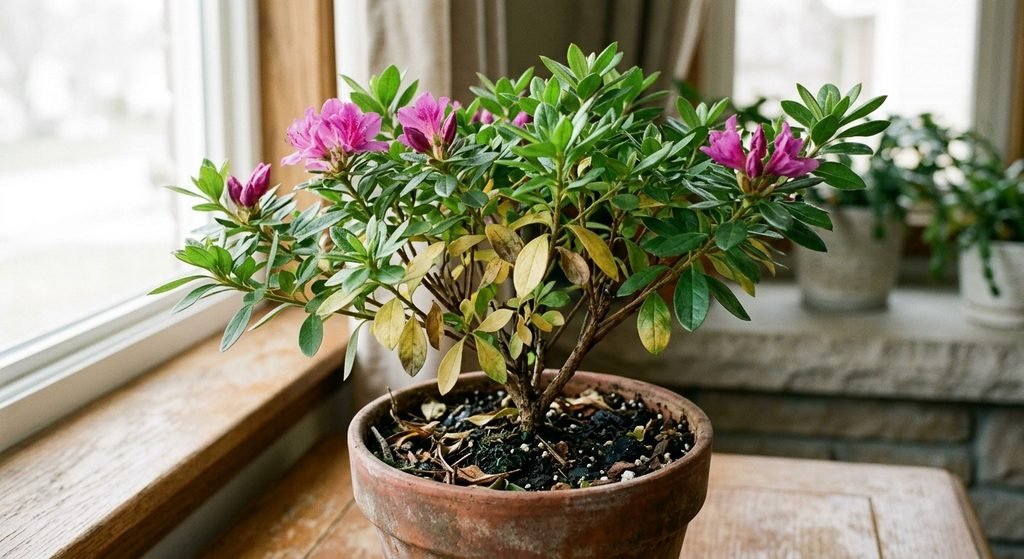
A quick troubleshooting check can help you avoid changing everything at once.
Yellow Leaves
Possible causes include:
- Overwatering
- Poor drainage
- Alkaline growing conditions
- Nutrient availability problems
- Root stress
Start by checking the soil.
Brown Leaves
Possible causes include:
- Dry roots
- Heat stress
- Very dry air
- Root damage
- Excessive sunlight
Look at both the leaf and the environment.
Wilting
Wilting doesn’t always mean the plant needs more water.
Check whether the soil is:
- Dry
- Moist
- Saturated
If it’s saturated and the plant is still wilting, damaged roots may be preventing normal water uptake.
Buds Falling Off
Flower buds may fail or fall because of:
- Excessive heat
- Dry conditions
- Water stress
- Environmental changes
Indoor azaleas generally prefer stable conditions during flowering.
Flowers Fading Too Quickly
Flowers naturally age, but excessive warmth can shorten their display.
A cooler, bright location can help preserve flowering for longer.
Indoor Azalea Pests
Indoor azaleas can experience several pest problems.
Potential pests include:
- Aphids
- Scale insects
- Whiteflies
- Spider mites
- Other sap-feeding insects
How to Inspect Your Plant
Look carefully at:
- Leaf undersides
- New growth
- Stems
- Flower buds
- Leaf joints
Look for:
- Sticky residue
- Tiny insects
- Fine webbing
- Distorted leaves
- Pale speckling
- Small bumps attached to stems or leaves
Early detection makes treatment much easier.
For a minor infestation, physically removing pests and isolating the affected plant can be useful first steps. For pesticide use, always choose a product labeled for the plant and pest and follow its directions exactly.
Should You Repot an Indoor Azalea?
Don’t repot an azalea simply because you’ve brought it home. Repot when there’s a genuine reason.
Reasons may include:
- Severely compacted growing medium
- Poor drainage
- Root-bound conditions
- A damaged container
- Degraded growing medium
The RHS recommends repotting after flowering when necessary and increasing container diameter by only around 2.5–5 cm (1–2 inches).
A huge container isn’t an upgrade.
It can hold excess moisture around a relatively small root system, making overwatering easier.
Choose a Container With Drainage
This is non-negotiable.
The pot should have functional drainage holes.
If you’re using a decorative outer container, empty collected water rather than allowing the plant’s roots to sit in it.
Can You Keep a Potted Azalea Indoors Year-Round?
Yes, but keeping an indoor azalea healthy year-round can be more challenging than keeping many common houseplants.
The difficulty is recreating the conditions the plant prefers.
A typical warm home may provide:
- Too much heat
- Too little humidity
- Inconsistent watering
- Poor light
- Dry air from heating or cooling systems
If you can provide a cool, bright location and maintain appropriate moisture, an azalea can continue growing as a potted plant.
However, don’t expect every commercially produced azalea to repeat its original flowering performance automatically.
Indoor Azalea Care at a Glance
| Care Factor | What to Aim For | Warning Sign |
| Light | Bright light without prolonged harsh sun | Weak growth or scorched foliage |
| Water | Consistently moist growing medium | Dry roots or saturated soil |
| Soil | Acidic, well-drained mix | Yellowing or poor drainage |
| Temperature | Cool conditions | Heat stress or rapid drying |
| Humidity | Reasonably humid surroundings | Dry, stressed foliage |
| Feeding | Moderate feeding during active growth | Salt buildup or root stress |
| Container | Drainage holes and modest size | Standing water |
| Pruning | Light pruning after flowering | Excessive dieback |
Quick Indoor Azalea Care Checklist
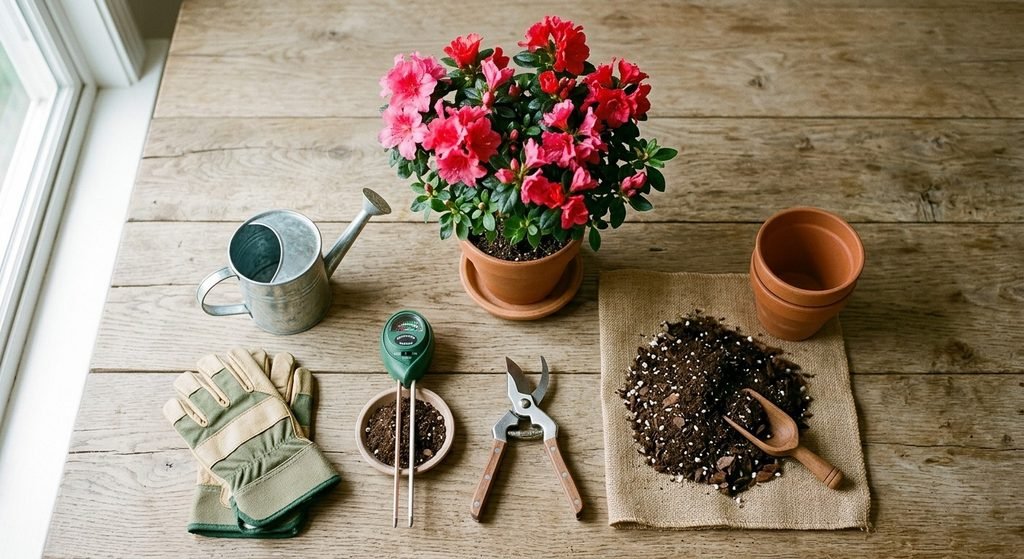
Save this checklist if you’ve recently brought an azalea home:
- Choose a bright location.
- Protect the plant from prolonged harsh sunlight.
- Keep it away from heaters and hot air vents.
- Check the soil regularly.
- Don’t allow the root ball to dry completely.
- Don’t leave the plant sitting in water.
- Use acidic growing media designed for acid-loving plants.
- Consider rainwater where practical, especially with hard water.
- Maintain reasonable humidity.
- Remove faded flowers.
- Feed modestly during active growth.
- Inspect for pests.
- Avoid unnecessary repotting.
- Don’t make several major environmental changes at once.
8 Indoor Azalea Mistakes to Avoid
1. Treating It Like a Tough Houseplant
Azaleas aren’t as forgiving as pothos or snake plants.
Their preferences are more specific.
2. Waiting for Dramatic Wilting Before Watering
By the time an azalea visibly wilts, the root system may already be stressed.
Check moisture before the plant reaches that point.
3. Keeping the Soil Permanently Wet
Moist soil is desirable.
Waterlogged soil isn’t.
4. Putting the Plant Beside a Heater
This can combine heat with very dry air.
It’s one of the worst locations for an indoor azalea.
5. Overfertilizing
Fertilizer can’t compensate for poor light, bad drainage, or excessive heat.
6. Using the Wrong Potting Mix
A general-purpose mix may not provide the acidic conditions an azalea prefers.
7. Repotting Into a Huge Container
Bigger isn’t always better.
Choose only a modestly larger pot when repotting is necessary.
8. Giving Up After Flowering
The end of flowering isn’t necessarily the end of the plant.
Continue caring for the foliage and roots.
A Simple Weekly Indoor Azalea Routine
You don’t need to inspect the plant constantly.
A short weekly check can tell you a lot.
Step 1: Check the Soil
Feel the growing medium.
Has it started drying?
Step 2: Inspect the Leaves
Look for:
- Yellowing
- Browning
- Drooping
- Spots
- Insects
Step 3: Look at the Flowers
Remove spent flowers and check buds for unusual damage.
Step 4: Check the Plant’s Location
Ask yourself:
- Has the room become hotter?
- Is the plant beside a heater?
- Is direct sunlight suddenly stronger?
- Has it been moved recently?
Step 5: Check Drainage
Make sure excess water can escape freely.
This takes only a few minutes, but it can prevent small problems from becoming major ones.
The Secret to Better Azaleas Indoor Care
There’s no magic trick.
Consistency is the real secret.
Your azalea doesn’t need constant attention. It needs an environment that doesn’t swing from one extreme to another.
Bright light.
Cool temperatures.
Moist but well-drained soil.
Acidic growing conditions.
Reasonable humidity.
Moderate feeding.
And regular observation.
Pay attention to small changes.
If the soil suddenly dries twice as quickly as normal, investigate.
If leaves begin yellowing, check the roots and growing medium.
If buds start dropping, look at temperature and moisture.
Instead of treating every symptom separately, look at the whole environment.
That’s when azaleas indoor care becomes much easier.
Frequently Asked Questions
Can azaleas live indoors?
Yes. Indoor or florist azaleas can be grown as potted plants. They generally prefer cool, bright, humid conditions rather than hot, dry rooms.
How much sunlight does an indoor azalea need?
Give an indoor azalea plenty of bright light while protecting it from prolonged harsh sunlight and excessive heat.
How often should I water an indoor azalea?
Water when the growing medium begins to dry. Don’t allow the root ball to become completely dry, but don’t keep it permanently saturated either.
Why are my azalea leaves turning yellow?
Yellow leaves can be associated with overwatering, poor drainage, unsuitable alkaline conditions, nutrient availability issues, or root stress. Check the growing conditions before adding fertilizer.
Why is my indoor azalea dropping leaves?
Dry soil, waterlogged roots, heat, low humidity, environmental changes, pests, and normal aging of older foliage can all contribute to leaf drop.
Do indoor azaleas need humidity?
They generally perform better in reasonably humid conditions, especially when indoor heating makes the air dry.
What soil is best for indoor azaleas?
Use an acidic, well-draining growing medium intended for acid-loving plants, such as an appropriate ericaceous compost.
Should I prune an indoor azalea?
Light pruning after flowering can help maintain the plant’s shape. Remove dead or unwanted growth, but avoid unnecessary heavy pruning.
Can I keep an azalea indoors after it blooms?
Yes. Continue caring for it after flowering. However, getting it to flower as heavily as its original commercially produced display can be challenging.
Should I repot an indoor azalea immediately?
No. Repot only when there’s a good reason, such as poor drainage, severely degraded growing medium, or root-bound conditions.
Final Takeaway
Successful azaleas indoor care isn’t about constantly watering, feeding, pruning, or moving your plant around.
It’s about creating a stable environment.
Give your azalea bright but appropriate light, cool temperatures, consistent moisture, good drainage, acidic growing conditions, reasonable humidity, and modest feeding.
Then observe what happens.
If the plant struggles, don’t immediately add fertilizer or water. Look at the bigger picture. The problem may be the location, temperature, soil, drainage, or watering routine.
And when those beautiful flowers finally fade, don’t assume your azalea has had its day.
That’s when the next stage of its care begins.
For more practical home and gardening advice, continue exploring HomeWorksDaily and build your plant-care knowledge one project at a time.