A rug can look perfectly clean from across the room and still be holding onto weeks of tracked-in dust, crumbs, pet hair, and the occasional mystery spot. That’s why choosing a cleaning product isn’t as simple as grabbing the first bottle labeled “rug cleaner.”
The right rug shampoo can help refresh a suitable rug, loosen embedded soil, and improve its overall appearance. But there’s an important catch: not every rug should be treated the same way. Fiber type, backing, dye stability, construction, and the amount of moisture involved can all change what’s safe.
So before you start scrubbing, it pays to slow down for a minute.
Quick Answer: Is Rug Shampoo Worth Using?
Rug shampoo can be useful for rugs that are compatible with wet cleaning, but it isn’t automatically safe for every rug. Check the manufacturer’s care instructions first, identify the rug’s material, test the cleaning solution in an inconspicuous area, and avoid over-wetting. For delicate, valuable, antique, or water-sensitive rugs, professional cleaning may be the safer choice.
What Is Rug Shampoo Used For?

Rug shampoo is generally used to loosen and remove dirt, soil, odors, and some stains from rugs when the rug and cleaning method are compatible with the product.
Think of it as one part of a broader cleaning routine rather than a magic solution in a bottle.
A typical cleaning process may involve:
- Removing loose dirt first
- Applying an appropriate cleaning solution
- Allowing the solution to work as directed
- Agitating the rug when the material and instructions permit it
- Extracting or removing the cleaning solution
- Allowing the rug to dry thoroughly
The exact process depends heavily on the rug.
That distinction matters because a synthetic, washable area rug is a very different cleaning project from a hand-knotted wool rug or a delicate natural-fiber rug.
The Carpet and Rug Institute notes that rugs can require special attention compared with wall-to-wall carpet, while WoolSafe emphasizes pre-testing wet-cleaning methods and avoiding excessive moisture, particularly with wool and other sensitive fibers.
Is Rug Shampoo Safe for Every Rug?

No. A rug shampoo should never be assumed to be suitable for every rug.
Before using one, check the care label or manufacturer’s instructions. If the instructions say the rug should be dry-cleaned, professionally cleaned, or treated with a particular method, don’t substitute a wet shampooing process simply because the product claims to work on rugs.
Here are some of the factors worth checking.
1. Rug Material
The fiber can influence how the rug reacts to moisture, agitation, heat, and cleaning chemicals.
Common rug materials include:
- Wool
- Cotton
- Polyester
- Nylon
- Polypropylene
- Rayon or viscose
- Natural plant fibers
- Blended fibers
These materials don’t necessarily respond the same way to cleaning.
Wool, for example, deserves particular care. WoolSafe guidance warns that wet-cleaning problems can involve over-wetting, excessive mechanical action, and unsuitable chemicals.
2. Rug Construction
The construction matters, too.
A machine-made washable rug may tolerate a cleaning process that would be inappropriate for a hand-knotted or highly delicate rug.
Pay attention to:
- Hand-knotted construction
- Hand-tufted construction
- Woven construction
- Braided construction
- Latex or other backing
- Fringe
- Decorative details
- Glued components
3. Colorfastness
A beautiful rug with unstable dyes can turn a simple cleaning project into a frustrating one.
Before cleaning the entire surface, test the proposed method in a hidden area according to the product and rug manufacturer’s directions.
Look for:
- Color transfer
- Fading
- Bleeding
- Texture changes
- Unexpected residue
If the test produces a questionable result, stop rather than hoping the problem disappears after the whole rug is cleaned.
Rug Type vs. Cleaning Approach
There isn’t one cleaning method that fits every rug. The following is a practical starting point, not a replacement for the manufacturer’s instructions.
| Rug Type or Situation | Main Concern | General Approach | Important Precaution |
| Washable synthetic rug | Excess moisture or residue | Follow the wash or cleaning label | Use the recommended temperature and detergent |
| Synthetic area rug | Fiber/backing compatibility | Suitable wet-cleaning method if permitted | Don’t over-wet |
| Wool rug | Moisture, dyes, fiber damage | Use a wool-compatible method | Follow wool-specific care guidance |
| Delicate natural-fiber rug | Moisture sensitivity | Often better suited to low-moisture methods | Check care instructions carefully |
| Antique or valuable rug | Structural and dye risks | Professional assessment may be appropriate | Avoid experimenting with household products |
| Rug with unknown material | Unknown reaction | Identify material before cleaning | Don’t guess based on appearance |
WoolSafe specifically recommends low-moisture approaches for water-sensitive fine fibers because they reduce the risk of over-wetting, shrinkage, and long drying times.
How to Choose the Right Rug Shampoo

If your rug is suitable for this type of cleaning, choosing a product requires more thought than simply looking for the word “shampoo” on the label.
Check Compatibility First
Look for clear information about the surfaces and fibers the product is designed for.
Ask:
- Is it intended for rugs?
- Is it compatible with the rug’s fiber?
- Is it designed for manual cleaning or a machine?
- Does it require extraction?
- Does it leave a residue?
- Does the manufacturer provide dilution instructions?
- Are there surfaces the product specifically excludes?
A product designed for wall-to-wall carpet isn’t automatically appropriate for every area rug.
Consider the Cleaning Method
Some products are intended to be used with extraction machines. Others may be designed for specific cleaning systems or methods.
Don’t improvise the concentration.
More product doesn’t necessarily mean a cleaner rug. Excess detergent can create more residue and make the cleaning process harder.
Think About the Problem You’re Trying to Solve
A general soil problem isn’t the same as a pet accident, grease stain, old discoloration, or moisture-related odor.
Before buying anything, identify the actual problem.
For example:
Everyday dirt:
A routine cleaning process may be enough.
Pet-related mess:
Look for a method specifically appropriate for the rug and the type of stain or odor.
Unknown discoloration:
First determine whether the mark is actually removable soil or a dye/fiber issue.
Old or valuable rug:
Professional assessment may be more sensible than experimenting.
Rug Shampoo vs. Other Cleaning Methods

The word “cleaning” covers several different approaches, and they’re not interchangeable.
| Cleaning Method | Best Fit | Main Advantage | Main Concern |
| Rug shampoo/wet cleaning | Compatible rugs needing deeper cleaning | Can loosen embedded soil | Moisture and residue must be controlled |
| Vacuuming | Routine maintenance | Removes loose soil without adding moisture | Doesn’t replace deep cleaning |
| Low-moisture cleaning | Some moisture-sensitive rugs | Reduced drying burden | May not suit every type of soil |
| Spot cleaning | Small localized messes | Treats a specific area | Incorrect treatment can create a larger mark |
| Professional cleaning | Delicate, valuable, or difficult rugs | Specialized equipment and expertise | Higher cost than DIY |
| Machine washing | Certain labeled washable rugs | Convenient for suitable rugs | Only appropriate when the label permits it |
The Carpet and Rug Institute recommends following appropriate maintenance and cleaning standards, while WoolSafe’s guidance emphasizes selecting methods based on the rug or carpet involved rather than assuming one technique is universally best.
How to Use Rug Shampoo Step by Step

If your rug’s care instructions permit the cleaning method, take a measured approach.
Step 1: Read the Rug’s Care Instructions
This is the boring step that’s easiest to skip—and one of the most important.
Check for:
- Recommended cleaning method
- Water restrictions
- Detergent restrictions
- Washing instructions
- Drying instructions
- Professional-cleaning requirements
If the instructions conflict with the cleaning product label, don’t assume the product wins.
The rug manufacturer’s instructions should guide the decision.
Step 2: Vacuum Thoroughly
Remove loose dirt before introducing moisture.
Vacuum both directions where appropriate, but be careful with delicate pile, fringe, or loose fibers.
The goal is simple: don’t turn loose surface dirt into wet mud.
Step 3: Test a Hidden Area
Apply the recommended test according to the product instructions.
Watch for:
- Dye transfer
- Fading
- Texture changes
- Surface damage
- Unexpected residue
Give the test area appropriate time to show a reaction before committing to the whole rug.
Step 4: Prepare the Cleaning Solution Correctly
Follow the manufacturer’s dilution instructions exactly.
Avoid the assumption that a stronger solution will automatically produce better results.
Too much cleaning product can create unnecessary residue and make extraction or rinsing more difficult.
Step 5: Clean Methodically
Work in manageable sections.
Avoid flooding the rug.
If agitation is permitted, use only the level of mechanical action appropriate for the rug. WoolSafe guidance specifically warns that excessive mechanical action can contribute to damage in wet cleaning.
Step 6: Remove the Cleaning Solution
If the method calls for extraction or rinsing, follow the equipment and product instructions.
Leaving too much moisture behind can create a longer drying period.
Step 7: Dry the Rug Completely
Drying isn’t an afterthought.
A rug that stays damp for too long can develop unpleasant odors and other problems.
WoolSafe notes that over-wetting greatly increases drying time and can contribute to discoloration or other issues.
Improve airflow where appropriate with:
- Fans
- Open windows when weather permits
- Good room ventilation
- Elevated airflow beneath the rug when the construction allows it
Don’t put furniture back on the rug until it is appropriately dry.
How Much Moisture Is Too Much?
There’s no single universal amount of water that’s safe for every rug.
That’s because drying time depends on:
- Fiber
- Rug thickness
- Backing
- Room humidity
- Air circulation
- Cleaning method
- Amount of water used
The practical rule is simple: use only the moisture the recommended cleaning method requires and avoid saturating the rug unnecessarily.
This is especially important with moisture-sensitive materials.
WoolSafe’s cleaning guidance specifically highlights over-wetting as a major concern because it can lengthen drying and contribute to problems such as discoloration.
Common Rug Shampoo Mistakes to Avoid
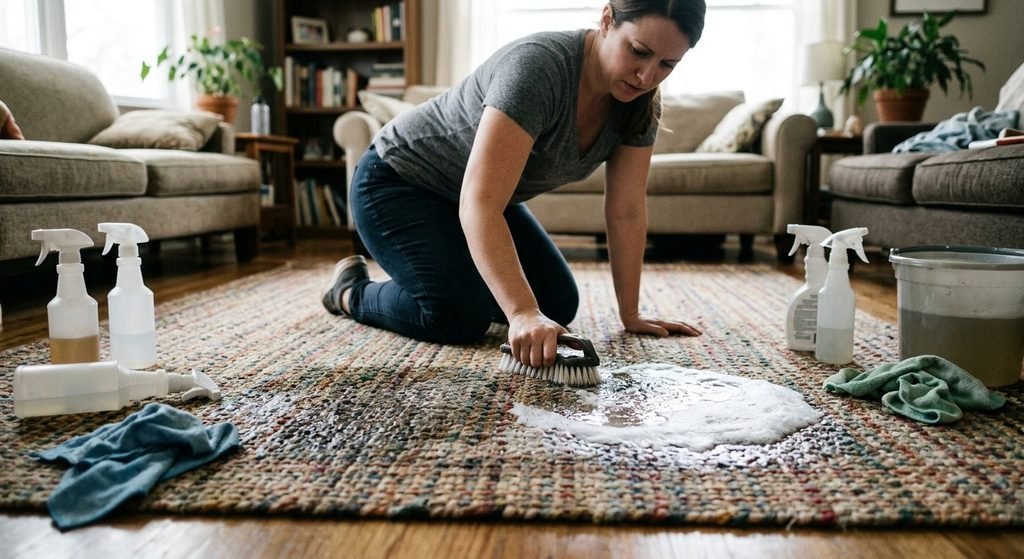
Sometimes the cleaning product isn’t the real problem. The way it’s used is.
Mistake 1: Skipping the Care Label
The product may be perfectly legitimate and still be wrong for your rug.
Mistake 2: Using Too Much Product
More detergent isn’t automatically better.
Excess solution may leave residue or make rinsing and extraction more difficult.
Mistake 3: Soaking the Rug
Over-wetting can dramatically increase drying time and may create problems for certain fibers and constructions.
Mistake 4: Scrubbing Aggressively
Hard scrubbing can disturb fibers or pile.
Gentle, appropriate action is usually a better starting point than brute force.
Mistake 5: Ignoring the Backing
A rug can have a face fiber that looks durable while the backing reacts poorly to moisture.
Mistake 6: Cleaning Without a Test
A hidden-area test can reveal a problem before you’ve spread it across the entire rug.
Mistake 7: Returning Furniture Too Soon
If the rug is still damp, placing furniture on it can interfere with drying.
Mistake 8: Assuming Every Stain Is Removable
Some discoloration isn’t simply dirt sitting on top of a fiber.
Dye damage, bleaching, permanent discoloration, and fiber damage require a different response.
What About Pet Stains and Odors?
Pet messes are one of the reasons people start searching for a deeper rug-cleaning solution.
But there are two separate problems:
- Removing visible soil or staining
- Addressing the source of the odor
A product that improves the appearance of a stain isn’t necessarily going to solve every odor problem.
Before treating a pet accident:
- Check the rug’s cleaning instructions.
- Identify the fiber.
- Remove surface material carefully.
- Blot rather than aggressively scrub when appropriate.
- Use only a product compatible with the rug.
- Follow the product’s directions.
- Avoid excessive moisture.
If repeated accidents have penetrated deeply into the rug or backing, DIY cleaning may have limitations.
When DIY Rug Cleaning Makes Sense
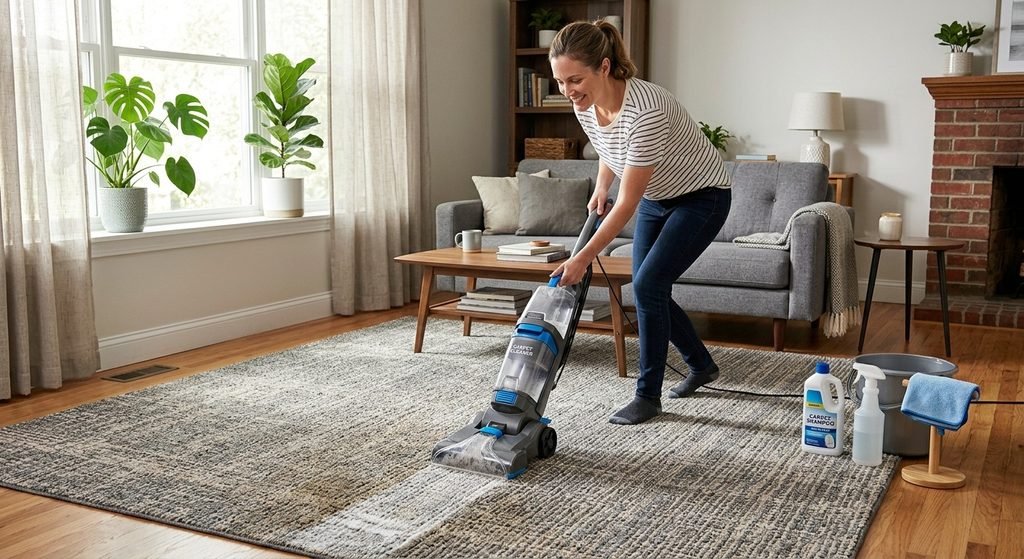
DIY cleaning can be reasonable when the situation is straightforward and the rug is designed to tolerate the selected method.
You may be a good candidate for DIY cleaning if:
- The rug has clear care instructions.
- The material is known.
- The rug is not especially valuable or delicate.
- The manufacturer permits the cleaning method.
- The stain or soil is manageable.
- You have suitable equipment.
- You can provide adequate drying conditions.
The biggest advantage is control. You can clean the rug on your schedule without arranging a professional service.
But convenience isn’t the only factor.
A cheap DIY job isn’t cheap if the wrong cleaning method permanently damages an expensive rug.
When Should You Call a Professional Rug Cleaner?
Professional cleaning deserves serious consideration when the rug is valuable, delicate, unusually constructed, or difficult to identify.
Consider professional help for:
- Antique rugs
- Valuable handmade rugs
- Delicate natural fibers
- Significant color bleeding
- Severe staining
- Water damage
- Persistent odors
- Mold or prolonged dampness
- Rugs with uncertain construction
- Cleaning instructions that specifically require professional service
WoolSafe maintains directories for approved rug-care specialists and related professionals, which can be useful when looking for specialized care.
A professional isn’t automatically necessary for every dirty rug. The point is to recognize when the potential cost of a mistake is greater than the cost of expert help.
A Simple Rug Cleaning Decision Guide
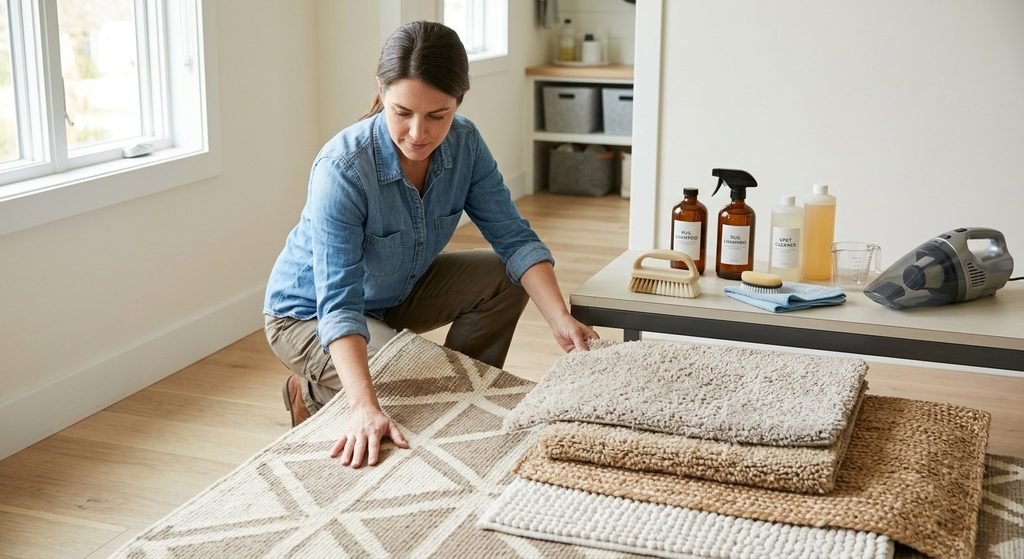
Here’s a practical way to think through the decision.
If the rug is washable and the label permits wet cleaning:
Follow the label and product instructions carefully.
If the rug is synthetic but has special backing or construction:
Check compatibility before using a wet cleaning method.
If the rug is wool:
Use wool-specific care guidance and avoid assuming a generic cleaner is appropriate.
If the rug is made from a water-sensitive fine fiber:
Consider a low-moisture approach or professional advice.
If the rug is valuable or antique:
Professional cleaning is usually the safer direction.
If you don’t know what the rug is made from:
Identify the material before experimenting.
How to Get Better Results From Rug Shampoo
Good results aren’t just about the cleaning product.
The process matters just as much.
Start With Less Moisture
Don’t begin by saturating the rug.
Controlled application is easier to manage than trying to rescue an over-wet rug later.
Work in Sections
This helps you maintain consistent coverage and prevents one part of the rug from sitting wet while you’re still working elsewhere.
Follow the Product Instructions
Pay attention to:
- Dilution
- Dwell time
- Application method
- Agitation
- Extraction
- Rinsing
- Drying
Don’t invent your own concentration or timing.
Give Drying Enough Attention
Good airflow can make a noticeable difference.
If the rug remains damp longer than expected, investigate the cause rather than simply adding more cleaning product.
What Should You Look for on a Rug Shampoo Label?

When comparing cleaning products, don’t focus only on marketing language.
Look for useful information such as:
- Compatible surfaces
- Compatible fibers
- Recommended dilution
- Application instructions
- Machine compatibility
- Rinsing requirements
- Safety information
- Drying instructions
- Manufacturer contact information
A product with clear instructions is generally easier to evaluate than one that relies mostly on vague promises.
For products designed around specific equipment, follow the equipment manufacturer’s instructions as well.
The Carpet and Rug Institute’s Seal of Approval program evaluates cleaning systems and products for cleaning efficacy, giving consumers another type of information to consider when comparing cleaning products and equipment.
Can You Use Carpet Cleaner Instead?
Sometimes, but you shouldn’t assume carpet cleaner and rug cleaner are interchangeable.
The important question is compatibility.
A product designed for carpeting may work with certain synthetic rugs and equipment, while another rug could react poorly.
Before substituting one product for another, check:
- Rug manufacturer’s instructions
- Product label
- Fiber type
- Backing
- Cleaning equipment
- Moisture requirements
If the instructions don’t clearly support the combination, don’t guess.
Rug Shampoo Buying Checklist

Before purchasing a product, run through this quick checklist:
- I know what my rug is made from.
- I’ve checked the manufacturer’s care instructions.
- The product says it is compatible with my cleaning method.
- I understand how the product should be diluted.
- I know whether extraction or rinsing is required.
- I can dry the rug properly.
- I understand any safety precautions.
- I’ve considered whether professional cleaning makes more sense.
If several answers are “no,” that’s a sign to pause before buying.
Frequently Asked Questions About Rug Shampoo
What is rug shampoo used for?
Rug shampoo is used to clean suitable rugs by helping loosen and remove dirt, soil, and some stains. Its suitability depends on the rug’s material, construction, care instructions, and the cleaning method being used.
Can you use rug shampoo on an area rug?
Yes, sometimes. An area rug can be cleaned with a suitable rug shampoo when its care instructions allow the method. Always check the rug’s material, backing, and manufacturer instructions first.
Is rug shampoo safe for all rug materials?
No. Different fibers and constructions can react differently to moisture, chemicals, heat, and agitation. Wool and water-sensitive fibers may require specialized or low-moisture care.
Should you vacuum before using rug shampoo?
Yes, when appropriate for the rug. Removing loose soil first can make the subsequent cleaning process more effective and prevents unnecessary dirt from becoming part of a wet-cleaning process.
Can rug shampoo remove pet stains?
It can help with some pet-related soil and stains, but results depend on the stain, rug material, cleaning product, and how deeply the contamination has penetrated. Persistent odors or deep contamination may require professional treatment.
Can too much rug shampoo damage a rug?
It can create problems. Excess product may increase residue and make rinsing or extraction more difficult. More cleaning solution isn’t automatically better.
How long does a shampooed rug take to dry?
There isn’t one universal drying time. Rug material, thickness, backing, humidity, airflow, and the amount of moisture used all affect drying. The goal is thorough drying rather than relying on a fixed number of hours.
Is rug shampoo better than steam cleaning?
Neither is universally better. The appropriate method depends on the rug, its construction, the type of soil, and the manufacturer’s recommendations. A method that works well for one rug can be inappropriate for another.
Should you shampoo a valuable rug yourself?
Usually, caution is the better choice. For antique, valuable, delicate, or uncertain rugs, professional assessment can reduce the risk of irreversible damage.
Can you use more shampoo to clean a heavily dirty rug?
Not necessarily. Heavier soil may require a different cleaning process, repeated passes, appropriate dwell time, or professional treatment—not simply more detergent.
What is the biggest mistake when using rug shampoo?
Ignoring rug compatibility and over-wetting are two major mistakes. Always begin with the care instructions, use an appropriate product, test the method, and control moisture.
Final Takeaway
The best rug shampoo isn’t simply the one with the strongest cleaning claims. It’s the one that matches the rug you’re actually trying to clean.
Start with the care label. Identify the fiber and construction. Test the cleaning method. Use the recommended amount of product, keep moisture under control, and give the rug enough time to dry.
And if you’re dealing with an antique, valuable, delicate, or unfamiliar rug, there’s no prize for turning a cleaning project into a repair project. Professional advice can be the smarter choice.
For everyday home-care questions, HomeWorksDaily aims to make these decisions easier by focusing on practical explanations rather than one-size-fits-all recommendations.