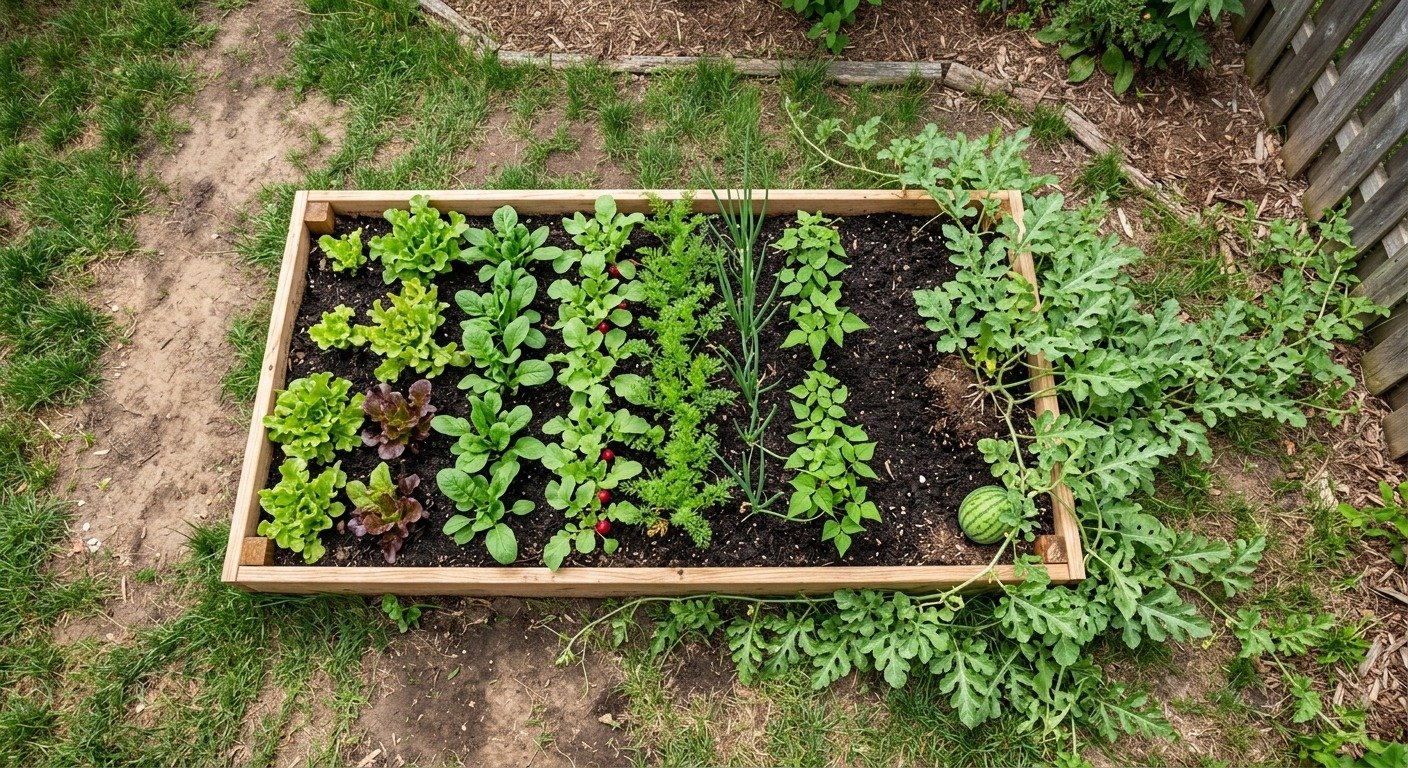
A zoned garden is a practical way to plan plants around the conditions where you actually live and grow. Start with your USDA Plant Hardiness Zone to understand winter cold, but don’t stop there. Map the sunlight, soil, drainage, wind, moisture, and warmer or colder pockets in your own yard. Then choose plants that fit both your regional hardiness zone and the specific spot where they’ll live.
A plant tag says your new shrub is hardy in your zone. You bring it home, give it a promising corner of the yard, and wait for it to flourish.
Instead, it struggles.
Meanwhile, a neighbor a few houses away grows something similar without much trouble.
That’s the frustration a zoned garden approach is meant to prevent. The zone number matters, but it’s only one part of the decision. Your yard has its own small climate system, and sometimes even two beds separated by 30 feet behave differently.
Understanding that difference can save money, reduce unnecessary maintenance, and make plant shopping far more deliberate.
What Is a Zoned Garden?
A zoned garden is a garden planned by matching plants to both a regional hardiness zone and the specific growing conditions within the property.
The phrase isn’t the name of an official USDA garden classification. The USDA’s formal system is the Plant Hardiness Zone Map, which helps gardeners judge the winter-cold tolerance of perennial plants. In practical garden planning, however, thinking in “zones” can go further: one area of your yard may be sunny and dry, another sheltered and warm, and another damp enough to need an entirely different plant palette.
Think of the USDA zone as your broad geographic filter. Your property conditions are the fine print.
Why Garden Zones Matter—but Don’t Tell the Whole Story

A USDA hardiness zone tells you how severe the typical annual winter minimum is at a location. It does not describe every condition a plant will face there.
The 2023 USDA Plant Hardiness Zone Map is based on the average annual extreme minimum winter temperature. The system uses 10°F zones divided into 5°F half-zones such as 7a and 7b. Gardeners can enter a ZIP code in the official USDA Plant Hardiness Zone Map to find a starting point for perennial plant selection.
The current map uses the 1991–2020 climate-normal period. USDA also notes that elevation, urban development, topography, and proximity to large bodies of water can contribute to local differences.
That’s why a zone rating should be treated as a useful screening tool, not a promise.
A perennial labeled for Zones 5–8 may clear the winter-cold test for a Zone 7 property. You still need to ask whether it can handle that property’s summer conditions, soil, available moisture, sun, wind, and drainage.
Hardiness zones are especially useful for perennial decisions
Trees, shrubs, perennial flowers, and other plants expected to remain outdoors through winter need to tolerate the cold conditions associated with the location.
Annual vegetables and flowers are different. Because they complete their useful garden season without needing to overwinter, gardeners often need frost or freeze timing, current weather, soil conditions, and crop-specific guidance more than a hardiness number when deciding when to plant.
A USDA zone is therefore not a universal planting calendar.
Hardiness Zone vs. Your Local Growing Conditions
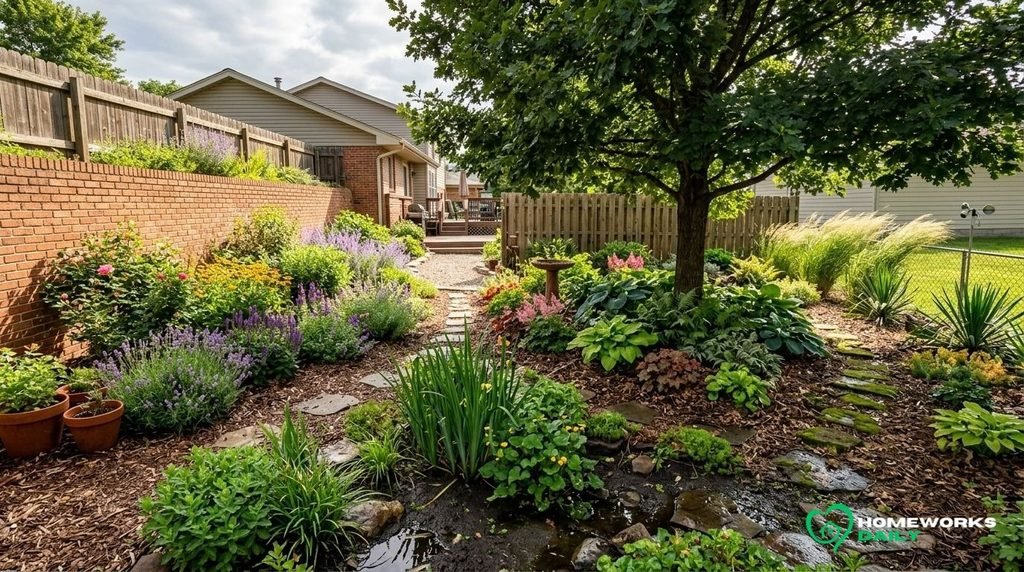
A USDA hardiness zone describes regional winter cold. A microclimate describes conditions in a much smaller area, sometimes as small as one side of a house or one garden bed.
University of Georgia Cooperative Extension describes microclimates as small areas affected by their surroundings. A protected courtyard, low area, slope, structure, or wet location near a downspout can behave differently from the surrounding landscape.
Imagine two neighbors in the same USDA half-zone.
One plants a shrub beside a south-facing masonry wall that absorbs solar warmth and blocks winter wind. The other puts the same type of shrub in an exposed low corner where cold air settles and winter wind crosses the property.
The map gives both homes similar regional information. The plants don’t necessarily experience similar sites.
Soil creates another layer. Penn State Extension recommends evaluating factors such as winter and summer conditions, rainfall, sunlight, prevailing wind, soil texture, drainage, nutrient conditions, and pH before selecting landscape plants.
That leads to a better question than “Will this grow in my zone?”
Ask: Will this plant fit this exact spot?
How to Find Your Garden Zone
Start with the official USDA map rather than an old graphic saved on social media or a zone chart of uncertain age.
- Open the official USDA Plant Hardiness Zone Map.
- Enter your five-digit ZIP code.
- Note both the zone number and half-zone letter.
- If you’re near a visible boundary, use the interactive map to examine your location more closely.
- Write the zone into your garden plan, but leave room for local observations.
The current USDA map is more detailed than older versions and uses newer climate data, so it’s worth checking even if you’ve known your zone for years.
Then move from the national map to your property.
Walk the yard in the morning, around midday, and later in the afternoon. Look again after a heavy rain. Pay attention during a windy day and during the first few cold mornings of the season.
You’re building a second map: the one no national climate map can give you.
How to Plan a Zoned Garden Step by Step
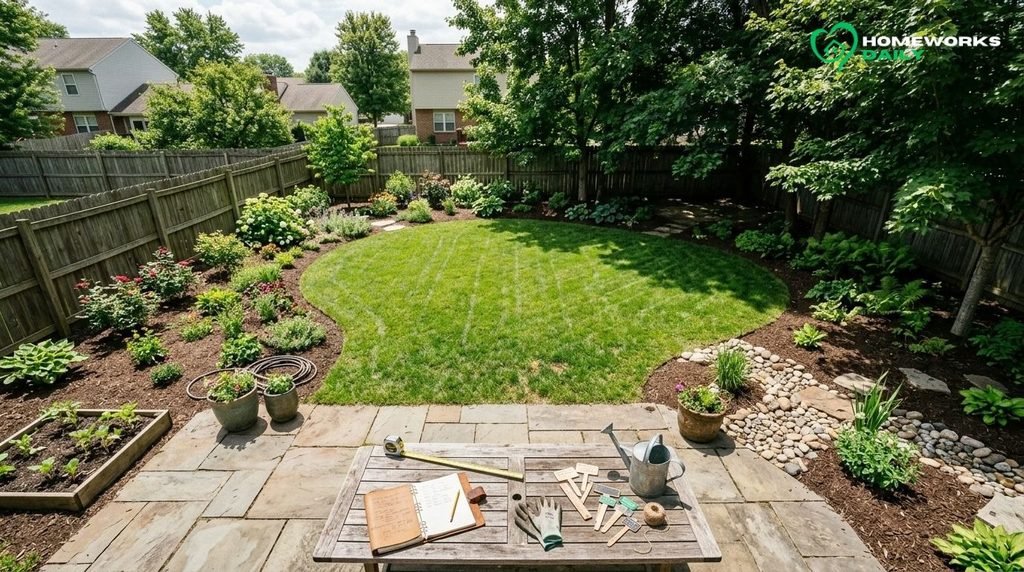
A practical zoned garden can be planned with a four-layer fit check:
Zone → Site → Plant → Care
Each layer eliminates choices that look attractive on paper but don’t make sense for the property.
1. Zone: Start with winter hardiness
Find the USDA zone and use it as the initial cold-tolerance filter for perennials, shrubs, and trees.
Don’t choose a plant merely because your zone appears somewhere in its stated range. Read the rest of its growing requirements before buying.
2. Site: Divide the property by actual conditions
Instead of treating the entire backyard as one growing environment, mark meaningful differences.
You might identify areas such as:
- full-sun, fast-drying bed
- afternoon-shade border
- low area that stays wet after rain
- protected wall-side bed
- exposed windy corner
- irrigated lawn
- dry area under established tree roots
- high-traffic family or pet space
This exercise often explains why plants that are technically hardy still fail in certain locations.
3. Plant: Match the whole plant profile
Now evaluate each candidate by more than its hardiness range.
Check its preferred light, soil, drainage, moisture, mature height, mature width, growth habit, and maintenance requirements. Also consider whether the plant’s eventual size makes sense near foundations, walkways, fences, utilities, and neighboring plants.
HomeWorks Daily’s guide to choosing trees for winter landscapes makes the same useful point: climate is only one part of tree selection; mature size, sunlight, drainage, and exposure matter too.
For ornamental trees, the site’s weeping cherry growing guide is another example of why drainage and available space should be checked before a dramatic specimen plant comes home from the nursery.
4. Care: Ask whether the garden fits your life
A plant can fit the climate and still be wrong for the homeowner.
Before committing, consider how much watering, pruning, seasonal cleanup, pest monitoring, dividing, mowing, or replacement you’re willing to do.
This is where garden planning becomes realistic.
A large, thirsty planting that requires constant supplemental irrigation may not make sense for someone seeking a low-input landscape. A fast-growing hedge may sound inexpensive until its long-term pruning needs are considered. An elaborate perennial border may be a joy for one gardener and a burden for another.
Choose a garden you want to maintain, not merely one you want to photograph.
Zoned Garden Planning Table
| Factor | What to Check | Why It Matters | Practical Action |
| Winter cold | USDA hardiness zone | Helps screen perennial cold tolerance | Check the current USDA map before buying long-lived plants |
| Microclimate | Warm walls, low spots, wind, shelter, slopes | One yard can contain warmer, colder, wetter, and drier pockets | Map obvious microclimates before assigning plants |
| Sunlight | Hours and timing of direct sun | “Sunny” and “shady” aren’t precise enough for plant selection | Observe the site at several times of day |
| Soil | Texture, pH where relevant, compaction | Root conditions affect water, air, and nutrient availability | Use a soil test when important plant decisions depend on it |
| Drainage | Ponding or rapid drying after rain | Plants vary greatly in tolerance for wet or dry roots | Observe after rainfall and choose accordingly |
| Water | Rainfall, irrigation access, plant demand | Mismatched water needs increase maintenance and waste | Group plants with similar water needs |
| Space | Mature height and width | Nursery-size plants can outgrow paths and structures | Plan around mature dimensions |
| Use | Kids, pets, entertaining, screening, food, wildlife | A garden should serve the household | Give each area a purpose before buying plants |
| Maintenance | Pruning, mowing, watering, cleanup | Long-term labor is part of plant suitability | Choose plants that fit your available time |
Use Water Needs to Create Another Kind of Garden Zone
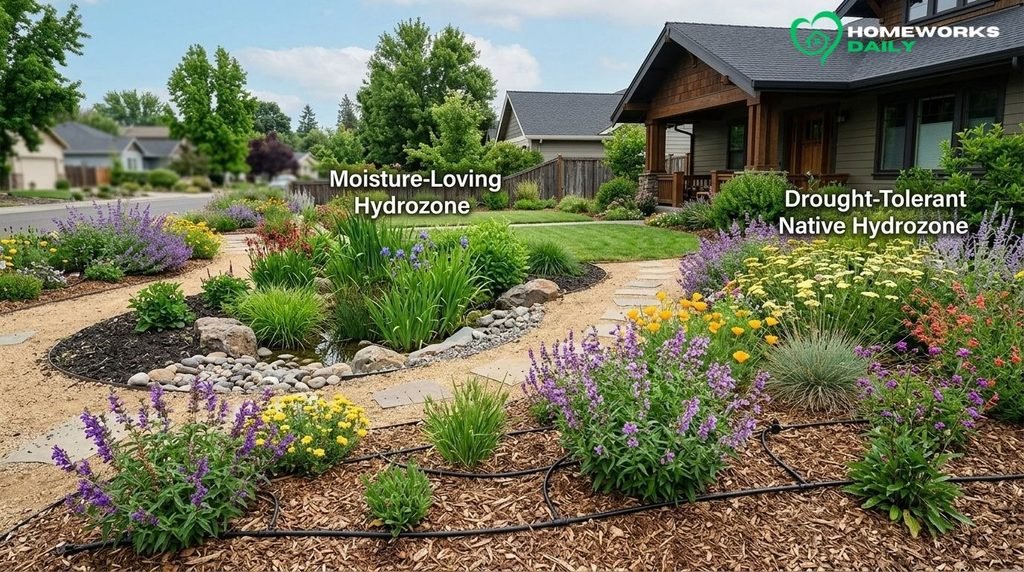
Hardiness isn’t the only useful way to zone a landscape.
The EPA WaterSense program recommends grouping vegetation with similar irrigation requirements into hydrozones. The idea is straightforward: plants needing similar amounts of water are easier to irrigate efficiently when they’re grouped together instead of scattered randomly through the landscape.
For example, a frequently used lawn, drought-adapted border, and moisture-loving planting bed shouldn’t automatically receive the same irrigation schedule.
WaterSense also advises evaluating local climate, sun and shade, soil, maintenance needs, and regional plant suitability.
That’s a useful reminder: good zoning isn’t about drawing arbitrary lines through the yard. Each “zone” should represent a real difference that changes how you choose or care for plants.
Choosing Plants for Your Zone Without Buying the Wrong Plant
A nursery tag that matches your hardiness zone is permission to investigate further—not permission to stop thinking.
For each candidate, work through four questions:
Will winter cold eliminate it?
Check the hardiness rating.
Will this exact location support it?
Check sunlight, moisture, soil, drainage, and exposure.
Will it still fit when mature?
Look at expected height, width, root space, and proximity to structures.
Will you realistically maintain it?
Consider irrigation, pruning, cleanup, lawn edging, fertilization, and other recurring work.
The same process applies to turf.
HomeWorks Daily’s Bermuda grass guide notes that climate, sunlight, traffic, soil, and maintenance expectations all affect whether that grass makes sense for a yard. Its guide comparing Kentucky bluegrass, fescue, and ryegrass similarly illustrates why lawn selection can’t be reduced to appearance.
A landscape is simply a collection of these small fit decisions.
Three Examples of Why the Same Zone Doesn’t Mean the Same Garden
Consider a hypothetical homeowner in a Zone 8 location in the humid Southeast and another in a Zone 8 area of the Pacific Northwest.
They may share a comparable winter-minimum classification, but their rainfall patterns, summer heat, humidity, soil conditions, and irrigation needs can differ sharply. A national zone number can’t reconcile those differences for them.
Now narrow the scale further.
Two planting beds on the same property can differ because one receives afternoon sun while another is shaded by the house. A slight depression may stay wet after storms. An elevated bed may drain quickly. Pavement and masonry may make a nearby space warmer.
USDA’s own map documentation notes the influence of elevation, urban heat, water bodies, and topography on mapped temperatures.
The practical lesson is simple: region filters the possibilities; the site makes the final decision.
Common Zoned Garden Mistakes
Treating the USDA zone as a complete climate profile
It isn’t. The zone is based on winter minimum temperature.
Better approach: Pair the hardiness number with local site observation and regional Extension guidance.
Using the zone as a spring planting date
A hardiness zone doesn’t tell you the exact date to set tender vegetables or annual flowers outdoors.
For example, UF/IFAS Extension explains that a change in a Florida hardiness zone doesn’t automatically move warm-season vegetable planting dates; frost timing remains a separate consideration.
Better approach: Use local frost/freeze information, current weather, and crop-specific recommendations for seasonal planting.
Ignoring drainage because the plant is “hardy”
Cold tolerance can’t rescue roots from chronically unsuitable soil conditions.
Better approach: Watch where water stands after rain and choose plants suited to the moisture pattern.
Buying for nursery size
A three-foot shrub may eventually occupy far more space than expected.
Better approach: Design for mature dimensions, not the pot sitting in front of you.
Treating native plants as automatically maintenance-free
Regionally appropriate native plants can offer important advantages, but a native species still has its own preferences for sun, moisture, soil, and space.
EPA WaterSense recommends native and regionally appropriate plants while also stressing the importance of matching plants to site conditions.
Better approach: Use native status as one selection factor, not the only one.
Giving every bed the same watering schedule
The sunny bed beside the driveway may dry faster than the sheltered bed on the other side of the house.
Better approach: Group plants with similar water requirements and adjust irrigation to actual site conditions.
Budget and Maintenance: Plan Beyond the Purchase Price
The cheapest plant on the nursery bench isn’t always the least expensive plant to own.
A poor site match can mean replacement plants, extra soil work, more irrigation, repeated pest problems, or ongoing efforts to force a plant to tolerate conditions it doesn’t prefer.
Maintenance has a cost too, even when you’re doing the work yourself.
Before buying, think about whether the planting will require frequent pruning, irrigation, mowing, staking, dividing, seasonal protection, or cleanup. Then compare that workload with what you actually want from the yard.
For many homeowners, the better investment is the plant that looks slightly less exciting in the garden center but naturally fits the property.
When Professional or Local Help Makes Sense
Most homeowners can do the first stages of zone and site planning themselves. Some situations deserve additional help.
Your local Cooperative Extension office can be useful when plant selection depends on regional pests, unusual soil conditions, frost timing, or locally adapted species.
A qualified landscape professional may be worthwhile when you’re redesigning large parts of the property, changing drainage or irrigation, working on steep slopes, or trying to coordinate multiple outdoor uses.
For significant tree work—especially large branches, trees near structures, or difficult planting decisions—a qualified arborist can help evaluate risk, species, and long-term placement.
The goal isn’t to outsource every garden decision. It’s to know when a mistake could be much more expensive than good advice.
Frequently Asked Questions
Is a zoned garden the same as a USDA hardiness zone?
No. A USDA hardiness zone is a geographic temperature classification based on average annual extreme minimum winter temperatures. In this guide, a zoned garden is the broader planning idea of combining that regional information with the conditions in your own yard, including sunlight, soil, drainage, moisture, wind, space, and maintenance.
Can two gardens in the same USDA zone need different plants?
Absolutely. Hardiness zones primarily describe winter minimum temperature. Two properties in the same zone can have different soil, rainfall, summer heat, sunlight, wind exposure, elevation, drainage, and microclimates. Even two beds on the same property can behave differently. That’s why the hardiness rating should be a first filter rather than the final plant-selection rule.
Does my USDA zone tell me my last frost date?
No. The USDA Plant Hardiness Zone Map is based on average annual extreme minimum winter temperature, not the expected timing of the last spring frost or first fall frost. For planting annual vegetables and tender flowers, use local frost or freeze information, current forecasts, and region-specific growing guidance.
Should I buy only plants rated exactly for my zone?
Use the plant’s hardiness range to screen for winter suitability, then examine the rest of its needs. A plant can have an appropriate cold rating and still fail because the site is too shady, too wet, too dry, too windy, or too small. The entire plant profile matters.
Do microclimates really matter in an ordinary suburban yard?
Yes. Buildings, pavement, slopes, fences, tree canopy, low areas, wind exposure, and drainage can create noticeable differences over short distances. A sheltered bed near a structure may behave differently from an exposed corner or low frost-prone spot. Observing your yard through changing weather is one of the most useful planning steps you can take.
Are native plants automatically the best choice for a zoned garden?
Native plants can be excellent choices because appropriately selected native species are adapted to regional conditions and can provide ecological benefits. But “native” isn’t enough by itself. A sun-loving native won’t become a shade plant, and a species adapted to well-drained soil may still struggle in a wet low spot. Match the species to the actual site.
How should beginners start planning a zoned garden?
Start small. Find your USDA hardiness zone, choose one planting area, observe its light and drainage, and identify what you want that area to do. Then shortlist plants that pass the four-layer test: Zone, Site, Plant, Care. Expanding one well-planned bed at a time is usually easier than redesigning the entire yard in one shopping trip.
Final Takeaway: Build Your Zoned Garden From the Site Out
A zoned garden works best when the zone number begins the conversation instead of ending it.
Find your USDA hardiness zone. Then walk outside and study the property you actually have: the sunny wall, the soggy corner, the exposed lawn, the sheltered bed, the heavy soil, the afternoon shade, and the areas your household uses most.
Match plants to those conditions, check their mature size, group compatible water needs, and be realistic about maintenance.
That’s usually a better strategy than buying a beautiful plant first and trying to make the yard accommodate it afterward.
For readers comparing their next planting or lawn decision, HomeWorks Daily’s existing tree, ornamental-plant, and grass guides can help you evaluate individual options after you’ve mapped the conditions they need to fit.