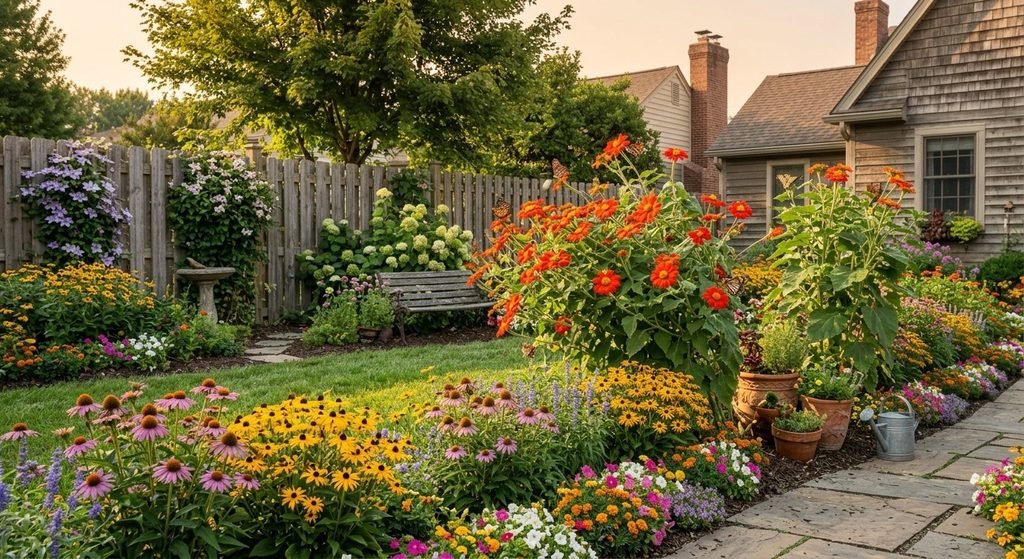
A bright flower can change the personality of a garden almost overnight. One day, a sunny corner looks ordinary; a few weeks later, it’s filled with warm orange blooms, visiting butterflies, and the kind of color that makes you stop while walking past.
That’s one reason the mexican flower is an interesting choice for gardeners looking for something colorful, heat-tolerant, and relatively low-maintenance.
But there’s an important detail to understand first: “mexican flower” isn’t one universal botanical name. In gardening conversations, the phrase can refer to several flowers associated with Mexico. One especially useful plant to know is Mexican sunflower (Tithonia rotundifolia), an annual native to Mexico and Central America that performs well in full sun and attracts pollinators.
If you’re planning a colorful backyard border, pollinator garden, cutting garden, or sunny container display, this guide will help you understand what to grow, where to plant it, and how to keep it looking its best.
Quick Answer: What Is a Mexican Flower?
A mexican flower can describe a flowering plant associated with Mexico, but the term doesn’t identify just one species. Mexican sunflower, Tithonia rotundifolia, is one particularly popular example for gardens because it produces vivid orange-red flowers, grows quickly, and attracts pollinators.
For US gardeners, the right plant depends on your climate, available sunlight, garden space, and whether you’re looking for flowers for pollinators, containers, cutting gardens, or landscape color.
Why Mexican Flowers Are Worth Adding to a Garden
A good garden plant doesn’t have to be difficult to impress.
Mexican sunflower, for example, combines several qualities that gardeners often want: fast growth, showy flowers, heat and drought tolerance, and wildlife value. NC State Extension lists it as suitable for butterfly, pollinator, cutting, drought-tolerant, and rock gardens.
Here are some of its biggest advantages:
- Bright, warm-colored flowers
- Fast growth
- Attracts bees and butterflies
- Can attract hummingbirds
- Handles heat well
- Tolerates drought once established
- Works well in pollinator gardens
- Useful as a cut flower
- Can add height to the back of a border
- Generally requires relatively low maintenance
It’s also an interesting choice when you want a garden to look full without relying entirely on expensive landscaping materials.
Mexican Sunflower: A Standout Mexican Flower

If you’re searching for a mexican flower to grow in a sunny US garden, Tithonia rotundifolia deserves a closer look.
Despite its common name, Mexican sunflower isn’t the same plant as the familiar giant sunflower, Helianthus annuus. It belongs to the same broader daisy family, Asteraceae, but it is a different species. NC State Extension identifies Tithonia rotundifolia as an annual native to Mexico and Central America.
The plant can grow approximately 3 to 6 feet tall and 2 to 3 feet wide, so it isn’t a tiny flower for the front edge of a narrow bed. Its flowers can reach around 3 inches across and appear in orange, red, or burgundy tones.
That height can actually be useful.
Place it toward the back of a flower border and shorter plants can create layers in front of it.
Mexican Sunflower at a Glance
| Feature | Mexican Sunflower |
| Scientific name | Tithonia rotundifolia |
| Type | Annual |
| Origin | Mexico and Central America |
| Mature height | About 3–6 feet |
| Mature width | About 2–3 feet |
| Light | Full sun |
| Soil | Average, well-drained soil |
| Flower color | Orange, red, burgundy, yellow-orange |
| Bloom period | Summer into fall |
| Wildlife value | Bees, butterflies, hummingbirds |
| Garden uses | Pollinator, cutting, drought-tolerant, border gardens |
These characteristics are documented by NC State Extension.
Where Should You Plant a Mexican Flower?

The easiest rule is simple: give Mexican sunflower plenty of sunlight and enough room to grow upward and outward.
Mexican sunflower performs best in full sun, meaning about six or more hours of direct sunlight per day. It also prefers well-drained soil.
Good locations include:
- Back of a flower border
- Pollinator garden
- Cutting garden
- Sunny backyard bed
- Drought-tolerant planting
- Rock garden
- Large container, if space is adequate
- Along a fence where its height can become part of the garden design
Because mature plants can become tall, avoid placing them where their growth will block shorter flowers.
A Simple Garden Layout
For a layered look, try thinking vertically:
Back: Mexican sunflower
Middle: Medium-height flowering plants
Front: Low-growing flowers or foliage
Edges: Groundcovers or container plants
This creates more visual depth than putting every plant at the same height.
How Much Sun Does Mexican Sunflower Need?
Mexican sunflower is a full-sun plant.
Aim for a location receiving at least six hours of direct sunlight each day. Good sunlight supports flowering and helps the plant develop its characteristic tall, upright form.
If a planting area receives only a small amount of morning or filtered sunlight, this may not be the best location.
Before planting, watch the area during a normal sunny day. A spot that looks bright from your kitchen window isn’t necessarily receiving enough direct sunlight at ground level.
What Soil Does a Mexican Flower Need?

You don’t need to create an elaborate soil mixture to grow Mexican sunflower.
NC State Extension recommends average, well-drained soil and notes that the plant can tolerate several soil textures, including clay, loam, sand, and shallow rocky soil.
One surprising point is that overly rich soil isn’t necessarily helpful.
NC Cooperative Extension notes that heavy fertilization or excessively rich soil can encourage too much leafy growth and weaker stems.
So instead of assuming “more fertilizer equals more flowers,” focus first on:
- Good drainage
- Adequate sunlight
- Appropriate spacing
- Consistent establishment watering
- Avoiding unnecessary heavy fertilization
That’s often a better approach.
How Often Should You Water Mexican Sunflower?
Newly planted flowers need attention while they establish their root systems. Once established, Mexican sunflower has useful tolerance for drought and dry conditions.
A practical approach is:
- Water newly planted seedlings consistently.
- Check the soil before watering again.
- Allow excess water to drain.
- Increase attention during prolonged hot, dry periods.
- Avoid keeping the soil constantly soggy.
The exact watering schedule will depend on your local weather, soil type, container size, and whether the plant is newly planted or established.
A plant growing in a small container in a hot location can dry out much faster than the same plant growing in a garden bed.
How to Grow Mexican Sunflower From Seed
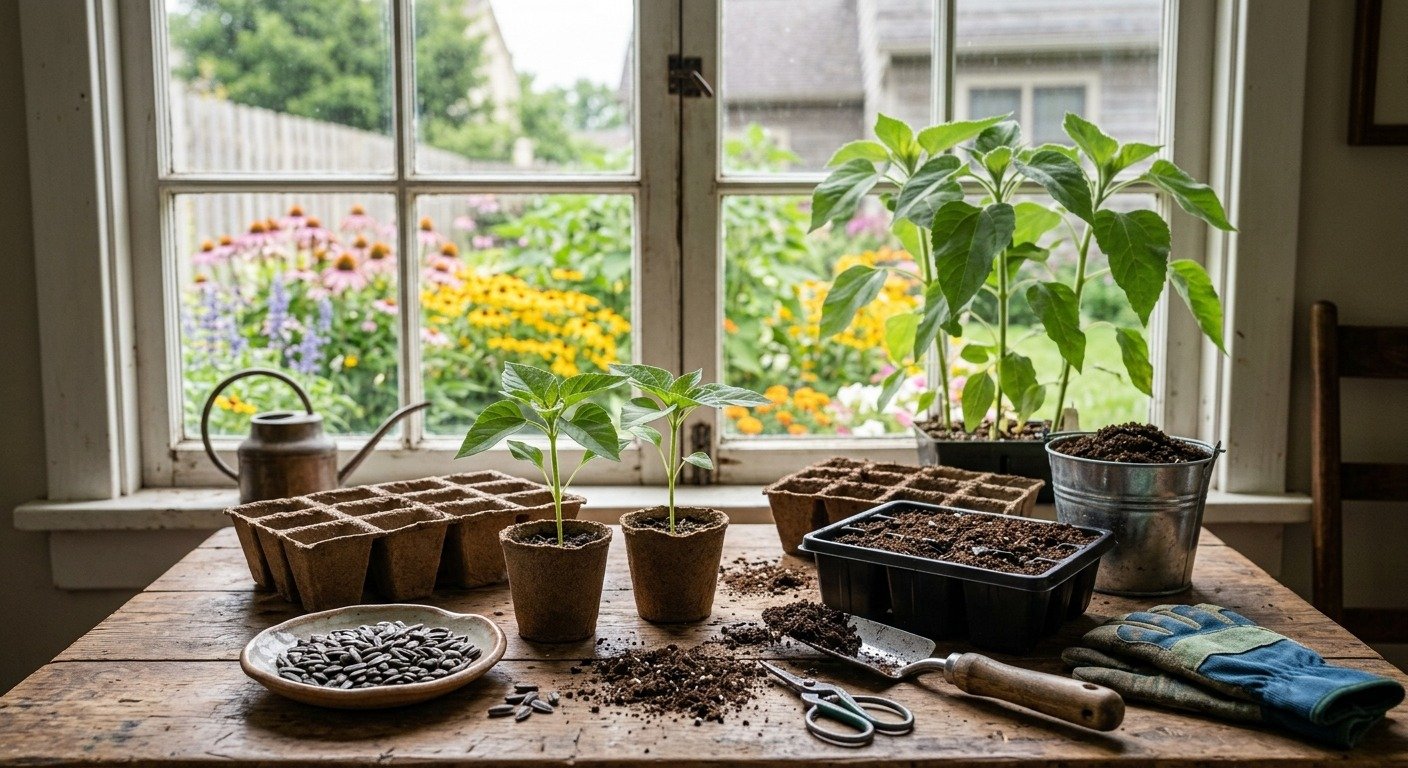
Growing Mexican sunflower from seed is one of the most practical ways to establish a planting.
NC Cooperative Extension recommends direct sowing around the last frost date or starting seeds indoors earlier for an earlier bloom.
Step 1: Choose a Sunny Location
Select a site with full sun and good drainage.
Step 2: Prepare the Soil
Loosen the planting area and remove competing weeds. There’s usually no need to create an excessively rich soil bed.
Step 3: Sow the Seeds
Follow the seed packet’s planting instructions for depth and spacing.
If starting indoors, NC Cooperative Extension recommends starting seeds approximately 6–8 weeks before the last frost.
Step 4: Thin Crowded Seedlings
Crowded plants compete for light and space.
NC Cooperative Extension recommends spacing plants at least 2 feet apart for Mexican sunflower.
Step 5: Keep Young Plants Watered
Provide appropriate moisture while seedlings establish.
Step 6: Let Them Grow
Once established, the plants can grow quickly, eventually becoming a dramatic backdrop for shorter flowers.
Does Mexican Sunflower Attract Pollinators?
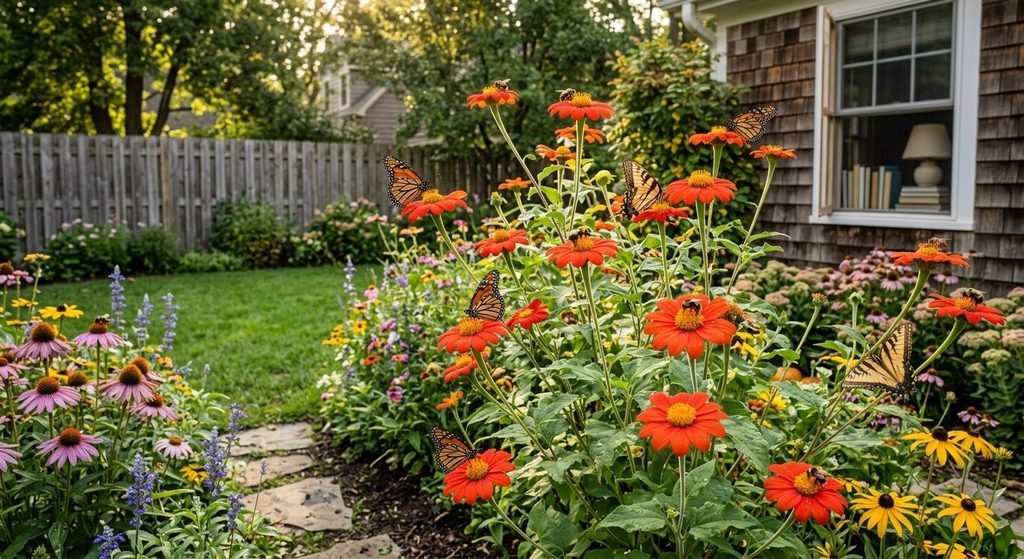
Yes. This is one of the strongest reasons to consider it for a wildlife-friendly garden.
NC State Extension reports that Mexican sunflower attracts butterflies, bees, and hummingbirds.
USDA Natural Resources Conservation Service material also lists Mexican sunflower (Tithonia rotundifolia) among plants used for pollinator habitat.
That makes it particularly useful for gardeners who want their flower beds to provide more than visual appeal.
A pollinator garden doesn’t have to look wild or messy, either. Mexican sunflower can be combined with other flowering plants to create a deliberate, colorful landscape.
How to Use Mexican Flower in Landscape Design

The secret is not simply planting more flowers.
It’s choosing the right shape, height, color, and location.
Mexican sunflower’s tall growth makes it particularly useful toward the back of a border. NC Extension specifically recommends it for back-of-border planting, cutting gardens, drought-tolerant gardens, and pollinator gardens.
Try These Garden Combinations
For a bold summer border:
Combine warm-colored flowers with purple or dark foliage for contrast.
For a pollinator garden:
Group several flowering species so insects have multiple nectar sources.
For a cutting garden:
Grow it where you can easily reach the stems without disturbing the rest of the landscape.
For a drought-conscious garden:
Combine it with other plants suited to your regional conditions instead of treating every plant as if it has identical water needs.
Can Mexican Sunflower Grow in Containers?

Yes, but container growing requires more planning than planting it in the ground.
The main challenge is size. A plant that can reach 3–6 feet tall needs enough container space and a stable location.
If you want to try container growing:
- Choose a large, sturdy container.
- Make sure drainage holes are present.
- Use a quality container-growing medium.
- Give the plant full sun.
- Monitor moisture more frequently than you would in a garden bed.
- Protect tall plants from strong winds.
- Don’t overcrowd the container.
A smaller cultivar may be more practical where space is limited. NC Cooperative Extension lists ‘Fiesta del Sol’ at around 3 feet tall and ‘Goldfinger’ at approximately 2–2½ feet.
Does Mexican Sunflower Need Support?
Sometimes.
Tall Mexican sunflower plants can become top-heavy, particularly when exposed to strong wind. NC Cooperative Extension notes that stems can be brittle and that staking may be necessary.
You can reduce the risk by:
- Planting in a sheltered location
- Giving plants adequate spacing
- Avoiding excessive fertilization
- Using support before plants become difficult to manage
- Pinching plants when appropriate to encourage bushier growth
A little planning is easier than trying to rescue a tall plant after a storm.
Should You Deadhead Mexican Sunflower?
Deadheading can be useful if your goal is to encourage continued flowering.
NC State Extension specifically recommends deadheading to prolong the bloom season.
Simply remove spent flower heads using clean garden snips.
However, there’s another consideration: if you want to collect seeds or allow some self-seeding, you may want to leave selected flower heads alone toward the end of the season.
That’s one of those gardening decisions where your goal matters more than following a single universal rule.
Common Mexican Flower Growing Mistakes

Even relatively easy plants can struggle when they’re placed in the wrong conditions.
1. Choosing Too Much Shade
Mexican sunflower is a full-sun plant. A shady location can work against the vigorous flowering you’re hoping for.
2. Overfertilizing
More fertilizer isn’t automatically better. Excessively rich soil or heavy fertilization can encourage foliage and weaker stems.
3. Ignoring Mature Size
A tiny seedling can look harmless in a garden center. Remember that Mexican sunflower can eventually reach several feet in height.
4. Planting Too Close Together
Crowded plants have less room for healthy development. Extension guidance recommends at least 2 feet of spacing.
5. Putting Tall Plants in an Exposed Spot
Strong winds can be a problem because the stems can be brittle.
6. Treating Every US Climate the Same
A gardening recommendation that works beautifully in one region may need adjustment somewhere else.
Your local frost dates, summer temperatures, rainfall, soil, and growing season all matter.
Mexican Flower Care: Quick Reference
| Care Need | What to Do |
| Sunlight | Full sun |
| Soil | Average, well-drained soil |
| Water | Water consistently while establishing; established plants tolerate dry conditions |
| Fertilizer | Avoid excessive fertilization |
| Spacing | About 2 feet apart |
| Wind | Use a sheltered location where possible |
| Support | Stake if plants become unstable |
| Deadheading | Useful for extending bloom |
| Wildlife | Attracts bees, butterflies, and hummingbirds |
| Best uses | Borders, pollinator gardens, cutting gardens |
The recommendations above are based primarily on NC State and NC Cooperative Extension guidance.
Is Mexican Sunflower Good for Beginners?
For many gardeners, yes.
Its appeal comes from a combination of fast growth, bright flowers, full-sun tolerance, and relatively straightforward care. NC State Extension classifies it as a low-maintenance annual and notes tolerance of drought, heat, dry soil, and deer.
Still, “easy” doesn’t mean “plant it anywhere.”
The biggest things to get right are:
- Sunlight
- Drainage
- Spacing
- Watering during establishment
- Mature size
- Wind exposure
Get those basics right and the plant can do much of the work itself.
Mexican Flower vs. Common Sunflower
It’s easy to confuse Mexican sunflower with the common sunflower sold in garden centers.
They aren’t the same species.
Mexican sunflower is Tithonia rotundifolia, while the common sunflower is Helianthus annuus. NC State identifies Tithonia rotundifolia as native to Mexico and Central America, while Helianthus annuus is native to parts of North America including the western US and Mexico.
| Feature | Mexican Sunflower | Common Sunflower |
| Scientific name | Tithonia rotundifolia | Helianthus annuus |
| Plant type | Annual | Annual |
| Typical flowers | Orange-red tones | Often yellow, with many cultivars |
| Height | About 3–6 ft | Can range widely by cultivar |
| Sun | Full sun | Full sun |
| Pollinator value | Bees, butterflies, hummingbirds | Valuable to pollinators and birds |
| Main use | Ornamental, pollinator, cutting garden | Ornamental, wildlife, agricultural uses |
Both can be excellent choices, but they’re different plants.
Frequently Asked Questions About Mexican Flower
What is the most common Mexican flower?
There isn’t one universal answer because “Mexican flower” is a broad phrase rather than one botanical species. Mexican sunflower (Tithonia rotundifolia) is one well-documented example associated with Mexico and Central America and is widely used as an ornamental and pollinator plant.
Is Mexican sunflower easy to grow?
Generally, yes. It grows quickly, prefers full sun, tolerates heat and dry conditions once established, and is considered relatively low-maintenance.
Does Mexican sunflower come back every year?
Mexican sunflower is an annual, so it does not behave like a typical perennial that reliably returns from the same root system each year. It can, however, produce seeds that may provide volunteer plants under suitable conditions.
How tall does Mexican sunflower get?
Mexican sunflower commonly reaches around 3–6 feet tall, with a mature width of approximately 2–3 feet.
Does Mexican sunflower attract butterflies?
Yes. NC State Extension specifically lists butterflies among the wildlife attracted to Mexican sunflower, along with bees and hummingbirds.
Does Mexican sunflower need full sun?
Yes. Full sun is recommended, with NC State defining this as six or more hours of direct sunlight daily.
Can Mexican sunflower tolerate drought?
It has useful drought and dry-soil tolerance once established, although young plants still need appropriate water while developing their root systems.
Can Mexican sunflower be grown from seed?
Yes. Seeds can be sown directly after the last frost date, while indoor starting can provide earlier-season plants. NC Cooperative Extension recommends starting indoors about 6–8 weeks before the last frost when using that approach.
Final Takeaway
A mexican flower can bring much more to a garden than a splash of color. If you’re looking for a specific, easy-to-understand example, Mexican sunflower (Tithonia rotundifolia) stands out for its vivid flowers, fast growth, full-sun preference, and appeal to bees, butterflies, and hummingbirds.
The key is to give it what it actually wants: sun, drainage, room to grow, and sensible watering while it establishes.
And don’t underestimate the value of placement. Put a tall Mexican sunflower toward the back of a sunny border, combine it with contrasting plants, and suddenly a plain garden corner can feel intentional and alive.
For more practical home improvement, gardening, and plant-care ideas, HomeWorksDaily can serve as a useful resource for homeowners and gardeners who want straightforward advice they can actually use.