You bring home a beautiful bouquet of roses, set it on the dining table, and enjoy how instantly it brightens the room. But a few days later, the petals start drooping, the leaves look tired, and the once-clear vase water has turned cloudy.
It’s disappointing, especially when those flowers were a thoughtful gift or a little treat for yourself.
Fortunately, learning how to keep cut flowers fresh doesn’t require expensive equipment or complicated gardening techniques. A few small changes in how you prepare, arrange, and maintain your bouquet can make a noticeable difference.
Quick Answer: To keep cut flowers fresh for longer, start with a thoroughly cleaned vase, trim the stems with a sharp tool, and remove any leaves below the waterline. Use fresh water and commercial flower food according to its instructions. Keep the arrangement in a cool spot away from direct sunlight and heat, and replace dirty water promptly.
How to Keep Cut Flowers Fresh: 7 Essential Steps
The best flower-care routine begins before you place the first stem in a vase.
Cut flowers no longer receive water and nutrients through their roots. Instead, they depend on their cut stems to absorb enough water to keep their petals and leaves hydrated.
Anything that interferes with that process, including blocked stems, contaminated water, or excessive heat, can shorten their display life.
Here are seven practical steps worth following.
1. Start With a Thoroughly Clean Vase
A vase might look clean while still containing residue from an earlier arrangement.
That residue can harbor microorganisms that multiply in the water. As bacteria build up, they may interfere with water uptake and contribute to premature wilting.
Before arranging your flowers:
- Empty the vase completely.
- Wash it with warm water and dish soap.
- Scrub away residue, especially around the bottom and narrow areas.
- Rinse thoroughly to remove soap.
- Fill it with fresh water.
A bottle brush is helpful for tall, narrow vases that are difficult to clean with a sponge.
According to Iowa State University Extension’s cut flower care recommendations, starting with a clean container is one of the basic steps for extending flower life.
Practical tip: If you frequently receive flowers, keep one easy-to-clean vase available rather than relying on decorative containers with narrow openings.
2. Trim Flower Stems Properly
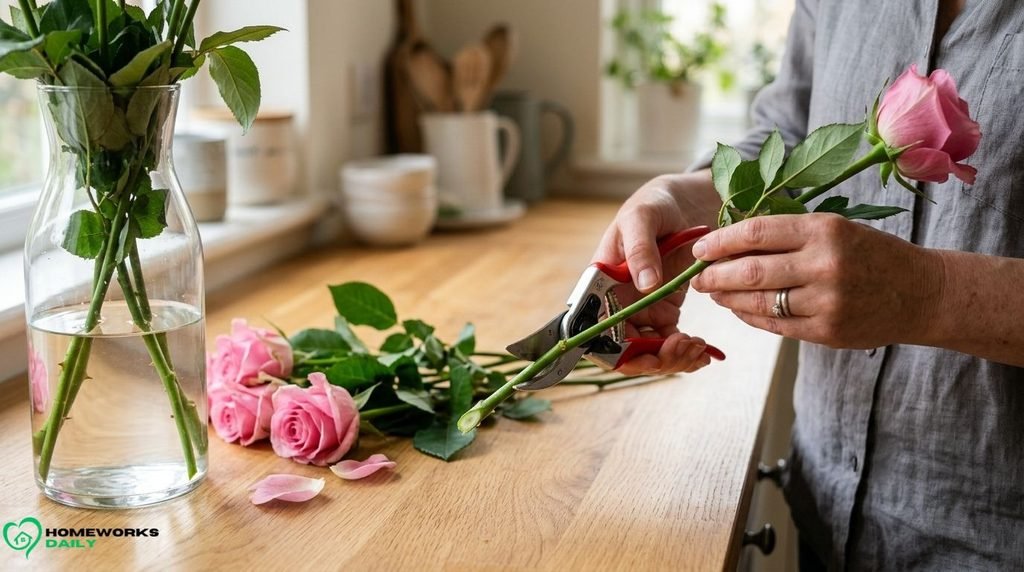
Freshly cutting the stems helps flowers take up water.
Even when flowers arrive in a water-filled container, their stem ends may have become damaged or partially blocked during handling and transportation.
Use clean, sharp floral snips, pruning shears, or a knife to remove approximately half an inch to one inch from the bottom of each stem.
Make a clean cut without crushing the stem. An angled cut can help prevent the end from resting flat against the bottom of the vase, although the cleanliness of the cut matters more than achieving a particular angle.
Place the stems into prepared water promptly after trimming.
Avoid squeezing thick stems with dull household scissors. Crushed plant tissue can interfere with water movement.
If you receive flowers late in the evening and don’t have time to arrange them beautifully, prioritize hydration. Put them in a clean container of water in a cool location, then trim and arrange them properly the following morning.
A simple overnight arrangement is better than leaving flowers dry on the kitchen counter.
3. Remove Leaves Below the Waterline
Leaves look lovely around a bouquet, but they don’t belong underwater.
Submerged foliage gradually breaks down, adding organic material to the water and encouraging microbial growth.
Before arranging your flowers, remove any leaves that would sit below the expected waterline.
There’s no need to strip every leaf from the stem. Healthy foliage above the water can remain, provided it doesn’t crowd the arrangement.
For roses, remove the lower leaves carefully and avoid damaging the stem. You generally don’t need to remove every thorn.
This small preparation step also makes the vase look cleaner and helps prevent unpleasant odors.
4. Use Fresh Water and Commercial Flower Food

The little packet included with a grocery-store bouquet isn’t just an extra accessory.
Commercial flower preservatives are formulated to help maintain the conditions cut flowers need after harvesting. Depending on the product, they may contain a sugar source, an acidifying ingredient, and compounds that help limit microbial growth.
Sugar can provide energy for certain cut flowers, while other ingredients help maintain water quality.
Follow the manufacturer’s instructions rather than guessing how much to add.
Using too little or too much can produce an unsuitable solution, and different products have different mixing requirements.
If your bouquet doesn’t include a packet, clean water is a reasonable starting point. Don’t delay putting flowers in water simply because you don’t have flower food.
5. Keep Flowers Away From Heat and Direct Sunlight
That sunny windowsill might look like the perfect place for a bouquet photograph, but it isn’t necessarily the best location for keeping flowers fresh.
Once flowers are cut, they don’t benefit from sunlight in the same way actively growing garden plants do.
High temperatures increase water loss and can speed up aging.
Choose a location with comfortable, relatively cool indoor temperatures and indirect light.
Avoid placing bouquets:
- On a windowsill receiving strong afternoon sunlight.
- Beside heating vents, radiators, or fireplaces.
- Directly beneath hot lamps.
- Near appliances that release substantial heat.
- In strong drafts that encourage moisture loss.
A dining table or sideboard away from direct sunlight is often a better choice.
Also, keep flowers away from ripening fruit when practical. Some fruits release ethylene gas, which can accelerate aging in ethylene-sensitive flowers.
6. Check Water Daily and Replace It Regularly
One of the easiest mistakes is assuming that a full vase must contain healthy water.
It doesn’t.
Cloudy water, unpleasant odors, or slippery residue on stems can indicate microbial buildup.
Check the vase each day. Add water when the level drops, and replace it completely whenever it becomes cloudy or smells unpleasant.
For a simple household routine, changing the water every day or two is a reasonable approach, especially when no commercial preservative is being used. Follow the product directions if you’re using flower food.
When changing the water, rinse the vase and inspect the stems. If the cut ends appear slimy or damaged, trim them again with a clean tool.
Remember: Topping off dirty water doesn’t remove the material already accumulating inside the vase.
7. Remove Wilting Flowers and Decaying Foliage
Not every flower in a mixed bouquet ages at the same rate.
A rose may begin dropping petals while nearby chrysanthemums still look attractive. Leaving deteriorating flowers in the arrangement can contribute to poor water quality.
Remove spent blossoms, decaying leaves, and badly damaged stems as needed.
This also gives you an opportunity to rearrange the remaining flowers into a smaller vase.
A bouquet that has lost several stems can still look beautiful when grouped more tightly.
Rather than trying to preserve every flower indefinitely, focus on maintaining the healthy ones.
How Long Do Cut Flowers Usually Last?
Most fresh-cut bouquets remain attractive for several days, and many can last around a week or longer with appropriate care. However, there’s no universal expiration date for flowers.
Vase life depends on the flower variety, its maturity when harvested, transportation and storage conditions, and the environment inside your home.
A bouquet purchased after several days of storage may not last as long as flowers harvested that morning.
The following comparison highlights practical differences rather than promising exact lifespans.
| Flower type | General vase-life expectation | Helpful care consideration |
| Roses | Several days to about a week or longer | Keep stems hydrated and remove damaged outer petals only when necessary |
| Tulips | Often around 5–7 days, sometimes longer | Expect stems to continue growing and bending toward light |
| Lilies | Often about a week or longer when buds open gradually | Remove spent blooms and keep away from cats |
| Sunflowers | Commonly several days to about a week | Use a sturdy vase and monitor water consumption |
| Hydrangeas | Highly variable; some wilt quickly | Prevent dehydration and investigate drooping promptly |
| Carnations | Often one to two weeks under favorable conditions | Remove deteriorating blooms and maintain clean water |
| Chrysanthemums | Often one to two weeks or longer | Keep foliage out of water and remove aging flowers |
These are broad planning estimates, not guaranteed lifespans or figures from a controlled comparison. Cultivar, harvest stage, and handling can substantially change the outcome.
When shopping, look for healthy foliage, firm stems, and blossoms that are opening but not already deteriorating.
For flowers harvested at home, timing matters too. Iowa State University’s harvesting and conditioning guidance recommends cutting garden flowers early in the morning, when they’re well hydrated, and placing them in water promptly.
What Is the Best Water for Cut Flowers?
For most household bouquets, clean tap water at a moderate temperature is a practical choice, provided the water is suitable for drinking and doesn’t have unusual quality problems.
You generally don’t need expensive bottled water or specialized filtration equipment.
The most important factors are cleanliness, adequate water levels, and the needs of the flower variety.
Should You Use Warm or Cold Water?
Water temperature recommendations vary because flowers respond differently.
Room-temperature or slightly lukewarm water is a convenient starting point for many mixed bouquets. Cool water can also be suitable, particularly for flowers that naturally prefer cooler conditions.
Some florists use warmer water during specific conditioning treatments to help certain flowers hydrate. That doesn’t mean every bouquet should be placed in hot water.
Avoid boiling or excessively hot water unless you’re following a verified treatment for a particular species.
For everyday care, choose a moderate temperature and concentrate on keeping the vase clean.
Is Filtered Water Better Than Tap Water?
Not necessarily.
If your tap water is safe to drink and your flowers are doing well, there’s usually no reason to switch.
However, unusually high mineral content, extreme pH, or other local water-quality issues can affect certain sensitive flowers.
If you repeatedly experience problems despite good vase hygiene, trying filtered water is a reasonable troubleshooting step.
Don’t assume that distilled water automatically produces longer-lasting bouquets. Water quality is only one part of flower care.
Does Homemade Flower Food Actually Work?
Homemade flower preservatives are popular because their ingredients are already sitting in most kitchens.
You may have heard that adding sugar, soda, aspirin, vinegar, or even a penny to vase water will keep flowers looking fresh.
The problem is that these remedies don’t consistently provide the balanced conditions flowers need.
Commercial preservatives are formulated for multiple purposes, while a single household ingredient usually addresses only one possible issue, if it helps at all.
| Treatment | What to know | Recommendation |
| Commercial flower food | Formulated to support hydration, nutrition, and water quality | Best general option when used as directed |
| Plain, clean water | Provides hydration without additional ingredients | Sensible alternative when flower food is unavailable |
| Sugar alone | May supply carbohydrates but can also encourage microbial growth | Don’t rely on it as a complete preservative |
| Lemon-lime soda | Contains sugar and acids, but isn’t formulated for flower care | Not a dependable substitute |
| Aspirin or pennies | Lack reliable evidence of consistent benefits | Skip them |
| Household bleach mixtures | Incorrect concentrations can damage flowers and create chemical safety risks | Avoid improvised mixtures |
Iowa State University Extension specifically advises against relying on common homemade additives in place of commercial floral preservatives.
Some published floral-care advice includes carefully measured homemade solutions, but those formulations shouldn’t be confused with casually adding kitchen ingredients to a vase.
In particular, never mix bleach with vinegar, ammonia, or other household cleaners.
For most homeowners, the choice is straightforward: use properly diluted commercial flower food or clean water.
How to Keep Different Types of Cut Flowers Fresh
The basic rules apply to most bouquets, but some flowers have characteristics that deserve extra attention.

Roses: Keep the Stems Hydrated
Roses are popular for birthdays, anniversaries, and special occasions, but they can develop bent necks when water uptake becomes inadequate.
This happens when the flower head droops near the top of the stem, sometimes while the petals still look relatively healthy.
Start with a clean cut and fresh water. If a rose begins drooping, inspect the stem and recut it if necessary before returning it to clean water.
Keep roses away from excessive heat.
If the flower is already badly deteriorated or its stem is decaying, trimming may not restore it.
Tulips: Expect Movement and Continued Growth
Tulips behave differently from many other cut flowers.
Their stems can continue elongating after harvesting, and they may bend toward available light.
This isn’t necessarily a sign that something is wrong.
Use a vase that supports the stems, keep the arrangement cool, and rotate it occasionally if you prefer a more balanced appearance.
Tulips may need rearranging as their stems lengthen.
If you’re creating a formal centerpiece, consider that tulips may change shape over several days. Their movement is part of their character.
Lilies: Watch the Pollen and Remove Spent Blooms
Cut lilies can create an impressive display because several buds may open over time.
Remove spent blossoms as they deteriorate, allowing the remaining buds to take center stage.
Lily pollen can stain clothing and furniture. You can carefully remove the pollen-bearing anthers as flowers open, preferably before the pollen becomes loose.
Pet safety warning: True lilies and daylilies are extremely dangerous to cats, including exposure to pollen and vase water. Households with cats should avoid bringing these flowers indoors.
Sunflowers: Choose a Stable Vase
Sunflowers have large, relatively heavy flower heads, so a sturdy vase is essential.
Their stems may consume considerable amounts of water, especially in warm rooms.
Check water levels frequently and remove leaves that would be submerged.
If a sunflower starts leaning, inspect the stem before assuming it needs more water. A heavy flower head may simply need better physical support.
Hydrangeas: Pay Attention to Sudden Wilting
Hydrangeas can be particularly sensitive to dehydration.
Their large flower clusters may droop dramatically when they lose water, even if the vase still contains plenty.
If a hydrangea wilts, check the stem end, make a fresh cut, and place it promptly into clean water.
Some hydrangeas respond to specialized rehydration treatments, but those techniques vary and aren’t guaranteed to work for every cultivar or stage of deterioration.
If you’re growing hydrangeas or other flowering plants for arrangements, browse HomeWorks Daily’s gardening guides for more ideas on caring for plants before harvest.
Common Mistakes That Make Cut Flowers Wilt Faster
Sometimes a bouquet doesn’t need special treatment. It simply needs one avoidable problem corrected.
Watch for these common mistakes:
- Using a dirty vase: Wash it thoroughly before each arrangement.
- Leaving leaves underwater: Remove submerged foliage before it decays.
- Using dull cutting tools: Make clean cuts without crushing stems.
- Placing flowers in strong sunlight: Move them to a cooler spot with indirect light.
- Ignoring cloudy water: Replace it and rinse the container.
- Adding random household chemicals: Use a commercial preservative as directed instead.
- Overcrowding a vase: Give stems enough space and make sure each reaches the water.
- Forgetting water levels: Some arrangements drink faster than expected.
- Leaving flowers in a hot car: Bring them indoors promptly after shopping.
One particularly common problem is buying flowers on a warm afternoon and leaving them in the car while running errands.
Heat exposure during that short period may affect how long the bouquet remains attractive.
When possible, make flowers your last stop before heading home.
How to Revive Drooping Cut Flowers

Drooping flowers aren’t always beyond saving.
Sometimes they simply aren’t absorbing enough water. Other times, their petals and stems have aged too far to recover.
The first step is identifying the likely cause.
| What you notice | Possible cause | What to try |
| Flower heads droop but stems remain firm | Temporary dehydration or restricted water uptake | Recut stems and place in clean water |
| Water is cloudy or smells unpleasant | Microbial buildup | Wash vase, replace water, and inspect stems |
| Stems feel slimy near the bottom | Tissue deterioration or microbial growth | Trim affected ends if enough healthy stem remains |
| Petals are brown, dry, or falling | Advanced aging or environmental stress | Remove spent flowers |
| Tulips lean while remaining firm | Natural growth toward light | Rotate or rearrange the vase |
| Leaves wilt despite a full vase | Water uptake problems, heat, or stem damage | Check stem ends and move flowers to a cooler location |
A Simple Rescue Routine
If your bouquet is drooping unexpectedly:
- Remove the flowers from their container.
- Wash the vase thoroughly.
- Inspect stems for sliminess, crushing, or decay.
- Make fresh cuts on healthy stem tissue when needed.
- Remove submerged or decaying foliage.
- Refill the vase with fresh water and correctly mixed preservative, if available.
- Return the flowers to a cool location and monitor them over the next several hours.
Some flowers will regain firmness after rehydration. Others won’t.
A flower with extensively browned petals, rotting stems, or collapsing tissue is unlikely to recover its original appearance.
It’s also worth distinguishing between a cut bouquet and a living houseplant. A potted plant still has roots and needs ongoing growing conditions, as explained in HomeWorks Daily’s peace lily care guide.
What Supplies Are Actually Worth Buying?
You don’t need a professional florist’s workshop to keep flowers fresh.
A few reliable basics are usually enough.
A Sturdy, Easy-to-Clean Vase
Choose a vase that supports the flowers without squeezing the stems together.
Glass is especially convenient because you can see the water level and notice cloudiness early.
A wide opening makes cleaning easier, while a narrower neck can help support a smaller bouquet.
You don’t need an expensive vase. A clean glass jar can work perfectly well for a casual arrangement.
Sharp Floral Snips or Pruning Shears
A sharp cutting tool is one of the most useful investments if you regularly buy or harvest flowers.
Floral snips are convenient for softer stems, while pruning shears can handle tougher growth.
If you already own sharp, clean garden pruners, there’s no need to buy a separate tool solely for occasional bouquets.
Commercial Floral Preservative
Extra packets can be helpful when you frequently change water or arrange flowers harvested from your garden.
Choose a product intended for cut flowers and follow its mixing instructions.
Don’t assume that adding extra preservative will improve results.
Optional Flower-Arranging Supplies
Floral tape, a reusable flower frog, or a simple stem-support grid can help organize arrangements.
These accessories are useful for creative displays, but they aren’t necessary for keeping a basic bouquet hydrated.
If you’re interested in growing your own cutting garden, HomeWorks Daily’s guide to starting a vegetable garden also introduces foundational gardening practices, although flower varieties have their own planting and harvesting requirements.
A Simple Cut Flower Care Routine for Busy Households
You don’t have to spend twenty minutes caring for your bouquet every morning.
A short, consistent routine can prevent many problems.
| When | What to do |
| When flowers arrive | Clean the vase, trim stems, remove submerged leaves, and add water |
| Every morning | Check water level and look for drooping flowers |
| Every day or two | Refresh water as needed; replace immediately if cloudy |
| When changing water | Rinse vase and remove decaying foliage |
| As blooms fade | Remove spent flowers and rearrange healthy stems |
| Before leaving for a weekend | Refresh water and move flowers to a cool location |
For a particularly busy week, prioritize three things: adequate water, a clean container, and a cool location.
Those basics are more valuable than complicated preservation tricks.
What About Flowers Cut From Your Own Garden?
Garden flowers have one major advantage: you control when they’re harvested.
Cut them early in the morning when plants are well hydrated, and carry a clean bucket of water into the garden.
Choose the appropriate harvest stage for each variety. Some flowers last best when cut as buds begin opening, while others need to be more fully developed.
Place freshly harvested stems in water immediately, then condition them in a cool location before arranging.
If you enjoy growing flowers for indoor displays, you can also explore HomeWorks Daily’s Mexican flower guide for additional garden inspiration.
Frequently Asked Questions
1. How Long Can Cut Flowers Stay Fresh?
Many cut flowers remain attractive for roughly five to ten days, although some varieties fade sooner and others last considerably longer. Their condition when purchased, room temperature, water quality, and care routine all influence their vase life.
2. Should You Change Flower Water Every Day?
Changing water daily is a good option, especially in warm rooms or when you’re not using a floral preservative. However, it isn’t always necessary if the water remains clean and you’re following the preservative’s instructions. Check the water level daily and replace cloudy or foul-smelling water immediately.
3. Does Sugar Help Cut Flowers Last Longer?
Sugar can provide carbohydrates that some cut flowers use, but sugar alone isn’t a complete flower preservative. It can also encourage microbial growth in vase water. Commercial flower food combines ingredients designed to work together, making it a more dependable choice.
4. Should You Use Warm or Cold Water for Cut Flowers?
For most mixed bouquets, room-temperature water is a practical starting point. Certain flowers benefit from cooler water, while some conditioning techniques use warmer water. Avoid extreme temperatures and follow species-specific guidance when available.
5. Why Do Cut Flowers Wilt Even When the Vase Is Full?
A full vase doesn’t guarantee that water is reaching the petals. Bacteria, damaged stem ends, air-related blockages, or deteriorating tissues can interfere with water uptake. Heat and natural aging can also cause wilting. Inspect the stems, refresh the water, and move the bouquet to a cooler location.
6. Can Wilted Cut Flowers Become Fresh Again?
Sometimes. Flowers that are temporarily dehydrated may regain firmness after their stems are recut and placed in clean water. Flowers with extensive decay, browned petals, or severe age-related deterioration generally won’t return to their original condition.
7. Does Refrigerating Flowers Extend Their Life?
Cool storage can slow flower aging, and refrigeration may help many cut flowers remain fresh longer. However, household refrigerators aren’t ideal for every variety, especially tropical flowers sensitive to chilling. Keep flowers away from freezing temperatures and ripening produce, and use refrigeration only when the flower type and available storage conditions are suitable.
Final Thoughts
A beautiful bouquet doesn’t need complicated treatments to stay attractive.
Most of the work comes down to simple habits: start with a clean vase, give stems a fresh cut, keep leaves out of the water, and place the flowers somewhere cool.
Pay attention to what the arrangement is telling you. Cloudy water needs replacing. Drooping stems deserve inspection. Fading blossoms can be removed so the remaining flowers have room to shine.
And if you only have time to do one thing today, check your vase water.
A few minutes of care can help you enjoy those birthday roses, grocery-store tulips, or freshly picked garden flowers for as long as their natural vase life allows.
For more practical ideas on growing and caring for plants, explore the gardening advice at HomeWorks Daily.