You spot the name Yalla Choy while searching for an unfamiliar leafy vegetable. It sounds like the name of an Asian green, but there’s a catch: the term isn’t as straightforward as it looks.
Some recent online pages use Yalla Choy to describe a leafy vegetable, while others appear to use it for water spinach. Still other references connect it with yu choy or choy sum. Those aren’t interchangeable names for one clearly defined plant. For a gardener, that matters because the plants have different botanical identities, growing habits, and even legal considerations in the United States.
So before buying seeds or putting a mystery green in your garden, it’s worth clearing up the name first.
This guide explains what Yalla Choy appears to mean online, which established vegetables it may be confused with, how to identify the plant you’re actually dealing with, and what U.S. home gardeners should know before growing it.
Quick Answer
Yalla Choy is not a standardized botanical name that can be reliably matched to one plant. In current online usage, the term is sometimes associated with Asian leafy greens such as yu choy/choy sum or water spinach. Those are different plants. Yu choy and choy sum belong to the Brassica group, while water spinach is Ipomoea aquatica, a member of the morning-glory family. If you’re buying seeds, check the scientific name on the package rather than relying on “Yalla Choy” alone.
What Is Yalla Choy?
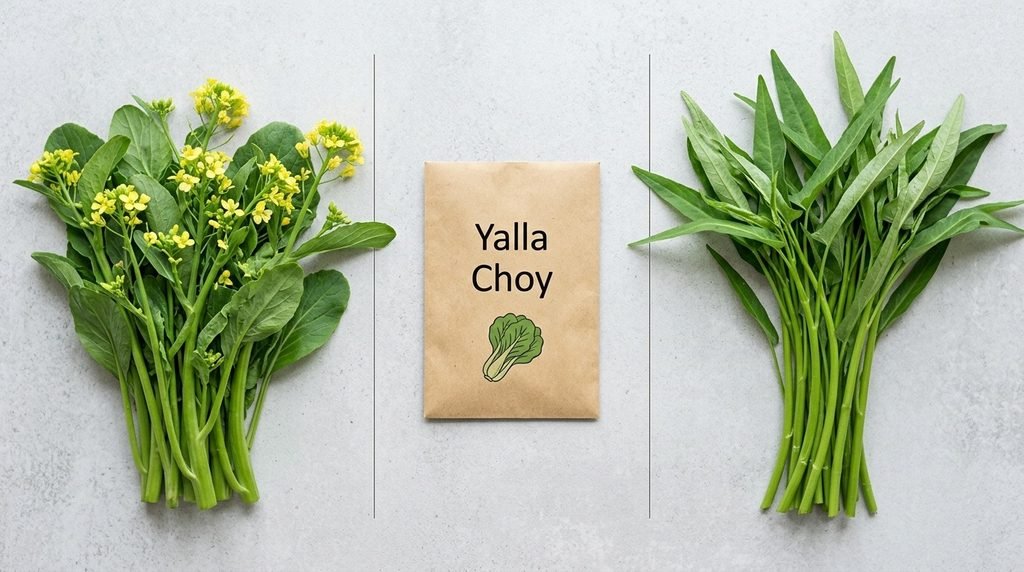
The simplest answer is that Yalla Choy is a nonstandard name whose meaning depends on the source using it.
That may sound less satisfying than a one-line plant definition, but it’s the most accurate way to approach the term. Authoritative horticultural references identify vegetables such as yu choy, choy sum, and water spinach by established common and scientific names. I could not verify Yalla Choy as a standardized plant name in the university, government, and botanical references reviewed for this guide.
That means a gardener shouldn’t assume that every seed packet, recipe, market listing, or website using Yalla Choy is referring to exactly the same vegetable.
Why the Name Causes Confusion
Several Asian leafy vegetables have similar-sounding names and overlapping culinary uses.
For example, yu choy is an Asian green associated with flowering edible rape and is closely related to bok choy and choy sum. UC Agriculture and Natural Resources describes yu choy as similar to bok choy but more delicate and sweeter.
Choy sum, meanwhile, is also known as Chinese flowering cabbage. University of Florida Extension identifies it within the Brassica rapa group and notes that the flowering stems, leaves, and other above-ground portions are edible.
Water spinach, on the other hand, is Ipomoea aquatica. It belongs to the Convolvulaceae family—the same broader family that includes sweet potatoes and morning glories—and has hollow stems that can trail or float in water.
Those differences are too important to gloss over.
Is Yalla Choy the Same as Yu Choy?
Not necessarily.
If you encountered Yalla Choy in a gardening or food context and the plant is described as having upright green stems, leaves, and small yellow flowers, the intended vegetable may be yu choy or choy sum.
Yu choy and choy sum are closely related Asian greens. University of California Agriculture and Natural Resources groups yu choy and choy sum with other Brassica rapa vegetables, while University of Florida provides a more specific production guide for choy sum.
A useful clue is the presence of flowering shoots. Choy sum is specifically valued for its flowering stems bearing leaves, and the plant produces small yellow flowers as it matures.
Cornell’s Vegetable Varieties for Gardeners also lists several Yu Choy varieties, describing them as Asian greens grown for young leaves and flowering stalks, with maturity periods varying by variety and season.
So if you’re trying to identify something sold as Yalla Choy, “yu choy” or “choy sum” may be worth investigating—but don’t assume the names are automatically synonymous.
Is Yalla Choy Water Spinach?
This is where the distinction becomes especially important.
Water spinach is a completely different plant from yu choy and choy sum.
Its scientific name is Ipomoea aquatica. The U.S. National Invasive Species Information Center lists water spinach under that scientific name and identifies it as a federally regulated noxious weed.
Water spinach is a warm-climate, aquatic or semiaquatic vegetable. It has long, hollow stems and can grow along waterways, in wet soil, or floating on water. University of Georgia Extension notes that it grows best in warm, wet conditions and can reproduce through both seed and stem fragments.
That is very different from a typical yu choy or choy sum plant.
A Quick Identification Comparison
| Feature | Yu Choy / Choy Sum | Water Spinach |
| Botanical group | Brassica | Ipomoea |
| Family | Brassicaceae | Convolvulaceae |
| Growth habit | Upright leafy vegetable | Trailing or floating vine |
| Flowers | Small yellow flowers | Morning-glory-like white, pink or pale-lilac flowers |
| Stems | Upright, relatively firm | Hollow and capable of rooting at nodes |
| Preferred conditions | Commonly grown as an Asian leafy vegetable | Warm, wet or semiaquatic conditions |
| U.S. regulatory issue | No comparable federal noxious-weed status identified | Federally listed noxious weed |
The distinction is more than botanical trivia. It can determine whether a plant is appropriate—or legally permissible—for your garden.
How Can You Identify the Plant Behind the Name?
If a label says Yalla Choy, don’t rely on the label alone.
Look for the following information:
- Scientific name
- Variety or cultivar name
- Seed supplier
- Plant description
- Mature size
- Flower description
- Growing requirements
- Intended harvest stage
The scientific name is the most useful identifier when common names become confusing.
For example:
- Brassica rapa var. parachinensis → choy sum/Chinese flowering cabbage
- Ipomoea aquatica → water spinach
- Yu choy is associated with Asian greens in the Brassica rapa group.
If a seller provides only “Yalla Choy” and gives no botanical name, ask for clarification before purchasing seeds.
How Do You Grow Yalla Choy?
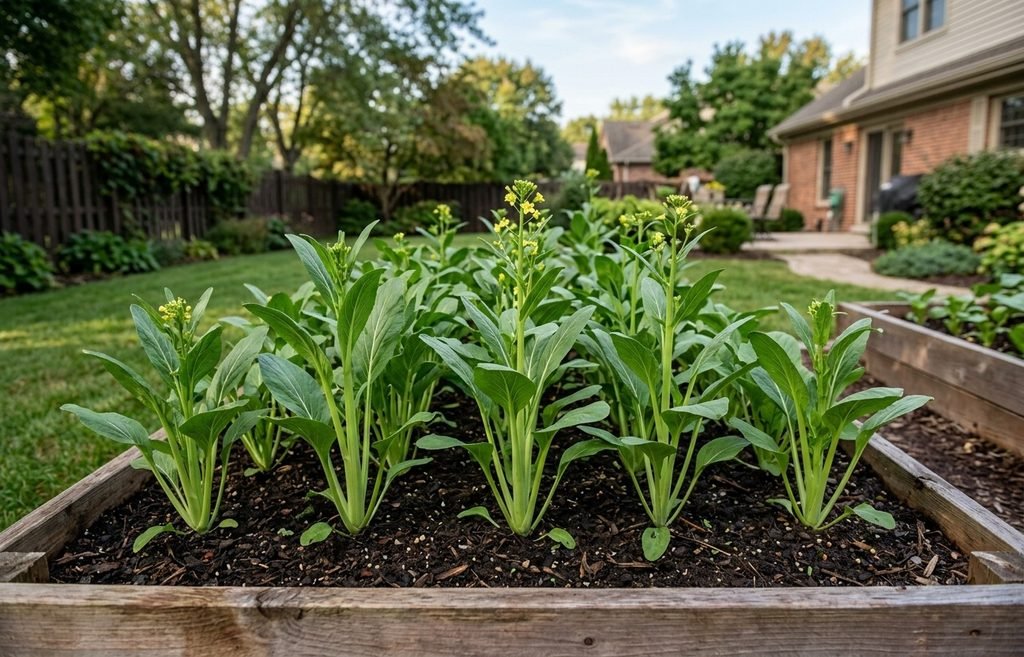
Because Yalla Choy isn’t a standardized plant name, there isn’t one scientifically reliable growing schedule specifically for it.
The correct growing method depends on which vegetable the seller actually means.
If the plant is yu choy or choy sum, you can use growing guidance for those Brassica greens.
If it is water spinach, the requirements and legal considerations are completely different.
Growing Yu Choy or Choy Sum
Choy sum is a relatively compact leafy vegetable. University of Florida Extension describes plants generally reaching around 8 to 16 inches tall, with shallow roots and flowering shoots that develop as the plant matures.
Cornell’s variety database lists yu choy varieties with maturity ranges from roughly 30 days to 80 days, depending on variety and growing season.
That makes these greens interesting for gardeners who want a relatively quick crop.
Light
For a typical Brassica Asian green, choose a location with good sunlight while considering your local climate.
Cool-season conditions are particularly relevant to many Asian brassica crops. UC Agriculture and Natural Resources describes bok choy, choy sum, yu choy, and related vegetables as cool-season crops.
In warmer regions, seasonal timing can matter as much as the planting location.
Soil
Focus on soil that supports healthy root development and drains appropriately.
Choy sum has shallow roots, so consistent soil conditions are particularly useful. Excessive moisture can also create problems; University of Florida notes that overly wet conditions can contribute to bacterial soft rot.
A practical preparation routine is to:
- Loosen the planting area.
- Remove large debris and competing weeds.
- Incorporate suitable organic matter if the soil needs improvement.
- Ensure excess water can drain away.
- Keep moisture reasonably consistent during establishment.
Avoid assuming that “leafy green” means the plant should sit in constantly saturated soil.
Watering
The goal is consistent moisture rather than a cycle of extreme drying followed by heavy watering.
For container gardens, check the growing medium more frequently because containers can dry faster than beds.
At the same time, drainage matters. A plant that likes moisture isn’t necessarily a plant that benefits from stagnant soil.
Spacing
Spacing depends on the variety and whether you’re harvesting young leaves or allowing the plant to develop flowering shoots.
Follow the spacing information supplied for the specific seed variety whenever available.
Giving plants adequate room can improve airflow and make harvesting easier.
What About Growing Water Spinach?
If the Yalla Choy you purchased is actually water spinach, don’t simply follow yu choy growing instructions.
Water spinach has very different biology.
University of Georgia Extension describes it as a warm, wet-climate crop that grows best when temperatures are regularly above 77°F and prefers full sun. It can grow in moist soil as well as aquatic environments.
More importantly, water spinach presents a U.S. regulatory and invasive-species issue.
The species is listed as a federal noxious weed, and USDA regulations specifically identify Ipomoea aquatica as water spinach/swamp morning-glory.
The National Invasive Species Information Center explains that federal noxious-weed status restricts importation and interstate movement without the required permit.
State rules can also differ. University of Georgia’s 2026 production guide, for example, discusses state-specific permitting and cultivation restrictions.
What Should U.S. Gardeners Do?
Before growing a plant sold as Yalla Choy:
- Find its scientific name.
- Determine whether it is yu choy, choy sum, water spinach, or another vegetable.
- Check your state agriculture department’s rules if the plant is Ipomoea aquatica.
- Never release plant fragments into ponds, streams, drainage ditches, or natural waterways.
- Follow any permit or containment requirements that apply.
This is one situation where checking the label first can save you considerable trouble.
When Should You Harvest Yu Choy or Choy Sum?
If your Yalla Choy turns out to be yu choy or choy sum, harvest timing depends on the variety and the part of the plant you want.
Choy sum is particularly valued for its flowering stems and leaves. University of Florida notes that it is primarily harvested for flowering stems bearing leaves during bolting.
Cornell’s variety listings show that some yu choy varieties can be harvested as young leafy greens relatively quickly, while other varieties take longer.
For a home gardener, this means you don’t necessarily need to wait for a large mature plant.
Young leaves and tender stems can be useful depending on the variety and intended cooking method.
How Is Yu Choy Used in the Kitchen?
If your Yalla Choy actually turns out to be yu choy or choy sum, the kitchen is where the plant becomes particularly versatile.
These greens are commonly:
- Stir-fried
- Added to soups
- Steamed
- Served with garlic
- Cooked with chili
- Added to mixed vegetable dishes
- Used in salads when sufficiently tender
University of Florida Extension specifically notes stir-frying, salads, and soups among common uses for choy sum.
The stems and leaves can provide different textures, so cooking time may need to be adjusted according to the maturity of the vegetable.
Is Yalla Choy Healthy?
It’s better to answer this question after identifying the actual vegetable.
For choy sum, University of Florida’s production guide provides nutrient data showing that raw choy sum contains dietary fiber, calcium, potassium, vitamin C, beta-carotene, and folate.
That doesn’t mean a plant labeled Yalla Choy automatically has a particular nutritional profile. If the product is actually water spinach, for example, you’re dealing with a different species.
So avoid treating nutrition claims attached to the name Yalla Choy as universal.
The scientific identity of the vegetable matters.
Common Yalla Choy Mistakes to Avoid
The biggest mistakes are surprisingly simple.
1. Assuming the Name Identifies the Plant
This is the first problem.
A common name can be inconsistent. With Yalla Choy, the uncertainty appears especially significant.
Better approach: Find the scientific name before planting.
2. Assuming Water Spinach and Yu Choy Are the Same
They’re not.
Water spinach is Ipomoea aquatica, while choy sum belongs to the Brassica group.
3. Buying Seeds Without Checking the Label
A colorful seed packet isn’t enough.
Look for:
- Scientific name
- Variety
- Days to maturity
- Growing instructions
- Supplier information
4. Ignoring Local Regulations
This is particularly important if the plant turns out to be water spinach.
Federal and state regulations can apply to Ipomoea aquatica.
5. Treating Every Asian Green as a Warm-Weather Crop
Different vegetables have different temperature preferences.
Choy sum and related Brassica greens have different growing requirements from warm-loving water spinach.
Can You Grow Yalla Choy in a Container?
Potentially—but again, the answer depends on what “Yalla Choy” actually means.
For yu choy or choy sum, container gardening can be practical because these are relatively compact leafy vegetables. Choose a container with drainage, use a quality growing medium, and follow the spacing and maturity information for the specific variety.
A container can also make seasonal growing easier because you have more control over the soil and location.
If you’re planning a larger container garden or limited-space growing area, HomeWorksDaily’s existing guide to roof garden ideas can provide useful ideas for organizing productive planting areas.
Water spinach is a different matter. Because Ipomoea aquatica can spread through stem fragments and has invasive potential, simply putting it in a pot does not eliminate the need to understand applicable regulations and containment concerns.
What Should You Look for When Buying Seeds?
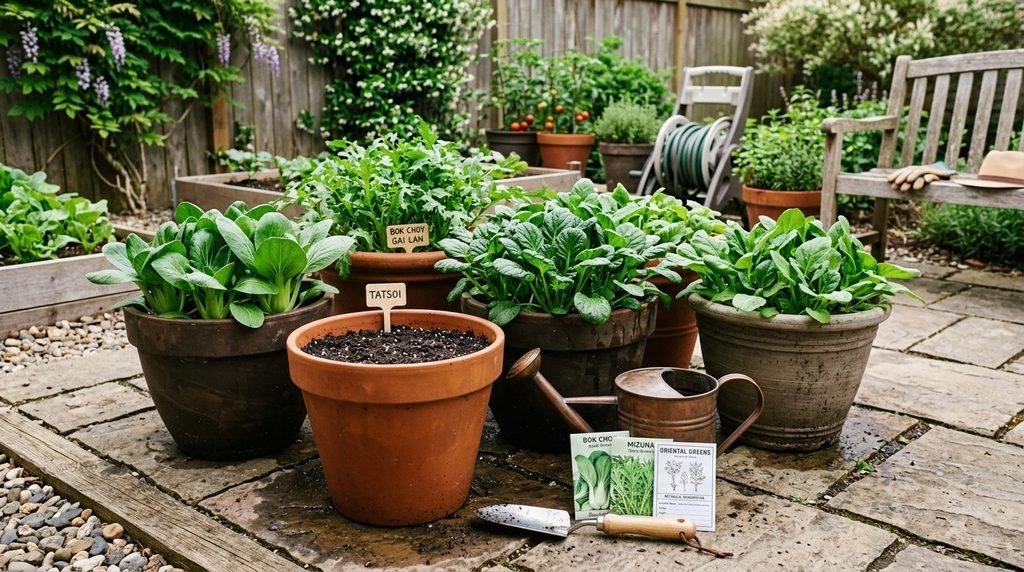
If you’re shopping for something advertised as Yalla Choy, treat the name as a starting point rather than proof of plant identity.
Seed-Buying Checklist
Look for:
- Scientific name: The most important detail.
- Specific variety: Useful for understanding maturity and growth habit.
- Days to maturity: Helpful for planning successive plantings.
- Growing season: Check whether the variety suits your climate.
- Harvest description: Look for young leaves, mature leaves, or flowering stems.
- Supplier instructions: Prefer a seller that clearly identifies the crop.
- Regulatory information: Especially important if the scientific name is Ipomoea aquatica.
If a listing says only “Yalla Choy” without botanical information, consider asking the seller to identify the plant before buying.
Yalla Choy vs. Yu Choy vs. Water Spinach
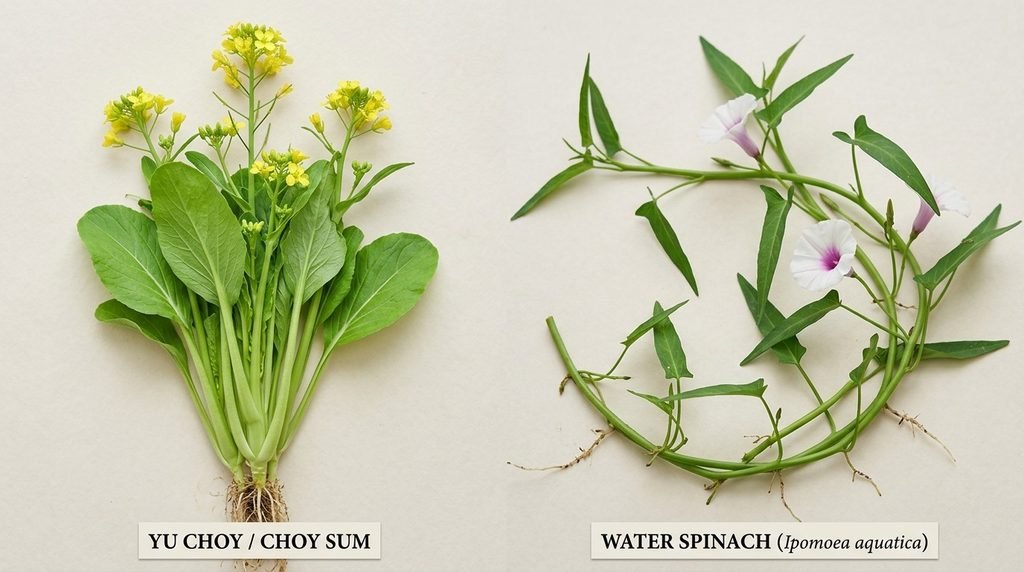
The easiest way to remember the issue is this:
Yalla Choy is the uncertain label. Yu choy/choy sum and water spinach are identifiable plants.
| Name | Scientific identity | General type | Key feature |
| Yalla Choy | Not standardized in the authoritative sources reviewed | Ambiguous | Verify before planting |
| Yu choy | Associated with Brassica rapa Asian greens | Leafy vegetable | Tender leaves and flowering stalks |
| Choy sum | Brassica rapa var. parachinensis and related classifications | Chinese flowering cabbage | Edible flowering shoots and leaves |
| Water spinach | Ipomoea aquatica | Aquatic/semi-aquatic vegetable | Hollow stems and trailing growth |
University sources support the distinction between yu choy/choy sum and water spinach, while federal sources identify Ipomoea aquatica as a regulated noxious weed.
Frequently Asked Questions
What is Yalla Choy?
Yalla Choy is an ambiguous term rather than a standardized botanical name. Current online usage can refer to different Asian leafy vegetables, including yu choy/choy sum and, in some cases, water spinach. Because those plants are biologically different, gardeners should verify the scientific name before buying seeds or planting.
Is Yalla Choy the same as yu choy?
Not necessarily. Some online uses may be referring to yu choy, but “Yalla Choy” itself is not a reliable standardized synonym in the authoritative horticultural references reviewed. Yu choy belongs to the Asian Brassica greens group, so the scientific name and plant description should be checked before assuming the identity.
Is Yalla Choy the same as water spinach?
It should not automatically be treated as the same plant. Water spinach is Ipomoea aquatica, a distinct species in the morning-glory family. It is also federally listed as a noxious weed in the United States, making identification particularly important for U.S. gardeners.
Can I grow Yalla Choy at home?
You can grow the plant marketed under that name only after determining what it actually is. If it is yu choy or choy sum, standard Asian-green gardening practices apply. If it is water spinach, warm and wet growing conditions are preferred, and U.S. regulatory requirements must be checked first.
How long does yu choy take to grow?
The timing depends on the variety and season. Cornell’s Vegetable Varieties for Gardeners lists yu choy varieties with maturity ranges from about 30 days to 80 days. Some are grown for young leaves and flowering stalks, while others take longer to mature.
What does choy sum look like?
Choy sum is an upright leafy vegetable with green stems and leaves and small yellow flowers. University of Florida describes typical plants as approximately 8 to 16 inches tall, although size varies with genetics and growing conditions.
Is water spinach legal to grow in the United States?
The answer depends on federal and state requirements. Ipomoea aquatica is federally listed as a noxious weed, and state rules can impose additional restrictions or permit systems. Check current USDA and state agriculture regulations before acquiring or growing it.
What should I check before buying Yalla Choy seeds?
Check the scientific name first. Then review the variety, days to maturity, growing conditions, harvest information, and any applicable regulations. If the seller cannot provide a scientific name, it’s worth clarifying the product before making the purchase.
Final Takeaway
The most useful thing to know about Yalla Choy is that the name itself isn’t enough to identify a plant reliably.
If you’re interested in growing or cooking with this vegetable, don’t stop at the label. Find out whether you’re actually dealing with yu choy, choy sum, water spinach, or another leafy green.
For a home gardener, that small identification step can make a big difference. It determines what soil, temperature, watering routine, harvest method, and—in the case of water spinach—regulatory precautions you need to consider.
The broader lesson is useful beyond this one search term: when a plant has an unfamiliar or inconsistent common name, the scientific name is your best friend.
Once the plant is properly identified, the gardening advice becomes much clearer—and you can choose seeds, containers, soil, and growing conditions with considerably more confidence.
For more practical gardening and home-growing guidance, explore the gardening resources available through HomeWorksDaily.