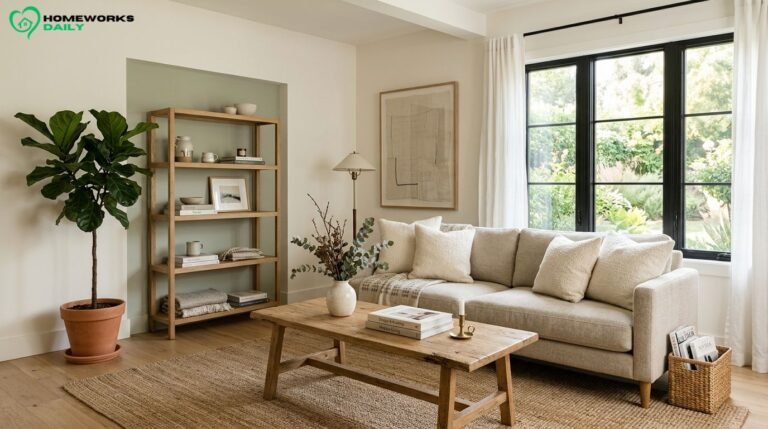
Picture this: your room doesn’t exactly need a complete makeover, but it feels a little flat. The walls are bare, the lighting isn’t doing you any favors, and the space doesn’t quite have the cozy look you’ve been saving on Pinterest.
The good news? You don’t necessarily need hundreds or thousands of dollars to change that.
With room decor under 200$, the trick isn’t to buy as many things as possible. It’s to spend your money where you’ll actually notice the difference.
A new light fixture, a well-placed mirror, coordinated textiles, a few pieces of wall art, or some greenery can completely change the feel of a room when they’re chosen and arranged thoughtfully.
The bottom line: A $200 decorating budget can go surprisingly far when you focus on a few high-impact pieces, work with what you already own, and avoid filling the room with random inexpensive accessories.
Let’s break down exactly how to do it.
How Far Can $200 Go When Decorating a Room?
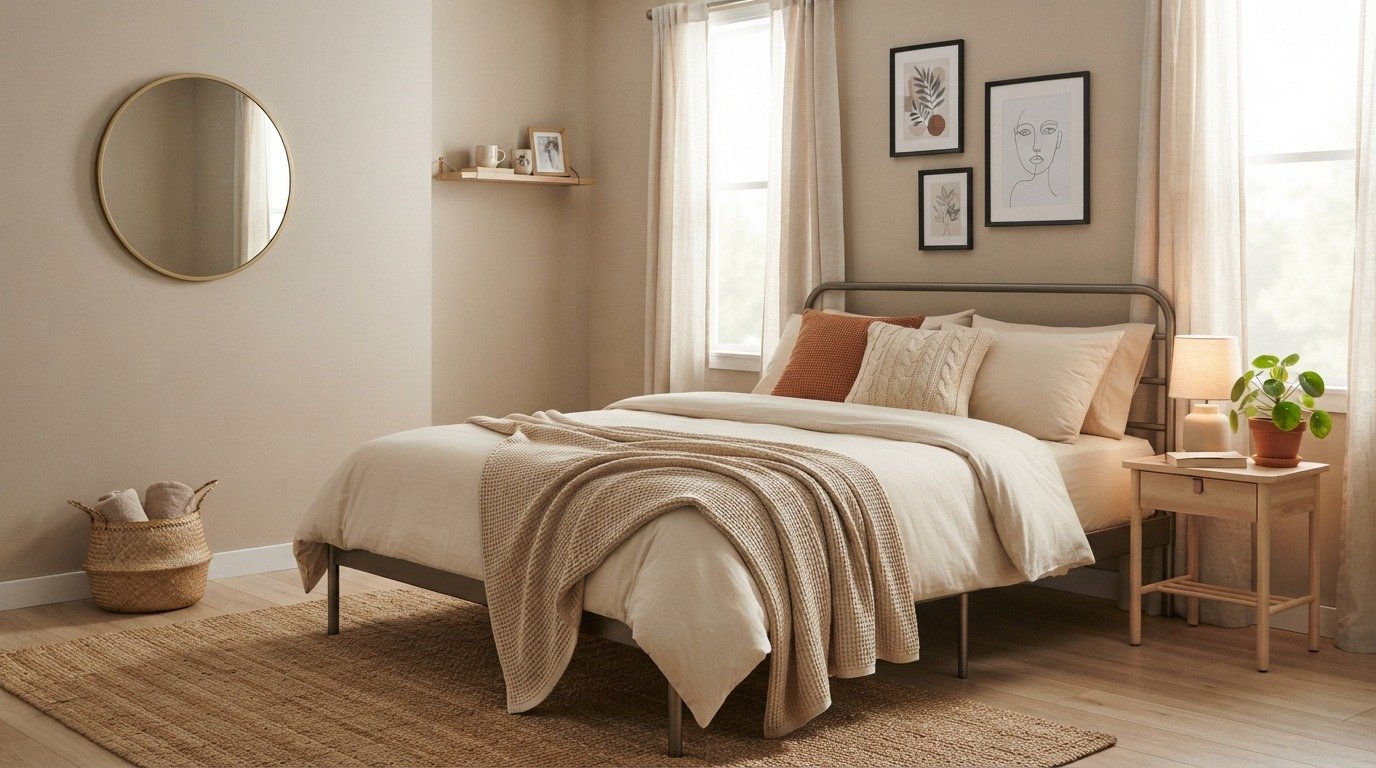
A $200 budget won’t usually transform an entire room from top to bottom, especially if you’re also replacing furniture. But it can create a noticeable visual refresh.
Think of your budget as a styling budget rather than a furniture-replacement budget.
For example, $200 could potentially cover a combination of:
- New throw pillows
- A cozy blanket
- Curtains
- Decorative lighting
- Wall art
- A mirror
- A small indoor plant
- Decorative storage
- A few finishing accessories
The exact cost will vary depending on the retailer, materials, size, and current promotions.
Instead of asking, “How many things can I buy for $200?” ask:
“Which three or four changes will make this room look noticeably better?”
That question can save you from wasting your budget on small items that don’t make much visual difference.
15 Room Decor Ideas Under $200
You don’t need all 15 ideas. Pick the ones that solve the biggest problems in your particular room.
1. Upgrade the Lighting
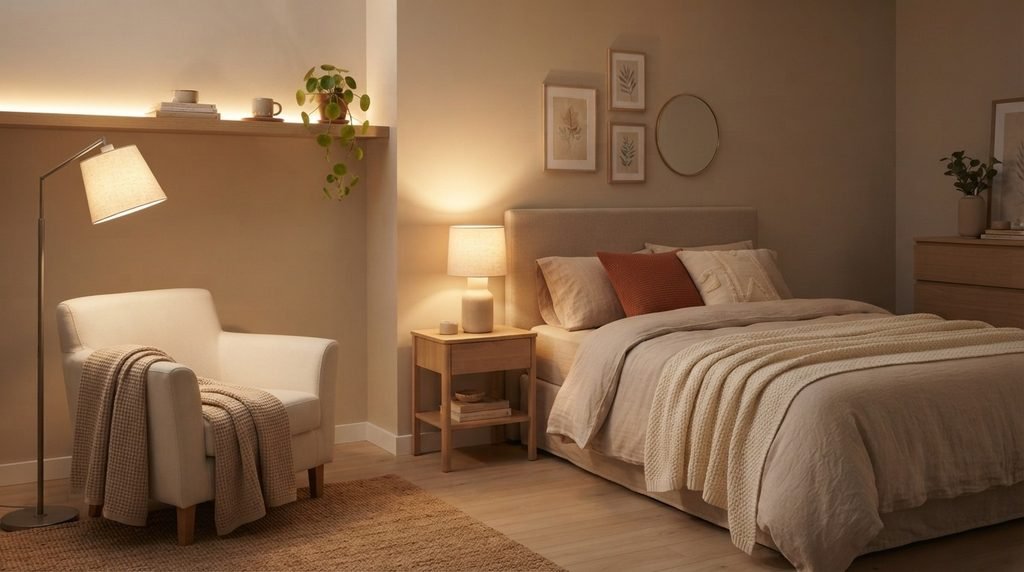
Lighting is one of the easiest ways to change the atmosphere of a room.
A room with basic overhead lighting can feel very different after adding one or two additional light sources.
Consider:
- A table lamp
- A floor lamp
- A small accent lamp
- Warm-toned bulbs where appropriate
- Decorative lighting for a reading corner
The goal isn’t simply to make the room brighter. It’s to create layers of light.
One overhead light often makes a room feel flat. Several smaller sources can create more depth.
Best for: Bedrooms, living rooms, home offices, and reading areas.
2. Add a Large Mirror
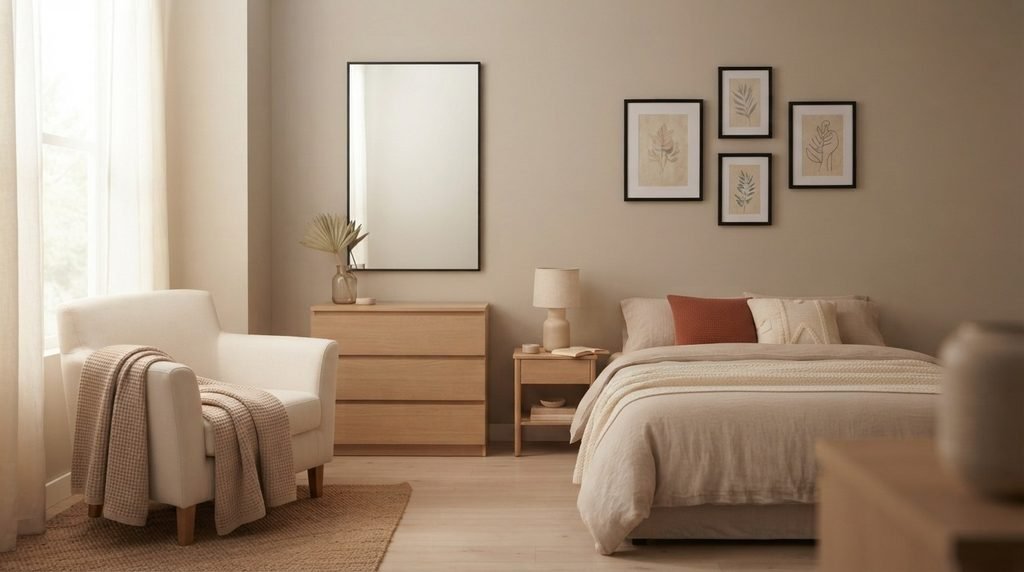
A mirror can be a particularly useful decorating piece when you’re working with a smaller room.
Place it where it can reflect natural or artificial light, rather than simply putting it on an empty wall without considering what it reflects.
A mirror can also become a visual focal point.
For a budget makeover, look for:
- Simple framed mirrors
- Rounded mirrors
- Full-length mirrors
- Thrifted mirrors that can be refreshed
- Leaning mirrors for suitable spaces
You don’t need the most expensive frame. Size and placement often matter more than a fancy design.
3. Refresh the Wall Decor
Bare walls can make a room feel unfinished.
You don’t have to create an expensive gallery wall. A few carefully selected pieces can be enough.
Try:
- One oversized artwork
- A pair of coordinated prints
- A small gallery arrangement
- Framed botanical artwork
- A large decorative textile
- A simple wall mirror
One important rule: don’t make every wall compete for attention.
A strong focal wall can look more intentional than covering every available surface.
4. Use Throw Pillows Strategically
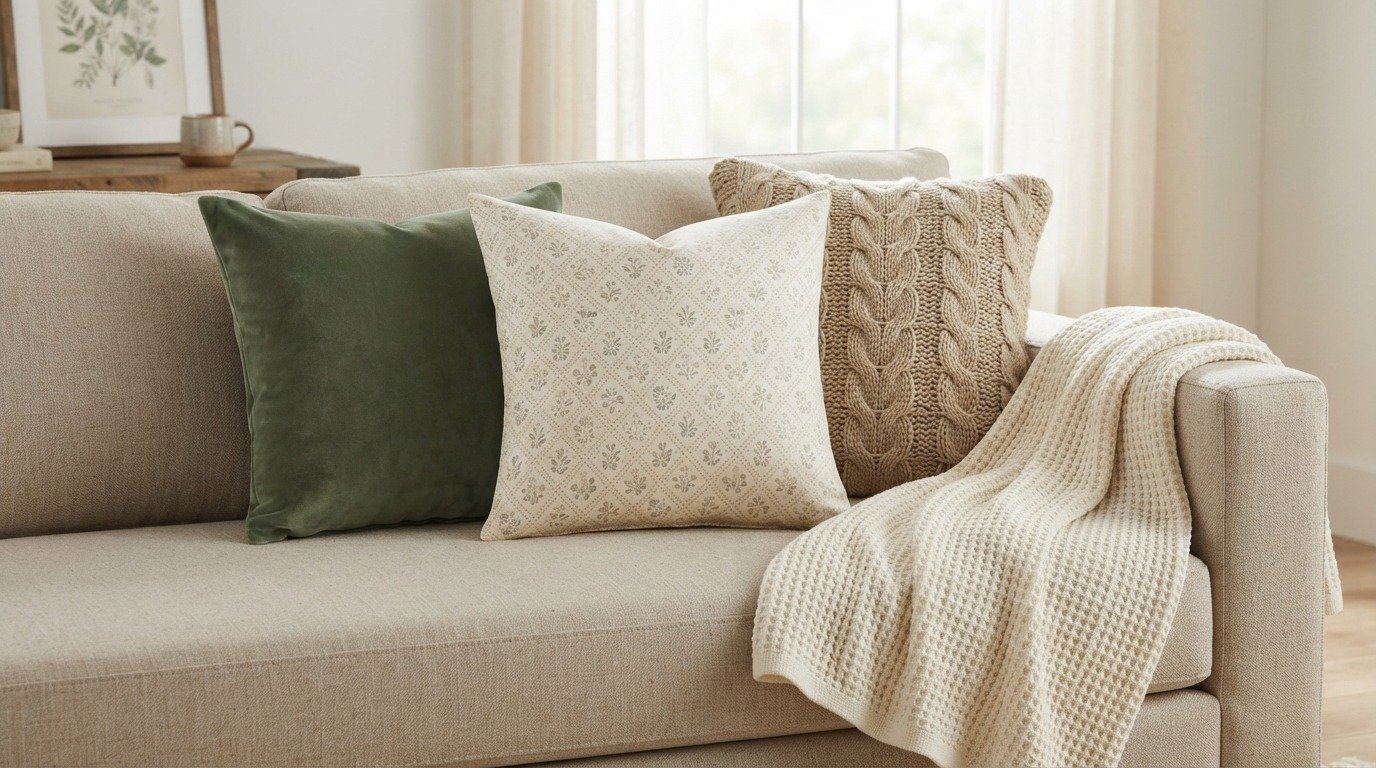
Throw pillows are relatively easy to change when you want a new color scheme.
Instead of buying several unrelated patterns, choose a simple combination.
For example:
One solid color + one subtle pattern + one textured pillow
This creates variety without making the sofa or bed look chaotic.
If your existing furniture is neutral, pillows can introduce color without requiring a major investment.
5. Add a Cozy Throw Blanket
A throw blanket can make a sofa, chair, or bed feel more inviting.
Look for texture rather than simply choosing the cheapest option.
Depending on your room, consider:
- Knitted textures
- Woven blankets
- Lightweight cotton
- Neutral colors
- Seasonal colors
The blanket doesn’t have to match everything perfectly.
It simply needs to work with the overall color and texture of the room.
6. Change the Curtains
Curtains can occupy a surprisingly large visual area, so changing them can have more impact than buying several tiny decorations.
Before purchasing, measure the window and consider the rod placement.
For a polished look, avoid choosing curtains based only on their color.
Think about:
- Length
- Width
- Fabric appearance
- Pattern
- Light control
- Overall room style
A simple neutral curtain can work especially well if your walls and furniture already provide plenty of color.
7. Bring in Some Greenery
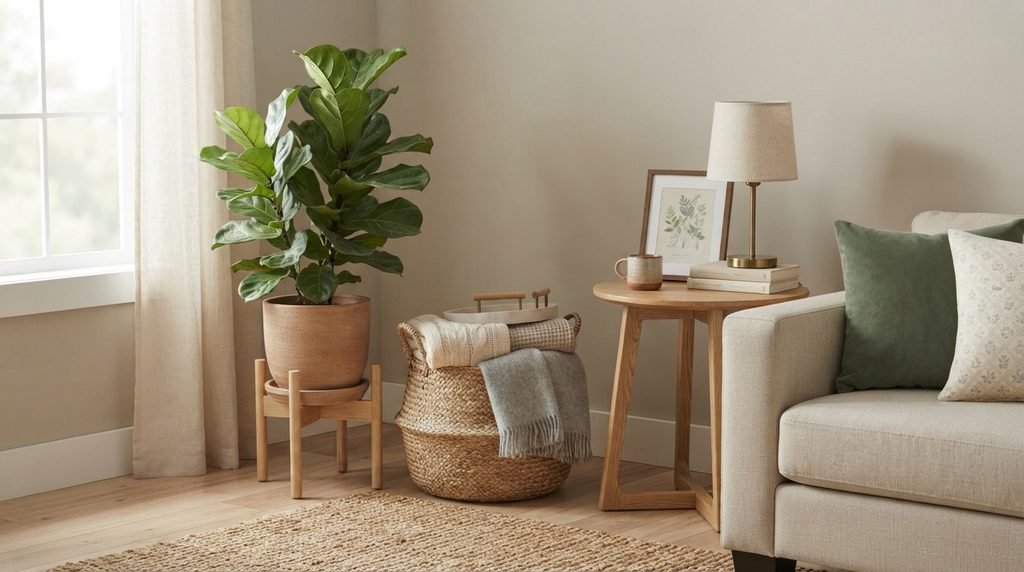
Plants can introduce color and texture while making a room feel more connected to nature.
If your room has good natural light, consider an indoor plant suited to those conditions.
If maintaining plants isn’t practical, decorative branches, dried arrangements, or realistic artificial greenery can provide a similar visual effect.
Don’t turn every empty corner into a plant display.
One larger plant can sometimes have more impact than several tiny ones scattered around the room.
8. Improve Decorative Storage
Storage doesn’t have to look like storage.
Use attractive baskets, boxes, trays, or containers to keep everyday items organized.
This works particularly well for:
- Blankets
- Books
- Remote controls
- Small accessories
- Office supplies
- Everyday clutter
The benefit is twofold: the room looks better and becomes easier to keep tidy.
That’s a much better use of $20–$30 than another decorative object that simply occupies space.
9. Create a Small Reading Corner
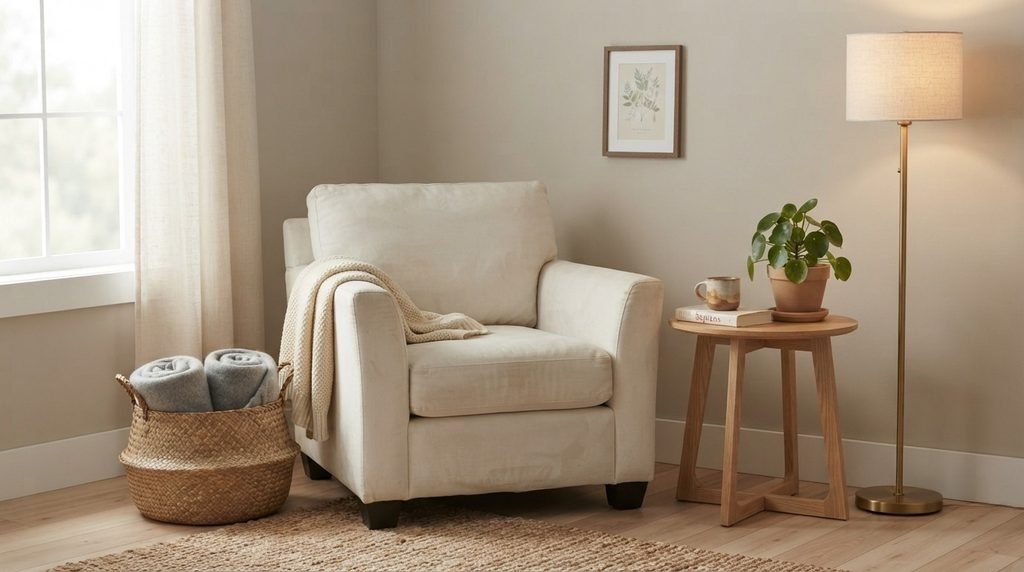
Have an unused corner?
You may not need to buy an entirely new furniture set.
If you already have a chair, add:
- A small side table
- A lamp
- A throw blanket
- A plant or decorative object
Suddenly, an unused corner becomes a purposeful part of the room.
This is a useful budget-decorating principle:
Don’t just decorate empty space. Give empty space a job.
10. Style Your Existing Shelves
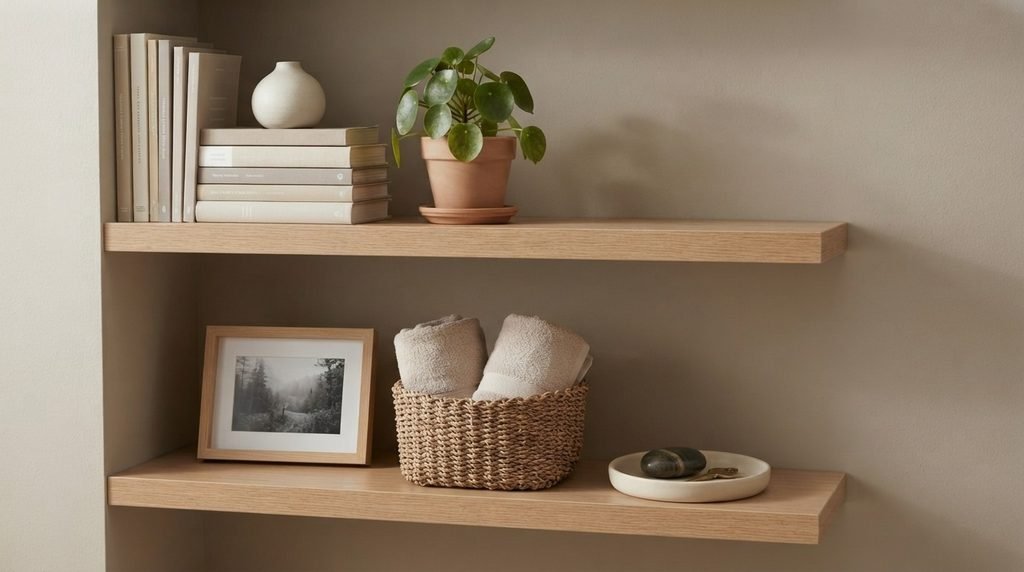
Before buying new shelves, take a look at what you already own.
Rearrange books, plants, framed photos, baskets, and decorative objects.
A simple styling technique is to vary:
- Height
- Shape
- Texture
- Color
Avoid lining up 15 small objects at exactly the same height.
Instead, create small visual groupings.
11. Use a Tray to Create a Focal Point
A decorative tray can make a collection of small items look intentional.
On a coffee table, dresser, or console, a tray might hold:
- A small plant
- A candle
- A book
- A decorative object
The tray visually groups everything together.
This is a small change, but it can make a surface look much less cluttered.
12. Add an Area Rug or Small Accent Rug
A rug can visually connect different elements of a room.
However, don’t automatically buy the largest rug you can afford.
First consider:
- Room dimensions
- Furniture arrangement
- Existing colors
- Traffic patterns
- Cleaning requirements
For a $200 decorating budget, a smaller accent rug may make more sense if buying a large rug would consume most of the budget.
13. Refresh Hardware
Sometimes a room feels dated because of small details rather than major furniture.
Depending on the item and whether replacement is appropriate, updating visible hardware can provide a subtle refresh.
Examples include:
- Cabinet pulls
- Drawer handles
- Certain furniture knobs
Before changing anything, make sure the new hardware fits the existing holes and is suitable for the furniture.
14. Create a Color Story
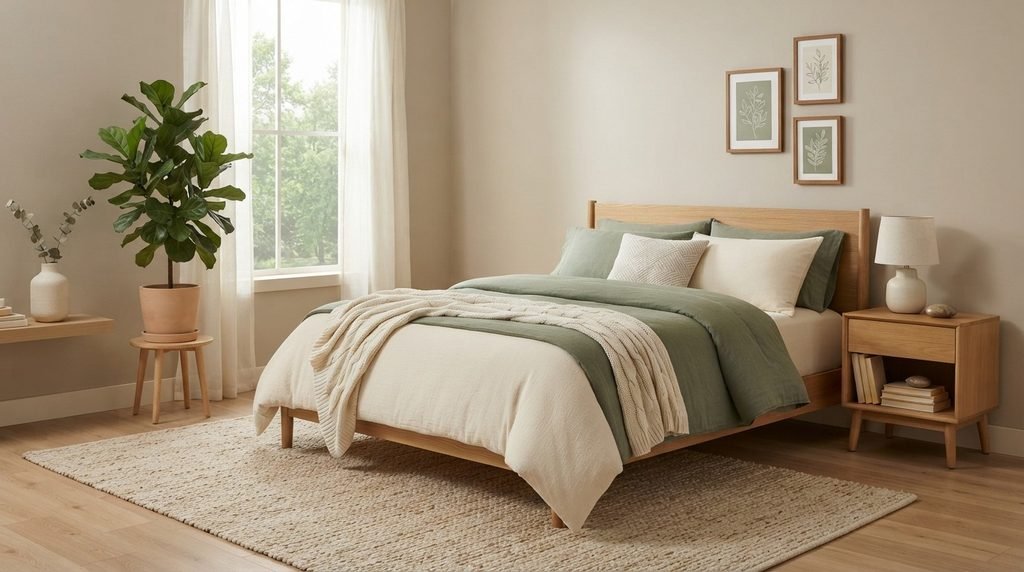
You don’t need every item to match.
Instead, choose a small color palette.
For example:
Cream + warm wood + muted green
or
White + charcoal + soft blue
or
Beige + brown + terracotta
Once you choose your palette, use it across several elements.
That makes inexpensive pieces feel more coordinated.
15. Rearrange Before You Buy
This might be the most underrated budget decorating idea.
Before spending a single dollar, move things around.
Try:
- Changing furniture orientation
- Moving a chair closer to a lamp
- Creating a stronger focal point
- Removing unnecessary furniture
- Repositioning artwork
- Grouping accessories
- Clearing visual clutter
Sometimes the room doesn’t need more decor.
It needs better editing.
How to Build a $200 Room Decor Budget
Rather than spending the entire amount on one category, divide your budget according to the room’s biggest weaknesses.
Here’s an example starting point:
| Decor Category | Suggested Budget | Main Purpose |
| Lighting | $35–$50 | Improve atmosphere |
| Wall decor | $25–$40 | Add personality |
| Textiles | $35–$45 | Add softness and color |
| Mirror | $20–$35 | Add visual depth |
| Greenery | $15–$25 | Add natural texture |
| Storage/accessories | $20–$30 | Finish and organize |
| Total | Around $150–$225 | Adjust to your room |
You don’t have to spend exactly these amounts.
In fact, leaving part of the budget unspent can be smart.
You might discover that one category costs less than expected, giving you room to invest in something more important.
Where Should You Spend More?
Not every decorating item deserves the same budget.
A useful rule is:
Spend more on pieces that are large, frequently used, or visually dominant. Save on small accessories.
Consider spending more on:
- A well-sized rug
- A frequently used lamp
- Curtains
- A quality mirror
- A major decorative focal point
Consider saving on:
- Small decorative objects
- Picture frames
- Simple trays
- Accent accessories
- Seasonal decorations
The right balance depends on your room.
A $40 lamp that you use every night may provide more value than four $10 decorations that you barely notice.
Room Decor Styles You Can Create for $200
A limited budget doesn’t mean you have to choose a particular decorating style.
Modern
Focus on:
- Clean lines
- Neutral colors
- Simple artwork
- Minimal accessories
- One or two strong statement pieces
Cozy
Prioritize:
- Soft blankets
- Warm lighting
- Textured pillows
- Rugs
- Natural materials
Minimalist
The secret isn’t buying minimalist-looking decorations.
It’s buying fewer things.
Choose:
- Simple artwork
- Neutral textiles
- Functional storage
- A small number of intentional accessories
Boho
Use:
- Natural textures
- Plants
- Woven baskets
- Layered textiles
- Warm earth tones
Farmhouse
Consider:
- Neutral colors
- Wood textures
- Simple framed artwork
- Woven accessories
- Functional storage
Scandinavian-Inspired
Think:
- Light colors
- Simple shapes
- Natural textures
- Functional furniture
- Plenty of visual breathing room
You don’t need to perfectly follow a design label. Borrow the elements you like and adapt them to your existing room.
How to Make Affordable Decor Look More Expensive
This is where styling matters.
Two rooms can contain similarly priced items, yet one can look much more polished.
Why?
Pay attention to scale
Tiny artwork on a large wall can look lost.
A single larger piece may create more impact.
Repeat colors
If you introduce a particular color through a pillow, repeat it subtly somewhere else.
This creates visual continuity.
Mix textures
Combine smooth, woven, soft, matte, and natural-looking surfaces.
Texture can make a simple room feel more layered.
Give objects breathing room
Not every surface needs decoration.
Empty space can actually make the items you choose stand out more.
Think about height
Place objects at different heights instead of creating a flat line of accessories.
Coordinate without matching
A room can look coordinated without having identical colors and patterns everywhere.
A Simple $200 Room Makeover Example
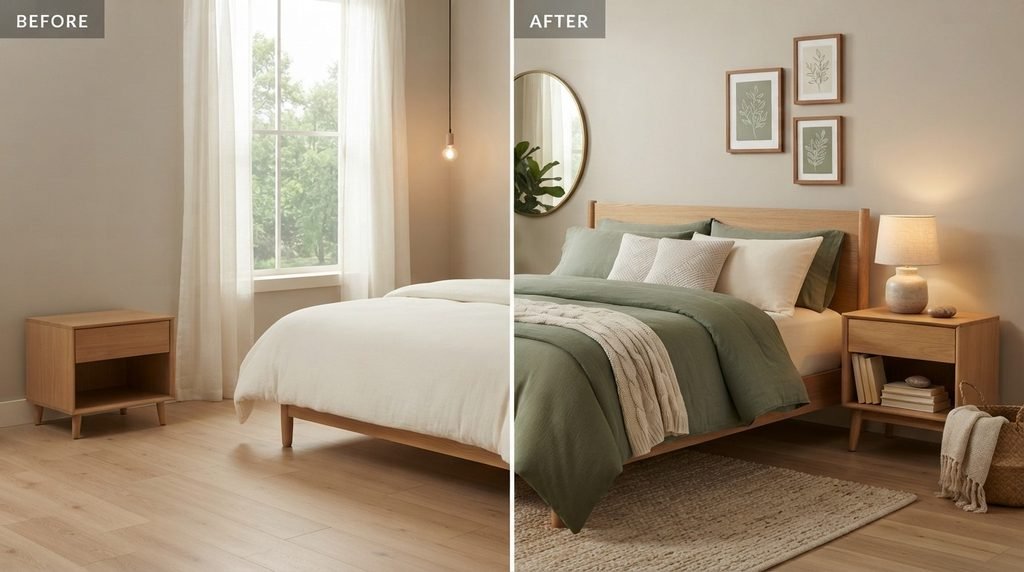
Let’s say you have a bedroom with:
- Existing bed
- Existing dresser
- Basic lighting
- Bare walls
- Neutral bedding
- One empty corner
Instead of replacing the furniture, you could prioritize:
| Purchase | Example Budget |
| Table or floor lamp | $35 |
| Large wall art | $30 |
| Mirror | $30 |
| Throw blanket | $25 |
| Two accent pillows | $20 |
| Small plant | $15 |
| Decorative basket | $20 |
| Small accessory/tray | $15 |
| Total | $190 |
That leaves approximately $10 for a small finishing touch—or you can simply keep it.
The important part isn’t the exact shopping list.
It’s the strategy: change several visually important elements while keeping the expensive furniture you already own.
Common Budget Decorating Mistakes
Buying too many small things
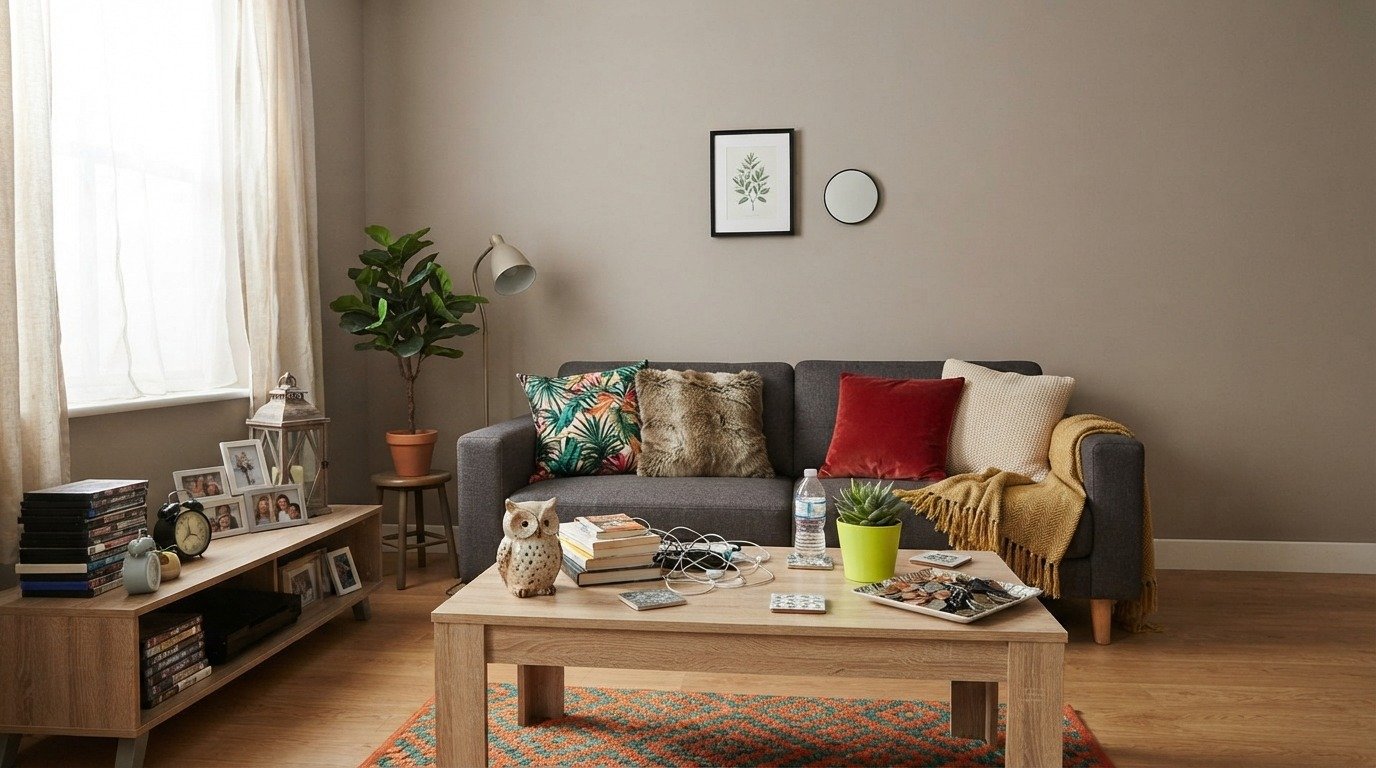
A cart full of inexpensive accessories can consume your budget without changing the room much.
Better approach: Choose a few high-impact pieces.
Ignoring measurements
A beautiful rug or mirror can still look wrong if its size doesn’t suit the room.
Better approach: Measure before purchasing.
Trying to copy a staged room exactly
Online inspiration photos often involve carefully controlled lighting, furniture placement, and styling.
Your room has its own dimensions and natural light.
Better approach: Copy the design principles, not every individual object.
Choosing everything from one style category
A room doesn’t need to look like a showroom.
Better approach: Combine complementary textures and colors.
Forgetting what you already own
The cheapest decor item is the one you don’t need to buy.
Before shopping, inspect your closets, storage areas, and other rooms for pieces that could be repurposed.
What Should You Buy First When Decorating on a Budget?
Start with the element that’s causing the biggest visual problem.
For example:
Does the room feel dark? Start with lighting.
Walls feel empty? Start with artwork or a mirror.
Does the room feel cold? Add textiles and texture.
Does the room feel cluttered? Improve storage.
Does the room feel disconnected? Establish a simple color palette.
This approach is much more effective than buying whatever happens to be on sale.
Can You Decorate a Whole Room for $200?
Yes, but the result depends on what you already have.
If you already own the main furniture, $200 can be enough for a noticeable decorative refresh.
If you need a bed, sofa, dresser, dining table, or other major furniture pieces, the same budget will be much more restrictive.
The smartest strategy is usually to keep functional furniture and use the budget for visual improvements.
What Decor Gives the Biggest Visual Impact?
The biggest impact usually comes from items that occupy significant visual space or influence the room’s atmosphere.
These can include:
- Lighting
- Curtains
- Rugs
- Mirrors
- Large wall art
- Bedding
- Accent colors
Small accessories can help finish the look, but they generally shouldn’t consume most of a limited decorating budget.
How Can I Make Cheap Decor Look Expensive?
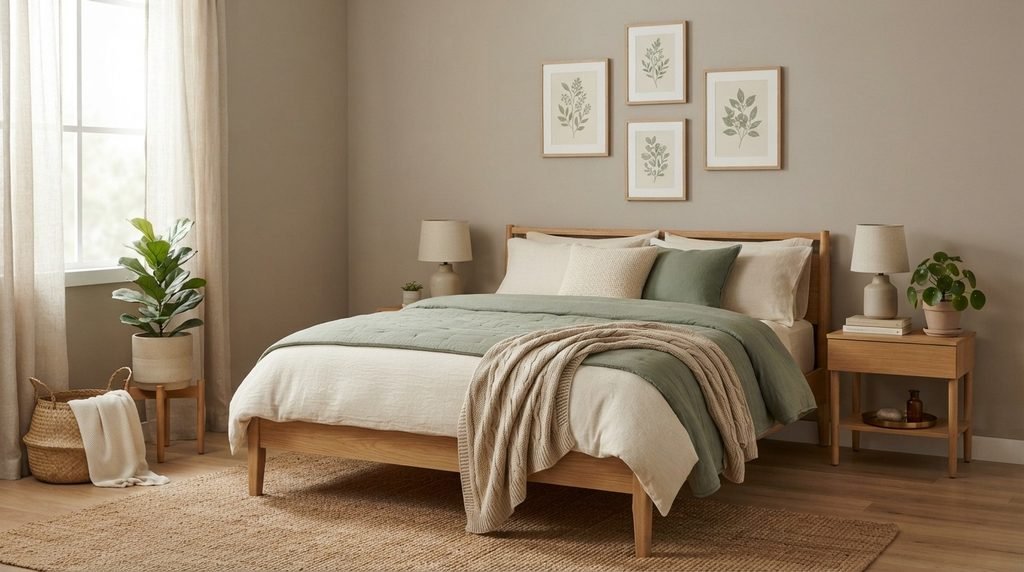
Focus less on the price tag and more on presentation.
Use a consistent color palette, avoid excessive clutter, vary textures, choose appropriate sizes, and give important pieces enough visual space.
A $15 decorative object can look perfectly at home beside a more expensive piece if the overall composition is balanced.
How Should I Divide a $200 Decorating Budget?
A practical starting point is to spend roughly half of the budget on one or two high-impact categories and divide the rest among smaller finishing touches.
For example:
- $40–$50 for lighting
- $30–$40 for wall decor
- $30–$40 for textiles
- $20–$30 for a mirror
- $20–$30 for greenery or storage
- Keep the remaining amount as a buffer
Adjust this according to your room rather than following the numbers rigidly.
What Should I Avoid Buying With a $200 Budget?
Avoid spending most of your budget on random small decorations simply because they’re inexpensive.
Also think twice about:
- Items that don’t have a clear place
- Decor that doesn’t work with your existing furniture
- Oversized pieces for small rooms
- Trendy pieces you’ll quickly dislike
- Items purchased without measuring
- Duplicate accessories
A limited budget rewards intentional shopping.
Final Takeaway
You don’t need an unlimited decorating budget to make a room feel fresh.
The smartest approach to room decor under 200$ is to stop thinking about how much stuff you can buy and start thinking about which changes create the biggest visual improvement.
Begin with the room’s biggest weakness. Improve the lighting if the space feels dark. Add a mirror if the room needs visual depth. Use textiles when it feels cold or unfinished. Bring in greenery when it needs natural texture. And before buying anything, rearrange what you already own.
Most importantly, don’t feel pressured to spend the entire $200.
A well-edited room with a few intentional pieces will usually feel more polished than a room filled with inexpensive decorations.
For more practical ideas covering home improvement, decorating, organization, and gardening, explore HomeWorksDaily and build your next project around what your home actually needs.