A sofa can look perfectly fine and still feel like it’s missing something. Sometimes that missing piece isn’t a new couch, a different rug, or a major room makeover. It’s a small detail—a well-chosen lumbar pillow cover that adds shape, texture, color, and a more finished look.
But choosing one isn’t as simple as picking a pretty pattern.
Size matters. So does fabric. The closure, pillow insert, cleaning requirements, and even the way the cover will be used can change which option makes sense.
If you’re shopping for a lumbar pillow cover for a sofa, bed, accent chair, or home office, a little planning can save you from ending up with a cover that looks great online but fits poorly in your space.
Quick Answer: What Is a Lumbar Pillow Cover?
A lumbar pillow cover is a removable fabric cover designed for a long, rectangular pillow, often used as an accent on sofas, beds, chairs, and benches. Common lumbar formats include sizes around 12×20 and 14×22 inches, although dimensions vary by manufacturer. The right cover should match the insert, intended use, room style, and care requirements.
Why a Lumbar Pillow Cover Can Change a Room
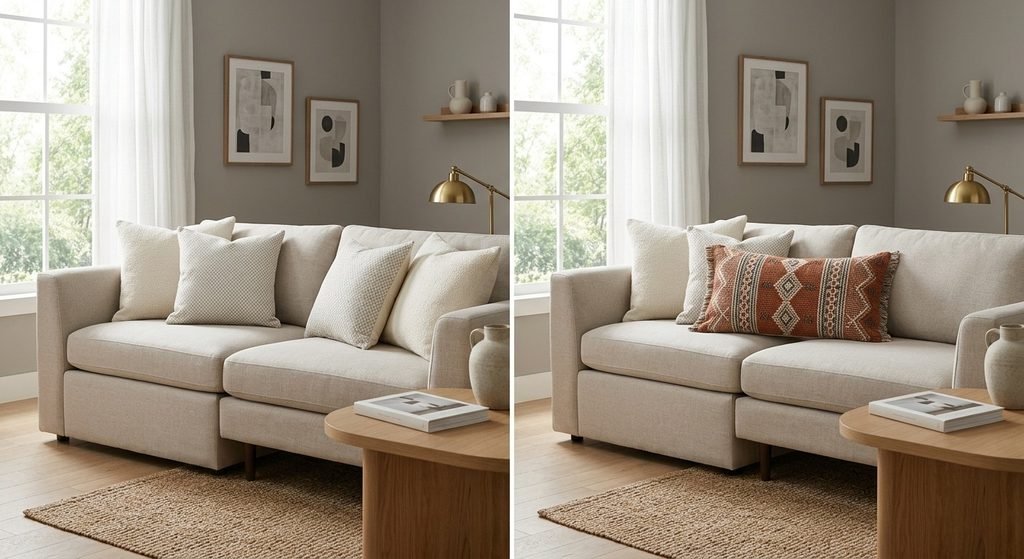
Large square pillows create volume. A lumbar pillow adds direction.
That horizontal shape can break up a stack of square cushions and give a sofa or bed a more layered appearance. It can also make an otherwise plain seating area feel more intentional without requiring a complete décor overhaul.
A lumbar pillow cover can work particularly well when you want to:
- Add a small amount of color without replacing larger pieces
- Introduce a new texture
- Create contrast between square and rectangular pillows
- Refresh seasonal décor
- Protect or change the appearance of an existing insert
- Add a finishing layer to a sofa or bed
- Give an accent chair a more comfortable, finished appearance
The nice thing about a removable cover is flexibility. You can change the look of a room without buying an entirely new pillow every time your décor changes.
That makes the cover especially useful for people who like to refresh their interiors throughout the year.
How to Choose the Right Lumbar Pillow Cover
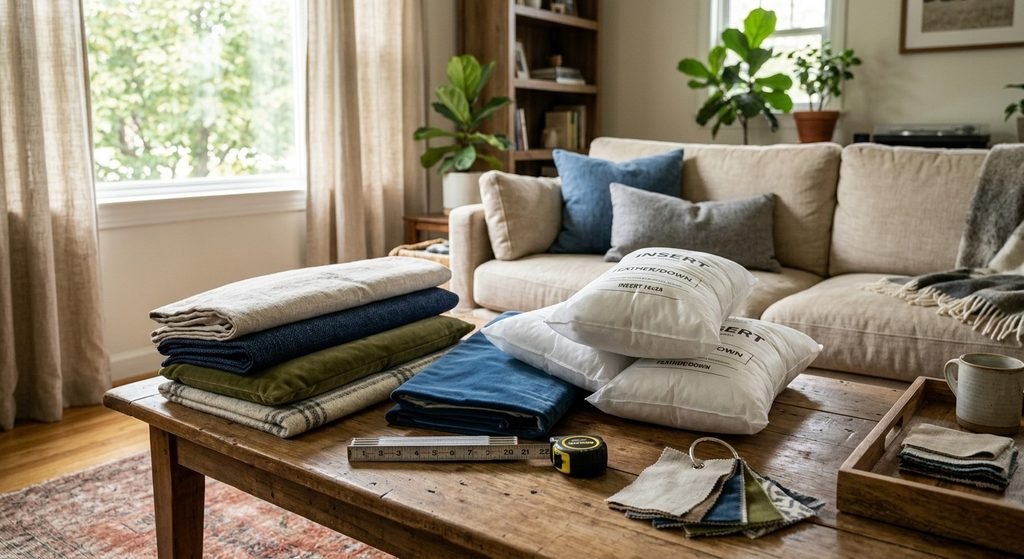
The best choice depends on more than appearance.
Start with the pillow insert and furniture where you’ll use the cover. Then consider fabric, construction, maintenance, and style.
A simple checklist is:
- Measure the insert or existing cover.
- Check the manufacturer’s finished dimensions.
- Decide how full you want the pillow to look.
- Choose a fabric suited to the room.
- Check the closure.
- Consider cleaning requirements.
- Make sure the pattern works with your existing décor.
- Think about how often the pillow will actually be used.
That last point is easy to overlook.
A decorative velvet cover might be perfect for a formal sitting room but less practical for a busy family room where the pillow gets handled every day.
What Size Lumbar Pillow Cover Should You Buy?

Measure first rather than relying only on the size name. Pillow dimensions aren’t perfectly standardized across manufacturers, so checking the actual measurements can prevent an annoying mismatch.
Some common lumbar cover dimensions include:
| Lumbar Cover Size | Typical Use | Insert Consideration |
| 12×20 inches | Sofa, chair, bed | Often paired with a slightly fuller insert |
| 14×22 inches | Sofa, bed, larger chair | Good choice for a more substantial lumbar accent |
| 12×22 inches | Sofas and layered arrangements | Useful for a slightly longer profile |
| Larger lumbar sizes | Beds, benches, large sofas | Check the manufacturer’s insert recommendation |
These are useful reference points, not universal rules.
For example, some current 12×20-inch covers are sold with recommendations for 14×22-inch inserts, while other manufacturers suggest a same-size insert or a more modest increase depending on the fill and desired appearance.
Why Doesn’t Every Cover Use the Same Insert Size?
Because the insert’s material and the cover’s construction change the finished appearance.
A compressible feather or down insert can behave differently from a firm synthetic insert. Fabric can also make a difference. A structured cover may not tolerate the same amount of overfilling as a more flexible textile.
So don’t assume that one sizing formula works for every lumbar pillow.
Measure the Cover or Insert?
If you already own the pillow insert, measure the insert.
If you’re buying a replacement cover, check the seller’s stated finished cover dimensions and compare them with the insert specifications.
If the cover is already available, lay it flat and measure the usable pillow area rather than counting decorative flanges or borders.
When in doubt, follow the specific manufacturer’s insert recommendation.
How Full Should a Lumbar Pillow Look?
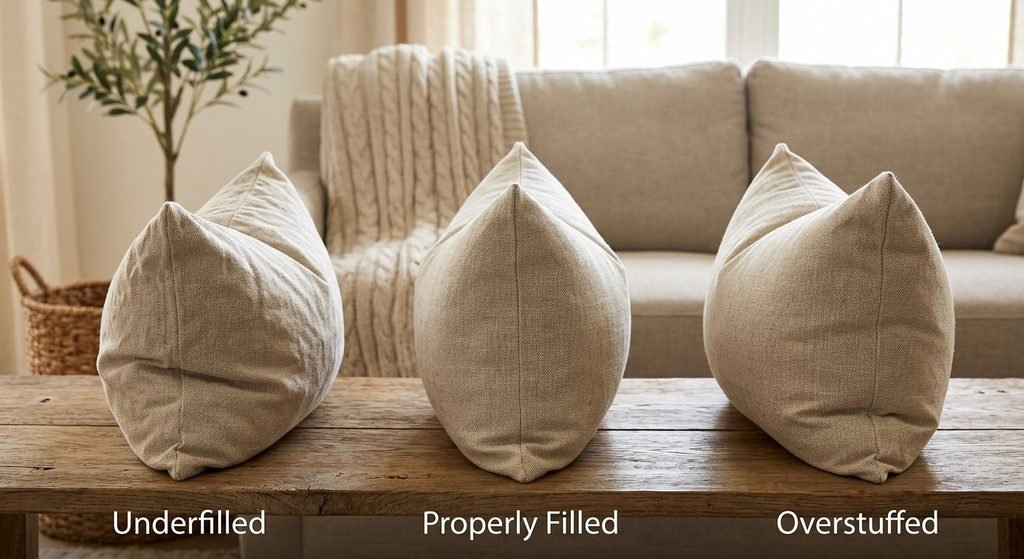
This is where personal preference comes into play.
Some people like a crisp, tailored pillow with defined edges. Others prefer a softer, fuller appearance.
A slightly fuller insert can give a cover more volume, while an exact-size or less-filled insert may create a relaxed look.
But bigger isn’t automatically better.
An insert that’s too large can strain the zipper or seams, distort the corners, or make the pillow look excessively rounded. On the other hand, an insert that’s too small can leave the cover looking flat and wrinkled.
The goal is fullness without distortion.
A Simple Visual Check
Once the insert is inside:
- The cover should look filled rather than saggy.
- The corners should be reasonably defined.
- The zipper should close without excessive strain.
- The fabric shouldn’t look stretched to its limit.
- The pillow should retain the intended rectangular shape.
If you have to wrestle with the zipper to close the cover, stop. That’s a useful sign that the insert may be too large for that particular cover.
Which Fabric Is Best for a Lumbar Pillow Cover?
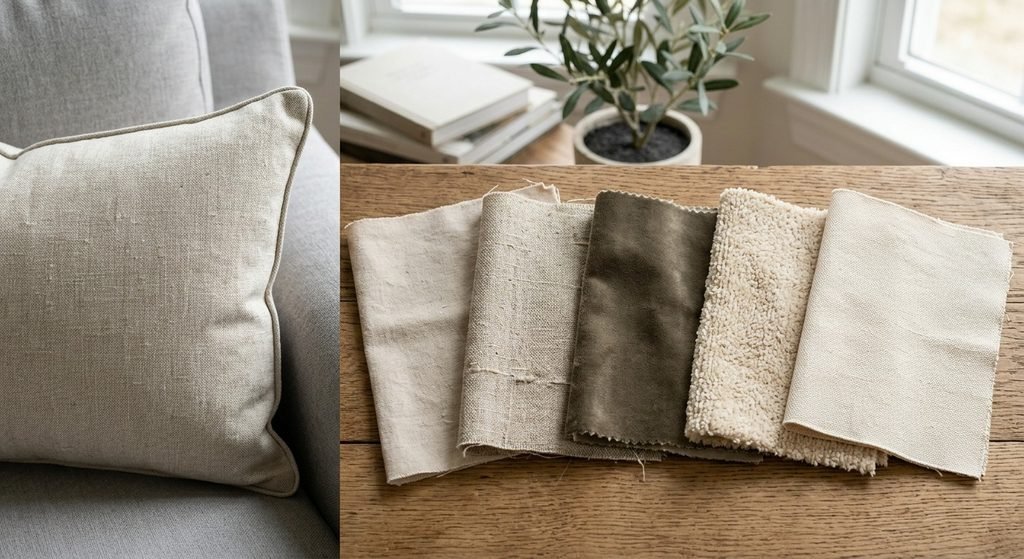
There isn’t one universally best fabric.
The better question is:
Where will the pillow be used, and how much wear will it receive?
Different fabrics create very different results.
| Fabric | Look & Feel | Good For | Considerations |
| Cotton | Casual and versatile | Everyday spaces | Care varies by construction |
| Linen | Relaxed and textured | Coastal, modern, natural décor | Can wrinkle |
| Velvet | Plush and rich | Accent pieces, bedrooms, formal spaces | May require more careful care |
| Chenille | Soft and textured | Cozy living spaces | Check washing instructions |
| Canvas | Structured and durable-looking | Casual or high-use rooms | Less soft than velvet or linen |
| Faux fur | Very soft and dramatic | Seasonal décor | Often needs gentler care |
The fabric should fit the room, but it should also fit your lifestyle.
A beautiful pillow that requires special handling every week may become more of a chore than a decoration.
Cotton vs. Linen for a Lumbar Pillow Cover

Cotton and linen are common choices when you want a relaxed, versatile appearance.
Cotton can be practical for everyday décor because it comes in many weights, colors, and patterns.
Linen has a naturally relaxed appearance and can work particularly well with neutral, coastal, farmhouse, and modern interiors.
Neither is automatically better.
If you prefer a crisp, casual look, cotton may be a straightforward choice. If you like visible texture and a slightly relaxed appearance, linen may be more appealing.
Always check the individual product’s care label rather than assuming all cotton or linen covers can be washed the same way.
Is Velvet a Good Choice for a Lumbar Pillow Cover?
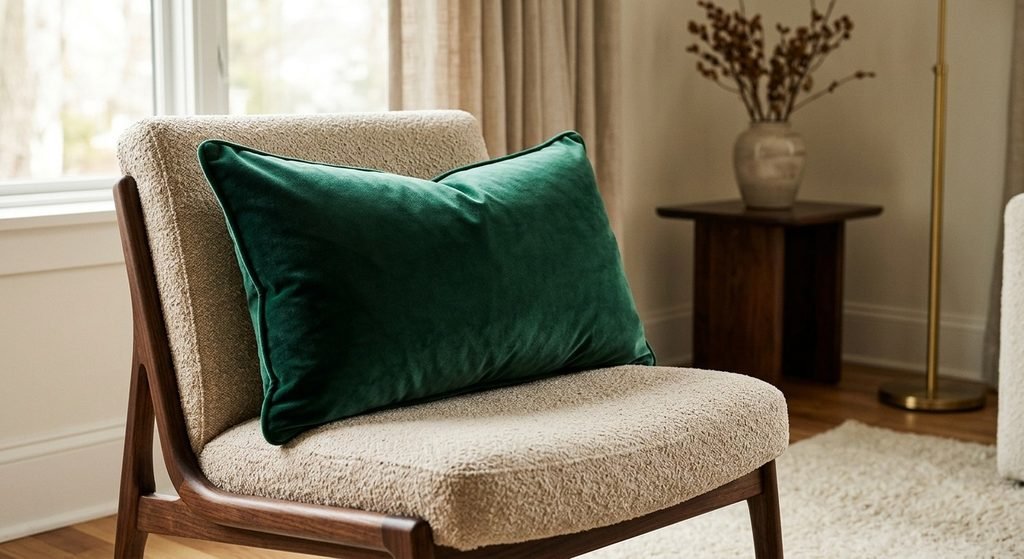
Velvet can make a lumbar pillow feel more decorative almost immediately.
Its surface catches light differently as the fabric changes direction, which can give a solid-color pillow more visual depth.
Velvet can be particularly attractive in:
- Bedrooms
- Formal living rooms
- Reading chairs
- Seasonal décor
- Moody or sophisticated interiors
However, care instructions vary significantly.
For example, current velvet lumbar covers on the market include products recommending cold washing and low drying, while other velvet or velveteen covers recommend spot cleaning and avoiding tumble drying.
That’s why the fabric name alone isn’t enough. Read the actual care instructions for the cover you’re buying.
What Closure Is Best?
The closure is easy to ignore because it isn’t usually visible.
It still matters.
Hidden Zipper
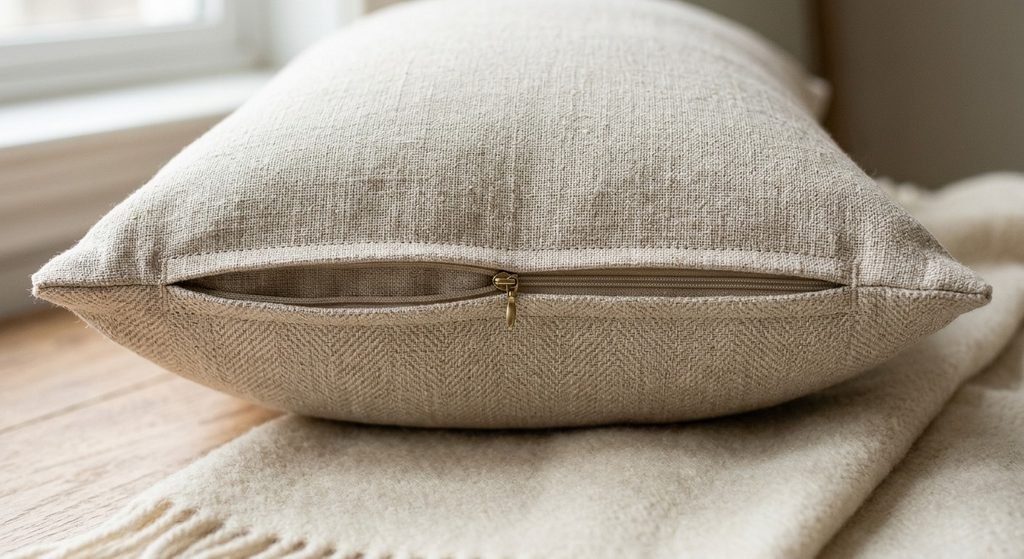
A hidden zipper is a popular choice for decorative lumbar pillow covers because it allows the insert to be removed while keeping the finished appearance relatively clean.
It can be especially useful when you want to:
- Wash the cover
- Change inserts
- Store seasonal covers
- Switch décor without buying another pillow
Several current lumbar pillow products use hidden zippers, including 12×20-inch designs.
Envelope Closure
An envelope-style closure avoids a zipper and can be convenient for some designs.
Its main advantage is simplicity.
However, the finished appearance and security can vary depending on the construction.
Button Closure
Buttons can become part of the design rather than simply serving as a functional feature.
They’re useful when you want a more traditional, decorative appearance.
Which Should You Choose?
For a clean, modern look and easy insert changes, a hidden zipper is often a practical choice.
For a softer or more casual design, an envelope closure may work well.
If the closure is part of the visual style, buttons can add character.
How to Match a Lumbar Pillow Cover to Your Room

You don’t need to match every pillow perfectly.
In fact, matching everything too closely can make a room feel flat.
Instead, look for relationships between colors, textures, and shapes.
For example, if your sofa already has several solid square pillows, a patterned lumbar cover can become the visual accent.
If your room already has bold patterns, a solid lumbar cover may give the eye somewhere to rest.
Think in terms of:
Color + texture + shape
rather than simply:
Same color + same pattern
For a Neutral Living Room
A textured lumbar cover in cream, beige, taupe, gray, or another restrained shade can add interest without making the room feel busy.
For a Colorful Room
Choose a lumbar cover that picks up one color already present in the room.
It doesn’t need to match exactly.
A related shade can often look more natural.
For a Minimalist Room
A simple solid-color cover with subtle texture may work better than a complicated print.
For a Traditional Room
Patterns, piping, buttons, or classic fabrics can complement traditional furniture.
For a Modern Room
Clean lines, restrained patterns, and simple closures often fit better.
Where Should You Put a Lumbar Pillow?
A lumbar pillow is particularly useful as a finishing layer.
On a sofa, it can sit in front of larger square pillows.
On a bed, it can be placed toward the front of a decorative pillow arrangement.
On an accent chair, one lumbar pillow may be enough.
On a bench, a longer lumbar shape can visually echo the horizontal line of the furniture.
The key is proportion.
A tiny lumbar pillow can disappear on a large sectional. A very large one can overwhelm a small chair.
Don’t choose the pillow in isolation. Look at the furniture around it.
Lumbar Pillow Cover for a Sofa

For a sofa, consider the width of the seating area first.
A single lumbar pillow can work as a centered focal point.
For a larger sofa, you might use one lumbar pillow in the middle or position lumbar pillows as part of a layered arrangement.
A common styling approach is:
Large square pillows → smaller accent pillows → lumbar pillow in front
The lumbar cover becomes the finishing piece rather than competing with everything behind it.
If your sofa already has plenty of patterns, a textured solid cover may be enough.
Lumbar Pillow Cover for a Bed

Beds often benefit from layered pillow shapes because the large horizontal surface can otherwise look visually repetitive.
A lumbar pillow cover can provide a transition between taller pillows and the mattress.
For example:
- Sleeping pillows at the back
- Larger decorative pillows next
- Smaller accent pillows
- Lumbar pillow toward the front
The exact arrangement depends on the bed size and your decorating style.
For a smaller bed, fewer pillows may actually look better.
More isn’t always more.
Lumbar Pillow Cover for an Accent Chair

A lumbar cover can give a simple chair a more finished appearance without overwhelming the seat.
For a reading chair or occasional chair, consider a fabric that complements the surrounding room rather than matching the chair exactly.
A patterned cover can make a plain chair more interesting.
A neutral textured cover can calm down a chair with bold upholstery.
Should You Buy the Cover or the Whole Pillow?
If you already have a suitable insert, buying a cover alone can make sense.
A removable cover lets you change colors and patterns while keeping the same insert.
This can be especially useful for seasonal decorating.
You might use:
- Lightweight natural textures in spring
- Brighter colors during summer
- Warm tones in fall
- Velvet or winter-inspired textures during the holidays
The insert stays the same while the cover changes.
If you don’t already have an insert, buying a complete pillow may be simpler.
Before ordering, check whether the listing includes the insert. Many current lumbar pillow cover listings specifically sell the cover only, with the insert purchased separately.
Common Mistakes When Buying a Lumbar Pillow Cover
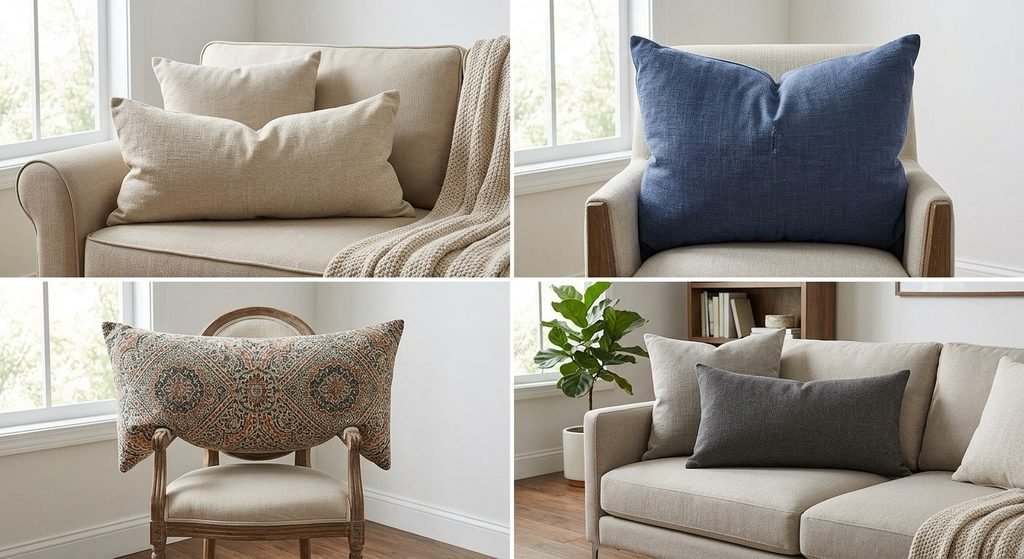
A beautiful photograph can make almost any pillow look perfect.
The reality can be different.
Here are some mistakes worth avoiding.
1. Ignoring the Actual Dimensions
A pillow described as “lumbar” isn’t necessarily one standard size.
Check the measurements.
2. Buying Only for the Pattern
The pattern may look great, but the fabric might not suit your household.
Think about cleaning, wear, and daily use.
3. Assuming Every Insert Fits
Different covers can have different insert recommendations.
Check before buying.
4. Choosing an Insert That’s Too Large
An overly large insert can make the cover look distorted and may put unnecessary strain on seams or closures.
5. Ignoring Care Instructions
A cover that looks washable isn’t necessarily machine washable.
Follow the manufacturer’s instructions.
6. Using Too Many Patterns
If the room already has patterned rugs, curtains, artwork, and pillows, another bold pattern may create visual clutter.
Sometimes a simple texture works better.
7. Forgetting the Furniture Scale
A cover can be attractive and still look wrong because it’s too small or too large for the furniture.
Always consider the surrounding proportions.
How to Clean a Lumbar Pillow Cover
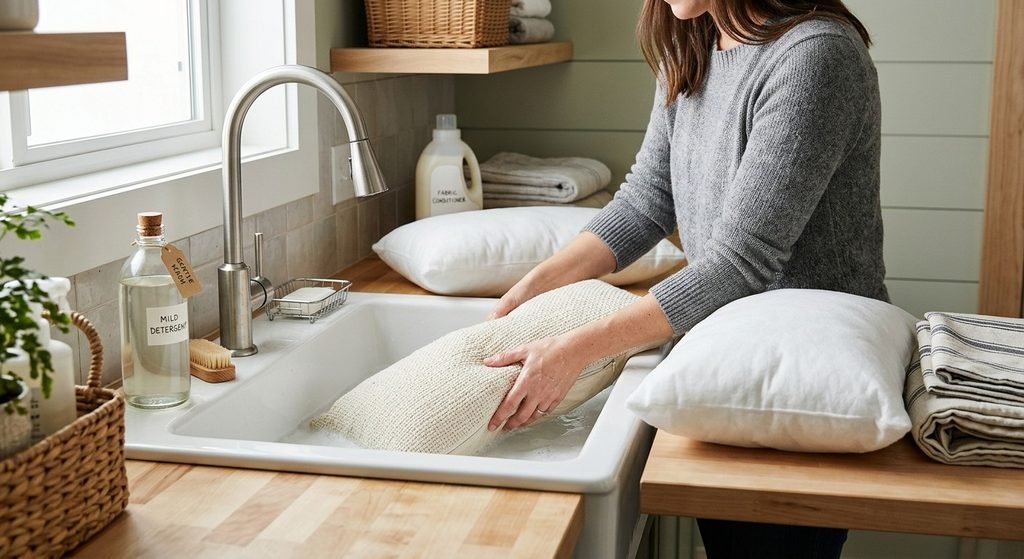
The correct method depends on the fabric and manufacturer’s instructions.
Before cleaning:
- Check the care label.
- Remove the insert if the cover is removable.
- Check for stains or damaged seams.
- Follow the recommended washing temperature.
- Avoid harsh cleaning methods unless the manufacturer permits them.
- Dry according to the instructions.
Some covers are machine washable, while others recommend spot cleaning.
For example, one current cotton velveteen lumbar cover recommends spot cleaning and air drying, while another velvet lumbar cover lists cold washing and low-temperature drying.
That’s a good reminder that fabric names aren’t enough to determine care instructions.
Always check the individual cover.
How to Keep a Lumbar Pillow Cover Looking Good
Regular maintenance doesn’t have to be complicated.
A few simple habits can help:
- Rotate decorative pillows occasionally.
- Don’t drag pillows across rough surfaces.
- Avoid pulling directly on zipper tabs.
- Remove stains promptly according to the care instructions.
- Store seasonal covers clean and completely dry.
- Avoid overcrowding the cover with an oversized insert.
- Keep delicate fabrics away from unnecessary abrasion.
For textured or delicate materials, gentle handling can matter as much as cleaning.
Is a Lumbar Pillow Cover Good for Back Support?
It can provide some cushioning or positioning support, but a decorative lumbar pillow should not automatically be treated as a medical or ergonomic product.
A lumbar pillow’s shape is associated with lower-back support, but the right support depends on the individual, seating position, pillow construction, and intended use.
If you’re specifically looking for ergonomic back support for long periods of sitting, look for a product designed and described for that purpose rather than assuming a decorative cover makes a pillow ergonomic.
For ordinary décor and occasional support, a lumbar pillow can be a useful addition.
Can You Make a Lumbar Pillow Cover Yourself?
Yes. A lumbar pillow cover can be a manageable sewing project if you have basic sewing equipment and know the desired finished dimensions.
A simple zippered cover generally involves:
- Measuring the intended insert.
- Choosing suitable fabric.
- Cutting the fabric with the required seam allowance.
- Installing the zipper or other closure.
- Sewing the remaining seams.
- Finishing the corners.
- Turning the cover right side out.
- Pressing it.
- Inserting the pillow form.
A DIY approach also gives you much more control over fabric, pattern direction, dimensions, and closure style. Sewing guides commonly use lumbar formats alongside standard square pillow projects.
If you’re new to sewing, start with a straightforward fabric and a simple closure rather than jumping directly into difficult materials such as slippery velvet.
What Should You Look for Before Buying?
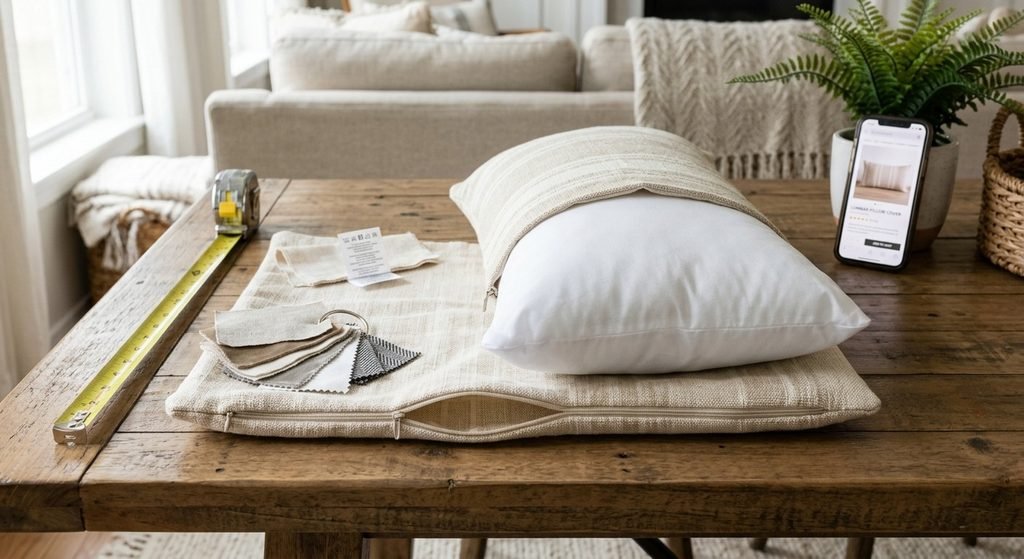
Before clicking “Buy,” run through this quick checklist.
Size
Does the cover’s finished dimension match the insert you already own?
Fabric
Will the fabric suit the amount of use it will receive?
Closure
Do you prefer a zipper, envelope opening, or buttons?
Care
Can you realistically maintain the cover?
Style
Does the color or pattern connect with something already in the room?
Construction
Look at seams, stitching, piping, zipper placement, and overall finishing.
Insert
Is the insert included?
If not, what size does the manufacturer recommend?
Return Policy
For online purchases, check the seller’s return terms before ordering, especially if you’re uncertain about color, dimensions, or texture.
Quick Comparison: Which Type May Suit You?
| Your Priority | Consider | Why |
| Easy style changes | Removable cover | Lets you change décor without replacing the insert |
| Elegant appearance | Velvet or textured fabric | Adds visual depth |
| Everyday versatility | Cotton or durable woven fabric | Works across many decorating styles |
| Relaxed look | Linen-style fabric | Adds natural texture |
| Seasonal decorating | Decorative removable cover | Easy to swap and store |
| Clean appearance | Hidden zipper | Keeps the closure less noticeable |
| DIY project | Simple cotton or woven fabric | Generally easier to handle than slippery fabrics |
This isn’t a ranking of “best” materials. The right choice depends on the room and how the pillow will be used.
How Much Should You Spend on a Lumbar Pillow Cover?
Price can vary dramatically depending on fabric, construction, brand, craftsmanship, and design.
Instead of asking only, “What’s the cheapest option?” consider:
What am I actually paying for?
A higher price may reflect:
- More expensive fabric
- Better construction
- Detailed pattern work
- Handmade production
- Specialty textiles
- Decorative finishing
- Brand positioning
But a higher price doesn’t automatically mean a better choice for your home.
If you need several covers for everyday use, durability and easy care may matter more than premium fabric.
If you’re buying one statement piece for a bedroom or formal room, appearance and craftsmanship may justify spending more.
The smartest purchase is the one that fits your actual needs.
Frequently Asked Questions
What is the most common lumbar pillow cover size?
12×20 and 14×22 inches are common lumbar formats, but there is no single universal size. Always check the actual dimensions of the cover and insert before purchasing. Current products show that even covers with similar dimensions can have different insert recommendations.
What size insert goes in a 12×20 lumbar pillow cover?
It depends on the cover and desired fullness. Some current 12×20 covers recommend a 14×22 insert, while other sizing guides use different proportions. Check the manufacturer’s recommendation instead of applying one universal rule.
Can I wash a lumbar pillow cover?
Some can be machine washed, while others require hand washing or spot cleaning. Always follow the specific care instructions for the fabric and product. Different velvet and velveteen covers, for example, can have different care requirements.
Is a lumbar pillow cover only for decoration?
No. A lumbar pillow can provide some cushioning or lower-back support, depending on the pillow and how it is positioned. However, decorative pillows shouldn’t automatically be treated as ergonomic or medical support products.
Are lumbar pillow covers good for sofas?
Yes. Their rectangular shape can add contrast to square pillows and create a more layered sofa arrangement. The best size depends on the sofa’s scale and the other pillows being used.
Should a lumbar pillow cover be smaller than the insert?
Not always. Some covers are intentionally paired with larger inserts for a fuller appearance, while others are designed around a same-size insert. Follow the specific manufacturer’s recommendation and avoid forcing an insert that strains the seams or zipper.
What fabric is best for a lumbar pillow cover?
There isn’t one best fabric for every situation. Cotton and woven fabrics can be versatile for everyday décor, linen can create a relaxed textured appearance, and velvet can provide a richer decorative effect. Choose based on appearance, use, durability, and care requirements.
Can I use a lumbar pillow cover on a bed?
Absolutely. A lumbar pillow can act as a finishing layer in a decorative pillow arrangement. Choose a size and fabric that complement the bed’s scale and existing bedding.
Final Takeaway
The right lumbar pillow cover doesn’t have to be expensive or complicated. It simply needs to make sense for your space.
Start with measurements. Then consider the insert, fabric, closure, care requirements, and overall décor. A 12×20 cover might be perfect for one sofa but look too small on another. A luxurious velvet cover may look beautiful in a bedroom but be less practical in a high-use family room.
The best choice is the one that balances fit, function, maintenance, and style.
And that’s really the advantage of choosing a cover rather than treating the pillow as a permanent piece of décor: when your room changes, your pillow can change with it.
If you’re working on other home projects, HomeWorksDaily can also be used as a practical resource for more home-improvement and gardening ideas.