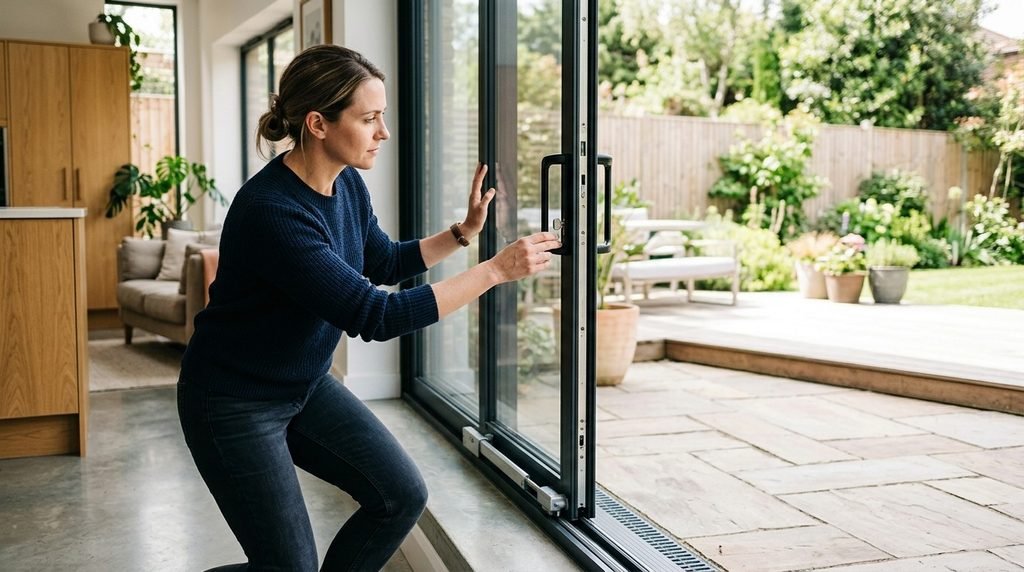
A sliding patio door can make a room feel bigger, brighter, and more connected to the outdoors. But there’s a catch: that same large glass panel and smooth sliding track can become a security weak point if the door relies only on its original latch.
The good news? You don’t necessarily need an expensive renovation to improve it.
A few well-chosen upgrades—such as a security bar, secondary lock, anti-lift protection, stronger hardware, and security film—can make a sliding door considerably more resistant to unwanted opening.
In this guide, we’ll explain how to secure sliding doors, which methods are most practical, what works for renters, and which improvements are worth considering for a long-term home-security setup.
How to Secure Sliding Doors: Quick Answer
The most effective approach is to secure the sliding door at several points rather than relying on its built-in latch alone.
Consider combining:
- A sliding door security bar or similar physical restraint
- A secondary pin or auxiliary lock
- Proper anti-lift protection
- A well-maintained and correctly aligned door track
- Strong, compatible locking hardware
- Security film when glass protection is appropriate
- A door sensor connected to a home-security system
You don’t need to install everything at once. Start by identifying the weakest part of the door, then improve that area first.
Why Sliding Doors Can Be Vulnerable
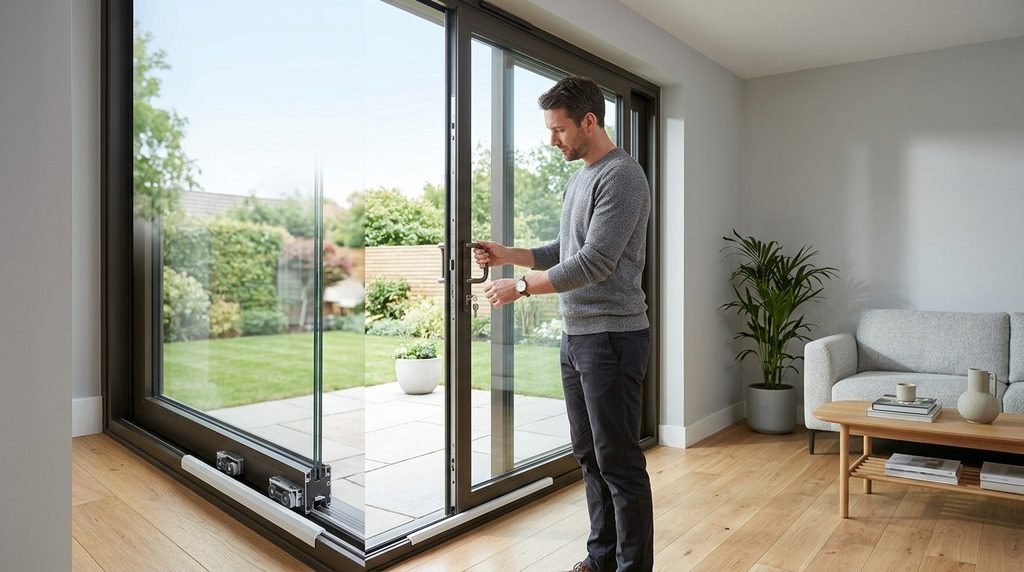
Before choosing a security solution, it helps to understand where the potential weaknesses are.
Unlike a conventional hinged door, a sliding door moves horizontally along a track. It also commonly has a large glass panel, a relatively narrow locking mechanism, and hardware that can wear down over time.
Several components deserve attention.
The Original Latch
Many sliding doors come with a basic latch designed primarily to keep the door closed. If the hardware is worn, loose, misaligned, or poorly adjusted, it may not provide the level of security a homeowner expects.
A secondary locking method can provide an additional layer of protection.
The Track
The track keeps the panel moving in the correct direction. Dirt, damage, poor alignment, or worn rollers can affect how securely the door closes.
A door that doesn’t sit correctly in its frame can also make the locking mechanism less effective.
The Frame
A strong lock doesn’t accomplish much if the surrounding frame or hardware is weak.
Check the area around the lock, frame, screws, and mounting points for looseness or visible damage.
The Glass
Large panes provide excellent views and natural light, but they’re also a different security consideration from a solid wood or metal door.
Security film can sometimes provide additional protection, although it shouldn’t be treated as a substitute for a proper lock or physical security.
The Lifting Risk
Sliding doors can have another potential weakness: the panel needs to stay properly seated in the frame.
That’s why anti-lift protection deserves attention when improving sliding-door security.
9 Practical Ways to Secure Sliding Doors
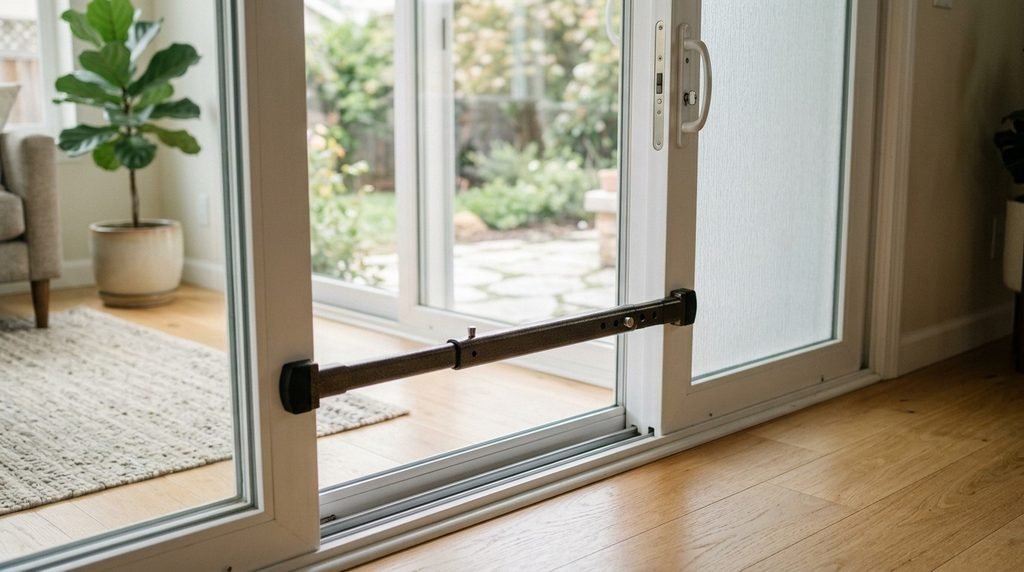
There’s no single solution that works perfectly for every home. The best setup depends on your door design, budget, whether you’re renting, and how much permanent modification you’re comfortable making.
Here are practical options to consider.
1. Add a Sliding Door Security Bar
A security bar is one of the simplest ways to add a physical barrier to a sliding door.
The basic idea is straightforward: when the door is closed, the bar prevents the movable panel from sliding open.
This can be particularly useful because it doesn’t depend entirely on the door’s existing latch.
Why consider one?
- Easy to understand and use
- Usually requires little or no permanent modification
- Available in adjustable designs
- Useful for renters
- Provides a visible physical barrier
However, make sure the bar is compatible with your specific door and installed according to the manufacturer’s instructions.
A poorly fitted bar can be inconvenient or ineffective.
Best for: renters, apartments, homeowners looking for a simple additional barrier.
2. Install a Secondary Pin or Auxiliary Lock
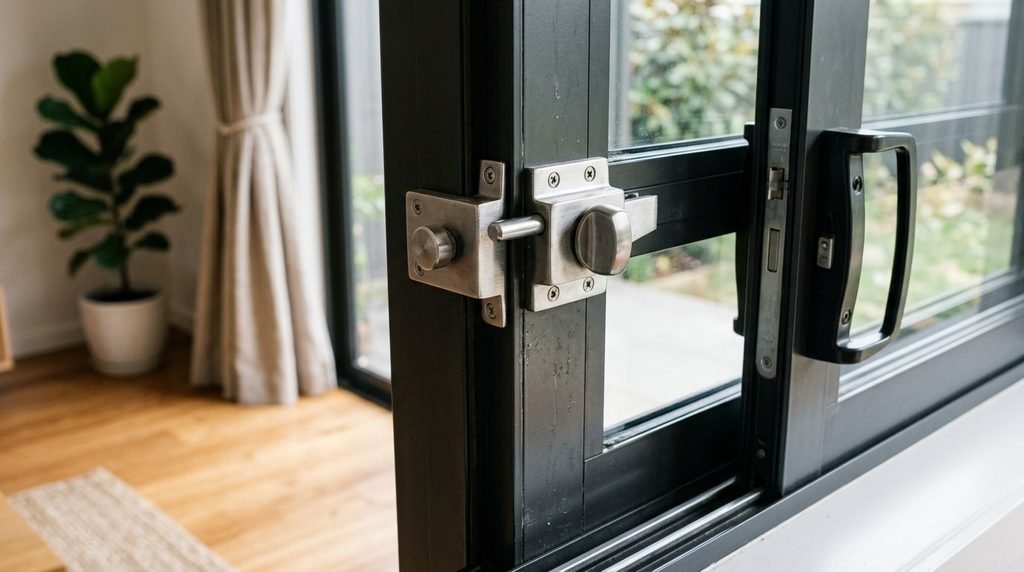
A secondary lock can add another point of resistance to a sliding door.
Depending on the door design, auxiliary locks may secure the moving panel to the frame or interact with the door components to prevent normal sliding.
Before installing one, check the manufacturer’s instructions and confirm that the hardware is designed for your door.
A secondary lock can be especially useful when:
- The existing latch feels weak
- The door receives frequent use
- You want additional physical security
- The original lock is difficult to adjust or replace
Don’t assume every auxiliary lock will fit every patio door. Sliding-door designs vary considerably.
3. Upgrade the Existing Lock
Sometimes the simplest improvement is fixing or replacing the hardware that’s already there.
If the latch is loose, damaged, corroded, or difficult to engage, address that problem before adding more hardware.
A replacement lock should be compatible with the door’s construction and dimensions.
When shopping for replacement hardware, pay attention to:
- Door type
- Lock dimensions
- Mounting arrangement
- Compatibility
- Material quality
- Manufacturer instructions
A properly fitted lock is generally more useful than an expensive lock that isn’t compatible with the door.
4. Add Anti-Lift Protection
Sliding-door security isn’t only about stopping the panel from moving horizontally.
The door should also remain properly seated within its frame.
Anti-lift features are designed to reduce the possibility of the movable panel being lifted out of its normal position.
This is one reason it’s worth inspecting the top and bottom portions of the door rather than focusing exclusively on the latch.
If you’re unsure whether your existing door has adequate anti-lift protection, check the manufacturer’s documentation or ask a qualified door professional.
5. Keep the Track Clean and Properly Aligned
This sounds like maintenance rather than security—but it matters.
A dirty or damaged track can interfere with the way a sliding door closes.
Over time, debris and wear can contribute to:
- Sticking
- Misalignment
- Difficult operation
- Uneven movement
- Problems with the locking mechanism
Clean the track according to the door manufacturer’s recommendations and inspect it periodically.
If the rollers or track are damaged, repairing the underlying problem may be more useful than simply adding another lock.
A secure door should also be a properly functioning door.
6. Consider Security Film for Glass
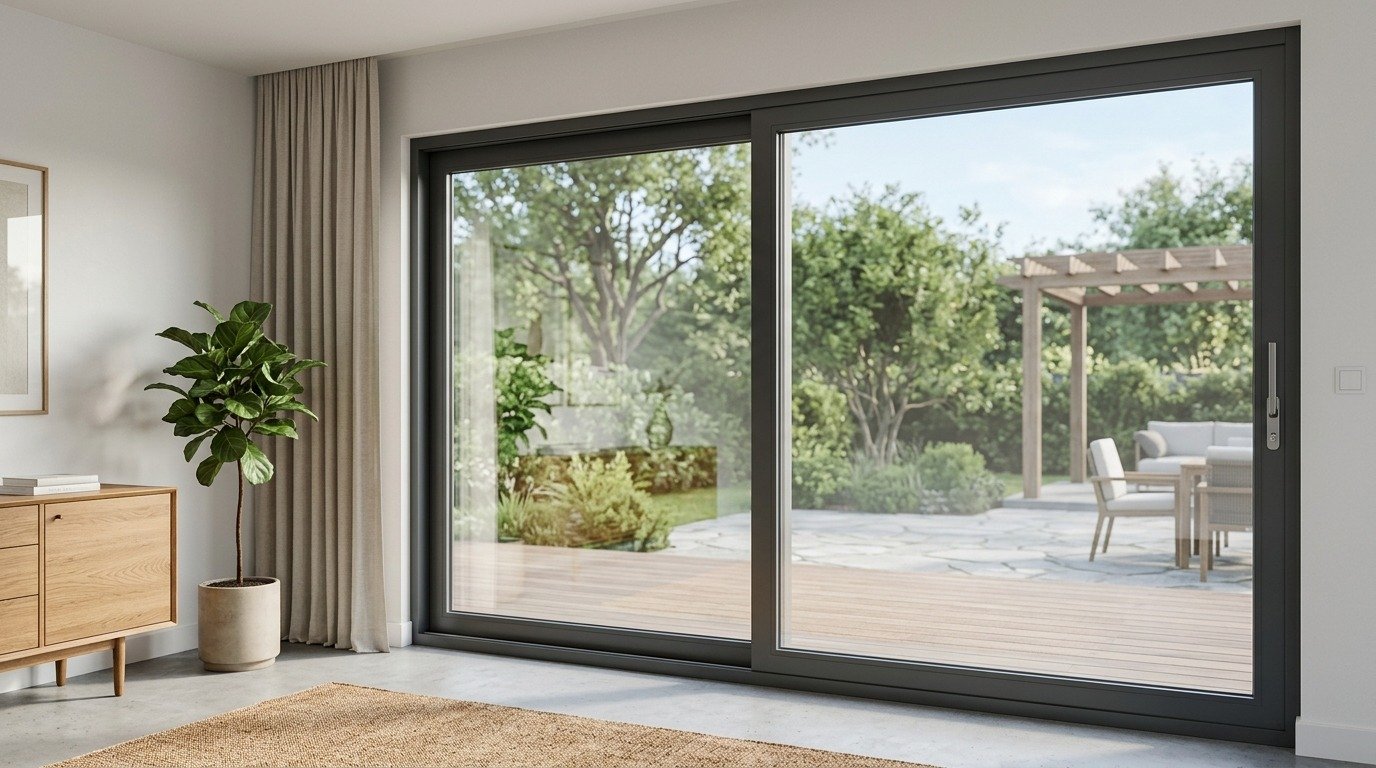
Security film can be applied to suitable glass surfaces to help hold broken glass together.
That’s useful because ordinary glass can behave very differently from laminated security glazing.
However, security film has an important limitation:
It doesn’t replace a lock.
Think of it as one component in a layered security strategy rather than the entire solution.
Before applying film, verify that the product is suitable for your specific glass and installation conditions.
For homeowners considering a more substantial upgrade, professional advice may be worthwhile.
7. Strengthen the Surrounding Hardware
Take a few minutes to inspect the entire door assembly.
Look for:
- Loose screws
- Damaged mounting points
- Worn hardware
- Cracked or damaged frame components
- Poor alignment
- Gaps around the closed door
Don’t focus so heavily on buying a new lock that you overlook the components supporting it.
The security of a door is a system. The lock, panel, frame, track, and hardware all need to work together.
8. Add a Sliding-Door Sensor
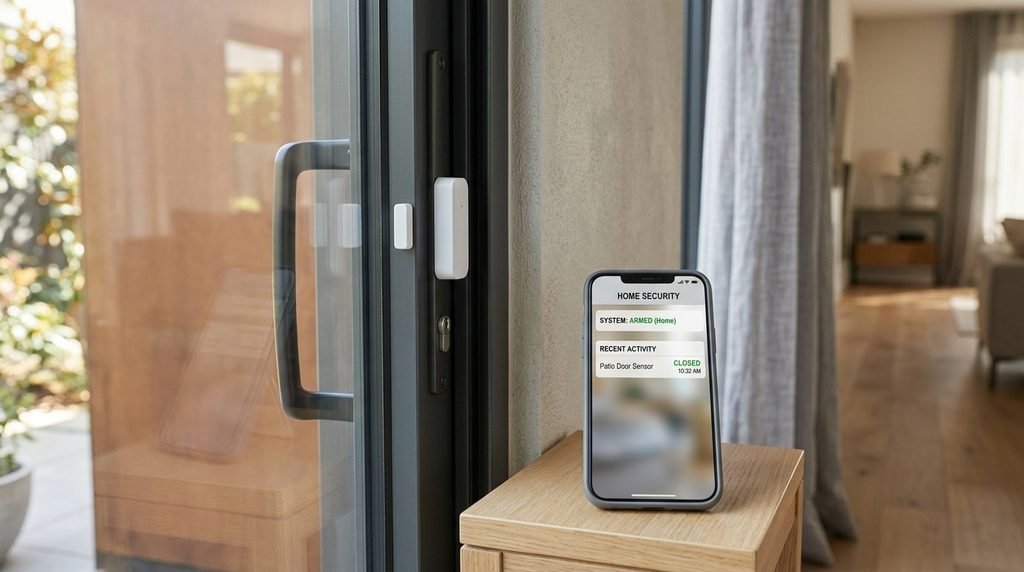
Physical security can prevent unwanted movement, but sensors can add something different: awareness.
A compatible contact sensor can notify you when the door opens.
Depending on the home-security system, alerts may appear on a phone or trigger other configured responses.
This is particularly useful when:
- You’re away from home
- You want nighttime alerts
- You have a large patio area
- The sliding door is rarely used
- You want additional awareness around vulnerable entry points
A sensor won’t physically stop the door from opening, so it should complement—not replace—a physical security measure.
9. Improve the Overall Patio-Door Security Setup
Sometimes the door isn’t the only issue.
Look at the area around it.
Good home security is often about reducing opportunities and improving awareness rather than relying on one gadget.
Consider:
- Adequate exterior lighting
- Clear visibility around the patio
- Working locks on nearby doors
- Properly maintained windows
- Security-system notifications
- A clear view of the entrance from inside the home
You don’t need to turn your backyard into a fortress.
A few sensible layers can make a much bigger difference.
Which Sliding-Door Security Method Is Best?
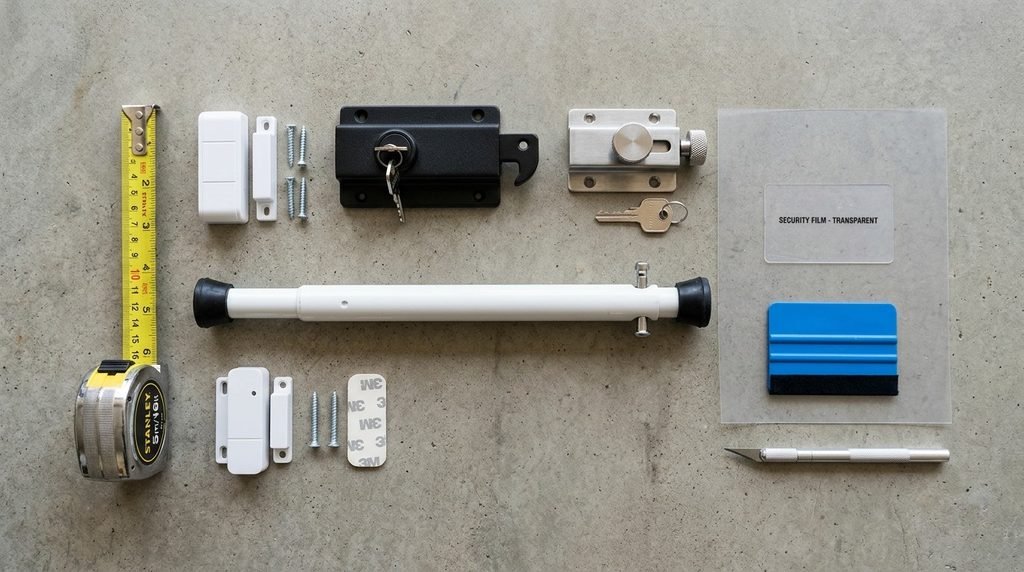
There isn’t one universal answer.
The right choice depends on what you’re trying to accomplish.
| Security Method | Main Benefit | Installation | Rental-Friendly | Best For |
| Security bar | Adds physical resistance | Easy to moderate | Usually | Simple added protection |
| Secondary lock | Adds another locking point | Moderate | Sometimes | Extra physical security |
| Lock replacement | Improves existing hardware | Moderate | Check with landlord | Worn or weak locks |
| Anti-lift protection | Helps keep panel properly seated | Moderate | Sometimes | Comprehensive door security |
| Track maintenance | Improves operation and alignment | Easy | Yes | Existing door problems |
| Security film | Adds glass protection | Moderate | Ask landlord | Glass-panel protection |
| Door sensor | Provides opening alerts | Easy to moderate | Usually | Security awareness |
The strongest approach is usually layered security rather than depending on one method.
How to Secure a Sliding Glass Door Without Spending a Lot
You don’t have to replace the entire door to improve its security.
Start with the basics.
Low-Budget Approach
A practical first step might include:
- Check that the existing lock works correctly.
- Clean and inspect the track.
- Check for loose or damaged hardware.
- Add an appropriate secondary physical barrier.
- Consider a compatible door sensor.
This approach focuses on inexpensive improvements before moving toward more substantial upgrades.
Moderate-Budget Approach
If you’re willing to invest more, consider:
- Upgraded locking hardware
- A better secondary lock
- Anti-lift improvements
- Professional adjustment of rollers and alignment
- A compatible security sensor
Higher-Budget Approach
For a long-term renovation, homeowners might consider:
- Professionally upgraded door hardware
- Improved glass protection
- Replacement of an aging door assembly
- Integrated home-security monitoring
- Professional assessment of the complete patio-door installation
The goal isn’t to spend the most money.
The goal is to address the actual weak points.
How to Secure Sliding Doors in a Rental
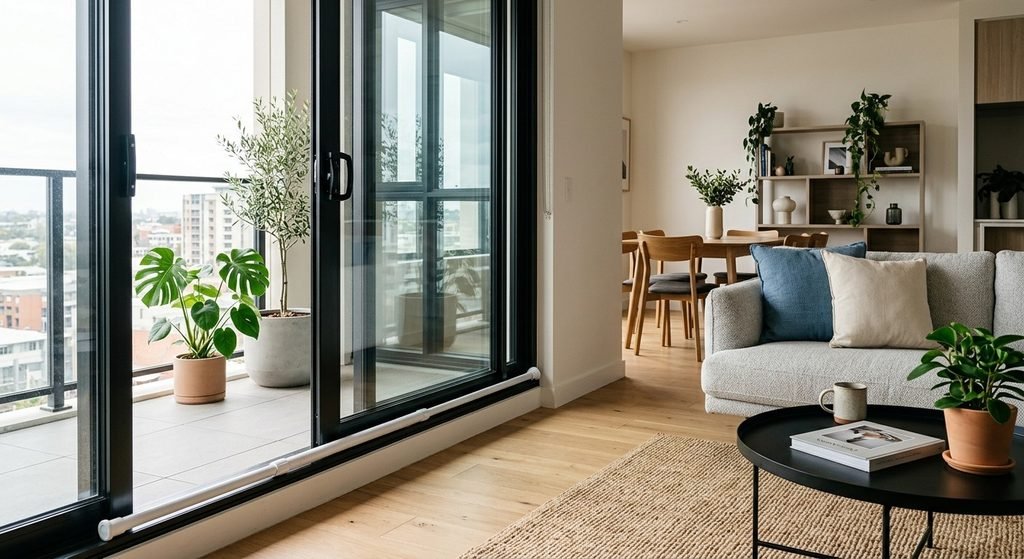
Renters often face a different problem: they want better security without making permanent changes.
Fortunately, there are several options that may require little or no modification.
Depending on the property and lease, consider:
- Adjustable security bars
- Compatible removable security devices
- Door sensors
- Improved lighting
- Temporary physical barriers designed for the door
Before drilling, replacing hardware, or applying permanent film, check your lease and ask the landlord for permission if necessary.
A renter-friendly solution should improve security without creating a problem with the property owner or emergency egress.
Don’t Forget Children and Pets
A security device can create a new hazard if it’s poorly chosen or installed.
For homes with children or pets, consider whether the device:
- Creates a trip hazard
- Has accessible moving parts
- Can be removed or manipulated easily
- Interferes with normal operation
- Blocks an emergency exit
- Creates a gap or pinch point
A secure home still needs to be a safe home.
Always follow the product manufacturer’s installation and safety instructions.
Common Sliding-Door Security Mistakes
Improving security isn’t just about what you add. It’s also about what you overlook.
Relying Only on the Original Latch
A single aging latch shouldn’t necessarily be the only security measure on a frequently used exterior door.
Ignoring the Door Frame
The lock and frame work together. Inspect both.
Forgetting About Anti-Lift Protection
Horizontal movement isn’t the only consideration with a sliding panel.
Using an Incorrectly Sized Security Bar
A bar that doesn’t fit properly can become inconvenient or fail to provide the intended resistance.
Ignoring Maintenance
A dirty or damaged track can cause alignment and locking problems.
Blocking Emergency Egress
Never create a security setup that prevents occupants from safely exiting when needed.
Installing Hardware Without Checking Compatibility
Sliding doors come in many designs. Measure and verify compatibility before purchasing replacement hardware.
Should You Use More Than One Sliding-Door Security Method?
Yes, in many situations a layered approach makes more sense than relying on a single device.
Think of it this way:
Physical barrier + reliable lock + anti-lift protection + awareness
Each addresses a different part of the problem.
For example, a homeowner might use an upgraded lock and physical security bar while also adding a contact sensor.
The sensor provides awareness. The lock provides controlled access. The physical barrier adds another layer.
That’s more comprehensive than expecting one inexpensive device to do everything.
A Simple Sliding-Door Security Checklist
Before calling the job finished, walk through this checklist:
- Does the existing lock engage properly?
- Is the door aligned correctly?
- Is the track clean and undamaged?
- Is the frame in good condition?
- Does the panel remain properly seated?
- Is there an appropriate secondary security measure?
- Have you considered glass protection?
- Would a door sensor be useful?
- Is the security setup safe for children and pets?
- Can occupants still exit safely in an emergency?
- Have you followed the manufacturer’s installation instructions?
If you discover significant damage or structural problems, professional assessment may be the better option.
When Should You Replace a Sliding Door?
Sometimes adding another security device isn’t the best answer.
A replacement may deserve consideration when the existing door has:
- Severely damaged framing
- Persistent alignment problems
- Failing hardware
- Significant deterioration
- Poor overall construction
- Glass or components that need major repair
If the door is old and repeatedly develops problems, continuing to patch individual components may eventually become less practical than replacing the assembly.
A qualified door professional can help determine whether repair or replacement makes more sense.
How Much Does It Cost to Secure a Sliding Door?
The cost can vary significantly depending on the door, hardware, installation requirements, and security level you’re aiming for.
Simple measures such as maintenance or certain removable barriers can be relatively inexpensive.
More substantial upgrades—such as new locking hardware, professional installation, glass protection, or replacement doors—can cost considerably more.
Rather than asking only, “What’s the cheapest security device?”, ask:
“Which weak point am I actually trying to fix?”
That question can prevent unnecessary spending.
What Is the Best Overall Approach?
For many homes, a sensible strategy is to build security in layers.
Start with the fundamentals:
- Make sure the door closes and locks correctly.
- Inspect the track and frame.
- Address damaged or worn hardware.
- Add an appropriate secondary physical security measure.
- Consider anti-lift protection.
- Add glass protection if appropriate.
- Use a sensor if you want opening alerts.
- Review the entire patio area for visibility and lighting.
You don’t have to do all eight today.
Start with the weakest part of your current setup.
Frequently Asked Questions
How do I secure a sliding door from being opened?
A combination of a properly functioning primary lock and an appropriate secondary physical barrier can provide additional resistance. Anti-lift protection and good door alignment are also important considerations.
Is a sliding-door security bar effective?
A properly fitted security bar can provide an additional physical barrier against normal sliding movement. Choose a model designed for your door and follow its installation instructions.
How can I secure a sliding glass door as a renter?
Renters can consider non-permanent options such as compatible security bars and door sensors. Check the lease before drilling, replacing hardware, or making permanent modifications.
Does security film make a sliding glass door secure?
Security film can help hold suitable broken glass together, but it doesn’t replace a lock or physical door security. Think of it as one layer within a broader security strategy.
How can I stop a sliding door from being lifted?
Look for appropriate anti-lift features and ensure the door is correctly installed and aligned. If you’re uncertain about the design of your door, consult the manufacturer’s documentation or a qualified professional.
Should I replace the original sliding-door lock?
If the existing lock is damaged, worn, loose, or unreliable, replacement may be worthwhile. Confirm that the new hardware is compatible with your particular door.
Are smart sensors enough to secure a sliding door?
No. A sensor can alert you when the door opens, but it doesn’t physically prevent movement. It works best as an additional layer alongside physical security.
What’s the cheapest way to secure a sliding door?
Start by checking the existing lock, alignment, track, and hardware. A suitable secondary physical barrier can then provide another layer without requiring a complete door replacement.
Can I use multiple security devices on one sliding door?
In many cases, layered security is sensible. Just make sure the devices are compatible, don’t interfere with one another, and don’t prevent safe emergency exit.
Final Takeaway
Learning how to secure sliding doors doesn’t have to mean turning your patio into a complicated security project.
Start with the door itself.
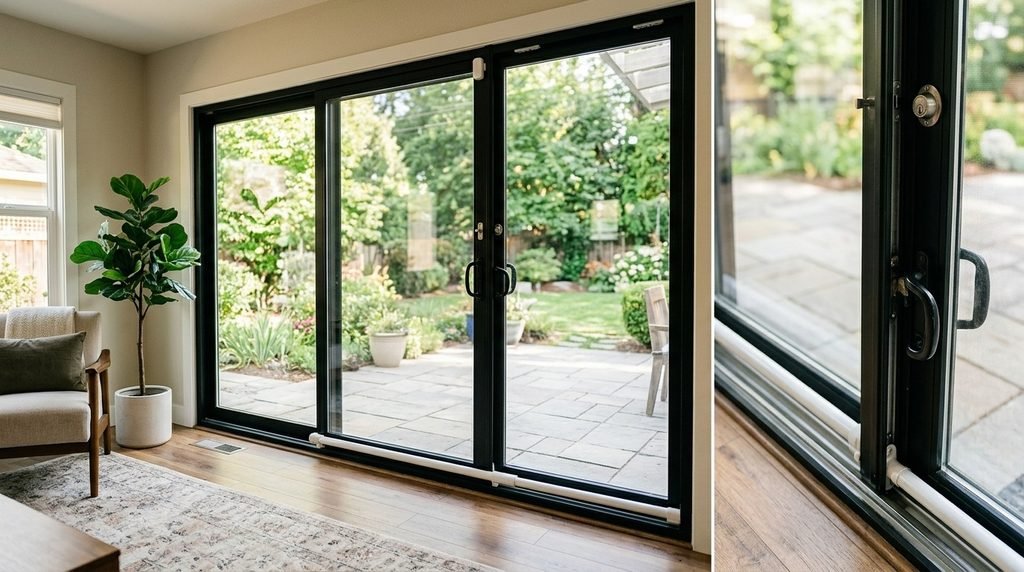
Check the lock. Inspect the track. Look at the frame. Make sure the panel is properly aligned and seated. Then consider adding another layer, such as a security bar, auxiliary lock, anti-lift protection, security film, or door sensor.
For renters, removable solutions can be particularly practical. For homeowners, upgrading worn hardware or investing in a more comprehensive door improvement may make sense.
The biggest lesson is simple: don’t rely on one component to do the entire job.
A properly maintained door combined with sensible physical security and useful alerts creates a more complete approach—and you can build that protection one improvement at a time.