
A flat or gently sloped rooftop can be more than just an empty space above your home. With the right planning, it can become a peaceful place for plants, herbs, flowers, seating, or even a small vegetable garden.
But here’s the thing: a roof garden isn’t simply a backyard garden moved upstairs. Rooftops have different challenges, including strong sunlight, wind exposure, drainage, irrigation, waterproofing, and the weight of planters and saturated growing materials.
The good news? You don’t need a huge rooftop or an elaborate landscape to create something worthwhile. A few well-chosen containers, suitable plants, and a sensible layout can make a surprisingly big difference.
This guide explains how to approach a roof garden, what to consider before getting started, which plants can work well, common mistakes to avoid, and how to create a rooftop space that’s attractive and practical.
What Is a Roof Garden?
A roof garden is a garden created on the roof of a building, usually using containers, planters, raised beds, or a purpose-built green-roof system.
For a residential project, the simplest approach is often container gardening. However, the roof must first be evaluated for factors such as structural capacity, waterproofing, drainage, access, and wind exposure.
Green roofs can also provide environmental benefits. The U.S. Environmental Protection Agency notes that vegetated roofs can help reduce heat-island effects, manage stormwater, and lower building energy demands under suitable conditions.
Important: Never assume a roof can safely support a garden. Planters, people, soil, water, furniture, and other materials add weight. A qualified professional should evaluate structural capacity when necessary.
Why Create a Roof Garden?
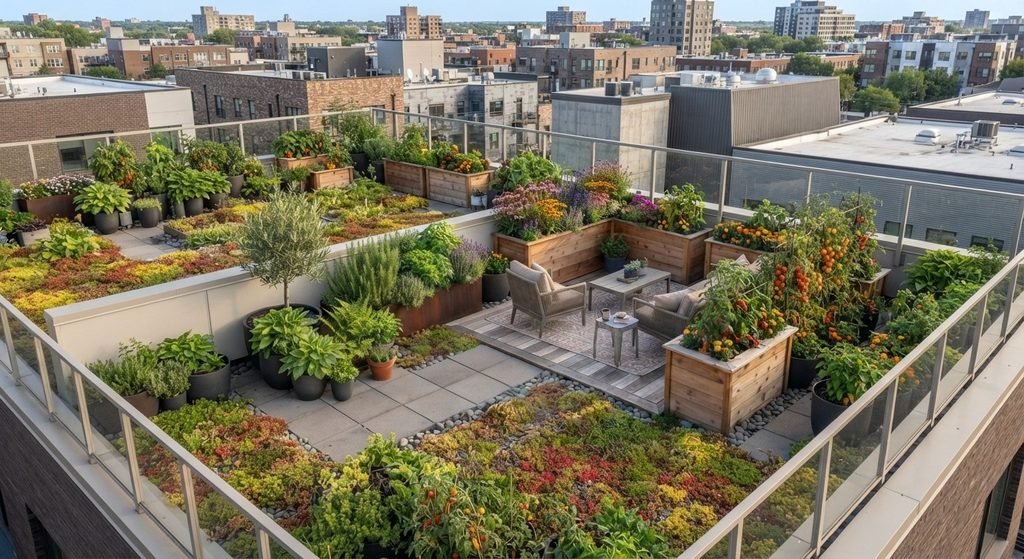
Why turn a perfectly ordinary rooftop into a garden?
Because unused space can become one of the most interesting parts of a property.
1. Make Better Use of Limited Space
For homes with small yards—or no usable yard at all—a rooftop can provide additional gardening space.
You might use it for:
- Herbs
- Flowers
- Vegetables
- Small ornamental plants
- Container trees where appropriate
- Pollinator-friendly plants
- A small seating area surrounded by greenery
A roof garden can be particularly appealing in densely developed neighborhoods where traditional garden space is limited.
2. Add Greenery to an Urban Home
Rooftops are often dominated by concrete, roofing materials, vents, and other hard surfaces.
Adding vegetation can soften that appearance.
Green roofs and rooftop vegetation can also provide habitat for insects and other wildlife. EPA identifies habitat creation and biodiversity among the potential benefits of green infrastructure and green roofs.
3. Help Manage Rainwater
Vegetated roofs can capture and temporarily store rainfall before water reaches drainage systems.
EPA explains that green roofs use vegetation and growing media to capture rainwater and release it gradually through drainage, evaporation, and evapotranspiration.
That doesn’t mean a small collection of containers will solve a property’s entire stormwater problem. The actual benefit depends on the design, rainfall, growing media, plants, and drainage system.
4. Reduce Rooftop Heat
A roof exposed to intense sunlight can become extremely hot.
Vegetation can provide shade and cooling through evapotranspiration. EPA identifies green roofs as one strategy for reducing heat-island effects and building heat exposure.
The exact energy benefit varies considerably by building, climate, roof construction, and garden design, so avoid treating any single percentage as a guarantee for every home.
Roof Garden vs. Green Roof: What’s the Difference?
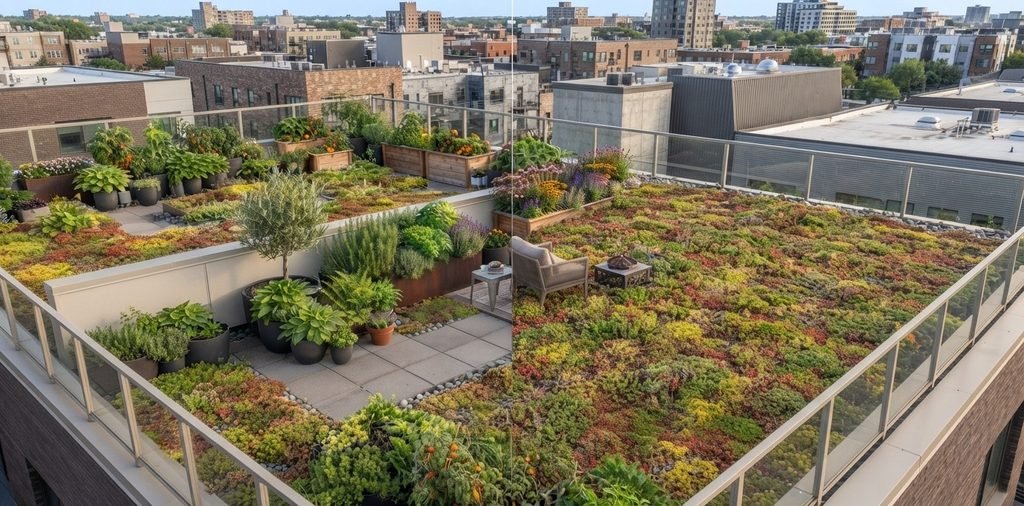
The terms are sometimes used interchangeably, but they’re not always describing exactly the same thing.
| Feature | Roof Garden | Green Roof |
| Typical setup | Containers or planters | Purpose-built vegetated roof system |
| Main purpose | Gardening, recreation, aesthetics | Vegetation plus building/environmental benefits |
| Plant choices | Often broader | Usually selected for roof conditions |
| Access | Usually designed for people | Depends on system |
| Structural planning | Still important | Critical |
| Maintenance | Varies | Depends on extensive/intensive design |
| Best for | Homeowners wanting usable garden space | Purpose-designed green-roof projects |
A container-based roof garden can be relatively straightforward compared with installing a complete green-roof system—but it still needs proper planning.
How to Start a Roof Garden
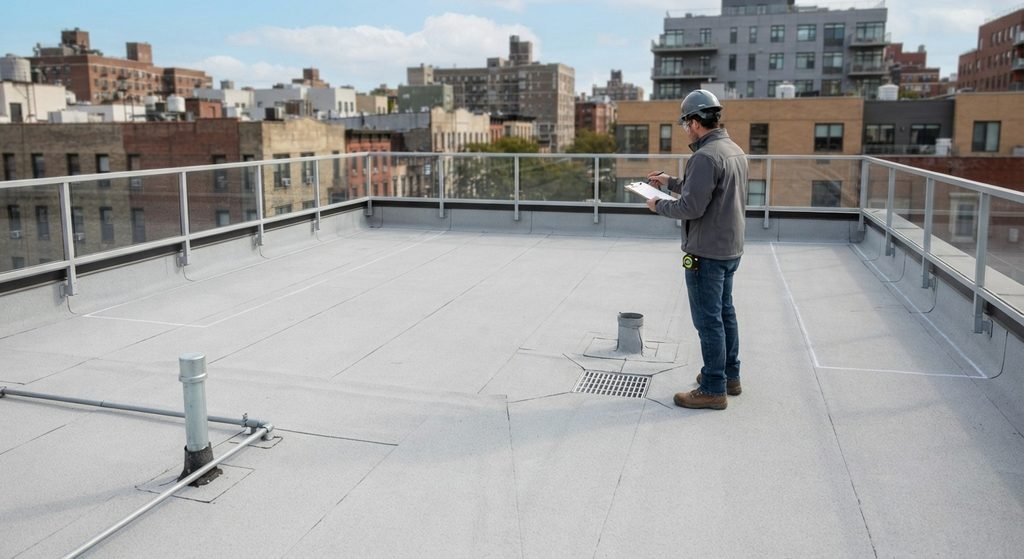
Before buying the first attractive planter you see, slow down.
A little planning goes a long way.
1. Check the Roof’s Structural Capacity
This is the step you shouldn’t skip.
A roof garden introduces additional loads from:
- Planters
- Growing media
- Water
- Plants
- Furniture
- People
- Irrigation equipment
- Other garden features
Waterlogged growing media can be substantially heavier than dry material.
EPA specifically warns that structures supporting green roofs need to accommodate the load of green-roof materials under fully saturated conditions.
For a substantial garden, consult a qualified structural professional before adding significant weight.
2. Inspect Waterproofing and Drainage
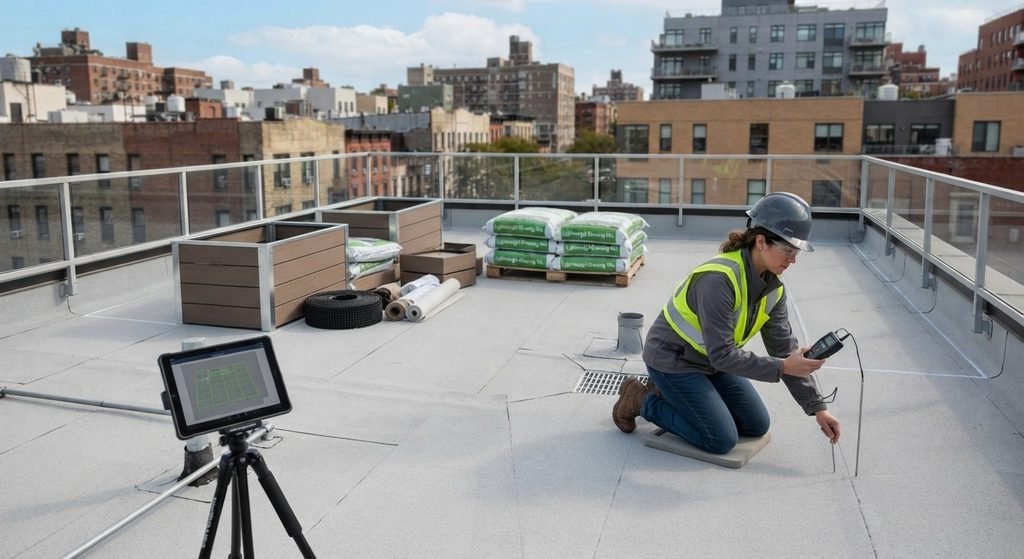
Plants need water, but your roof needs to move excess water away efficiently.
Before installing planters, make sure you understand:
- Where rainwater drains
- Whether drains are accessible
- Where water could collect
- The condition of the roof membrane
- Whether planters could obstruct drainage
- How irrigation water will be controlled
Don’t cover or block drainage points simply because a planter looks better in that location.
3. Study Sunlight
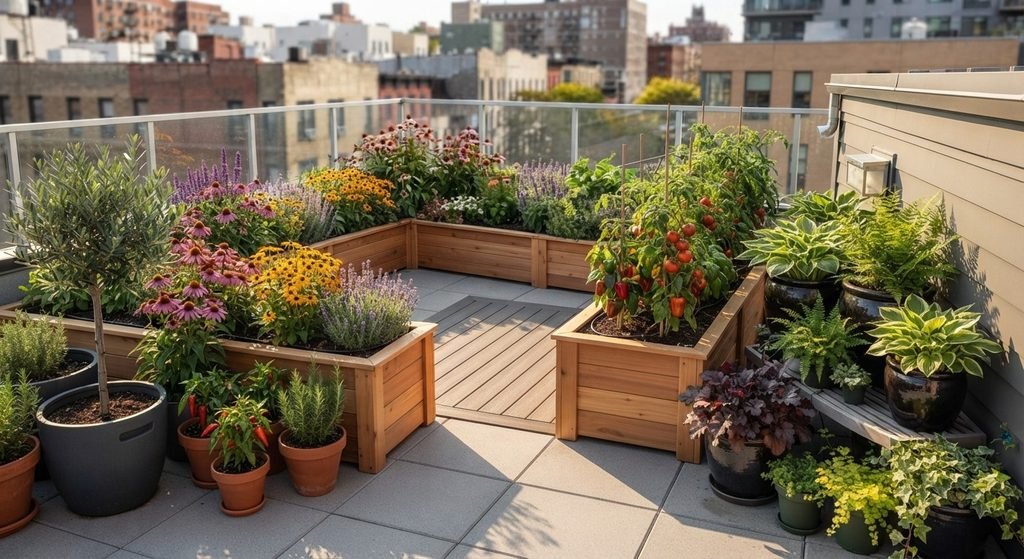
Spend a day observing your rooftop.
Then think about how sunlight changes throughout the seasons.
Ask:
- Which areas receive full sun?
- Where is partial shade available?
- Does a nearby wall create afternoon shade?
- Are some areas exposed all day?
- Could tall plants shade shorter plants?
Plant selection becomes much easier once you know the actual conditions.
4. Consider Wind Exposure
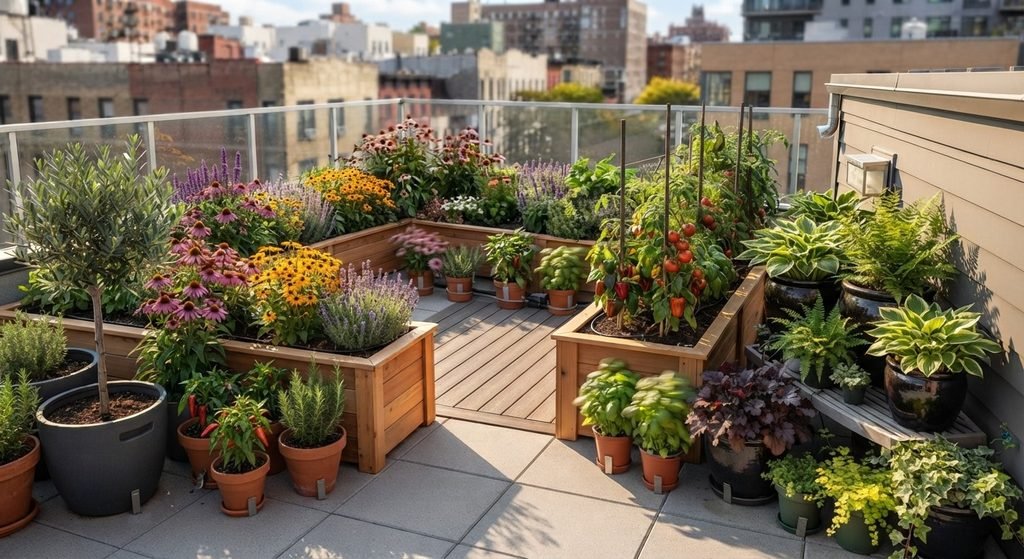
A rooftop can be much windier than a garden at ground level.
Strong winds can:
- Dry plants quickly
- Damage delicate foliage
- Knock over lightweight containers
- Stress young plants
- Increase watering requirements
Choose sturdy containers and plants appropriate for the conditions.
Avoid placing lightweight objects where they could become unstable during windy weather.
Best Plants for a Roof Garden
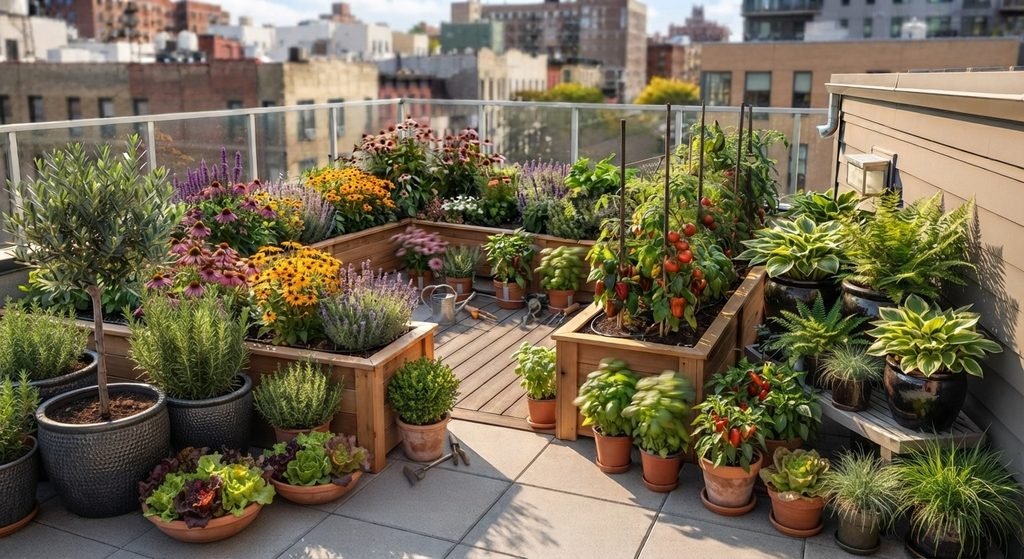
There isn’t one universal list of “best” plants.
The right choice depends on your US climate, sunlight, wind, container size, irrigation, and available space.
Still, several categories are worth considering.
Herbs
Herbs can be a great starting point because many grow well in containers.
Depending on your climate and conditions, possibilities may include:
- Basil
- Thyme
- Rosemary
- Oregano
- Mint
- Chives
Remember that mint can spread aggressively, so keeping it in its own container is often sensible.
Vegetables
A sunny rooftop can potentially support container-grown vegetables such as:
- Cherry tomatoes
- Peppers
- Lettuce
- Radishes
- Green onions
- Bush beans
Choose compact or container-friendly varieties where possible.
Flowers
Flowering plants can turn a plain rooftop into a much more inviting space.
Consider plants suited to your local climate and exposure, especially varieties that tolerate:
- Heat
- Sun
- Wind
- Container conditions
Native and regionally appropriate plants can also be valuable when they fit the rooftop environment.
Drought-Tolerant Plants
If your rooftop receives intense sun and you can’t water frequently, drought-tolerant plants may make more sense than thirsty varieties.
The exact choices depend heavily on your location.
A plant that thrives on a hot Southwestern rooftop may struggle in a cold northern climate.
How to Design a Small Roof Garden
You don’t need dozens of plants.
In fact, overcrowding can make rooftop gardening harder.
Use Containers Strategically
Instead of scattering containers randomly, group them according to:
- Sunlight
- Plant height
- Water requirements
- Accessibility
- Visual balance
Keep frequently harvested herbs near the easiest access point.
Place taller plants where they won’t unnecessarily shade sun-loving plants.
Create a Simple Focal Point
A small seating area, attractive planter, trellis, or distinctive plant can act as the visual center of the garden.
You don’t need an expensive landscape installation.
Sometimes one thoughtful feature works better than ten unrelated decorations.
Leave Room to Move
This is easy to overlook.
A roof garden needs maintenance access.
Leave enough space to:
- Walk between containers
- Water plants
- Reach drains
- Inspect the roof
- Prune plants
- Move containers when necessary
A beautiful garden that you can’t comfortably maintain won’t stay beautiful for long.
Roof Garden Ideas for Different Goals
Not every rooftop garden needs to serve the same purpose.
| Goal | Good Starting Approach | What to Prioritize |
| Growing herbs | Small containers | Easy access and drainage |
| Growing vegetables | Larger containers | Sunlight and irrigation |
| Relaxing | Plants + seating | Shade and comfort |
| Pollinator garden | Flowering plants | Suitable regional species |
| Low maintenance | Hardy plants | Irrigation and plant selection |
| Small rooftop | Vertical elements + containers | Space efficiency |
For a Food Garden
Keep edible plants somewhere convenient.
You don’t want to walk across the entire roof every time you need a handful of herbs.
Consider:
- Container vegetables
- Compact varieties
- Herbs
- Seasonal crops
- Easy-to-reach planters
For a Relaxing Rooftop
Focus less on the number of plants and more on the atmosphere.
A simple combination of:
- Comfortable seating
- Container plants
- A small shade solution
- Soft lighting where safely installed
- A clear walking path
can create a more enjoyable space.
For a Pollinator-Friendly Garden
Choose flowering plants that are appropriate for your region and provide resources for pollinators.
Avoid treating every rooftop as identical. Local climate and plant suitability matter.
What Does a Roof Garden Cost?
There isn’t one reliable price for every roof garden.
The final cost can vary based on:
- Roof size
- Existing roof condition
- Structural requirements
- Planters
- Growing media
- Plants
- Irrigation
- Waterproofing
- Drainage improvements
- Labor
- Furniture
- Local climate
- Whether the project is container-based or a complete green-roof system
EPA notes that green-roof installation and maintenance costs vary significantly by system type, with more intensive systems generally requiring greater investment and maintenance than simpler extensive systems.
For a homeowner, the smartest approach is usually to establish the project scope first and then obtain local estimates rather than relying on a generic national price.
Common Roof Garden Mistakes
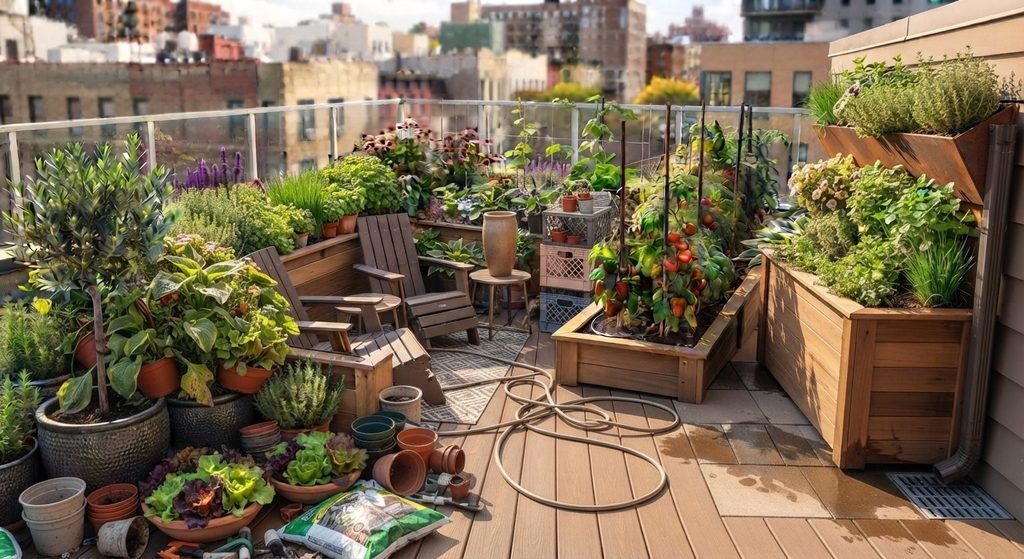
A roof garden can look easy on social media.
The reality is a little different.
Here are some mistakes worth avoiding.
1. Ignoring Structural Load
This is the biggest concern.
Don’t assume that because a roof can support people occasionally, it can automatically support a large collection of wet soil, planters, furniture, and plants.
Get appropriate professional advice for substantial installations.
2. Blocking Roof Drains
Never place containers or garden structures where they prevent proper drainage access.
A garden should work with the roof’s drainage system—not against it.
3. Choosing Plants Only for Appearance
That beautiful plant in the garden center may not be happy on a windy rooftop.
Consider the actual growing environment before choosing plants.
4. Underestimating Watering
Rooftop containers can dry out quickly, especially during hot, windy weather.
Think about how you’ll maintain consistent watering before filling the roof with plants.
5. Overcrowding
More plants don’t necessarily mean a better garden.
Overcrowding can create:
- Poor airflow
- Difficult maintenance
- Increased competition for water
- Hard-to-reach areas
- More complicated watering
6. Forgetting Maintenance Access
Your roof still needs inspection and maintenance.
Don’t design the garden so that important roof components become inaccessible.
How to Make a Roof Garden Easier to Maintain
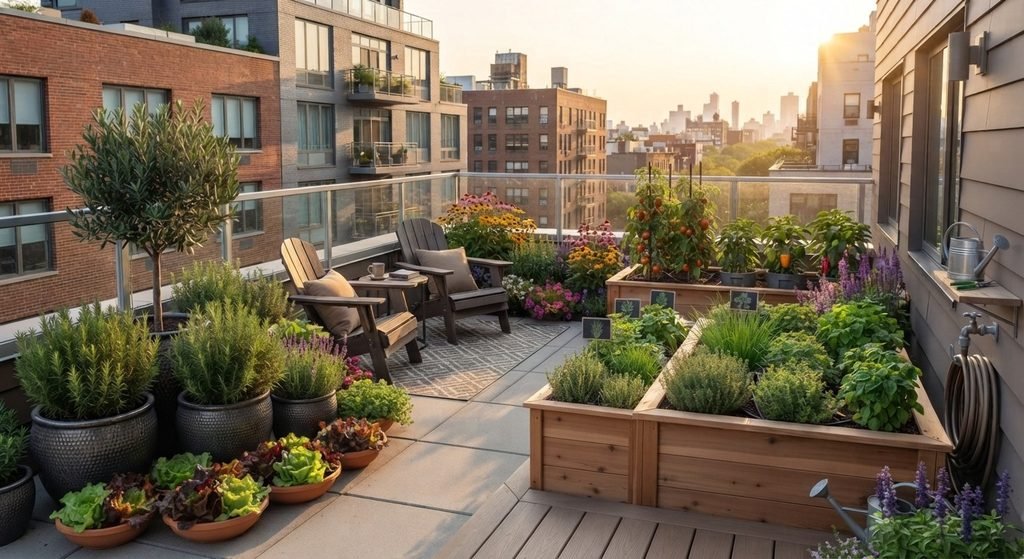
The best roof garden isn’t necessarily the biggest one.
It’s the one you can realistically look after.
Group Plants by Water Needs
Put plants with similar watering requirements together.
This makes irrigation easier and reduces the risk of overwatering some plants while underwatering others.
Use Appropriate Containers
Choose containers that are stable and suitable for outdoor conditions.
Consider:
- Size
- Drainage
- Durability
- Weight
- Wind exposure
- Ease of movement
Keep an Eye on Drainage
After significant rainfall, inspect areas around containers and drains.
Standing water shouldn’t simply be ignored.
Inspect Plants Regularly
Look for:
- Wilting
- Leaf damage
- Pest problems
- Broken stems
- Dry growing media
- Signs of excessive moisture
Small problems are usually easier to address than neglected ones.
Is a Roof Garden Worth It?
For the right property and homeowner, it can be.
A roof garden can turn underused space into something useful and enjoyable while potentially contributing to cooling, stormwater management, and urban biodiversity.
But it isn’t automatically the right project for every roof.
The key question isn’t simply:
“Can I put plants on my roof?”
It’s:
“Can I create a garden here safely, legally, and in a way I can maintain?”
That shift in thinking can save you money and prevent avoidable problems.
Frequently Asked Questions
Can I put a garden on my roof?
Yes, potentially, but the roof must be suitable for the additional loads and environmental conditions. Structural capacity, waterproofing, drainage, access, and local requirements should be evaluated before installing a substantial roof garden.
What plants are best for a roof garden?
The best plants depend on your location, sunlight, wind exposure, available container size, and watering setup. Herbs, compact vegetables, flowering plants, and regionally appropriate drought-tolerant species can all be possibilities.
Does a roof garden damage the roof?
A properly designed garden shouldn’t be assumed to damage a roof, but poor installation or maintenance can create problems. Waterproofing, drainage, structural loads, and access to roof components need careful consideration.
Does a roof garden need a lot of maintenance?
It depends on the design. A small collection of hardy container plants may be relatively manageable, while an intensive green roof or large edible garden can require considerably more maintenance.
Can a roof garden reduce heat?
Vegetated roofs can help reduce roof and surrounding temperatures and mitigate heat-island effects. EPA identifies green roofs as one strategy for reducing heat and building energy demands, although results vary by project and climate.
Can I grow vegetables on a roof?
Yes, vegetables can potentially be grown in suitable containers, provided the rooftop has appropriate conditions and the garden is properly planned. Sunlight, irrigation, wind, container depth, and structural considerations all matter.
Do roof gardens help with rainwater?
Vegetated roof systems can capture and slow rainfall runoff. Their stormwater performance depends on factors such as rainfall patterns, growing media, vegetation, and system design.
Should I hire a professional?
For a substantial roof garden, especially one involving significant planters, permanent structures, irrigation, or green-roof construction, professional advice can be worthwhile. Structural and waterproofing questions shouldn’t be guessed at.
Final Takeaway
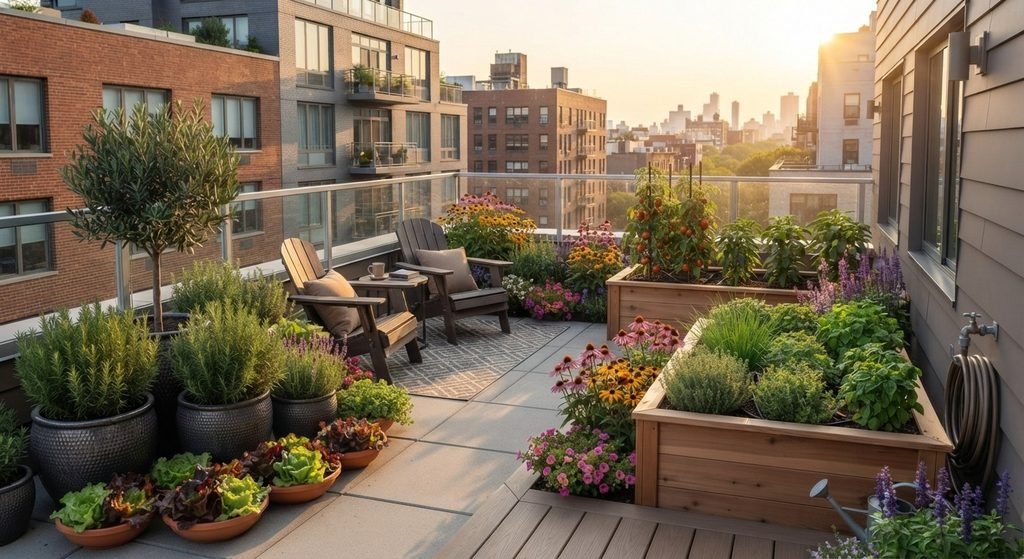
A roof garden can turn an overlooked rooftop into a greener, more useful part of a home.
The trick is not to start with the plants.
Start with the roof.
Check structural capacity, waterproofing, drainage, sunlight, wind, access, and local requirements. Then choose plants and containers that match those conditions.
Once the practical pieces are right, the creative part becomes much easier.
Whether you want a few herbs, colorful flowers, container vegetables, or a relaxing rooftop retreat, thoughtful planning can help you create a garden that’s attractive without becoming a maintenance headache.
For more practical home-improvement and gardening guidance, HomeWorksDaily can serve as a useful resource for planning projects, solving everyday home problems, and exploring new gardening ideas.









3 Responses