
There are trees that simply fill a space, and then there are trees that change the way a garden feels. A weeping cherry plant belongs firmly in the second group. When its long, cascading branches are covered with spring blossoms, even a fairly ordinary lawn can suddenly have a dramatic focal point.
But that graceful shape can be deceptive. A weeping cherry isn’t difficult to grow when it’s planted in the right place, yet choosing the wrong site, burying the graft, ignoring drainage, or pruning without a plan can create problems later.
So, before you buy one, it’s worth looking beyond the flowers.
This guide explains how to choose, plant, grow, prune, and maintain a weeping cherry plant—and how to decide whether one actually belongs in your garden.
Quick Answer: Is a Weeping Cherry Plant Right for Your Garden?
A weeping cherry plant can be an excellent ornamental tree if you have a sunny location, reasonably fertile and well-drained soil, and enough room for its mature canopy. Many commonly sold weeping cherries are cultivars of Prunus subhirtella or related flowering cherries. Their exact size, flower color, hardiness, and growth habit vary by cultivar, so checking the plant label before buying is important.
[IMAGE PLACEHOLDER: A mature weeping cherry tree covered in spring blossoms as a garden focal point]
What Is a Weeping Cherry Plant?
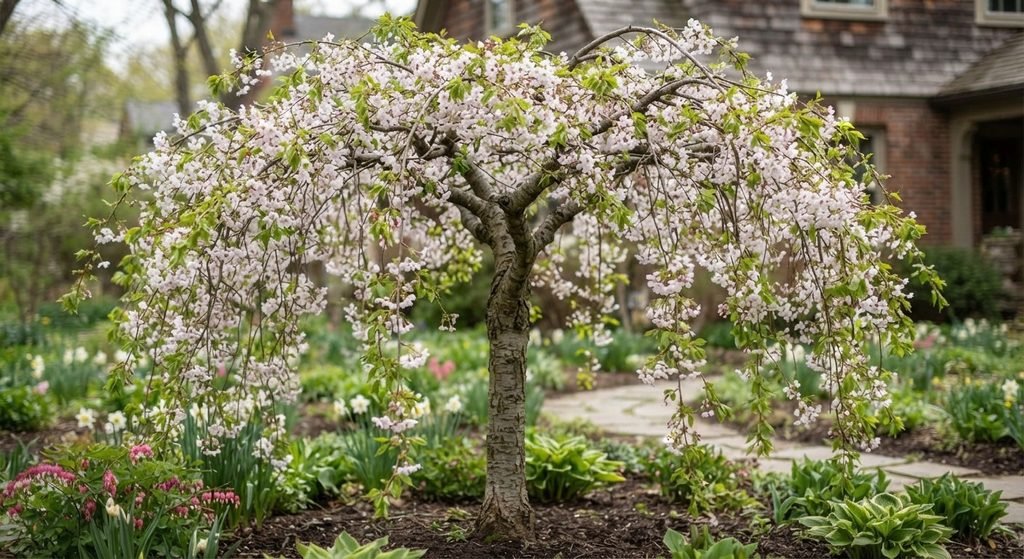
A weeping cherry plant is an ornamental flowering cherry grown primarily for its cascading branches and attractive spring blossoms.
One commonly encountered type is weeping Higan cherry (Prunus × subhirtella ‘Pendula’), a deciduous flowering tree associated with Japan. Its branches form the characteristic pendulous shape, while spring brings clusters of flowers. Depending on the cultivar and growing conditions, mature dimensions can vary considerably. (Plant Toolbox)
That’s an important point for buyers: “weeping cherry” isn’t always one identical tree. Different cultivars can have noticeably different mature sizes and forms.
How Weeping Cherry Trees Differ From Other Cherries
The word cherry can make people think of fruit first. With many ornamental weeping cherries, however, the main attraction is the flowering display and architectural shape, not a harvest of cherries for the kitchen.
Their pendulous branches make them especially useful as specimen trees. Instead of blending into a planting bed, they can become the visual centerpiece.
Some cultivars can also produce small fruit, but you shouldn’t select an ornamental weeping cherry primarily for edible fruit unless the specific cultivar is intended for that purpose.
Popular Types and Cultivars
The best choice depends on your available space and the appearance you’re after.
Commonly encountered forms include:
| Type or cultivar | Notable feature | Best consideration |
| Prunus × subhirtella ‘Pendula’ | Classic weeping form and spring flowers | Needs substantial space |
| ‘Snow Fountains’ | Strong cascading appearance with pale/white flowers | Useful where a softer floral effect is wanted |
| ‘Autumnalis’ | Known for flowering characteristics that can extend beyond the typical spring display in suitable climates | Interesting choice for extended seasonal interest |
| Other weeping cultivars | Varying flower color, size and habit | Check the nursery label carefully |
Cultivar names and characteristics can vary between nursery listings, so verify the botanical name and mature dimensions before purchasing. North Carolina Extension lists several pendulous cultivars associated with Prunus × subhirtella. (Plant Toolbox)
A smart buying rule: don’t choose solely by the photograph. Choose by the mature tree you’re actually going to have.
Why Grow a Weeping Cherry Plant?
The obvious reason is the flowers, but that’s only part of the story.
The Main Advantages
- Strong visual impact: The cascading canopy creates an immediate focal point.
- Spring flowers: Blossoms provide seasonal interest after winter.
- Distinctive form: The weeping habit gives the tree character even when it isn’t flowering.
- Landscape versatility: It can work as a lawn specimen, garden centerpiece, or feature near an entrance.
- Wildlife value: Flowers can contribute to a garden’s seasonal resources for pollinating insects.
What Are the Downsides?
There are a few.
Weeping cherries can be susceptible to several insect pests and fungal or bacterial diseases. Their thin bark can also be vulnerable to physical injury, particularly from lawn equipment. (Plant Toolbox)
Their mature spread is another consideration. A small nursery tree can look deceptively compact.
In other words, buy for the mature canopy—not the pot sitting in front of you at the nursery.
How to Choose the Right Weeping Cherry Plant
Before buying, look at the tree from three angles:
- Its mature size
- Its growing requirements
- Its grafting and structural quality
Check the Mature Dimensions
Some weeping cherries can become surprisingly broad. North Carolina Extension gives Prunus × subhirtella ‘Pendula’ a potential height range of roughly 15–40 feet and width of 15–25 feet, illustrating why cultivar-specific information matters. (Plant Toolbox)
Don’t assume every tree sold under the same common name will reach the same size.
Inspect the Plant
When shopping, look for:
- Healthy-looking foliage when plants are in leaf
- No obvious pest infestation
- No extensive bark damage
- A reasonably balanced structure
- A sound trunk
- No obvious signs of severe disease
- A clearly identified cultivar
- A healthy root system
If the plant is grafted, locate the graft union and understand which part of the tree forms the desired weeping canopy.
Where Should You Plant a Weeping Cherry Plant?
Location is probably the most important decision you’ll make.
A beautiful tree in the wrong spot can become a maintenance problem.
Sunlight Requirements
For strong flowering and balanced growth, choose a location receiving full sun, generally meaning at least six hours of direct sunlight daily.
North Carolina Extension lists full sun as a preferred condition for Prunus × subhirtella ‘Pendula’, while noting that the plant can tolerate some partial shade. (Plant Toolbox)
More sunlight generally means a better flowering opportunity and a more evenly developed canopy.
Soil Requirements
Aim for soil that is:
- Moist but not permanently wet
- Well drained
- Reasonably fertile
- Suitable for healthy root growth
The goal isn’t simply “rich soil.” Drainage matters just as much.
If rainwater routinely sits around the planting site, reconsider the location before putting the tree in the ground.
Give It Room
Think horizontally as well as vertically.
The cascading branches need space to develop naturally. Planting too close to:
- Buildings
- Walkways
- Driveways
- Fences
- Utility structures
- Other large trees
can eventually create conflicts.
Protect It From Harsh Conditions
A sheltered location can help protect flowers and branches from strong winds. This is particularly useful in exposed gardens where spring weather can be rough on flowering trees.
How to Plant a Weeping Cherry Plant
Planting correctly gives the tree a much better start.
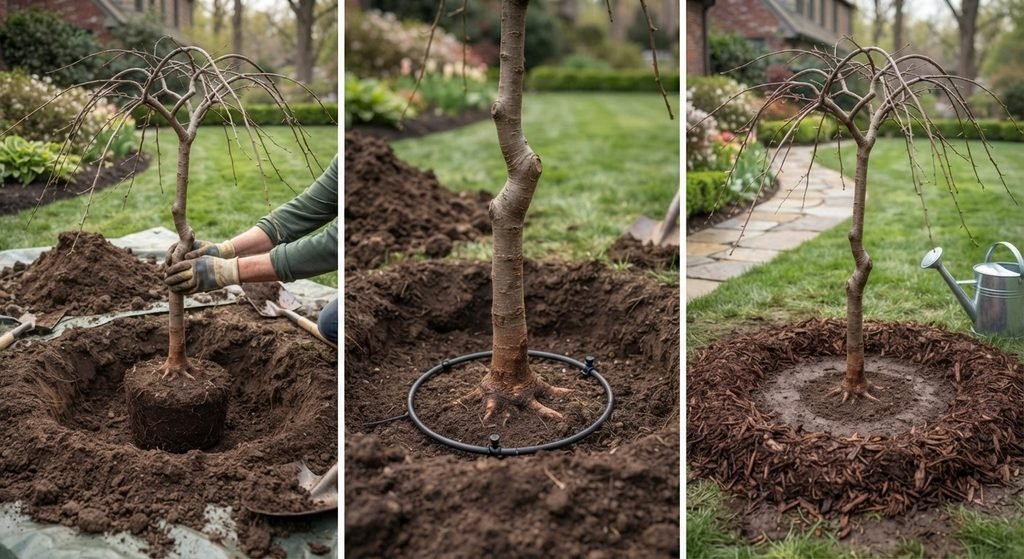
Step 1: Choose the Right Location
Select a sunny site with adequate room for the expected mature canopy.
Step 2: Check Drainage
After rainfall, observe whether water remains standing. Persistent wetness is a warning sign.
Step 3: Dig a Broad Planting Hole
Prepare a hole that accommodates the root system without forcing roots into a tight space.
Don’t automatically dig an extremely deep hole.
Step 4: Position the Tree Correctly
Place the tree so the root flare is at an appropriate level rather than burying the lower trunk.
If your tree is grafted, keep the graft union above the soil line.
This detail is easy to overlook and important for maintaining the intended tree form.
Step 5: Backfill
Return the original soil around the roots and gently firm it.
Step 6: Water Thoroughly
Water after planting so the soil settles around the root system.
Step 7: Add Mulch
Apply a moderate mulch layer over the root zone, keeping mulch away from direct contact with the trunk.
A common mistake is creating a volcano-shaped pile of mulch around the trunk. Avoid it.
Step 8: Monitor During Establishment
Newly planted trees need closer attention during dry periods than established trees.
Weeping Cherry Plant Care
Once established in a suitable location, care becomes much more straightforward.
Watering
Watering needs depend on rainfall, soil, temperature, tree age, and local climate.
Young trees generally need more consistent attention while their roots establish.
Instead of watering automatically every day, check the soil and weather conditions.
During extended dry periods:
- Monitor soil moisture
- Water deeply enough to reach the root zone
- Avoid constantly saturated soil
- Pay particular attention to newly planted trees
Established weeping cherries may tolerate some dry conditions better than newly planted trees, but prolonged drought can still create stress.
Fertilizing
Don’t assume more fertilizer means more flowers.
A tree growing in reasonably fertile soil may not need aggressive feeding. Fertilizer decisions should ideally be based on soil conditions, plant performance, and local recommendations.
Excessive fertilization can encourage growth without necessarily solving the underlying problem if the real issue is poor drainage, insufficient sunlight, root damage, or disease.
Mulching
Mulch can help conserve soil moisture and moderate soil temperatures.
A practical approach is to maintain a broad mulch area around the tree while leaving space around the trunk.
Protect the Trunk
Keep lawnmowers and string trimmers away from the trunk.
Physical bark damage can create openings for later problems. Extension guidance specifically notes that flowering cherries have thin bark that can be easily injured by mowing and trimming equipment.
How Fast Does a Weeping Cherry Plant Grow?
There isn’t one reliable growth rate that applies to every weeping cherry.
Growth depends on:
- Cultivar
- Rootstock
- Tree age
- Sunlight
- Soil
- Water availability
- Climate
- General tree health
- Competition from nearby plants
North Carolina Extension describes Prunus × subhirtella ‘Pendula’ as having a rapid growth rate, but its mature dimensions still vary substantially. (Plant Toolbox)
So don’t judge a tree’s future size by how small it looks when you bring it home.
When Does a Weeping Cherry Plant Bloom?
Most commonly grown ornamental weeping cherries are prized for their spring flowering period.
Exact timing depends on:
- Cultivar
- Winter temperatures
- Local climate
- Spring temperatures
- Weather conditions
- Tree health
A warm spring can accelerate flowering, while cold conditions may delay it.
Some cultivars also have unusual flowering characteristics. That’s another reason to check the exact cultivar rather than relying solely on the common name.
[IMAGE PLACEHOLDER: Close-up of pink and white weeping cherry blossoms hanging from cascading branches]
Common Weeping Cherry Plant Problems
A struggling tree doesn’t always have an insect problem.
Sometimes the real culprit is the planting site.
| Problem | Signs | Possible cause | What to check |
| Poor flowering | Few or no blossoms | Insufficient light, weather, cultivar or tree stress | Sun exposure and general health |
| Yellowing leaves | Leaves turn pale/yellow | Water stress, root issues or other causes | Soil moisture and drainage |
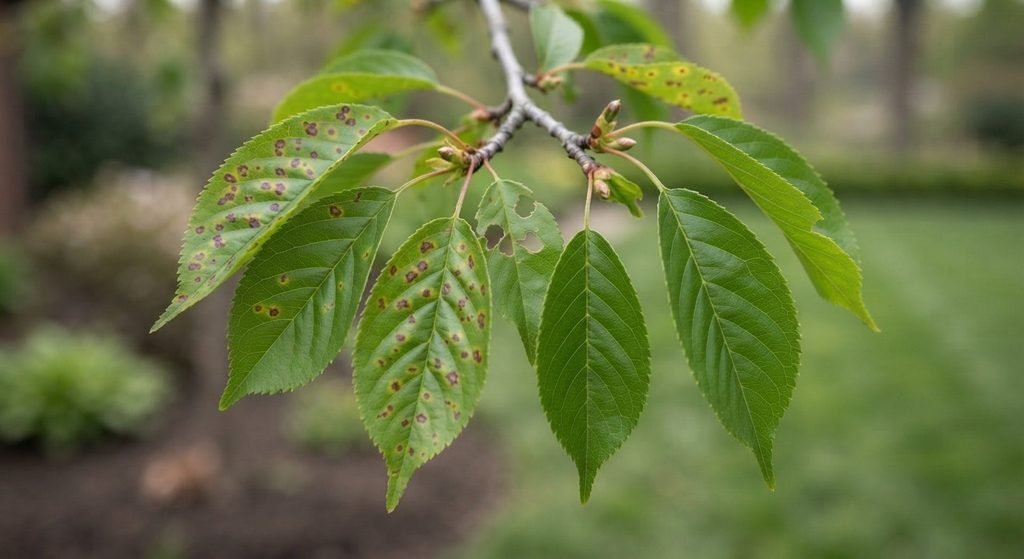
| Leaf spots | Dark spots or holes | Fungal or other leaf diseases | Leaves and recent weather |
| Wilting | Drooping or stressed foliage | Drought, root problems or disease | Soil moisture and roots |
| Gummy sap | Sticky material from trunk/branches | Bark injury, insects or disease | Trunk for wounds and damage |
| Dieback | Branches fail to leaf out | Injury, disease or structural decline | Dead wood and branch unions |
| Chewed leaves | Missing or damaged leaf tissue | Insect feeding | Undersides and surfaces of leaves |
Cherry trees are susceptible to a range of problems, including leaf spots, cankers, root rot, powdery mildew, borers, aphids, scale, caterpillars and Japanese beetles. (Plant Toolbox)
A Useful Troubleshooting Habit
Before reaching for a spray, ask:
What changed?
Was there:
- A drought?
- Excessive rain?
- Physical trunk damage?
- A new pest?
- Crowded growth?
- Poor airflow?
- A change in sunlight?
- Improper planting depth?
That question can save you from treating the wrong problem.
Common Pests and Diseases
Weeping cherries can experience both insect and disease pressure.
Leaf Spot
Leaf spot diseases can become more noticeable during cool, wet weather. Some infections cause spots and holes in leaves as damaged tissue drops out.
Extension specialists note that cherry leaf spot can be promoted by wet spring and early-summer conditions.
Good sanitation can help reduce disease pressure:
- Remove heavily infected fallen leaves where appropriate
- Keep the canopy from becoming excessively crowded
- Improve general tree health
- Avoid unnecessary overhead watering
Japanese Beetles
Japanese beetles can chew foliage and cause noticeable defoliation.
Well-established trees may tolerate moderate damage, but repeated severe defoliation can add stress. A 2026 Extension response recommends focusing on reducing stress through appropriate watering and mulching and considering the effects of insect-control products on beneficial organisms.
Borers and Trunk Damage
Gummy sap, bark injury, and declining branches deserve attention.
Gummosis can be associated with bark injury, disease, or boring insects, so the presence of sap alone isn’t enough to identify the exact cause.
If a mature tree has extensive trunk decay or major structural damage, professional assessment is often the safer option.
Weeping Cherry Plant Pruning Guide
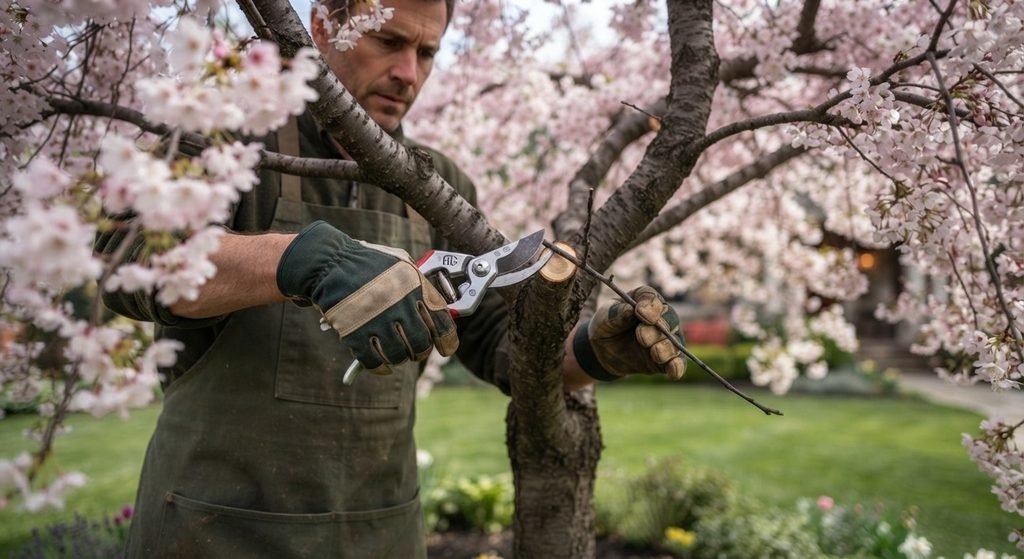
Pruning a weeping cherry isn’t about cutting it into a perfectly tidy shape.
The goal is to maintain:
- Healthy structure
- Adequate clearance
- Good airflow
- The natural weeping form
- Removal of dead or damaged wood
What Should You Remove?
Depending on the tree, pruning may involve removing:
- Dead branches
- Broken branches
- Diseased wood
- Crossing branches
- Unwanted shoots
- Growth emerging from below the graft
For grafted weeping cherries, shoots arising from the rootstock can grow upright and won’t carry the desired weeping form. North Carolina Extension specifically recommends removing growth at or below the graft.
Don’t Over-Prune
Heavy-handed pruning can destroy the graceful shape that makes the tree attractive in the first place.
For detailed pruning decisions, especially on a large mature tree, use guidance appropriate to your exact cultivar and local climate.
Weeping Cherry Plant Landscaping Ideas
This is where the tree really earns its place.
1. Lawn Focal Point
Plant one specimen where it can be viewed from the house.
Its branching structure naturally draws the eye.
2. Near a Garden Entrance
A carefully positioned tree can frame an entrance or pathway.
Just make sure the mature branches won’t obstruct the route.
3. Cottage-Style Garden
Pair the tree with lower-growing flowering plants and groundcovers while leaving enough space for its canopy.
4. Japanese-Inspired Garden
The graceful form of a weeping cherry works particularly well with restrained landscape designs using stone, evergreen plants, and carefully placed groundcovers.
5. Small Garden With the Right Cultivar
A weeping cherry isn’t automatically a small tree. If your yard is limited, choose a cultivar whose mature dimensions genuinely fit the site.
6. View From a Window
One of the smartest placements can be somewhere you can actually see it from indoors.
A beautiful spring tree hidden behind a shed doesn’t do much for your home’s view.
[IMAGE PLACEHOLDER: Weeping cherry used as a focal point in a landscaped residential front yard]
Can You Grow a Weeping Cherry Plant in a Container?
Some smaller or top-grafted ornamental weeping cherries can be grown in containers, but this isn’t automatically suitable for every weeping cherry.
Container growing creates different challenges:
- Restricted root space
- Faster drying
- Winter temperature exposure
- Need for suitable container size
- More frequent monitoring
- Eventual size limitations
Some horticultural sources describe compact, top-grafted forms as particularly suited to smaller spaces, while larger forms need substantially more room.
If container growing is your goal, choose the cultivar specifically for that purpose rather than trying to force a large tree into a pot.
Weeping Cherry Plant Care by Season
| Season | Main Tasks | What to Watch For |
| Spring | Monitor flowering, inspect new growth, check moisture | Leaf diseases, insects, damaged branches |
| Summer | Water during prolonged dry periods, monitor foliage | Drought stress, Japanese beetles and leaf damage |
| Fall | Clean up fallen leaves where disease has been present, inspect structure | Leaf spots, damaged limbs |
| Winter | Inspect branch structure and planting area | Storm damage, broken branches, structural issues |
Seasonal timing should be adjusted for your local climate and the specific cultivar.
Common Mistakes to Avoid
1. Choosing Based Only on Flower Color
The prettiest photograph isn’t necessarily the best tree for your garden.
2. Ignoring Mature Size
A young nursery tree can make a large mature tree look deceptively small.
3. Planting in Poor Drainage
Constantly wet soil can create root problems.
4. Burying the Graft
If your tree is grafted, don’t cover the graft union with soil.
5. Piling Mulch Against the Trunk
Mulch should protect the root zone—not smother the trunk.
6. Pruning Too Aggressively
Removing too much wood can spoil the natural form.
7. Ignoring Trunk Damage
Lawn equipment can damage thin bark. Keep grass-cutting equipment at a safe distance.
8. Assuming Every Weeping Cherry Is the Same
Cultivars differ. Always check the botanical name and mature dimensions.
Weeping Cherry Plant Buying Guide
If you’re shopping for one, slow down before placing the order.
Look for a Clearly Identified Cultivar
The common name can be too broad.
A good plant label should tell you what you’re actually buying.
Examine the Trunk
Avoid plants with serious wounds, extensive bark damage, or obvious structural problems.
Check for Pests
Inspect both sides of leaves and the stems for visible pest activity.
Think About the Future
Ask:
“Where will this tree be in ten years?”
Not:
“Does this little tree fit here today?”
Consider Your Climate
Hardiness information can vary by cultivar. For example, North Carolina Extension lists ‘Pendula’ across USDA hardiness zones 5a through 8b, but that shouldn’t be interpreted as a guarantee that every weeping cherry cultivar performs equally well across those zones.
Local climate, summer heat, winter conditions, and disease pressure all matter.
Frequently Asked Questions
How big does a weeping cherry plant get?
It depends heavily on the cultivar and growing conditions. Some forms remain relatively compact, while Prunus × subhirtella ‘Pendula’ can become a substantial tree. North Carolina Extension lists a potential height of 15–40 feet and width of 15–25 feet for that form, so always check the exact cultivar before planting.
How much sunlight does a weeping cherry plant need?
Full sun is generally preferred, with around six or more hours of direct sunlight a day providing a useful target. Some weeping cherry cultivars can tolerate partial shade, but insufficient light may reduce flowering and affect the shape of the canopy.
Is a weeping cherry plant easy to grow?
It can be relatively straightforward when planted in suitable soil with adequate sunlight and enough space. The bigger challenge is often prevention: poor drainage, improper planting, physical trunk damage, unsuitable climate, and neglected structural pruning can all create problems.
How often should you water a weeping cherry plant?
There isn’t one fixed schedule because watering depends on rainfall, soil type, temperature, and tree age. Newly planted trees need closer monitoring, especially during dry periods. Established trees generally require less frequent attention but can still suffer during prolonged drought.
When should you prune a weeping cherry plant?
Pruning timing depends on what you’re removing, the cultivar, and your local disease conditions. Dead or broken branches can require attention at other times, while major structural pruning should be planned carefully. If you’re unsure, use local extension guidance rather than following a one-size-fits-all calendar.
Why isn’t my weeping cherry plant blooming?
Possible reasons include insufficient sunlight, unsuitable weather, cultivar characteristics, young age, stress, or poor growing conditions. Start by checking sunlight, moisture, general tree health, and whether the cultivar is normally expected to flower at that time.
Can a weeping cherry plant grow in a small yard?
Yes, if you choose an appropriately sized cultivar. The phrase “weeping cherry” doesn’t automatically mean “small tree.” Some forms can develop broad canopies, so mature width is just as important as mature height.
Can you grow a weeping cherry plant in a pot?
Certain compact or top-grafted forms can be grown in containers, but large-growing trees aren’t ideal for long-term container culture. Container plants also need closer attention to water, root space, and winter conditions.
How long does a weeping cherry plant live?
Lifespan varies with cultivar, climate, site conditions, disease pressure, and care. Ornamental flowering cherries can be relatively short-lived compared with some large landscape trees; extension guidance notes that flowering cherries may decline after roughly 20–30 years in some home landscapes.
What soil is best for a weeping cherry plant?
A weeping cherry generally performs best in moist, well-drained soil. A soil that stays saturated is more concerning than ordinary variation in soil texture. North Carolina Extension lists the plant as adaptable to clay, loam, and sand provided drainage is suitable.
Final Takeaway
A weeping cherry plant can turn an ordinary garden into a beautiful seasonal focal point, thanks to its graceful cascading branches and spring blossoms. But its beauty starts with the basics: choose the right cultivar, give it plenty of sunlight, provide well-drained soil, leave enough room for mature growth, and water it properly while it establishes.
If you’re considering adding one to your landscape, don’t choose a tree based on flowers alone. Check its mature size, climate suitability, growing requirements, and overall health before bringing it home. With the right location and thoughtful care, a weeping cherry can bring structure, color, and character to your garden for years.
For more practical gardening, landscaping, and home-improvement advice, keep exploring HomeWorksDaily.










One Response