
A thick, green lawn can completely change how a home feels. It creates a welcoming outdoor space, gives kids and pets room to play, and makes a backyard feel cared for. But choosing the right grass is where many homeowners get stuck.
For people living in warm regions of the United States, Bermuda Grass is one of the most popular lawn choices because it can handle heat, recover from heavy foot traffic, and spread quickly when conditions are right.
But Bermuda Grass is not perfect for every yard.
It loves sunlight. It grows aggressively. It can create a beautiful, dense lawn — or become frustrating if planted in shady areas or maintained incorrectly.
This guide explains everything homeowners need to know, including what does Bermuda Grass look like, how to identify it, its advantages and disadvantages, maintenance requirements, seasonal care tips, and whether it is the right grass for your lawn.
What Is Bermuda Grass?
Bermuda Grass is a warm-season turfgrass known for its fast growth, excellent heat tolerance, and ability to repair damage quickly. It grows best in sunny lawns across the southern United States and spreads through above-ground runners and underground stems.
Here are the basics:
| Feature | Bermuda Grass |
| Grass type | Warm-season turfgrass |
| Scientific name | Cynodon dactylon |
| Best climate | Warm regions, especially the southern U.S. |
| Sun requirement | Full sun |
| Growth habit | Spreads through stolons and rhizomes |
| Traffic tolerance | Excellent |
| Maintenance level | Medium to high |
| Winter behavior | Often turns brown and goes dormant |
Bermuda Grass is especially common in states with hot summers because it thrives when temperatures rise and other grasses struggle.
What Is Bermuda Grass?
Bermuda Grass is a creeping perennial grass used for residential lawns, sports fields, golf courses, and recreational areas.
Its scientific name is Cynodon dactylon, and it belongs to the grass family Poaceae. Despite its name, Bermuda Grass is not originally from Bermuda. It has spread widely around the world because of its ability to survive difficult growing conditions.
The reason homeowners choose Bermuda Grass comes down to one simple quality:
It is a survivor.
A backyard that gets constant activity — children running, pets playing, outdoor gatherings, or regular mowing — can often recover faster with Bermuda Grass than with many slower-growing lawn types.
However, that same aggressive growth can become a challenge. Bermuda Grass does not always stay politely inside lawn borders. It can spread into garden beds, sidewalks, and areas where you may not want it..
What Does Bermuda Grass Look Like?
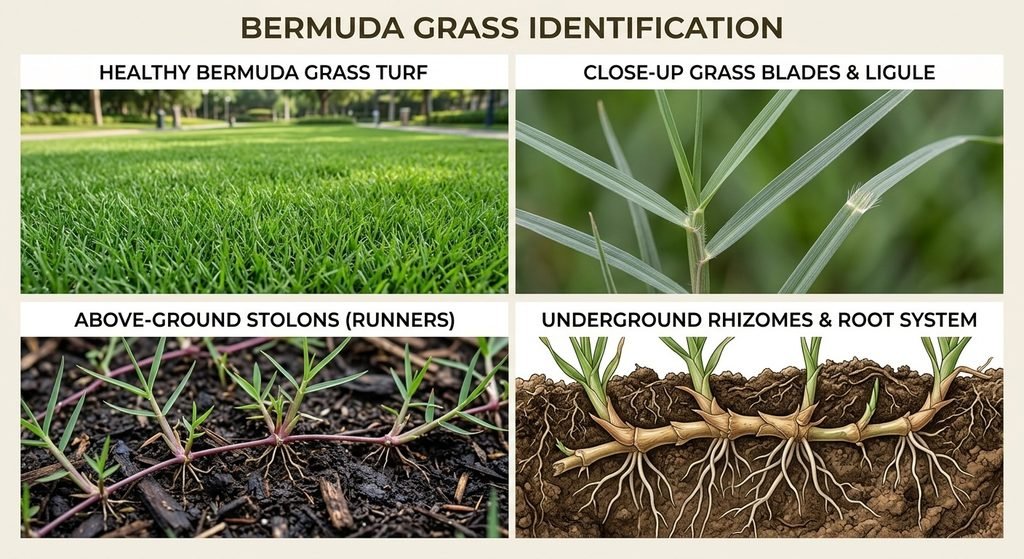
Bermuda Grass typically has fine to medium-textured blades, a dense growth pattern, a rich green color during active growth, and spreading runners that help it quickly fill bare spots.
If you are standing in your yard wondering, “Is this Bermuda Grass?” look for these signs:
- Narrow grass blades with pointed tips
- A dense, low-growing lawn appearance
- Fast spreading growth
- Above-ground runners called stolons
- Underground spreading stems called rhizomes
- Finger-like seed heads when flowering
A healthy Bermuda lawn often looks almost carpet-like during summer. The blades create a tight surface that feels firm underfoot.
During cooler months, many homeowners panic when their bright green lawn turns brown.
Usually, this is normal.
Bermuda Grass is a warm-season grass, meaning it slows down and may become dormant when temperatures drop. The grass is often alive underground and returns when warmer weather arrives.
Bermuda Grass Close Up: How to Identify It

Looking at bermuda grass close up reveals details that are easy to miss from a distance.
A close inspection shows:
1. Leaf blades
Bermuda Grass blades are usually:
- Thin and pointed
- Fine to medium in texture
- Soft compared with many coarse grasses
- Arranged tightly in a dense turf
2. Growth runners
One of the easiest identification features is its spreading habit.
Bermuda Grass produces:
- Stolons: runners that grow across the soil surface
- Rhizomes: underground stems that help the plant spread
These growth systems explain why Bermuda Grass repairs worn areas quickly.
3. Seed heads
When Bermuda Grass produces seeds, the flower heads often look like several small spikes extending from one point, sometimes compared to a bird’s foot shape.
Is Bermuda Grass Good for Lawns?
Yes, Bermuda Grass can be an excellent lawn choice for homeowners who have sunny yards in warm climates and are willing to provide regular maintenance.
It is especially suitable for:
- Southern U.S. lawns
- Homes with full sun exposure
- Families with active yards
- Areas needing fast recovery after damage
- High-use lawns
It may not be the best choice if your yard has:
- Heavy shade
- Cool summers
- Poor drainage
- A preference for very low maintenance
A common homeowner mistake is choosing grass based only on appearance. A lawn that looks beautiful in a neighbor’s yard may struggle in your yard because sunlight, soil, climate, and maintenance habits are different.
Benefits of Bermuda Grass
1. Excellent heat tolerance
Bermuda Grass performs well during hot summers when many cool-season grasses struggle.
This makes it popular throughout warmer parts of the United States.
2. Fast recovery
Dogs running across the lawn? Kids playing soccer? Backyard gatherings?
Bermuda Grass can often repair damage quickly because it spreads aggressively.
3. Dense lawn coverage
When properly maintained, Bermuda Grass creates a thick, attractive turf.
4. Good drought performance
Established Bermuda Grass can survive periods of limited water by slowing growth and becoming dormant during stress.
5. Handles heavy use
Its durability is one reason it is widely used in athletic fields and other high-traffic areas.
Possible Disadvantages of Bermuda Grass
Every lawn grass has trade-offs.
Before planting Bermuda Grass, consider these challenges:
| Challenge | Why It Matters |
| Poor shade tolerance | It needs strong sunlight to stay thick |
| Fast spreading | It can invade flower beds and sidewalks |
| Frequent mowing | Rapid growth means regular cutting |
| Winter dormancy | Lawn may turn brown during colder months |
| Maintenance needs | Fertilizing and watering require attention |
A homeowner who wants a “mow once every few weeks and forget it” lawn may find Bermuda Grass demanding.
Bermuda Grass Maintenance Guide

A healthy Bermuda lawn is not complicated, but consistency matters.
1. Mowing Bermuda Grass
Bermuda Grass usually performs best when maintained at a shorter height than many other grasses.
General mowing tips:
- Keep mower blades sharp
- Avoid removing more than one-third of the blade height at once
- Mow frequently during peak summer growth
- Leave appropriate clippings when possible
Many homeowners make the mistake of letting Bermuda Grass grow tall and cutting it back aggressively. This can stress the plant.
2. Watering Bermuda Grass
The goal is deep, less frequent watering rather than constant shallow watering.
Good practices include:
- Water early in the morning
- Allow soil to dry slightly between watering
- Adjust watering based on rainfall and climate
- Avoid keeping the lawn constantly wet
Overwatering often creates more problems than underwatering.
3. Fertilizing Bermuda Grass
Bermuda Grass responds well to proper feeding, especially nitrogen during active growth.
General guidance:
- Fertilize after spring green-up
- Avoid feeding dormant grass
- Follow soil test recommendations when possible
A soil test from a local extension service can help determine what your lawn actually needs.
4. Weed and Pest Management
A thick Bermuda lawn naturally competes against many weeds, but problems can still occur.
Watch for:
- Thin patches
- Discolored areas
- Unusual insect activity
- Sudden brown spots
Local university extension programs are valuable resources for region-specific lawn recommendations.
Bermuda Grass Compared With Other Popular Lawn Grasses
Choosing the right grass depends on your location and lifestyle.
| Grass Type | Best For | Strength | Weakness |
| Bermuda Grass | Hot sunny climates | Heat and traffic tolerance | Poor shade performance |
| Zoysia Grass | Warm transition areas | Dense texture, moderate shade tolerance | Slower recovery |
| St. Augustine Grass | Southern coastal areas | Good appearance and shade tolerance | Less cold tolerant |
| Kentucky Bluegrass | Cooler regions | Beautiful cool-season lawn | Struggles in extreme heat |
The “best” grass is not universal. The right choice depends on your weather, sunlight, soil, and how you use your yard.
Seasonal Bermuda Grass Care Tips

Spring
Spring is when Bermuda Grass wakes up.
Focus on:
- Removing winter debris
- Checking for weeds
- Starting mowing after active growth begins
- Applying fertilizer when appropriate
Summer
Summer is Bermuda Grass season.
Focus on:
- Regular mowing
- Proper watering
- Monitoring pests
- Maintaining healthy growth
Fall
Prepare the lawn for cooler temperatures.
Tasks include:
- Reducing fertilizer applications
- Cleaning leaves
- Managing weeds
- Preparing for dormancy
Winter
Bermuda Grass usually needs very little attention during dormancy.
Avoid:
- Heavy traffic on dormant grass
- Unnecessary fertilizing
- Overwatering
Common Bermuda Grass Mistakes Homeowners Make
Mistake 1: Planting it in shade
This is probably the biggest mistake.
Bermuda Grass needs lots of direct sunlight. A shaded backyard will often produce thin, weak growth.
Mistake 2: Cutting too much grass at once
Removing a large amount of leaf tissue stresses the lawn.
Mistake 3: Overwatering
More water does not always mean healthier grass.
Mistake 4: Ignoring soil conditions
Healthy grass starts with healthy soil.
Mistake 5: Fighting normal winter dormancy
Brown winter color does not automatically mean your Bermuda Grass is dead.
Frequently Asked Questions About Bermuda Grass
What does Bermuda Grass look like?
Bermuda Grass has narrow pointed blades, dense growth, and spreading runners. During warm months, it usually appears bright green and thick.
How do you identify Bermuda Grass?
Look for fine blades, aggressive spreading runners, and a dense low-growing turf pattern. Close inspection may reveal stolons above the soil and rhizomes below it.
Is Bermuda Grass good for lawns?
Yes, especially in warm, sunny areas where homeowners want a durable lawn that handles heat and traffic.
Does Bermuda Grass grow in shade?
Not well. Bermuda Grass performs best in full sun and often becomes thin in shaded areas.
Why does Bermuda Grass turn brown?
Cold temperatures commonly cause Bermuda Grass to enter dormancy. It usually returns to green growth when temperatures rise again.
How often should you mow Bermuda Grass?
During active growth, many Bermuda lawns require frequent mowing because the grass grows quickly.
Can Bermuda Grass spread into flower beds?
Yes. Its aggressive growth habit allows it to spread beyond lawn boundaries, so edging and maintenance may be necessary.
Final Thoughts: Is Bermuda Grass Right for Your Yard?
Bermuda Grass can create a beautiful, durable lawn when matched with the right conditions.
If you have:
- Plenty of sunlight
- Warm summers
- A yard that receives regular use
- Time for routine maintenance
Bermuda Grass may be an excellent choice.
But if your property has heavy shade or you want a very low-maintenance lawn, another grass type may fit better.
The best lawn is not simply the greenest one you see online — it is the one that works with your climate, your home, and your lifestyle.
For more practical home improvement and gardening advice, explore HomeWorksDaily for homeowner-friendly ideas, maintenance tips, and outdoor improvement inspiration.
Helpful external references:
- USDA and university extension lawn resources are recommended for region-specific turf guidance.
- Research-based turf information from agricultural extension programs can help homeowners choose grass varieties suited to local conditions.









2 Responses