
Choosing the right grass seed can feel surprisingly complicated. Walk into any garden center and you’ll see bags labeled Kentucky bluegrass, tall fescue, perennial ryegrass, cool-season mixes, shade blends, and drought-resistant varieties. For many homeowners, the question becomes simple:
Which grass will actually give me the healthy, green lawn I want without creating a maintenance headache?
That’s where understanding the differences between kentucky bluegrass vs fescue vs ryegrass becomes important.
A lawn that works beautifully in one neighborhood may struggle in another. A sunny yard in the northern United States has very different needs from a shaded backyard in a warmer transition zone.
The best grass choice depends on your climate, sunlight, soil conditions, water availability, maintenance preferences, and how you use your lawn.
In this guide, we’ll compare Kentucky bluegrass, fescue, and ryegrass so you can make a confident decision before spending money on seed or sod.
Kentucky Bluegrass vs Fescue vs Ryegrass
Kentucky bluegrass is best for homeowners who want a dense, soft, traditional lawn and are willing to provide regular maintenance. Fescue is usually the better choice for drought resistance, shade tolerance, and lower maintenance. Ryegrass is valued for its fast germination, quick establishment, and ability to repair bare areas.
Here is the simple breakdown:
- Choose Kentucky bluegrass if you want a premium-looking lawn in a cool climate with good sunlight.
- Choose fescue if you need a tougher lawn that handles shade, heat stress, and lower water availability.
- Choose ryegrass if you need fast results, erosion control, or overseeding support.
Many homeowners also use grass seed blends because combining strengths often creates a more resilient lawn.
Kentucky Bluegrass vs Fescue vs Ryegrass Comparison Table
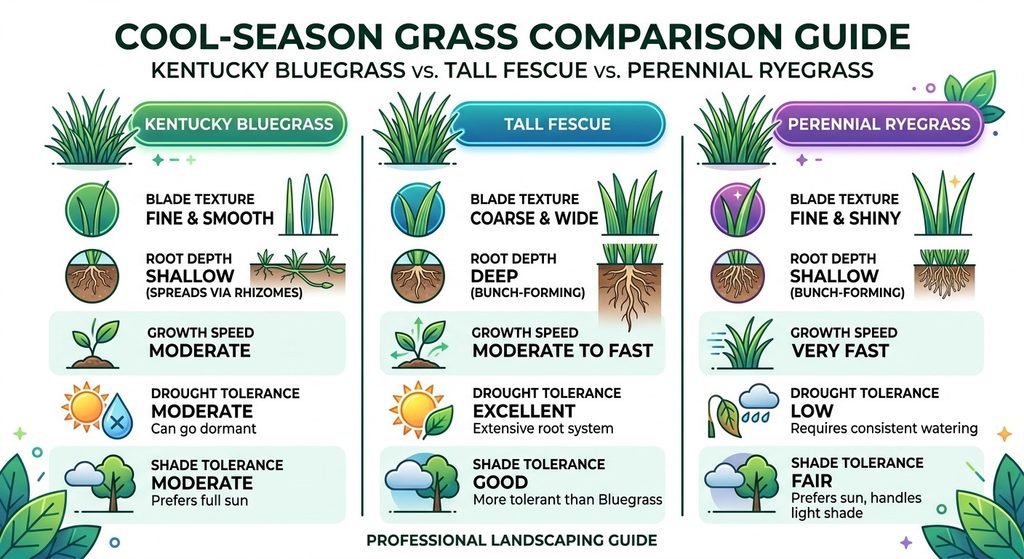
| Grass Type | Appearance | Best Climate | Maintenance | Strengths | Weaknesses |
| Kentucky Bluegrass | Fine texture, dark green color, dense carpet-like growth | Northern cool-season regions | Medium to high | Beautiful appearance, self-repairing ability, soft feel | Needs water, slower establishment |
| Tall Fescue | Medium-to-coarse blades, deep green, upright growth | Transition zones and areas with heat stress | Low to medium | Drought tolerant, shade tolerant, durable | Less fine-textured appearance |
| Perennial Ryegrass | Fine to medium blades, bright green appearance | Cool climates, overseeding areas | Medium | Very fast germination, quick coverage | Less drought tolerant than fescue |
What Is Kentucky Bluegrass?
Kentucky bluegrass is one of the most popular cool-season lawn grasses in the United States. Despite its name, it is not limited to Kentucky and is widely grown throughout northern states.
It spreads through underground stems called rhizomes, allowing it to gradually fill thin areas and recover from minor damage.
What does kentucky bluegrass look like?
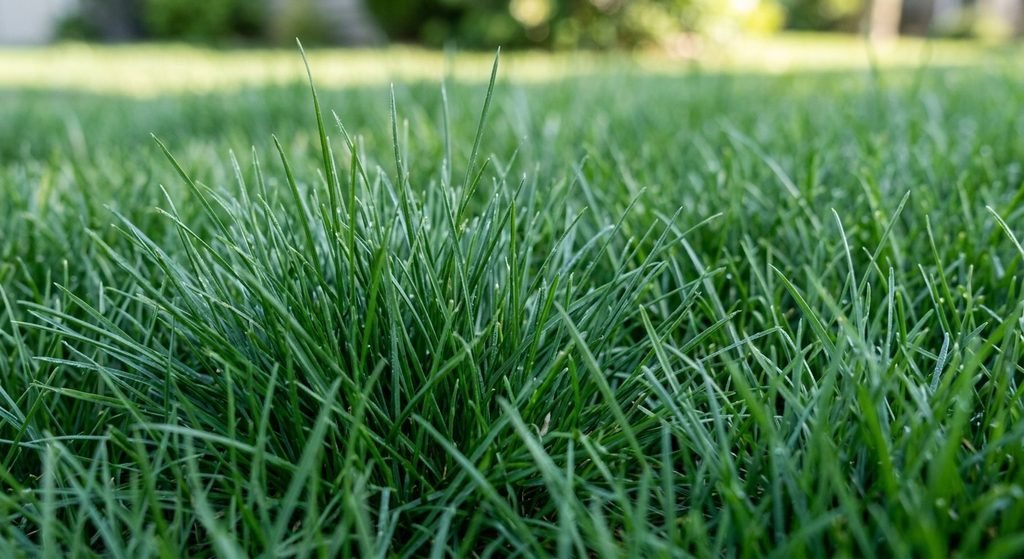
Many homeowners wonder: what does kentucky bluegrass look like?
Kentucky bluegrass typically has:
- Fine, narrow blades
- A rich green to blue-green color
- A soft texture underfoot
- Dense growth that creates a smooth lawn appearance
- A boat-shaped tip when viewed closely
A well-maintained Kentucky bluegrass lawn often has the classic “golf course” or neighborhood showcase appearance many homeowners want.
However, that beautiful appearance requires effort. Kentucky bluegrass performs best when it receives enough sunlight, water, fertilizer, and proper mowing.
What Is Tall Fescue?
Tall fescue is known as a practical, hardworking lawn grass. It has become increasingly popular because many homeowners want attractive lawns without spending every weekend watering, fertilizing, and repairing grass.
Unlike Kentucky bluegrass, tall fescue grows in bunches rather than spreading aggressively through underground stems.
Its biggest advantage is its root system.
Tall fescue develops deep roots that allow it to access moisture farther below the soil surface, making it more resilient during dry periods.
Why homeowners choose fescue
Fescue is often a good fit for:
- Homes with partial shade
- Areas with hot summers
- Busy homeowners who prefer lower maintenance
- Lawns where water restrictions are common
- Transition zones between northern and southern climates
The tradeoff is appearance. While modern tall fescue varieties can look excellent, they usually do not create the same ultra-soft carpet effect as Kentucky bluegrass.
What Is Perennial Ryegrass?
Perennial ryegrass is the fast starter of the cool-season grass family.
If you have ever planted grass seed and hoped to see green quickly, ryegrass is the type that often delivers noticeable results sooner.
It germinates faster than Kentucky bluegrass and establishes quickly.
Why ryegrass is popular
Ryegrass is commonly used for:
- Repairing bare patches
- Overseeding existing lawns
- Creating quick ground cover
- Reducing soil erosion
Its strong early growth makes it valuable, but it has limitations.
Ryegrass generally does not handle drought as well as tall fescue and may struggle during extended summer heat.
Climate Suitability: Which Grass Works Where?
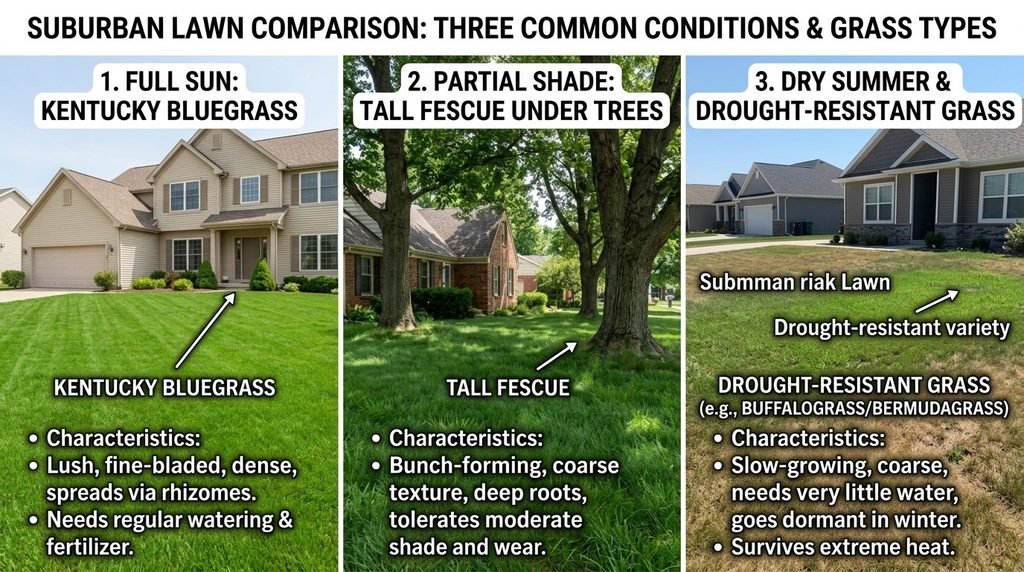
Your location is one of the biggest factors in choosing grass.
Northern United States
Kentucky bluegrass often performs extremely well in northern climates where summers are moderate and winters are cold.
Common states where Kentucky bluegrass is popular include:
- Minnesota
- Wisconsin
- Michigan
- Pennsylvania
- New York
Ryegrass is also commonly included in mixtures because it improves establishment speed.
Transition Zone
The transition zone includes areas where summers are hot but winters are cold.
This region can be challenging because many grasses struggle with either extreme.
Tall fescue is often preferred because it handles heat better than Kentucky bluegrass while maintaining a cool-season lawn appearance.
Southern Areas
In warmer southern regions, cool-season grasses may require more attention.
Some homeowners still grow tall fescue successfully in cooler southern areas, especially with proper irrigation and shade management.
Maintenance Requirements: Which Grass Needs More Work?
A beautiful lawn is not only about the grass type. It is also about how much maintenance you are willing to provide.
Kentucky Bluegrass Maintenance
Kentucky bluegrass generally needs:
- Regular watering
- Fertilization
- Weed management
- Proper mowing
- Seasonal lawn care
It rewards homeowners who enjoy lawn care as a hobby.
Fescue Maintenance
Tall fescue usually requires less attention.
Benefits include:
- Less frequent watering
- Better drought recovery
- Good performance in partial shade
- Less aggressive maintenance schedule
It is often preferred by homeowners who want a healthy lawn without constant upkeep.
Ryegrass Maintenance
Ryegrass requires:
- Regular watering during establishment
- Proper mowing
- Fertilization for best color
Because it grows quickly, it may need more frequent mowing during active growth.
Growth Speed: Which Grass Establishes Fastest?
If you need a lawn quickly, growth speed matters.
The general order is:
- Ryegrass — fastest germination
- Fescue — moderate establishment
- Kentucky bluegrass — slower establishment
Kentucky bluegrass may take longer to become established because it spends more energy developing a strong spreading system.
This is why many seed mixes combine Kentucky bluegrass with ryegrass. Ryegrass provides faster initial coverage while Kentucky bluegrass gradually fills in.
Drought Tolerance: Which Grass Survives Dry Conditions?
Water availability is becoming an important concern for many homeowners.
Best drought tolerance:
Tall fescue generally performs best because of its deep root system.
Kentucky bluegrass can survive drought by becoming dormant, but it often requires more water to maintain a green appearance.
Ryegrass typically needs more consistent moisture.
If you live somewhere with summer droughts or watering restrictions, fescue may be the practical choice.
Shade Tolerance: Which Grass Works Without Full Sun?
Many homeowners underestimate how much shade affects grass.
Trees, fences, and homes can create areas where traditional lawn grasses struggle.
General shade performance:
- Tall fescue
- Fine fescue varieties
- Kentucky bluegrass
- Ryegrass
If your backyard receives only a few hours of sunlight daily, choosing a shade-tolerant grass is often more important than choosing the prettiest variety.
Cost Considerations: Which Grass Is More Affordable?
Grass costs vary depending on whether you choose seed, sod, professional installation, and local availability.
Kentucky Bluegrass
Usually costs more because premium varieties are valued for appearance and performance.
Fescue
Often provides better value for homeowners who want durability with less maintenance.
Ryegrass
Can be affordable and useful for quick repairs, especially when purchased as part of a mixture.
The cheapest option upfront is not always the cheapest long term. A grass type that constantly needs extra water and repairs can cost more over several years.
Common Mistakes Homeowners Make When Choosing Grass
Choosing Based Only on Appearance
A beautiful lawn photo online does not tell you:
- The climate
- Soil type
- Maintenance routine
- Water availability
Always match the grass to your conditions.
Ignoring Sunlight
A sunny front yard and shaded backyard may need different solutions.
Planting the Wrong Grass Season
Cool-season grasses generally establish best during cooler growing periods, especially fall.
Using One Grass Type Everywhere
Many successful lawns use blends because different grasses contribute different strengths.
Which Grass Is Best for Different Homeowners?
Best for the Lawn Enthusiast
Choose:
Kentucky bluegrass
You’ll enjoy:
- A soft lawn
- Dense growth
- Classic appearance
But expect more maintenance.
Best for Busy Homeowners
Choose:
Tall fescue
You’ll appreciate:
- Better drought resistance
- Lower maintenance needs
- Strong durability
Best for Quick Lawn Repairs
Choose:
Perennial ryegrass
You’ll get:
- Faster germination
- Quick green coverage
- Useful repair capability
Frequently Asked Questions
Is Kentucky bluegrass better than fescue?
Kentucky bluegrass offers a softer, denser lawn appearance, while fescue usually provides better drought tolerance and lower maintenance. The better choice depends on your climate and lawn goals.
What does Kentucky bluegrass look like?
Kentucky bluegrass has fine blades, a dark green or blue-green color, and dense growth that creates a smooth carpet-like lawn when properly maintained.
Can you mix Kentucky bluegrass and fescue?
Yes. Many homeowners use blends to combine Kentucky bluegrass appearance with fescue durability.
Is ryegrass good for a permanent lawn?
Perennial ryegrass can be part of a permanent lawn, especially in cooler regions, but it is often used for quick establishment and overseeding.
Which grass is easiest to maintain?
Tall fescue is often considered easier to maintain because it handles drought and moderate shade better than many cool-season grasses.
Which grass grows fastest?
Perennial ryegrass usually germinates and establishes faster than Kentucky bluegrass and tall fescue.
Final Recommendation: Kentucky Bluegrass vs Fescue vs Ryegrass
There is no single “winner” for every lawn.
The right choice depends on what matters most to you.
- Want the traditional, thick, beautiful lawn? Kentucky bluegrass may be your best match.
- Want durability and easier maintenance? Tall fescue is often the smarter option.
- Need fast results or repair help? Perennial ryegrass can solve the problem quickly.
Before buying seed, consider your region, sunlight, soil, rainfall, and how much time you realistically want to spend caring for your lawn.
The best lawn is not the one that looks perfect on a seed bag. It is the one that fits your home.









One Response