Picture a quiet pond on a warm summer morning. The water is still, broad green leaves float above the surface, and suddenly a lotus opens into a striking bloom.
It’s easy to see why people have attached so much meaning to this flower.
The lotus flower’s meaning goes far beyond its appearance. Across different cultures and traditions, the lotus has been associated with ideas such as purity, spiritual growth, renewal, enlightenment, beauty, and resilience. At the same time, it’s a real aquatic plant with fascinating growth habits that can make a beautiful addition to the right water garden.
But there’s an important detail to remember: lotus symbolism isn’t exactly the same everywhere. Its meaning can change depending on the culture, tradition, color, and context.
So, what does the lotus really represent? And why has this particular flower remained meaningful for thousands of years?
Let’s take a closer look.
Quick Answer: What Is the Lotus Flower Meaning?
The lotus flower meaning commonly centers on purity, renewal, spiritual growth, resilience, and transformation. Its symbolism is closely connected to the way the flower rises from muddy water and produces an attractive bloom above the surface. In Buddhist and Hindu traditions, the lotus has important spiritual and religious associations, while other cultures have developed their own interpretations.
What Does a Lotus Flower Symbolize?
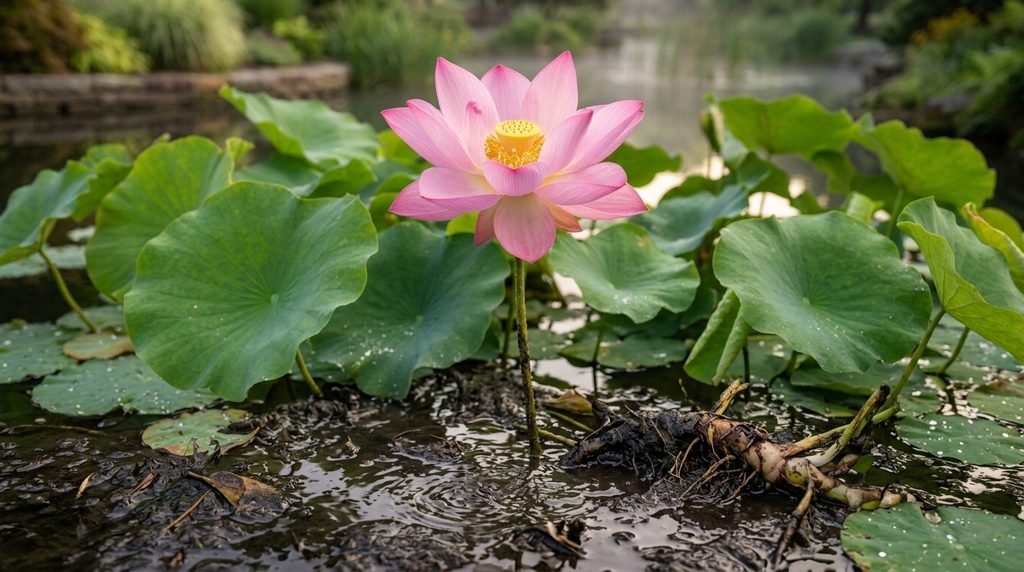
The lotus is often used as a metaphor for growth through difficult circumstances.
Its natural growth pattern makes that symbolism particularly powerful. The sacred lotus, Nelumbo nucifera, is an aquatic perennial whose stems and leaves rise from muddy soil and water before producing flowers above the surface. Missouri Botanical Garden specifically notes that this life cycle has become deeply connected with symbolism.
Common interpretations include:
- Purity — beauty emerging from muddy surroundings.
- Resilience — continuing to grow despite challenging conditions.
- Transformation — moving from one stage of life to another.
- Spiritual growth — developing beyond ordinary worldly concerns.
- Renewal — beginning again or moving forward.
- Enlightenment — particularly within Buddhist traditions.
- Beauty and grace — represented by the flower’s elegant form.
These meanings aren’t all universal rules. They’re interpretations that have developed through different cultural and religious traditions.
That’s what makes the lotus especially interesting: the flower has a recognizable physical story, but people have interpreted that story in different ways.
Why Is the Lotus Associated With Purity?
One of the most recognizable lotus symbols is purity.
The reason is easy to understand. A lotus can grow in muddy water while producing a flower that appears remarkably clean and elevated above the surface.
That contrast has inspired generations of artists, religious thinkers, and gardeners.
The Metropolitan Museum of Art explains that in Indian art, the lotus became a major symbol of spiritual perfection because the flower rises from muddy waters and blooms toward the sun.
In everyday language, you can think of the symbolism this way:
The lotus represents the possibility of growing into something beautiful without being defined by difficult surroundings.
That interpretation is one reason lotus imagery appears so frequently in art, architecture, decorative objects, and spiritual traditions.
What Does the Lotus Mean in Buddhism?
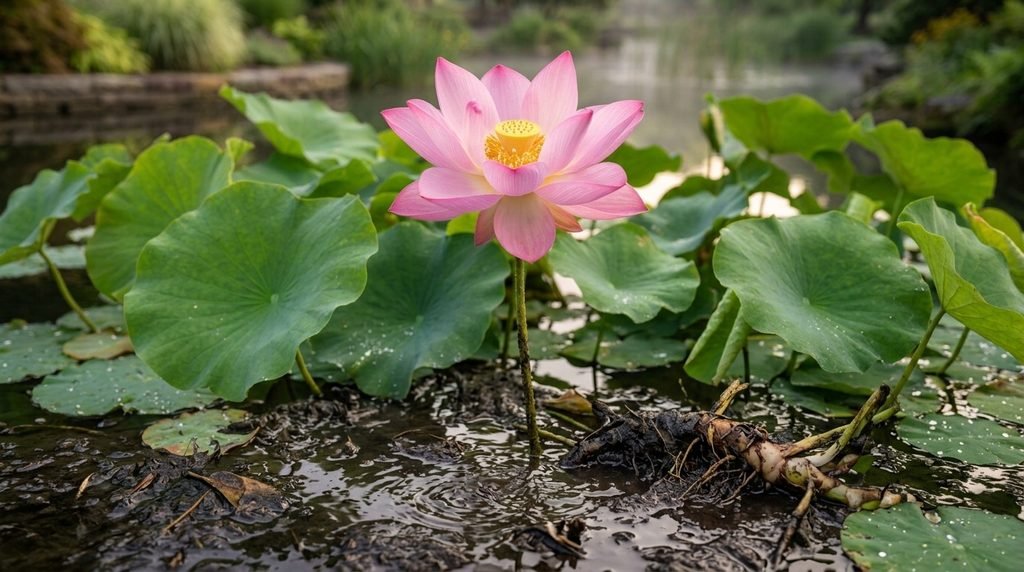
The lotus has an especially important place in Buddhist art and symbolism.
It is commonly associated with spiritual awakening, enlightenment, and transcendence. The Metropolitan Museum of Art describes the lotus as an auspicious symbol connected with Buddha’s enlightenment and notes its prominent role in Buddhist imagery.
Lotus flowers and lotus-shaped bases frequently appear in representations of Buddhist figures.
The symbolism makes sense within the visual metaphor: a flower emerges from water and rises toward the light, creating an image that can represent spiritual development.
The lotus isn’t simply a decorative flower in these contexts. It can communicate an idea about moving beyond ordinary difficulties toward greater awareness.
What Does the Lotus Mean in Hindu Traditions?
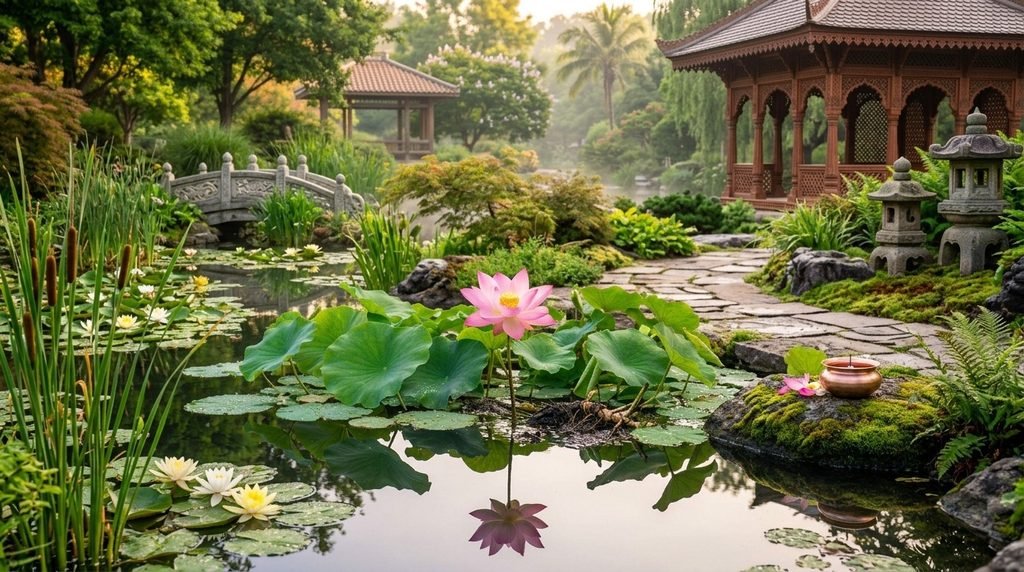
The lotus also has significant associations within Hindu traditions.
It can represent purity, beauty, prosperity, abundance, and spiritual significance, although the exact meaning depends on the deity, artwork, and context.
For example, The Metropolitan Museum of Art describes Lakshmi, a Hindu goddess associated with wealth and prosperity, in connection with a red-lotus pedestal.
The lotus also appears extensively in Hindu religious art and iconography.
This is a good reminder that flower symbolism isn’t always as simple as saying:
“One flower equals one meaning.”
The surrounding story matters.
Lotus Flower Meaning in Ancient Egypt
The lotus-like water lily also held an important symbolic role in ancient Egyptian culture.
The Metropolitan Museum of Art notes that blue and white water lilies were associated with daily rebirth and rejuvenation because the flowers closed at night and reopened in the morning.
There’s an interesting botanical distinction here.
In modern gardening, true lotus generally refers to plants in the genus Nelumbo, while some historical Egyptian objects described as depicting “lotus” actually represent water lilies in the genus Nymphaea.
So, when reading about ancient lotus symbolism, it’s worth checking the historical context rather than assuming every reference means the same plant we call lotus today.
Lotus Flower Meaning in Chinese Art and Culture
The lotus has also been an important motif in Chinese art.
The Metropolitan Museum of Art notes that the lotus became an important flower in Chinese art and has been associated with qualities including purity, longevity, elegance, and other virtues.
Lotus imagery appears in paintings, ceramics, decorative objects, and other forms of artistic expression.
This long artistic history is part of what makes the lotus more than simply a garden plant. Its visual form has made it especially adaptable to artistic symbolism.
What Do Different Lotus Colors Mean?
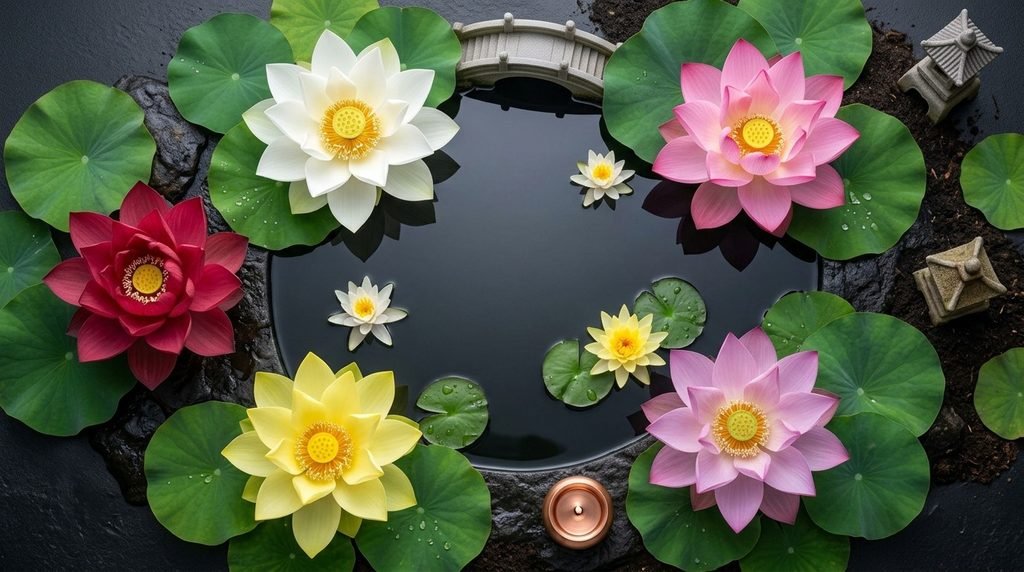
People often search for the meaning of different lotus colors. While color symbolism can vary between cultures and modern flower-language traditions, certain associations are commonly discussed.
| Lotus Color | Commonly Associated Meaning | Important Note |
| White | Purity, peace, clarity | Meanings vary by tradition |
| Pink | Spiritual significance, devotion, beauty | Especially prominent in Asian religious art |
| Blue | Wisdom, knowledge, spiritual development | Often discussed in Buddhist contexts |
| Red | Love, compassion, emotional depth | Interpretation depends on cultural context |
| Purple | Spirituality and mystery | Less universally standardized |
| Yellow | Brightness, optimism, warmth | Modern interpretations may vary |
It’s better to treat these meanings as common symbolic associations, not strict definitions.
A white lotus doesn’t automatically have one universal meaning, just as a pink lotus doesn’t carry exactly the same message in every culture.
What Does a Lotus Flower Mean as a Gift?
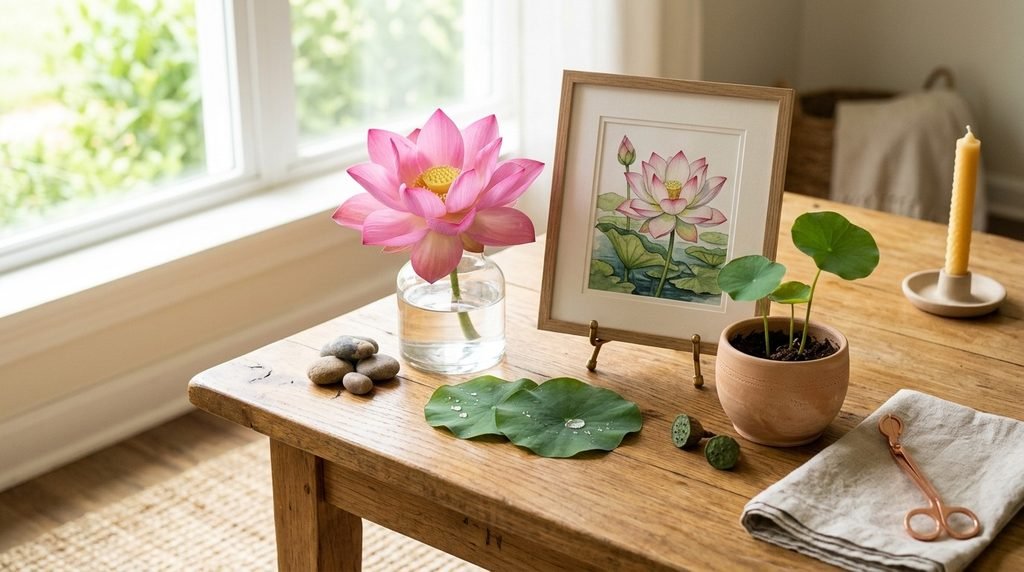
A lotus-inspired gift can communicate several positive ideas, depending on the relationship and occasion.
It may be appropriate when you want to express:
- Growth
- Encouragement
- Peace
- New beginnings
- Admiration
- Resilience
- Spiritual reflection
- Hope
For example, a lotus-themed garden decoration could be a thoughtful choice for someone creating a peaceful outdoor space.
A lotus image can also work well in artwork, stationery, home décor, or garden accessories.
The key is context. If the recipient has a particular cultural or spiritual connection to the lotus, that background may be more meaningful than a generic color symbolism chart.
What Does the Lotus Represent in Gardening?
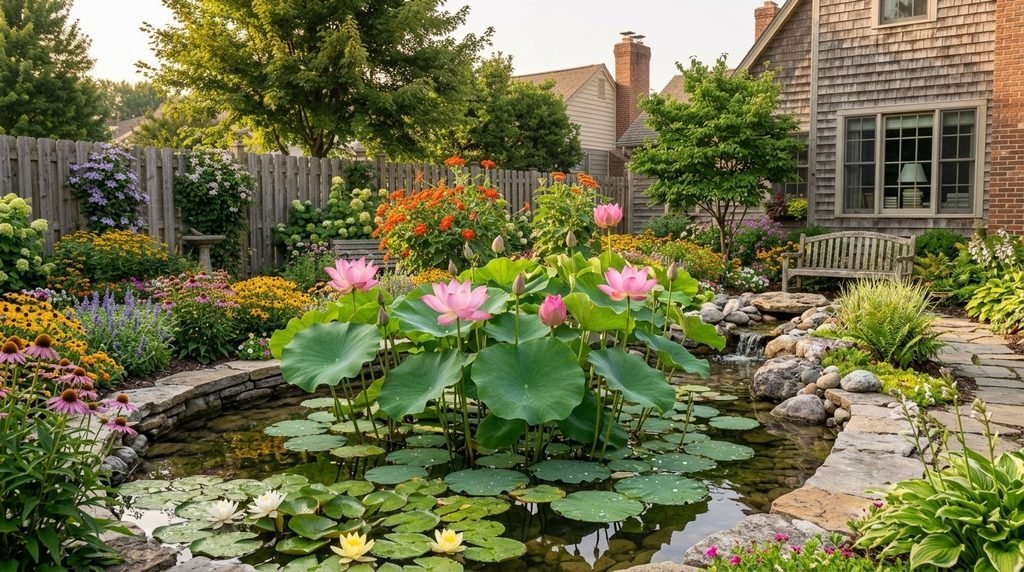
Here’s where the symbolism becomes especially interesting for HomeWorksDaily readers.
The lotus isn’t only a cultural symbol. It’s a living aquatic plant with specific growing requirements.
The sacred lotus, Nelumbo nucifera, is a rhizomatous aquatic perennial native to parts of Asia and northern Australia. Missouri Botanical Garden notes that its flowers can reach about 12 inches across, while leaves can grow to several feet in diameter.
For gardeners, the plant offers several visual features:
- Large rounded leaves
- Dramatic flowers
- Distinctive seed heads
- Strong vertical growth
- A natural water-garden appearance
Some cultivars are better suited to smaller spaces than others. Missouri Botanical Garden specifically notes that dwarf cultivars can be grown in containers such as barrels and in suitable ponds.
That means you don’t necessarily need a huge ornamental pond to appreciate lotus plants.
Lotus vs. Water Lily: What’s the Difference?
Lotus and water lilies are often confused because both are aquatic flowering plants.
They’re not the same plant, however.
One easy visual clue is the central seed head of the lotus. Missouri Botanical Garden points to this seed head as one of the observable differences between lotus and water lilies.
| Feature | Lotus | Water Lily |
| Common botanical genus | Nelumbo | Nymphaea and related genera |
| Growth habit | Flowers and leaves can rise above water | Many leaves and flowers sit closer to the water surface |
| Seed head | Prominent central seed head | Different floral structure |
| Garden use | Ponds, water gardens, containers for suitable cultivars | Ponds and water features |
| Symbolism | Strong religious and cultural associations | Also culturally significant, depending on species and tradition |
There are exceptions and variations, so appearance alone isn’t always enough for precise identification.
Why Does the Lotus Symbolism Feel So Powerful?
Part of the appeal comes from the contrast.
The flower doesn’t emerge from a perfectly clean, carefully landscaped environment. It grows from water and mud, yet the resulting bloom can look remarkably elegant.
That creates a simple but powerful visual story:
Difficult surroundings don’t necessarily determine the final outcome.
That’s why the lotus can feel relevant even to someone who isn’t interested in religious symbolism.
A gardener might see perseverance.
An artist might see beauty.
Someone going through a major life transition might see renewal.
A homeowner might simply appreciate the flower’s unusual beauty.
The same plant can hold different meanings for different people.
Is the Lotus Flower Meaning Always the Same?
No.
This is one of the most important points to remember.
There is no single universal definition of lotus symbolism.
Its meaning can change depending on:
- Culture
- Religion
- Historical period
- Color
- Artistic context
- Personal interpretation
- Occasion
For example, Buddhist artwork may emphasize enlightenment, while Chinese decorative art may connect lotus imagery with virtues such as purity and longevity. Ancient Egyptian representations involving water lilies have their own symbolism related to rebirth and rejuvenation.
So rather than asking, “What is the one true meaning of a lotus?” it’s more useful to ask:
“What does the lotus mean in this particular context?”
That small distinction makes the symbolism much more accurate.
How Can You Use Lotus Symbolism at Home?
You don’t need to turn your home into a themed space to enjoy the meaning behind the lotus.
A few subtle ideas include:
- Add lotus-inspired artwork to a peaceful reading area.
- Use lotus motifs around a backyard water feature.
- Choose lotus-themed décor for a meditation or relaxation corner.
- Grow suitable lotus cultivars in an appropriate water garden.
- Use lotus imagery when creating a garden designed around renewal or tranquility.
- Give lotus-inspired décor as a thoughtful housewarming gift.
For homeowners and gardeners, the best approach is usually simple: let the symbolism complement the space rather than overwhelm it.
Common Misconceptions About Lotus Flowers
“Every Lotus Color Has One Official Meaning”
Not necessarily.
Color symbolism varies between traditions and modern interpretations. Treat color meanings as context-dependent rather than universal rules.
“Lotus and Water Lily Are the Same Plant”
They’re not.
Both are aquatic flowering plants, but true lotus belongs to Nelumbo. Water lilies belong to different genera, including Nymphaea.
“Lotus Symbolism Is Only Religious”
Not at all.
Although religious traditions have played a major role in lotus symbolism, the flower is also appreciated for its beauty, cultural history, artistic value, and gardening appeal.
“The Lotus Only Grows in Huge Ponds”
That’s also too broad.
Some dwarf lotus cultivars can be grown in containers under suitable conditions, according to Missouri Botanical Garden.
Frequently Asked Questions
What is the main lotus flower meaning?
The lotus is commonly associated with purity, renewal, resilience, transformation, spiritual growth, and enlightenment. Its exact meaning varies according to cultural and religious context.
What does a lotus flower symbolize spiritually?
In several Asian religious traditions, the lotus is associated with spiritual development, purity, enlightenment, and transcendence. Buddhist art, for example, frequently uses lotus imagery in connection with spiritual awakening.
What does a white lotus symbolize?
A white lotus is commonly associated with purity, peace, and clarity. However, the precise interpretation depends on the cultural or artistic context.
What does a pink lotus symbolize?
Pink lotus symbolism is often associated with spiritual significance, devotion, beauty, and religious imagery, particularly in South and East Asian traditions.
What does a blue lotus symbolize?
Blue lotus symbolism is often connected with wisdom, knowledge, and spiritual development. However, interpretations can vary, and historical references to “blue lotus” may refer to different plants.
Is lotus a good plant for a home garden?
It can be, especially for a suitable pond or water garden. Some dwarf cultivars can also work in appropriately sized containers. Growing conditions, climate, container depth, and cultivar selection all matter.
What is the difference between a lotus and a water lily?
A lotus belongs to the genus Nelumbo, while water lilies belong to other genera, including Nymphaea. The prominent central seed head of the lotus is one useful visual distinction.
Why is the lotus associated with rebirth?
The association comes from the flower’s natural cycle and, in some cultures, from observations of its daily opening and closing. Ancient Egyptian symbolism involving water lilies, for example, connected the flower’s daily cycle with rebirth and rejuvenation.
Final Takeaway: The Lotus Means More Than Beauty
The lotus flower meaning is powerful because the flower itself tells a compelling story.
It grows in water and mud, yet produces an elegant bloom above the surface. Across different traditions, that natural contrast has inspired ideas of purity, renewal, resilience, spiritual growth, and transformation.
But there isn’t just one meaning.
The symbolism changes with culture, history, color, religion, and personal interpretation. And beyond symbolism, the lotus remains a fascinating aquatic plant for gardeners who have the right growing environment.
For homeowners and garden lovers, that’s perhaps the best part: the lotus can be appreciated both as a meaningful cultural symbol and as a remarkable living plant.
For more practical home and garden ideas, HomeWorksDaily can help you explore plants, gardening projects, home improvements, and everyday ways to make your space more useful and enjoyable.