
Picture this: you’ve finally found a rug you love. The color works with the sofa, the pattern looks right, and the size sounds generous enough. Then you roll it out in the living room—and somehow, the furniture still looks disconnected.
That’s where rug sizing gets interesting.
A 9 x 12 rug isn’t simply a large rectangle you place in an empty room. Its success depends on the relationship between the rug, your seating arrangement, coffee table, walkways, and the amount of visible floor around it.
Quick Answer
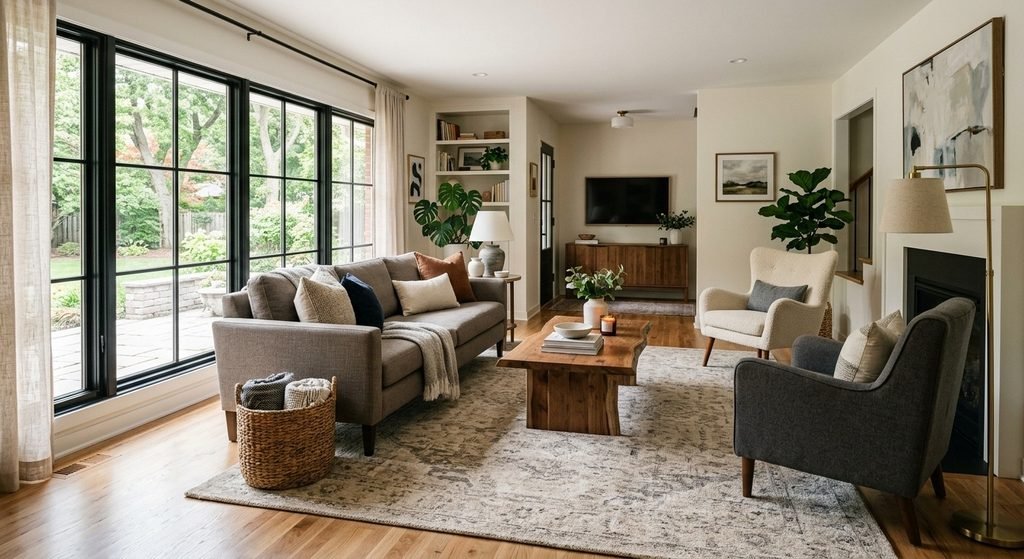
9 x 12 rugs for living room spaces are often a practical choice for larger seating arrangements, especially when you want the sofa, chairs, and coffee table to feel visually connected. The right placement matters more than the number alone, so measure your furniture layout—not just the empty floor—before buying.
Are 9 x 12 Rugs for Living Room a Good Size?
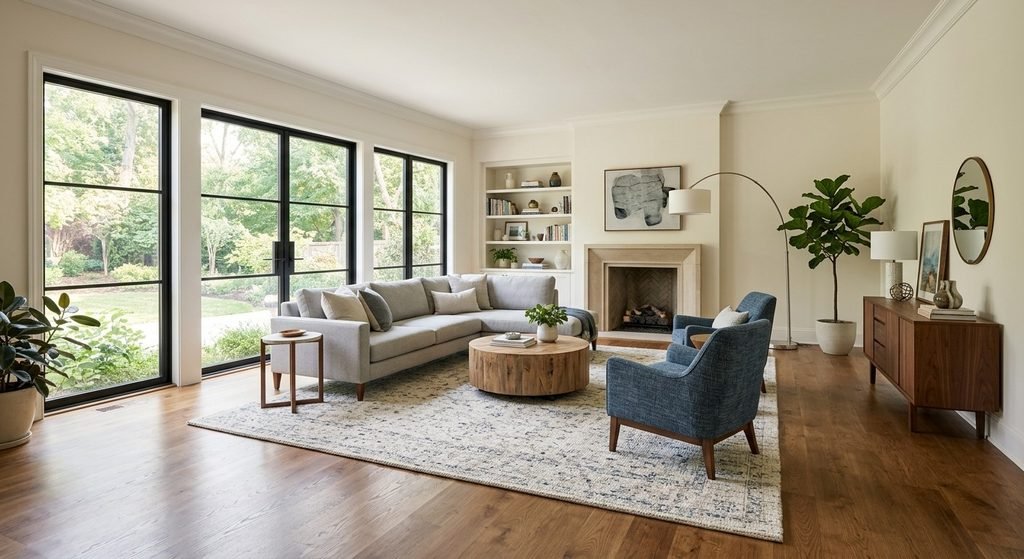
Yes, a 9 x 12 rug can work very well in a spacious living room, but it isn’t automatically the right choice for every layout.
A 9-by-12-foot rug covers 108 square feet, giving you enough surface area to anchor a substantial seating arrangement. The key question isn’t simply, “Will it fit?”
The better question is:
Will it fit the way your furniture actually works?
For example, a large sectional with a coffee table may benefit from a generous rug because the rug can visually pull the entire arrangement together. In another room, the same rug could crowd a narrow walkway or leave too little visible flooring around the edges.
Before ordering one, consider:
- The dimensions of the room
- The size and shape of your sofa
- Whether you have chairs or a sectional
- The location of the coffee table
- Main walking paths
- Door swings
- Existing furniture
- How much floor you want visible around the rug
A room doesn’t need to be enormous for a 9 x 12 rug to work. Furniture layout is often the deciding factor.
What Does a 9 x 12 Rug Actually Cover?
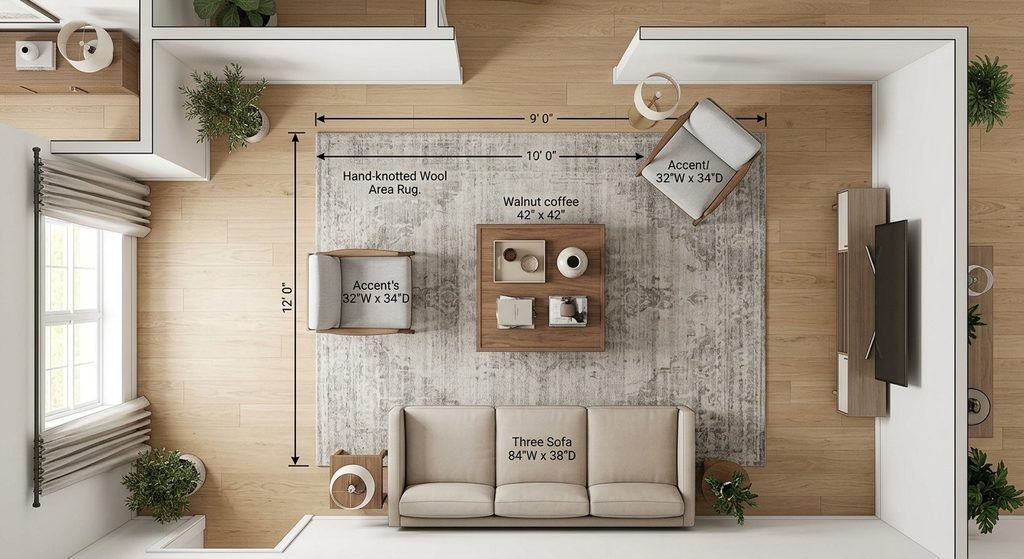
A 9 x 12 rug measures 9 feet by 12 feet, assuming the advertised dimensions are accurate.
That sounds straightforward, but furniture placement changes how large the rug feels.
A rug can make a seating area feel intentionally grouped together when it extends beneath the furniture. On the other hand, placing a large rug too far away from the seating can create an awkward island of fabric in the middle of the room.
Think of the rug as a visual foundation for the furniture, rather than simply a decorative rectangle.
Why the Orientation Matters
A 9 x 12 rug can be turned in either direction.
The 12-foot side may work better running:
- Along a long sofa
- Across a wide open-plan living area
- Between multiple seating pieces
- Parallel to the longest dimension of the room
But there isn’t one universal rule.
If the room is unusually shaped, the furniture arrangement should take priority over a rigid orientation rule.
How to Choose the Right 9 x 12 Rug for Your Living Room
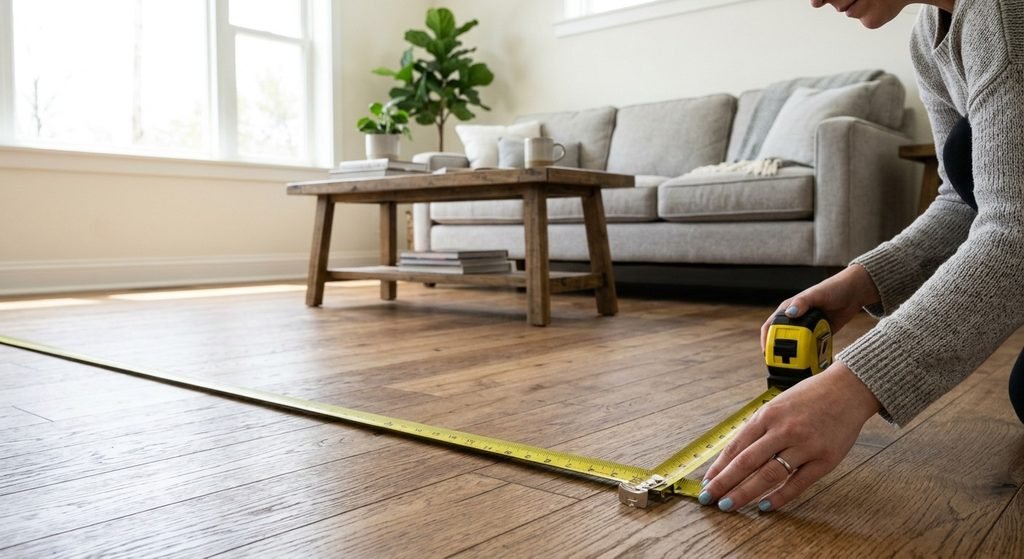
Choosing the rug starts with measurements, but it shouldn’t end there.
Consider Your Room Dimensions
Measure the room before shopping.
Pay attention to:
- Overall room length and width
- Fireplace locations
- Built-in cabinets
- Doorways
- Hallway openings
- Large windows
- Major furniture pieces
- Walking paths
Don’t forget that furniture can make the usable floor area much smaller than the room’s overall dimensions.
A 9 x 12 rug might technically fit inside the room but still interfere with movement if the seating arrangement leaves narrow passageways.
Measure Your Furniture Layout
This is one of the most useful steps.
Instead of measuring only the open floor, measure the seating zone.
Place your sofa, chairs, sectional, and coffee table where they normally sit. Then determine how much rug you want beneath them.
This helps answer a more useful question:
Does the rug support the furniture arrangement?
Rather than:
Does the rug fit inside the room?
That small change in thinking can prevent an expensive sizing mistake.
Think About Sofa and Chair Placement
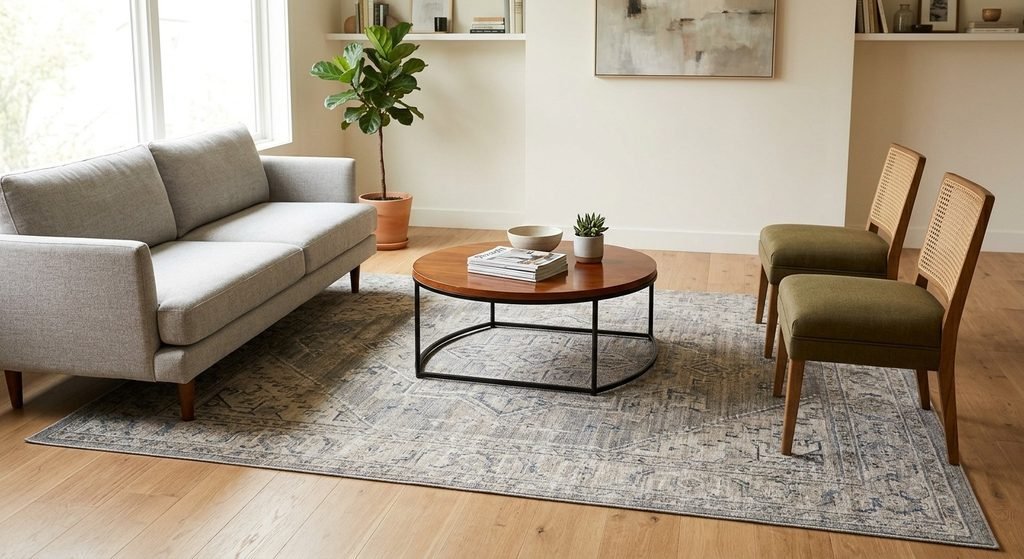
For many living rooms, the rug works best when it visually connects the major seating pieces.
Depending on the layout, you might have:
- The sofa and chairs fully on the rug
- The front legs of seating furniture on the rug
- A coffee table centered on the rug with surrounding seating partially on it
The right choice depends on the room.
Consider Sectionals and Open-Plan Rooms
Sectionals can make rug placement slightly trickier because of their size and shape.
A 9 x 12 rug can work particularly well when the goal is to define the living area within a larger open-plan space.
Here, the rug isn’t just decoration. It can help establish where the living room begins and ends.
This can be useful in homes where the kitchen, dining area, and living room share one large footprint.
Leave the Right Amount of Floor Around the Rug
You don’t necessarily want the rug pressed against every wall.
Visible flooring around the rug can help preserve a sense of proportion.
At the same time, leaving a very large amount of empty floor between the rug and the seating can make the furniture look detached.
The goal is balance.
How Should a 9 x 12 Rug Be Placed Under Furniture?
There are several common approaches.
| Placement Style | Best For | Main Benefit | Potential Drawback |
| All major furniture on rug | Large, spacious rooms | Creates a unified seating zone | Requires more floor space |
| Front legs on rug | Medium-to-large rooms | Connects furniture without covering everything | Back legs may sit unevenly |
| Coffee table centered on rug | Flexible layouts | Creates a clear visual focal point | Seating may feel disconnected if too far away |
All Furniture on the Rug
This approach creates a strong sense of cohesion.
When the sofa, chairs, and coffee table all sit comfortably within the rug’s boundaries, the seating area can feel deliberate and substantial.
It tends to work particularly well in larger living rooms.
Front Legs on the Rug
This is a flexible alternative.
The front legs of the sofa and chairs sit on the rug while the back portions remain on the floor.
It can work well when a full-furniture placement would require a larger rug than the room can comfortably accommodate.
Coffee Table-Centered Placement
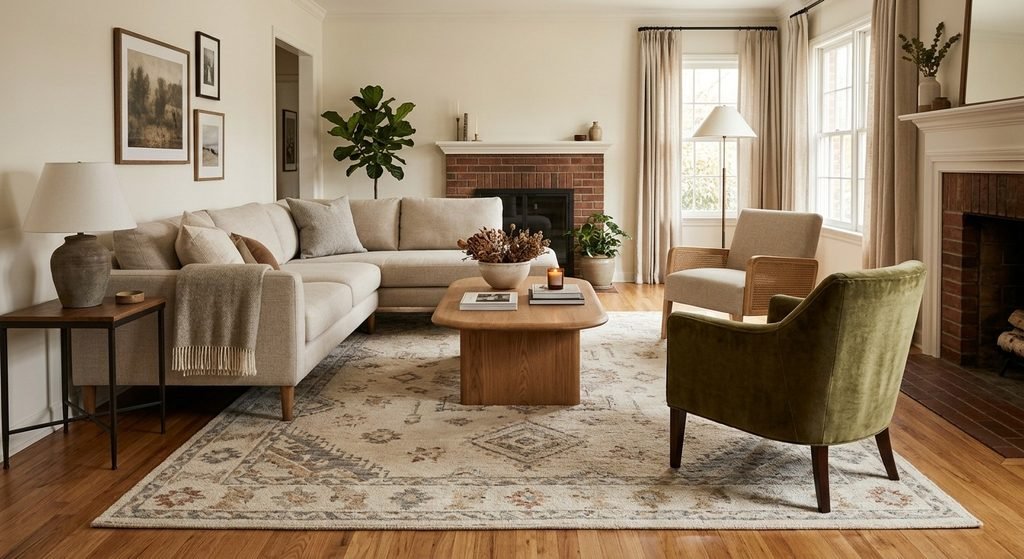
Another option is to center the coffee table over the rug while allowing the surrounding furniture to interact with the rug.
This can be useful in rooms where you want a defined center without covering too much of the existing flooring.
The important part is keeping the seating close enough to the rug that the arrangement still feels connected.
What Rug Material Is Best for a Living Room?
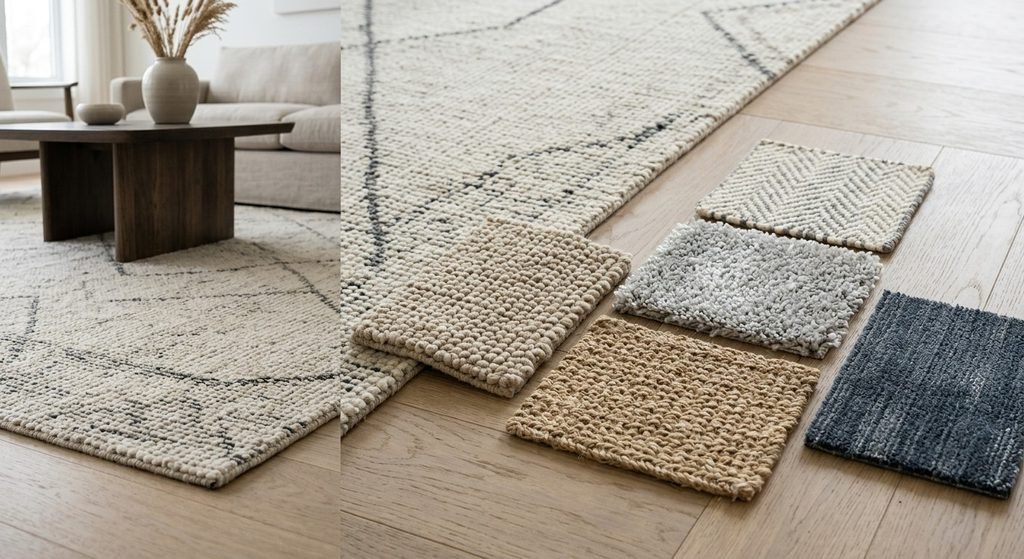
There isn’t one universally best rug material.
The better choice depends on traffic, comfort, cleaning requirements, pets, children, appearance, and budget.
| Material | Feel | Durability | Maintenance | Often Suited To |
| Wool | Soft and substantial | Generally strong | Moderate | Comfortable, frequently used rooms |
| Cotton | Casual and soft | Moderate | Often relatively easy | Relaxed interiors |
| Synthetic fibers | Varies by construction | Often practical | Often convenient | Busy households |
| Natural fibers | Textured | Varies | Can require specific care | Natural or casual interiors |
| Blended fibers | Depends on blend | Varies | Depends on materials | Shoppers seeking a balance |
These are broad characteristics rather than guarantees. Construction quality can matter just as much as fiber type.
What About Pets and Children?
If the living room sees heavy daily activity, consider how easily the rug can be cleaned and how well its construction suits your household.
A beautiful rug that requires delicate care may not be the most practical choice for a busy family room.
For a quieter formal living room, appearance and texture may carry more weight.
Low-Pile vs. High-Pile 9 x 12 Rugs
Pile height affects both appearance and everyday use.
Low-Pile Rugs
Low-pile rugs tend to have a flatter surface.
Potential advantages include:
- Easier movement across the rug
- Simpler furniture placement
- Often easier vacuuming
- Less visual bulk
- Practicality around frequently used seating
They’re worth considering when the living room is heavily used.
High-Pile Rugs
High-pile rugs can create a softer, more luxurious feel.
They may work particularly well when comfort and texture are major priorities.
However, thicker rugs can introduce practical considerations involving:
- Vacuuming
- Furniture stability
- Cleaning
- Door clearance
- Movement around the room
If a rug is going beneath furniture or near a doorway, check clearances before purchasing.
How to Choose the Right Rug Color and Pattern
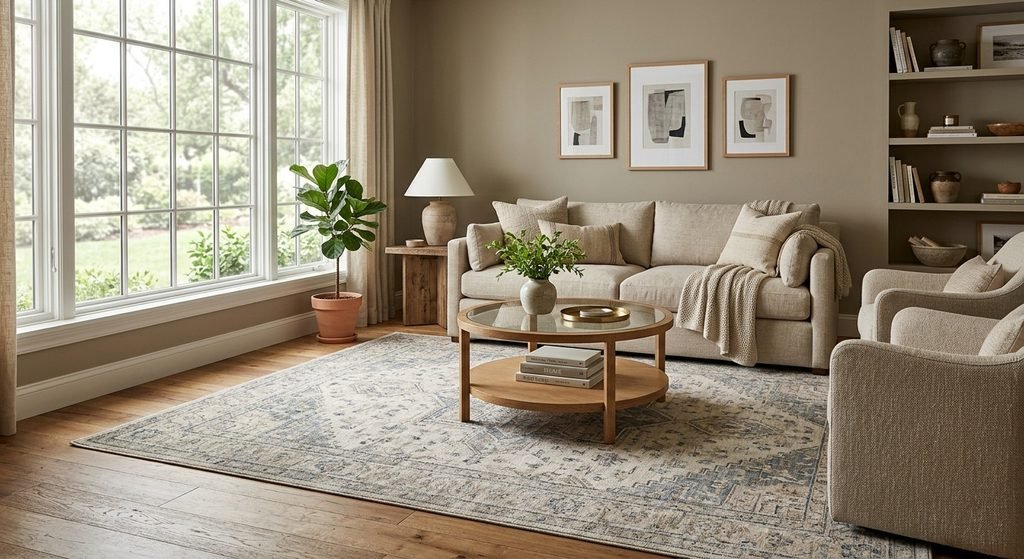
Size is only half of the equation.
A 9 x 12 rug occupies a significant visual area, so its color and pattern can influence the entire room.
For Neutral Living Rooms
A patterned rug can introduce visual interest without requiring major changes to the furniture.
If your sofa and walls are already neutral, a rug can become the layer that brings the room together.
For Bold Furniture
If the sofa, chairs, or artwork already command attention, a quieter rug may create better balance.
You don’t always need another statement piece.
Consider Existing Flooring
Think about how the rug interacts with the floor underneath it.
For example, a strongly patterned rug over heavily patterned flooring can create visual competition.
A more restrained rug may allow distinctive flooring to remain part of the room’s character.
Think About Pattern Scale
Large rugs have enough surface area for patterns to become prominent.
A small repeating design may create a completely different effect from a large geometric or floral pattern.
Before buying, consider how the pattern will look when viewed from across the room—not just in a close-up product photograph.
Common Mistakes When Buying a 9 x 12 Living Room Rug
A few mistakes come up repeatedly.
1. Measuring Only the Empty Floor
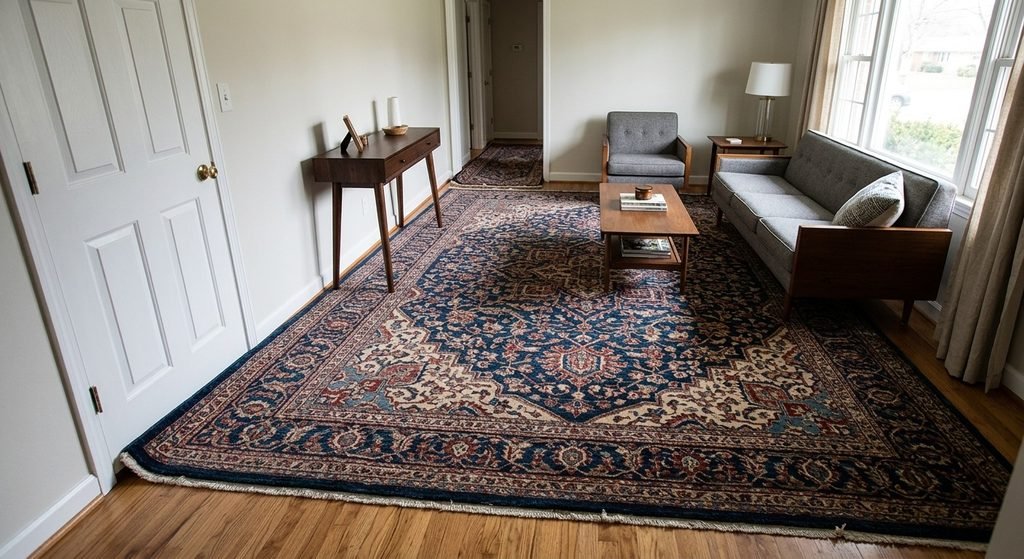
A room may have enough floor space for a 9 x 12 rug but not enough space for the rug and comfortable furniture circulation.
Measure the furniture arrangement too.
2. Choosing Based Only on Appearance
A rug can look fantastic online and still be wrong for your lifestyle.
Think about cleaning, traffic, pets, children, and furniture before committing.
3. Ignoring the Rug’s Thickness
Pile height can affect furniture stability and movement.
Don’t overlook practical clearances.
4. Forgetting the Rug Pad
A rug pad can contribute to stability and cushioning and may help prevent unwanted movement.
The correct pad should be compatible with both the rug and the floor.
5. Buying Before Checking the Return Policy
Large rugs are awkward to handle.
Before ordering, check the seller’s return terms, especially if you’re uncertain about size or color.
6. Treating 9 x 12 as a Universal Rule
A 9 x 12 rug isn’t automatically better simply because it’s larger.
If your furniture layout works better with another size, choose the size that fits the room—not the one that sounds more substantial.
How Much Should You Spend on a Large Living Room Rug?
There isn’t a single price that makes a 9 x 12 rug “good.”
The cost can vary significantly based on:
- Fiber
- Construction
- Weave
- Brand
- Pattern
- Manufacturing method
- Durability
- Thickness
- Design complexity
- Cleaning requirements
Instead of setting a budget based only on rug size, think about how the rug will be used.
For a high-traffic family room, durability and maintenance may justify spending more than they would in a rarely used formal sitting room.
For a temporary decorating project, a lower-cost option may make more sense.
The smartest purchase is usually the one that fits both your room and your lifestyle.
How to Keep a Large Living Room Rug Looking Good
A large rug can become one of the most noticeable pieces in the room, so maintenance matters.
A practical routine includes:
- Vacuum according to the manufacturer’s instructions
- Address spills promptly
- Follow the manufacturer’s cleaning recommendations
- Rotate the rug when appropriate to distribute wear
- Use a suitable rug pad
- Avoid harsh cleaning products unless the manufacturer says they’re safe
- Have specialty rugs professionally cleaned when appropriate
Always check the care instructions for the specific rug.
Natural fibers and specialty constructions can have different requirements.
9 x 12 Rug Buying Checklist
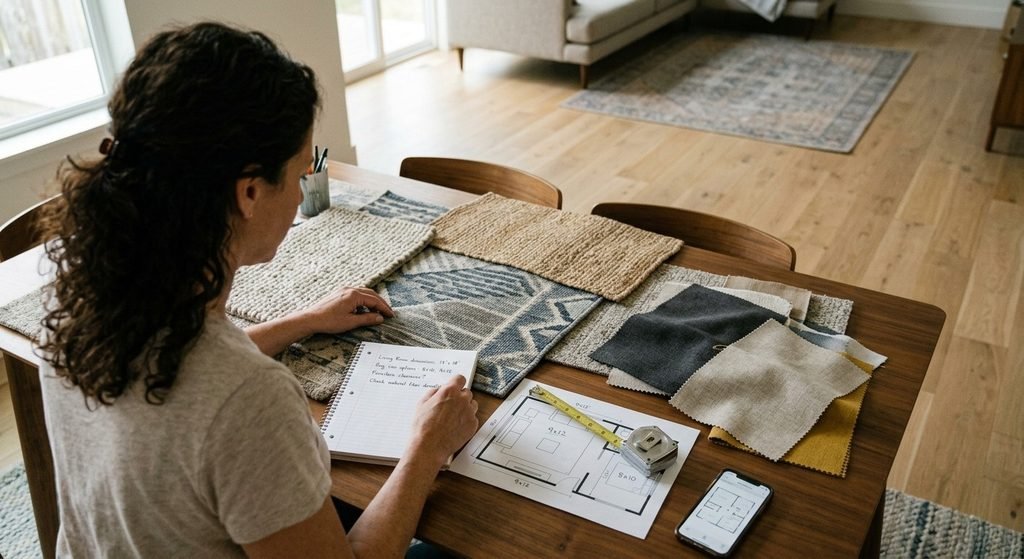
Before placing your order, run through this checklist:
- Have I measured the room?
- Have I measured the furniture arrangement?
- Will the rug interfere with walking paths?
- Is the rug large enough to connect the seating area?
- Have I decided which furniture will sit on it?
- Does the material fit my lifestyle?
- Is the pile height practical?
- Does the color work with my existing furniture?
- Does the pattern suit the room’s visual scale?
- Have I checked cleaning requirements?
- Do I need a rug pad?
- Have I checked return policies?
- Have I measured door and furniture clearances?
- Does the purchase make sense for my budget?
That last question matters.
A rug should improve the room without creating a maintenance or budget headache.
When Should You Choose a Different Rug Size?
A 9 x 12 rug isn’t the right answer for every living room.
Consider another size if:
- The rug leaves very little usable walking space
- Your seating arrangement is compact
- The room is narrow
- A smaller rug creates better proportions
- The furniture layout doesn’t require such a large anchor
- You want more visible flooring
- The rug would interfere with doors or other furniture
Conversely, an especially large open-plan room may benefit from a larger rug if a 9 x 12 leaves the seating arrangement looking disconnected.
The best rug size is the one that supports the furniture arrangement and movement patterns of the room.
Frequently Asked Questions
Are 9 x 12 rugs for living room spaces too large?
Not necessarily. They can work very well in larger living rooms and substantial seating arrangements. The deciding factors are the room dimensions, furniture layout, walkways, and desired amount of visible flooring.
What size living room works with a 9 x 12 rug?
There isn’t one required room size. A 9 x 12 rug can work in different room configurations depending on furniture placement and circulation. Measure the seating area and surrounding walkways before deciding.
Should a 9 x 12 rug go under the sofa?
Often, yes. Placing at least part of the sofa on the rug can visually connect it with the coffee table and other seating. Whether all of the sofa belongs on the rug depends on the room.
Should all furniture sit on a 9 x 12 rug?
No. All major furniture doesn’t have to sit completely on the rug. Full placement, front-legs-on-rug placement, and more flexible arrangements can all work depending on the room.
Is a 9 x 12 rug good for a sectional?
It can be. A 9 x 12 rug may provide enough area to visually anchor a sectional and coffee table, but the sectional’s dimensions and orientation still need to be considered.
What rug material is easiest to maintain?
There isn’t one answer for every household. Maintenance depends on the material, construction, finish, and manufacturer’s care instructions. Busy homes should prioritize a rug whose care requirements match their daily routine.
Do I need a rug pad under a 9 x 12 rug?
A suitable rug pad can help with stability and cushioning and may reduce unwanted movement. Make sure the pad is appropriate for the rug and flooring beneath it.
How do I measure for a 9 x 12 living room rug?
Start by measuring the room, then map out the furniture arrangement. Mark the proposed rug boundaries with painter’s tape or another temporary method. This gives you a much better visual sense of how the rug will interact with the furniture before you purchase it.
What should I consider before buying a large area rug?
Consider size, furniture placement, material, pile height, maintenance, color, pattern, traffic, household needs, budget, return policies, and how the rug will affect the room’s overall visual balance.
Internal Link Opportunities
Because internal links should point only to verified pages, don’t invent a HomeworkDaily URL that hasn’t been confirmed.
Potential contextual links could include:
- Home improvement guides → relevant HomeworkDaily home-improvement hub
- Living room decorating ideas → an existing relevant living-room article
- Flooring guides → an existing flooring-related article
- Home maintenance tips → an existing maintenance guide
Use the actual URLs only after verifying that those pages exist on HomeworkDaily.
External Authority-Link Opportunities
Where appropriate, link to authoritative sources that support specific claims about:
- Rug or textile care
- Flooring compatibility
- Cleaning instructions
- Consumer purchasing considerations
- Manufacturer-specific maintenance guidance
Don’t add external links merely to increase the number of links on the page.
Final Takeaway
9 x 12 rugs for living room spaces can be an excellent choice when the size works with the furniture—not simply the floor. Measure your seating arrangement, think about traffic and maintenance, consider the rug’s material and pile, and decide how much furniture you want resting on it.
The right rug should make the room feel more connected, comfortable, and intentional. If a 9 x 12 doesn’t achieve that, there’s nothing wrong with choosing a different size.










2 Responses