A roof usually doesn’t announce that something is wrong.
One day, everything looks perfectly normal. Then a heavy storm rolls through, you notice a damp spot on the ceiling, and suddenly you’re wondering whether you’re looking at a simple repair or the beginning of a much bigger project.
That’s where roof installation comes into the picture.
Installing a new roof isn’t simply about choosing shingles and putting them on top of a house. A roof is a complete system made up of several layers and components that work together to protect your home from rain, wind, heat, moisture, and everyday weather.
If you’re considering a new roof, replacing an aging one, or simply trying to understand what you’re paying for, this guide will walk you through the process from start to finish.
You’ll learn how roof installation works, which materials homeowners commonly consider, what affects the cost, how to compare contractors, what mistakes to avoid, and what you should know before signing a roofing contract.
The short version: A successful roof installation starts with proper planning and inspection, continues with the right materials and installation methods, and ends with careful attention to flashing, ventilation, drainage, and finishing details.
And there’s one thing worth remembering from the beginning:
The cheapest roof isn’t necessarily the cheapest roof to own.
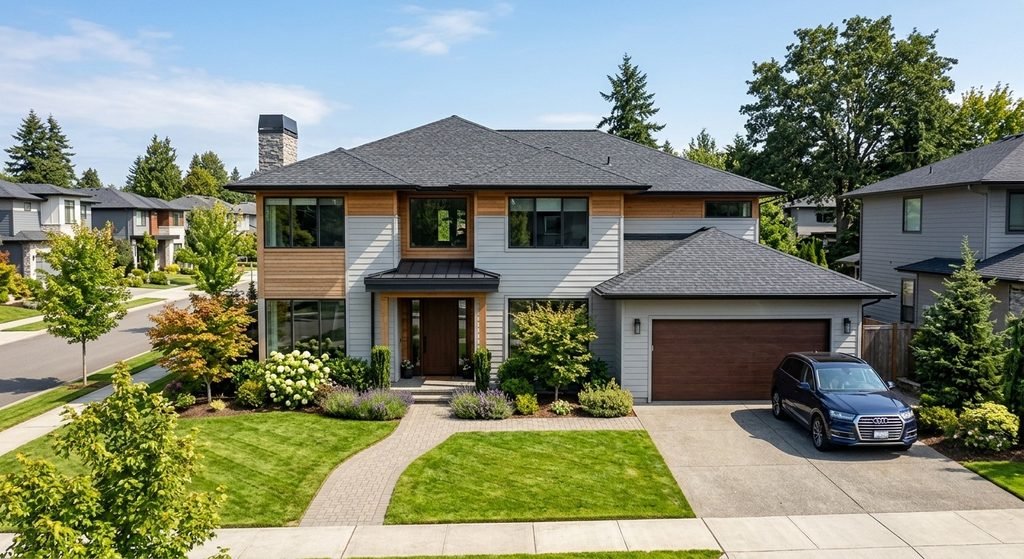
What Is Roof Installation?
Roof installation is the process of installing a complete roofing system on a home or replacing an existing roof with a new one.
Depending on the property and roofing material, the work can involve much more than the visible outer layer.
A typical project may include:
- Inspecting the existing roof
- Removing old roofing materials when required
- Checking the roof deck
- Repairing damaged areas
- Installing underlayment
- Installing flashing
- Installing drip-edge components where appropriate
- Addressing roof ventilation
- Installing the new roofing material
- Finishing ridges, hips, valleys, and penetrations
- Inspecting the completed work
- Cleaning the property
The exact process depends on the roof design, material, local requirements, manufacturer instructions, and condition of the existing structure.
That’s an important distinction.
A roof should be treated as a system rather than a single product.
You may spend most of your time choosing the visible roofing material, but components underneath and around it can be just as important to the finished result.
When Do You Need a New Roof?
Not every roof problem means you need a complete replacement.
A damaged shingle, loose flashing component, or isolated leak may be repairable. A roof with widespread deterioration, repeated problems, or serious underlying damage may be a different story.
Common warning signs include:
- Repeated leaks
- Missing roofing materials
- Cracked or damaged shingles
- Significant deterioration
- Damaged flashing
- Sagging sections
- Persistent moisture problems
- Extensive storm damage
- Increasingly frequent repairs
- An aging roofing system
But don’t make the decision based on one symptom alone.
For example, a ceiling stain doesn’t automatically mean the entire roof has failed. Water can enter around a flashing detail, vent, chimney, skylight, or another penetration.
The better question is not simply “Do I have a leak?” It’s “What is causing the leak, and how extensive is the problem?”
A professional inspection can help determine the answer.
Signs That May Point Toward Replacement
| Situation | Possible Approach |
| One isolated damaged shingle | Repair may be appropriate |
| Small flashing problem | Repair may be appropriate |
| Several localized issues | Inspect before deciding |
| Widespread deterioration | Replacement may be appropriate |
| Repeated leaks | Investigate the underlying cause |
| Damaged roof decking | Additional structural work may be needed |
| Major storm damage | Professional assessment recommended |
These are general considerations rather than automatic rules.
The condition of the roof should ultimately determine the next step.
Roof Repair vs. Roof Installation
This is one of the first decisions homeowners face.
A repair addresses a specific problem. A new roof replaces some or all of the existing roofing system.
Roof Repair May Make Sense When:
- Damage is limited
- The rest of the roof is in good condition
- The problem has a clear, localized cause
- The existing roofing system still has useful service life
A New Roof May Make More Sense When:
- Problems are widespread
- Repairs keep recurring
- The roofing system is substantially deteriorated
- The roof has reached the end of its expected service life
- The roof deck or other components require extensive work
There’s no prize for replacing a roof unnecessarily.
Likewise, repeatedly patching a roof that has widespread deterioration may simply postpone the inevitable while adding repair costs along the way.
How Does the Roof Installation Process Work?
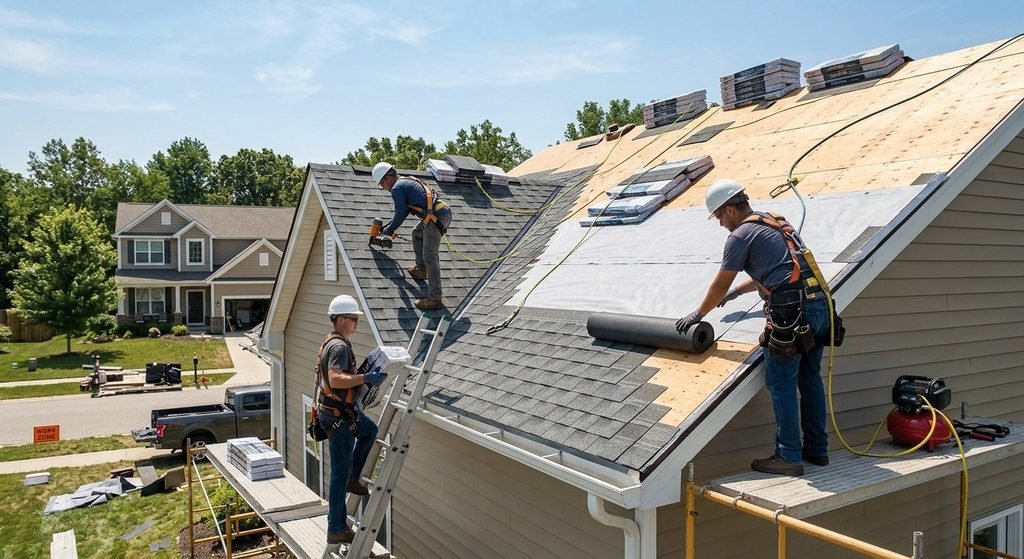
A typical roof installation begins with inspection and preparation before the new roofing material is installed.
The visible roofing material is only one part of the project.
Here’s what the process can look like.
Step 1: Inspect the Existing Roof
Before work begins, the contractor should understand what they’re dealing with.
The inspection may consider:
- Roof condition
- Roof slope
- Existing roofing layers
- Roof decking
- Flashing
- Roof penetrations
- Drainage
- Ventilation
- Signs of moisture
- Areas of previous repair
This is also the stage where you should clarify the project’s scope.
A roofing estimate that simply says “install new roof” doesn’t tell you enough.
Ask what materials are included, what will be removed, what happens if hidden damage is discovered, and which components are being replaced.
Step 2: Remove Existing Roofing When Required
Some roof replacement projects involve removing the existing roofing material before installing the new system.
In other situations, reroofing over an existing covering may be possible depending on the circumstances and applicable requirements.
Don’t assume either approach is automatically better.
A complete tear-off can provide an opportunity to inspect what’s underneath, while reroofing may sometimes reduce certain project requirements.
The correct approach depends on the existing roof, material, local requirements, manufacturer instructions, and project goals.
Step 3: Inspect the Roof Deck
The roof deck provides the base for many roofing systems.
If sections have been damaged by moisture or other problems, those areas may need repair or replacement before the new roofing material is installed.
This is one reason homeowners should ask about hidden damage allowances before signing a contract.
Suppose the contractor removes the old roofing and discovers damaged decking.
What happens next?
A good contract should make the process clear.
Step 4: Install Underlayment
Underlayment is installed beneath many roofing materials and provides an additional layer of protection.
The exact underlayment product and installation method depend on the roofing system.
It’s easy to overlook because it won’t be visible once the project is complete.
But that’s precisely the point.
Many of the most important parts of a roofing system aren’t visible from the street.
Step 5: Install Flashing and Edge Details
Flashing helps manage water around vulnerable areas of a roof.
It may be used around:
- Chimneys
- Skylights
- Roof-to-wall intersections
- Valleys
- Vents
- Pipes
- Other penetrations
These areas deserve attention because they’re where different surfaces and materials meet.
A beautifully installed roof surface doesn’t compensate for poorly handled flashing.
Step 6: Install the Roofing Material
Now comes the part most people associate with roof installation.
Depending on the project, this might involve:
- Asphalt shingles
- Metal roofing
- Wood shingles
- Wood shakes
- Clay tile
- Concrete tile
- Slate
- Other specialized roofing systems
Each material has its own installation requirements.
The contractor should follow applicable requirements and manufacturer instructions rather than treating every roofing material the same way.
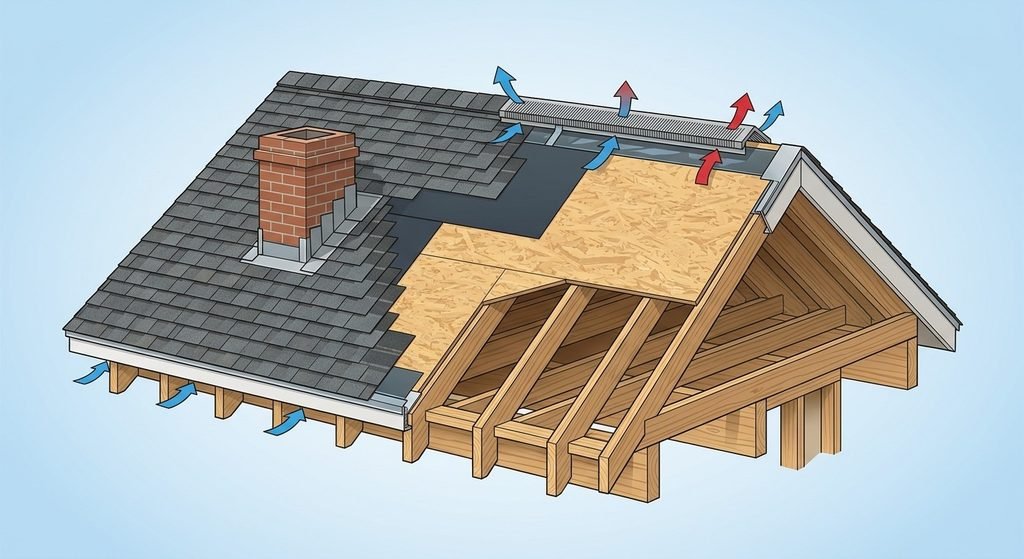
Step 7: Address Ventilation
Roof ventilation is another component homeowners often overlook.
A roofing contractor should consider the overall ventilation strategy rather than simply adding vents without understanding the existing system.
For attic ventilation, intake and exhaust work together.
The right approach depends on the home’s design, climate, roof configuration, and applicable requirements.
Step 8: Complete Ridges, Valleys, Penetrations and Edges
The roof isn’t finished simply because most of its surface is covered.
Installers also need to address:
- Ridges
- Hips
- Valleys
- Roof edges
- Vents
- Pipe penetrations
- Flashing
- Other transitions
These details can have a major effect on how water is managed.
Step 9: Final Inspection and Cleanup
Once installation is complete, the contractor should inspect the finished work and clean the work area.
Ask beforehand who is responsible for:
- Debris removal
- Nails and loose materials
- Protection of landscaping
- Cleanup around the house
- Final inspection
- Addressing defects
A clean driveway is nice.
A clearly documented finished project is even better.
Which Roofing Material Is Best for a Home?
There is no single roofing material that’s best for every home.
Your choice should take into account the roof design, climate, budget, appearance, maintenance expectations, material characteristics, local requirements, and availability of qualified installers.
Here are some common options.
Asphalt Shingles
Asphalt shingles are widely used because they’re familiar, available in many styles, and suitable for many residential applications.
Potential advantages include:
- Broad availability
- Many style options
- Familiar installation methods
- Different product grades
- Compatibility with many residential roof designs
But product quality and installation quality both matter.
Metal Roofing
Metal roofing can provide a different appearance and may offer long service potential depending on the product and conditions.
Metal roofing is available in different profiles and finishes.
Consider:
- Material type
- Coating
- Roof design
- Fastening system
- Installer experience
- Local climate
Wood Shingles and Shakes
Wood roofing can provide a distinctive natural appearance.
However, maintenance, moisture, fire considerations, and local requirements should be evaluated before choosing this option.
Clay and Concrete Tile
Tile roofing is popular in certain architectural styles and climates.
Potential considerations include:
- Weight
- Structural requirements
- Installation complexity
- Climate
- Maintenance
- Availability of qualified installers
Slate
Slate is a premium roofing material known for its distinctive appearance and long service potential.
The trade-off is that it can be expensive and requires specialized installation.
Roofing Material Comparison
| Material | Main Appeal | Key Consideration |
| Asphalt shingles | Familiar and widely available | Product and installation quality |
| Metal roofing | Durability and varied appearance | Product and installation differences |
| Wood shingles/shakes | Natural appearance | Maintenance and local considerations |
| Clay/concrete tile | Distinctive style and durability | Weight and installation requirements |
| Slate | Premium appearance and long service potential | Cost and specialist installation |
The right choice is ultimately the one that fits your home and your priorities.
How Much Does Roof Installation Cost?
Roof installation costs vary from project to project, so there isn’t one universal price that applies to every home.
The biggest mistake is comparing roofing estimates based only on the final number.
A $10,000 quote and a $14,000 quote may sound very different.
But what if the cheaper quote excludes several components included in the more expensive one?
The comparison suddenly changes.
What Affects Roof Installation Cost?
Several factors can influence the total project price.
Roof Size
A larger roof generally requires more materials and labor.
Roofing Material
Different materials have different material costs and installation requirements.
Roof Complexity
A simple roof may be easier to work on than one with multiple:
- Valleys
- Dormers
- Hips
- Skylights
- Chimneys
- Roof penetrations
- Different slopes
Existing Roof Removal
Removing and disposing of an existing roof can add labor and disposal costs.
Roof Deck Repairs
If damaged decking is discovered, additional work may be necessary.
Flashing
Flashing repairs or replacement can affect the project’s scope.
Ventilation
Changes to the ventilation system can add materials and labor.
Labor Market
Roofing labor costs vary by location and market conditions.
Accessibility
A difficult-to-access property may require additional planning, equipment, or labor.
Local Requirements
Permits, inspections, or other requirements can affect project cost depending on location.
Roof Installation Cost Factors
| Cost Factor | Why It Matters |
| Roof size | More area generally means more material and labor |
| Roofing material | Materials differ in price and installation complexity |
| Roof pitch | Steeper roofs may require additional safety and labor considerations |
| Roof complexity | More details can increase installation time |
| Tear-off | Removal and disposal add to project scope |
| Roof deck | Hidden damage may require repairs |
| Flashing | Replacement or repair may be necessary |
| Ventilation | Changes can affect materials and labor |
| Accessibility | Difficult sites can increase project complexity |
| Local labor | Rates vary by region |
Don’t ask only, “What’s the price?”
Ask:
“What’s included in the price?”
That question can save you from comparing incomplete estimates.
How to Compare Roof Installation Estimates
A roofing quote should be more than a single number.
When comparing contractors, look for differences in the actual scope.
Compare These Items
- Roofing material
- Product specifications
- Underlayment
- Flashing
- Drip edge
- Ventilation
- Tear-off
- Disposal
- Roof deck repairs
- Labor
- Cleanup
- Warranty
- Payment schedule
- Project timeline
How Long Does Roof Installation Take?
The duration of a roof installation depends on the size, complexity, material, weather, crew, roof condition, and project scope.
A straightforward residential roof may move relatively quickly.
A complicated roof with multiple levels, penetrations, repairs, or unexpected damage can take longer.
Potential causes of delay include:
- Rain
- Strong winds
- Extreme weather
- Material delivery problems
- Hidden damage
- Additional decking repairs
- Permit or inspection requirements
- Changes to the project scope
Ask the contractor for an expected start date and estimated completion period.
But remember:
An estimate is not a promise that every project will finish on an exact date.
Weather alone can change a roofing schedule.
How to Prepare for Roof Installation
Roofing work can be noisy and disruptive.
A little preparation can make the experience easier.
Before Installation
Consider:
- Moving vehicles away from the work area.
- Protecting fragile items in the attic.
- Clearing access around the house.
- Securing outdoor furniture and loose items.
- Moving delicate decorations.
- Discussing pets with the contractor.
- Keeping children away from the work area.
- Asking where materials will be delivered.
- Asking where debris will be placed.
- Confirming how cleanup will be handled.
- Identifying your main contact during the project.
If you work from home, you may also want to plan for noise.
Roof installation isn’t exactly a quiet renovation project.
What Should You Ask a Roofing Contractor?
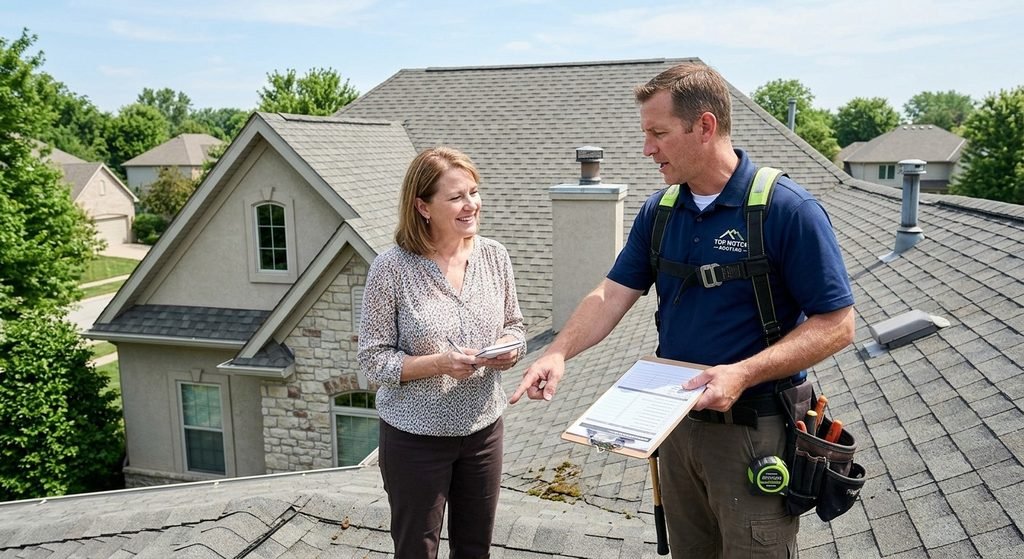
Before hiring someone, ask questions that reveal the actual scope of work.
Roofing Contractor Checklist
- What roofing material are you recommending?
- Which specific product will be installed?
- What exactly is included in the estimate?
- Will the existing roof be removed?
- What happens if damaged decking is discovered?
- Will flashing be replaced or reused?
- Is ventilation work included?
- Who handles permits if they’re required?
- How will debris be removed?
- What is the expected project schedule?
- What payment schedule do you require?
- What workmanship warranty do you provide?
- What manufacturer warranty applies?
- What could cause the final price to change?
- Who should I contact if there’s a problem after installation?
Don’t feel awkward asking detailed questions.
You’re making a major investment in your home.
Roof Installation Mistakes Homeowners Should Avoid
A roofing project can become unnecessarily expensive when important details are overlooked.
Here are some of the most common mistakes worth avoiding.
Choosing the Cheapest Quote Automatically
Price matters.
But price without context can be misleading.
If one contractor includes more materials, better preparation, additional flashing work, or a broader warranty, the higher price may have a reasonable explanation.
Compare scope first.
Ignoring the Roof Deck
A new roof covering doesn’t eliminate problems underneath it.
Ask how damaged decking will be handled if it is discovered after the old roof is removed.
Treating Flashing as an Afterthought
Flashing protects vulnerable transitions and penetrations.
Ask specifically what happens to existing flashing.
Choosing a Material Based Only on Appearance
A roof can look fantastic in a showroom photo and still be unsuitable for your particular project.
Consider:
- Climate
- Roof slope
- Weight
- Maintenance
- Installation requirements
- Local requirements
- Long-term expectations
Ignoring Ventilation
Ventilation should be evaluated as part of the overall roof system.
Adding vents randomly isn’t the same as designing a balanced ventilation approach.
Signing a Vague Contract
A vague agreement creates room for misunderstandings.
The contract should clearly describe the project scope and responsibilities.
Assuming Warranties Are All the Same
A manufacturer’s material warranty and a contractor’s workmanship warranty address different things.
Read both.
Forgetting About Cleanup
Ask exactly what cleanup includes.
Roofing debris doesn’t belong in your flower beds, driveway, or gutters.
Why Roof Ventilation Matter
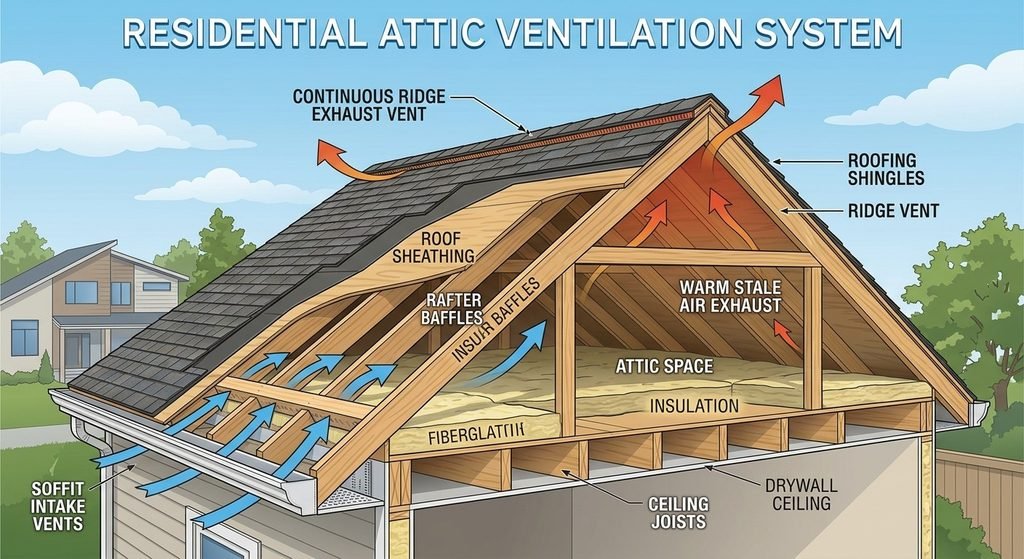
A roof doesn’t only keep rain outside.
The attic and roof assembly also have to deal with heat and moisture.
Proper ventilation depends on the building and roofing system, but the basic concept is straightforward:
Air needs a planned path through the attic or roof assembly when ventilation is part of the design.
Many systems use intake ventilation near the lower roof edge and exhaust ventilation near the upper portion of the roof.
The goal isn’t simply to install as many vents as possible.
It’s to create an appropriate ventilation strategy.
If you’re replacing an old roof, ask the contractor:
“What is the ventilation plan for this roof?”
That simple question can lead to a much better conversation.
What Happens If Hidden Damage Is Found?
This is one of the questions homeowners should ask before the roof comes off.
A contractor may discover:
- Rot
- Moisture damage
- Damaged decking
- Deteriorated flashing
- Previous improper repairs
- Structural concerns
The project may need to change.
That’s why a good roofing contract should explain how unexpected work will be handled.
For example, you may want to know:
- How will additional work be approved?
- Will you receive a revised estimate?
- What happens if only a small section is damaged?
- What happens if damage is widespread?
- Who decides whether additional repairs are necessary?
Getting these answers beforehand can prevent an unpleasant surprise later.
Can You Install a New Roof Over Old Shingles?
Sometimes, but it depends on the existing roof, roofing material, applicable requirements, and manufacturer instructions.
A homeowner shouldn’t assume that installing new roofing over old material is automatically acceptable.
Consider:
- Number of existing roof layers
- Condition of the existing roof
- Roof deck condition
- Weight
- Material compatibility
- Local building requirements
- Manufacturer instructions
A complete removal can also reveal problems that would otherwise remain hidden.
If a contractor recommends installing over the existing roof, ask them to explain why that method is appropriate for your particular property.
How Can You Tell If Roof Installation Was Done Properly?
You don’t need to become a roofing expert to evaluate the finished project.
Start with the obvious details.
Look for:
- Consistent installation
- Properly finished roof edges
- Clean transitions
- Properly addressed flashing
- Completed vents and penetrations
- No obvious loose materials
- Clean work areas
- Gutters free from excessive debris
- Completion of the agreed scope
But remember:
A roof can look good from the ground and still have problems that aren’t visible.
That’s why the quality of the contractor, materials, installation process, and documentation matters.
Roof Installation for Different Roof Designs
Not every roof presents the same challenge.
A simple gable roof may have relatively straightforward geometry.
A complex roof can contain:
- Multiple valleys
- Dormers
- Skylights
- Chimneys
- Different roof slopes
- Numerous penetrations
- Roof-to-wall intersections
Every additional transition creates another detail that needs to be handled correctly.
That’s why two houses with similar floor areas can have very different roofing costs.
Square footage alone doesn’t tell the whole story.
When Should You Hire a Professional?
Roofing work involves working at height, specialized materials, weather exposure, and technical installation details.
For a full roof replacement, homeowners without appropriate roofing experience, equipment, and safety systems should generally rely on qualified professionals.
When comparing contractors, consider:
- Relevant roofing experience
- Written estimates
- Insurance
- Required licensing
- References where appropriate
- Product knowledge
- Warranty terms
- Communication
- Safety practices
- Experience with your roofing material
Don’t be afraid to ask a contractor to explain something you don’t understand.
A professional should be able to explain the proposed work in language a homeowner can follow.
Roof Installation: What Homeowners Often Overlook
Sometimes the most useful advice is about the things that aren’t obvious.
The Contract Can Matter as Much as the Material
A high-quality roofing product doesn’t eliminate problems caused by unclear project terms.
Make sure the agreement explains the work.
The Lowest Quote May Not Be the Lowest Cost
If a cheaper quote excludes important components, you’ll eventually pay for them—or accept a smaller scope.
Hidden Damage Is a Possibility
Ask how unexpected repairs are handled before installation starts.
Roofing Is a System
Shingles or panels are only part of the picture.
Think about:
Roof deck → underlayment → flashing → ventilation → roofing material → drainage → maintenance
Maintenance Still Matters
A new roof isn’t immune to weather, debris, moisture, or damage.
Regular attention can help identify problems earlier.
Roof Installation and Long-Term Maintenance
A new roof deserves attention after installation.
Maintenance may include:
- Keeping gutters clear
- Watching for visible damage
- Checking flashing
- Looking for signs of leaks
- Monitoring attic moisture
- Removing problematic debris
- Addressing storm damage
- Scheduling professional inspections when appropriate
Don’t wait until water is pouring through the ceiling.
A small concern is generally easier to investigate than a major one.
What Should Be Included in a Roof Installation Contract?
Before signing, make sure you understand the project in writing.
A detailed contract may address:
- Contractor information
- Property information
- Roofing material
- Product specifications
- Scope of work
- Existing roof removal
- Disposal
- Underlayment
- Flashing
- Ventilation
- Decking repairs
- Cleanup
- Start date
- Estimated completion
- Payment terms
- Warranty information
- Change-order procedures
If something is important to you, don’t rely on a verbal promise.
Get it in writing.
Frequently Asked Questions About Roof Installation
What is the first step in roof installation?
The first step is normally evaluating the existing roof and determining the project’s scope. This helps identify the roof’s condition, materials, potential problems, and work that may be required before the new roofing material is installed.
How much does roof installation cost?
Roof installation costs vary depending on the project. Roof size, material, labor, roof complexity, tear-off, decking repairs, flashing, ventilation, accessibility, and local market conditions can all affect the final price.
How long does a new roof last?
Roof service life varies considerably by material, installation quality, climate, maintenance, and other conditions. Some roofing materials are designed for relatively long service periods, while others have different expected lifespans.
Don’t judge a material solely by a single lifespan number.
Is roof installation the same as roof replacement?
Not always. Roof installation can refer to installing a roof on a new structure, while roof replacement generally refers to replacing an existing roof.
In everyday conversation, however, people may use the terms interchangeably.
Can I install a new roof over old shingles?
Sometimes, but it depends on the existing roof and applicable requirements. A contractor should evaluate the existing layers, condition, roof deck, material, and manufacturer instructions before recommending this approach.
Do I need new flashing?
It depends on the condition of the existing flashing and the roofing project. Flashing is an important part of water management, so it should be specifically discussed in the estimate.
Does a new roof need ventilation?
Ventilation requirements depend on the roof and building. Ask the contractor to explain the overall ventilation strategy rather than assuming that adding vents automatically solves ventilation concerns.
What should a roofing estimate include?
A good estimate should clearly explain the scope of work, roofing material, removal, flashing, ventilation where applicable, cleanup, payment terms, schedule, and warranty information.
It should also explain how unexpected damage will be handled.
How do I compare roofing contractors?
Compare the complete scope rather than price alone.
Look at:
- Experience
- Insurance
- Required licensing
- Materials
- Installation scope
- Warranty
- Schedule
- Payment terms
- Communication
- Handling of unexpected repairs
Is roof installation a DIY project?
A full roof replacement involves significant height and safety risks as well as specialized installation requirements.
Homeowners should carefully consider whether they have the knowledge, equipment, safety systems, and experience required.
For a complete roofing project, hiring an appropriately qualified professional is generally the safer approach.
What is the most important thing to check before hiring a roofer?
Understand exactly what you’re paying for.
A detailed written scope can help you compare contractors and avoid misunderstandings about materials, labor, removal, repairs, warranties, and cleanup.
Final Takeaway
A successful roof installation isn’t just about putting a new material on top of your home.
It’s about building or replacing a complete system that works together.
The roof deck needs to be suitable. Underlayment needs to be appropriate. Flashing needs attention. Ventilation should make sense for the building. The roofing material should fit the project. And the contractor should provide a clear scope of work.
If you’re preparing for a new roof, don’t rush toward the first low estimate you receive.
Take your time.
Compare the materials. Ask questions. Read the contract. Find out what happens if hidden damage appears. Understand the warranty. And make sure you’re comparing complete project scopes rather than just numbers.
Because when it comes to your roof, what you don’t see can matter just as much as what you do.
For more practical home-improvement, gardening, DIY, cleaning, and home-lifestyle guides, explore HomeWorksDaily and use its related resources to help with your next project.