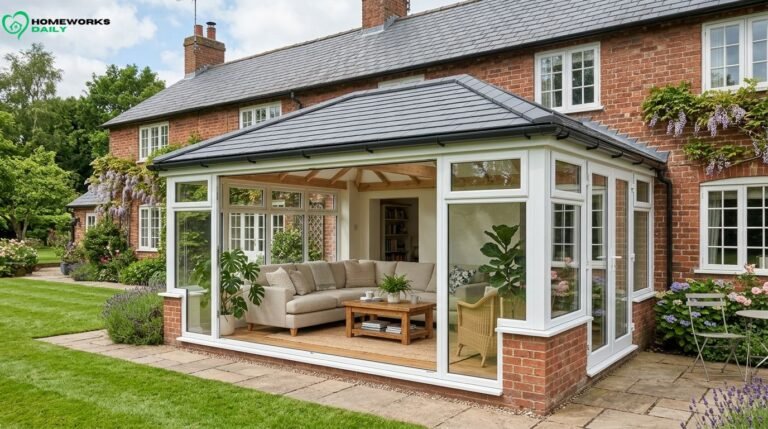
Yes, in many cases. Sound frames, glazing and floors can often stay in place while you upgrade insulation, seals or swap for tiled roof. A full rebuild is only necessary when the structure has genuine faults. Start with a proper survey, then match the fix to the actual problem rather than replacing everything by default.
Your conservatory is structurally fine. It’s just not somewhere you actually sit for most of the year. Too hot in July, too cold in January, and the kids have long since stopped using it as a playroom. The question on your mind is simple: do you need to knock it down and start again, or can you upgrade what’s already there?
For most homeowners, the honest answer sits somewhere in the middle. Some elements of your conservatory can likely stay exactly where they are. Others may need attention, repair, or replacement. The trick is working out which is which before you start getting quotes, so you don’t pay for a full rebuild when a targeted upgrade would have done the job.
This guide walks you through how to make that call: what to check, what commonly survives an upgrade, and what questions to ask any installer before you sign a contract.
What problem are you actually trying to solve?
Before you look at materials or price lists, get specific about what’s bothering you. “I hate my conservatory” isn’t a brief an installer can work with. Each of these issues points to a different fix:
- Too hot in summer – usually a glazing or shading problem, not a structural one
- Too cold in winter – often points to the roof and glazing working together, or lack of insulation, this is where solid tiled roof replacement may come into equation.
- Leaks or damp patches – could be sealant failure, guttering, or something more serious in the base
- Noise during rain – almost always a roof construction issue
- Dated appearance – a cosmetic problem, solvable with finishes and styling
- Wanting to open the space into the house – a layout change, which has its own planning implications
Naming your actual problem narrows the scope dramatically. A homeowner chasing year-round comfort needs a different conversation than one who simply wants the room to look nicer for a house sale.
Check the structure before you shop for finishes
It’s tempting to go straight to browsing roof panels or new glazing, but any upgrade should start with an honest look at the bones of the room. A conservatory that looks sound from the inside can still have problems worth knowing about before you spend a penny.
Ask a surveyor or structural engineer to check:
- Frame condition – are the uPVC or aluminium frames still sound, or showing signs of warping or corrosion?
- Base and foundations – any sinking, cracking, or movement around the perimeter?
- Water ingress – damp patches, staining, or evidence of past leaks?
- Roof supports – can the existing frame safely carry a heavier, insulated tiled conservatory roof if that’s the route you choose?
- The junction with your house – is the connection between the conservatory and the main building sound and weathertight?
This step matters more than it might seem. Upgrading the roof or glazing on a structure with an underlying fault just means paying twice. Get the structural picture clear first, then decide what to improve.
What can you usually keep?
Here’s the encouraging part: full rebuilds are the exception, not the rule. If your survey comes back clean, several elements can often be retained:
- Sound uPVC or aluminium frames – if they’re not warped, rotted, or structurally compromised, they can usually stay
- Existing glazing – older units can sometimes be upgraded in place, or supplemented with secondary measures, rather than replaced outright
- Doors – provided they seal properly and aren’t the source of draughts or leaks
- Floor finishes – unless you’re changing the layout, most flooring survives an upgrade untouched
The caveat here is important: “often retained” isn’t “always retained.” A frame with signs of movement or a glazing unit with failed seals won’t benefit from being left in place. Local repairs or secondary comfort measures (such as internal shading or draught-proofing) can bridge the gap where full replacement isn’t yet necessary.
Four routes from small upgrade to full rebuild
Once you know your problem and your starting structure, you’re choosing from a scale of intervention rather than a single yes-or-no decision.
- Seals and shading – the lightest-touch option. Re-sealing gaps and adding internal or external shading tackles draughts and summer overheating without touching the main structure.
- Glazing improvements – upgrading units or adding secondary glazing can meaningfully reduce heat loss and noise, especially if your current glass is older single or basic double glazing.
- Insulated roof panels or new roof systems – the biggest single upgrade for year-round comfort. This route tends to deliver the most noticeable change in temperature and noise, but it comes with a trade-off: solid, heavily insulated panels can reduce the amount of daylight entering the room compared with the original polycarbonate or glass roof. Ask your installer how they balance insulation with light retention before you commit.
- Full rebuild – reserved for conservatories with genuine structural problems, or where you want a fundamentally different layout, size, or connection to the house.
Each step up the list brings more disruption and more cost, so it’s worth matching the scope honestly to the problem you identified earlier rather than defaulting to the most comprehensive option.
What does installation actually involve?
It helps to know what to expect before work starts, so there are no surprises partway through. A typical upgrade, particularly a roof replacement, generally involves:
- An initial measure-up and structural check
- Confirming whether the work needs building regulations approval (more on this below)
- Arranging site access and protecting the surrounding area
- Removing the existing roof or glazing
- Fitting the new system and checking it’s weathertight
- Finishing internally, including trims and any redecoration needed
Timelines vary depending on the scope of work, the size of your conservatory, and weather conditions during installation, so be wary of any installer promising a guaranteed one-day turnaround regardless of the job. A reputable installer will give you a realistic estimate based on your specific project, not a generic figure.
Do you need planning permission or building regulations approval?
This trips up a lot of homeowners, and the rules differ depending on where in the UK you live.
In England, GOV.UK’s guidance on building regulations approval confirms that most repairs, replacements and maintenance work are exempt from needing formal approval. However, this exemption doesn’t cover everything — heating systems, oil tanks, fuse boxes, glazing units, guttering and downpipes, and external doors that are more than half glazed can still require approval. You’re still expected to meet safety and energy efficiency standards even when formal sign-off isn’t required, so if you’re unsure, check with your local building control body.
In Wales, Welsh Government guidance on building regulations for conservatories sets out that conservatories are normally exempt when they’re built at ground level, under 30 square metres, thermally separated from the house, have no fixed heating extended from the main house, and meet relevant glazing and electrical standards. Worth noting: creating any new structural opening between your conservatory and your existing house — for example, if you’re planning to open the space into your living room — requires building regulations approval, even where the conservatory itself remains exempt.
Because rules can differ by nation and individual circumstances, it’s always worth confirming your specific project with local building control before work begins.
What should you ask before you sign a quote?
A written quote should answer more than just the price. Before you commit to any installer, ask:
- What load can the existing structure safely take, and has this been checked?
- What evidence is there for the thermal performance of the materials being proposed?
- How will the new system manage condensation?
- What weathering and durability can you expect over time?
- What finish options are available, and how will they integrate with the rest of your home?
- What warranties cover materials and workmanship separately?
- What work is explicitly excluded from the quote?
- Has the installer flagged whether building control involvement is needed for your project?
Get at least two or three comparable written quotes covering the same scope of work. This is the only reliable way to judge value, since prices can vary significantly depending on materials, roof type, and the level of structural work involved.
Making the right call for your conservatory
A conservatory that’s structurally sound but underused doesn’t automatically need demolishing. In many cases, a well-chosen upgrade — better seals, improved glazing, or an insulated roof — can turn an unused room into genuine year-round space.
The honest starting point is always a proper structural check, followed by a clear-eyed look at what’s actually causing the discomfort. From there, you can match the solution to the problem: a light-touch fix for draughts, a bigger investment for a room you want to use every day of the year, or in rarer cases, a full rebuild where the existing structure simply can’t be salvaged.
Get a survey, get comparable quotes, and ask the right questions before you commit. That’s how you end up with a conservatory that earns its keep, without paying for more work than your home actually needs.
Frequently asked questions
Does every conservatory need a full rebuild to become comfortable year-round?
No. Many conservatories with sound frames and foundations can be upgraded through improved seals, glazing, or an insulated roof, without a full rebuild.
Will insulated roof panels make my conservatory darker?
Solid tiles or insulated roof panels generally reduce the amount of daylight compared with the original glass or polycarbonate roof. Ask your installer how they balance insulation with light retention, and consider options like roof lights if natural light is a priority.
Do I need planning permission to upgrade my conservatory?
It depends on the scope of work and where you live. In England, many repairs and replacements are exempt from building regulations approval, though exceptions apply to things like glazing units and heating systems. In Wales, exemptions depend on factors like floor area and thermal separation from the house. Check with local building control if you’re unsure.
How long does a conservatory roof upgrade take?
Timelines vary based on the size of the project, the scope of work, and weather conditions. Ask your installer for a realistic estimate specific to your conservatory rather than relying on general claims.
What should I compare between quotes?
Look beyond the headline price. Compare thermal performance evidence, condensation management, warranty terms, what’s excluded from the quote, and whether building control involvement has been considered.