A homeowner walks outside and sees the same frustrating view every weekend: thin grass near the trees, bare spots along the walkway, and a lawn that never seems to recover. They start comparing sod prices online, wondering how many pallets they need, whether St. Augustinegrass will actually survive their yard, and if installing new turf is worth the investment.
That is a common situation. Buying sod is not just about choosing a green-looking grass. The right decision depends on sunlight, climate, soil, drainage, traffic, maintenance expectations, and choosing the correct cultivar for the property.
Is ST Augustine Grass sod a Good Choice?
ST Augustine Grass sod is a good choice for many warm-climate homeowners, especially in Florida, Texas, Gulf Coast states, and other humid subtropical regions where St. Augustinegrass is adapted. It is popular because sod provides an immediately covered lawn, many cultivars perform well in partial shade, and the grass creates a dense, attractive turf when properly maintained. However, it is not ideal for every yard because cold exposure, heavy traffic, deep shade, poor drainage, and incorrect maintenance can limit performance.
St. Augustinegrass is a warm-season turf that spreads through above-ground runners called stolons. Unlike some grasses commonly grown from seed, St. Augustinegrass is generally established through sod, plugs, or sprigs.
For many homeowners, the practical question is not “Is St. Augustinegrass good?” but “Is this the right grass for my specific yard?”
Is ST Augustine Grass sod Right for Your Lawn?
Before ordering sod, evaluate five things:
- Climate: St. Augustinegrass performs best in warm regions and is not a universal lawn solution for all parts of the United States.
- Sunlight: Many cultivars tolerate some shade, but no turfgrass thrives in extremely low light conditions.
- Traffic: A backyard used for frequent sports or heavy activity may need a more wear-tolerant turf option.
- Soil and drainage: Poorly prepared soil can cause problems even with high-quality sod.
- Maintenance expectations: St. Augustinegrass requires regular mowing, irrigation management, and monitoring for pests and disease.
A beautiful sod installation can fail if the grass is placed in conditions it cannot tolerate.
What Makes St. Augustinegrass Different?
Appearance and Growth Habit
St. Augustinegrass is known for its broad leaf blades, dense appearance, and ability to create a thick lawn under suitable conditions. It usually has a coarser texture than grasses such as Bermuda.
Its growth habit helps it fill spaces over time, but the same dense growth can contribute to thatch problems if mowing, watering, and fertilization practices are not managed properly.
Shade Performance
One reason homeowners choose St. Augustinegrass is its relative shade tolerance compared with many other warm-season grasses.
However, “shade tolerant” does not mean “shade loving.” University of Florida guidance notes that cultivar selection matters significantly, with some St. Augustinegrass cultivars performing better in shade than others.
A lawn receiving filtered sunlight under a tree canopy is very different from an area receiving almost no direct light.
Climate Considerations
St. Augustinegrass is primarily suited to warm-season lawn regions. It is commonly used throughout the Southeast, Florida, Gulf Coast, and warm coastal areas.
Homeowners in colder regions should consider whether winter temperatures, dormancy expectations, and recovery after cold injury make another grass type more practical.
Traffic and Wear
St. Augustinegrass can handle normal household lawn use, but it is not usually selected for extreme foot traffic areas.
If children, pets, or frequent gatherings create heavy wear, compare other turf options before committing to a full lawn replacement.
Pros and Cons of ST Augustine sod
Advantages
- Provides an immediately green lawn after installation
- Establishes faster than plugs in many situations
- Several cultivars offer good shade performance
- Works well in warm, humid climates
- Can provide a dense, attractive residential lawn
- Offers some salt tolerance compared with certain warm-season grasses
Limitations
- Not suitable for every climate
- Requires careful watering during establishment
- Can struggle in deep shade
- Some cultivars are vulnerable to pests such as chinch bugs
- Poor drainage can create long-term problems
- Heavy traffic may cause thinning
- Sod installation costs more upfront than slower establishment methods
How Much Does ST Augustine Grass sod Cost?
The cost of ST Augustine Grass sod depends heavily on location, supplier, cultivar, delivery distance, season, order size, and installation requirements.
There is no reliable single nationwide 2026 price that applies to every homeowner. Local suppliers commonly price sod by square foot, roll, piece, or pallet, and pallet coverage varies by supplier.
A realistic project budget should separate:
| Cost Category | What Affects the Price |
| Sod purchase | Grass variety, supplier, quantity, local availability |
| Delivery | Distance, truck access, minimum order requirements |
| Soil preparation | Removal, grading, amendments, leveling |
| Installation | DIY labor versus professional installation |
| Aftercare | Irrigation adjustments, fertilizer, maintenance |
Before purchasing, ask suppliers for a complete quote rather than comparing sod price alone.
Factors That Change the Final Price
Your final cost may increase if you need:
- Old grass removal
- Weed removal
- Soil improvement
- Drainage correction
- Irrigation repair
- Difficult delivery access
- Small quantities that do not meet supplier minimums
A cheaper sod order can become expensive if the site is not prepared correctly.
Popular St. Augustinegrass Varieties
Cultivar selection matters because different St. Augustinegrass types have different characteristics.
| Variety | Sun/Shade Consideration | Texture | Cold Consideration | Best Fit |
| Floratam | Better in sunnier sites; less shade tolerant than some cultivars | Coarse | Lower cold tolerance than some options | Common warm-climate lawns with adequate sun |
| CitraBlue | Performs well in many Florida landscapes; noted for dense growth habit | Coarse | Research and regional suitability should be considered | Homeowners seeking newer cultivar options |
| Palmetto | Good shade performance compared with some cultivars | Medium | Good cold tolerance reported by UF/IFAS | Mixed sun and shade landscapes |
| Seville | Better shade performance; dwarf type | Fine | More cold sensitive | Smaller lawns needing lower mowing height |
Sources from the University of Florida IFAS Extension describe differences among cultivars, including mowing requirements, shade response, and environmental tolerances.
Do not assume the most common variety is automatically the best choice for your yard.
How Much Sod Do You Need?
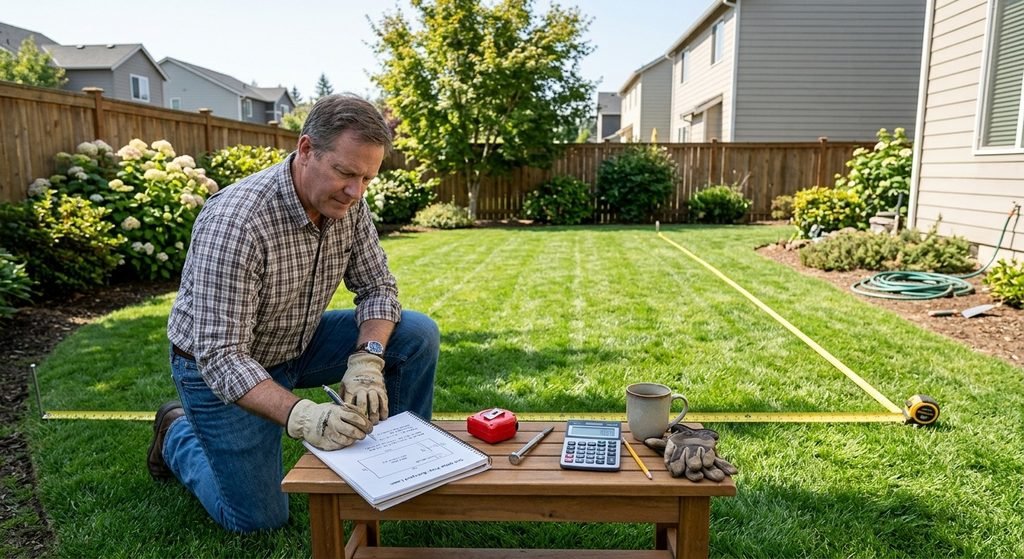
Start with a simple measurement:
Lawn square footage = length × width
For example, a rectangular lawn that is 40 feet long and 25 feet wide requires:
40 × 25 = 1,000 square feet
For irregular yards:
- Divide the lawn into smaller rectangles, squares, or triangles.
- Calculate each section separately.
- Add the totals together.
- Discuss waste allowance with your supplier.
Avoid ordering based only on a rough guess.
Most importantly, confirm the actual pallet coverage with your sod supplier. Different suppliers, regions, and cutting methods may package sod differently.
What to Check Before Buying ST Augustine sod
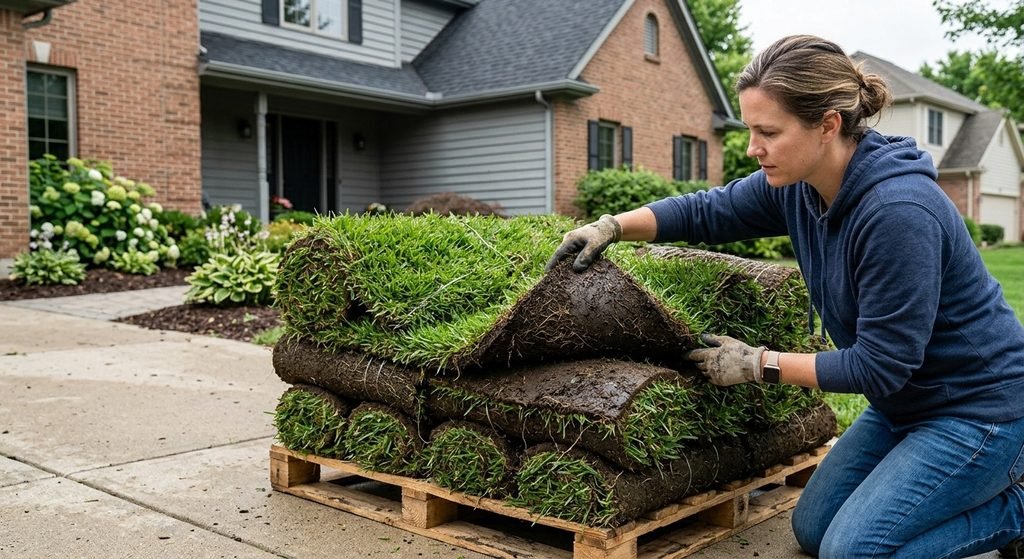
Before placing an order, ask:
- What cultivar are you selling?
- How many square feet does one pallet cover?
- When was the sod harvested?
- How quickly will it be delivered after harvesting?
- Is delivery included?
- Is there a minimum order?
- What condition should the soil be in before installation?
- Do you provide installation recommendations?
- What happens if sod arrives damaged?
- Is the grass inspected for weeds or obvious disease issues?
Inspecting Fresh Sod
Fresh sod should generally arrive:
- Moist but not falling apart
- Dense and firmly rooted together
- Free from obvious dead sections
- Reasonably uniform in thickness
A delivery problem should be addressed quickly because sod quality declines when rolls sit too long after harvest.
How to Prepare Your Yard Before Sod Arrives
Remove Existing Growth
Do not simply place sod over an unhealthy lawn and hope the problem disappears.
Existing grass, weeds, and uneven vegetation can interfere with soil contact and establishment.
Correct Grade and Drainage Problems
Water pooling after rain is a warning sign. New sod will not fix poor drainage.
Correct low areas and drainage issues before installation.
Prepare the Soil
Good soil preparation improves the chance that roots establish successfully.
Common preparation steps include:
- Loosening compacted soil
- Adding recommended soil amendments if needed
- Removing rocks and debris
- Creating a smooth planting surface
Final Leveling
The soil should be firm enough to prevent footprints but loose enough for roots to establish.
Plan Irrigation Before Delivery
A watering plan should be ready before the sod arrives. Newly installed turf requires different care than an established lawn.
How to Install ST Augustine Grass sod
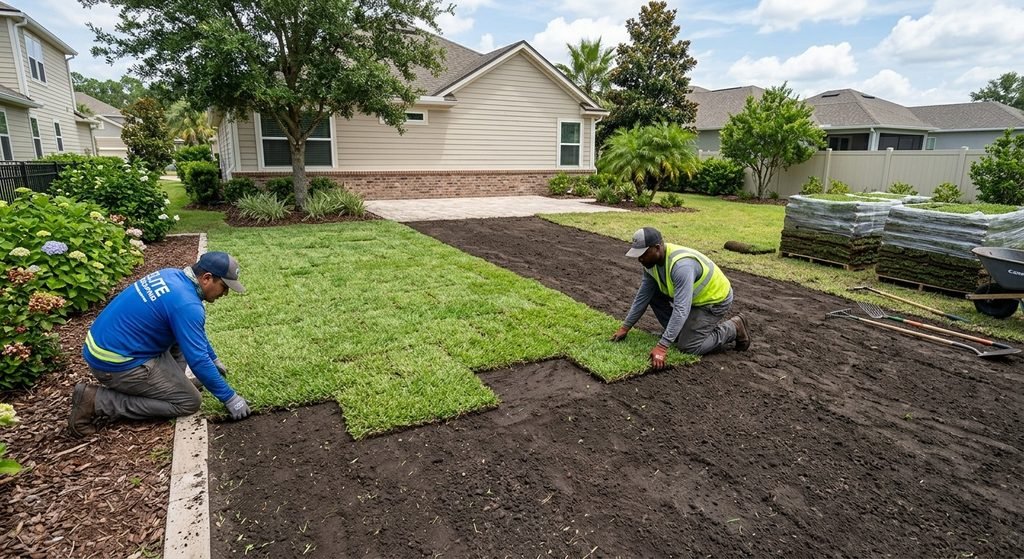
A basic installation process:
- Install sod soon after delivery. Avoid leaving rolls stacked for extended periods.
- Start along a straight edge such as a driveway or sidewalk.
- Stagger seams like brickwork to reduce visible joints.
- Keep pieces tightly connected without overlapping.
- Cut around obstacles such as trees and beds.
- Press sod firmly against prepared soil to eliminate air gaps.
- Water immediately after installation.
The goal is simple: create strong contact between sod roots and prepared soil.
Watering Newly Installed St. Augustine Sod
New sod needs frequent attention during establishment because the shallow root system has not yet connected deeply with the soil.
A common mistake is treating fresh sod like an established lawn.
New installations generally require:
- Keeping the root zone consistently moist
- Adjusting watering based on weather and soil conditions
- Gradually reducing frequency as roots establish
Regional climate, soil type, rainfall, and irrigation system design all affect watering needs. University Extension guidance recommends adjusting irrigation practices as turf establishes rather than relying on a single schedule for every yard.
When Can You Mow New Sod?
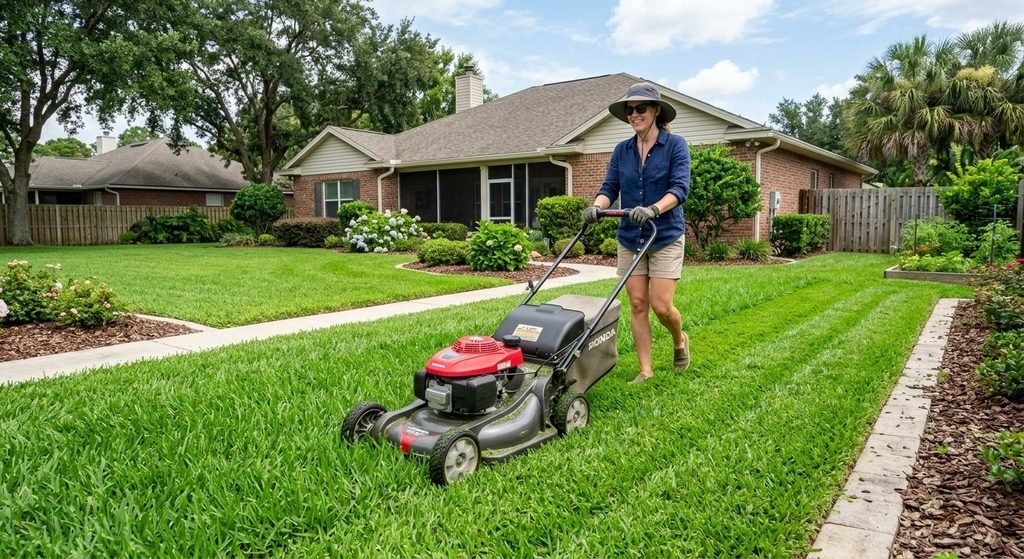
Usually, you should wait until the sod has rooted enough to resist being pulled up before mowing.
The exact timing varies by season, weather, installation quality, and grass growth.
When mowing:
- Use a sharp mower blade
- Avoid cutting too short
- Remove no more than one-third of the leaf blade
- Follow the recommended height for your cultivar
University of Florida guidance recommends maintaining standard St. Augustinegrass cultivars around 3.5–4 inches, while dwarf types have lower recommended mowing heights.
Choosing the right mower also matters after installation. Homeowners comparing equipment options can review this walk-behind lawn mower guide for general mower-buying considerations.
Common ST Augustine Grass sod Problems
Sod Isn’t Rooting
Possible causes include:
- Poor soil contact
- Dry conditions
- Overwatering
- Compacted soil
- Installation delays
Yellow or Brown Areas
Brown turf does not automatically mean one problem.
Possible causes include:
- Water stress
- Nutrient issues
- Disease
- Root problems
- Environmental stress
Chinch Bugs
Chinch bugs are a recognized St. Augustinegrass pest, particularly in some commonly grown cultivars. Symptoms can resemble drought stress, so inspection is important before treatment decisions.
Fungal Problems
Excess moisture, poor airflow, and overfertilization can increase disease risk.
Overwatering
Too much water can contribute to shallow roots, disease pressure, and drainage problems.
Underwatering
Dry sod may develop brown areas, especially during establishment.
Poor Drainage
Standing water can damage turf roots.
Excessive Shade
Even shade-tolerant cultivars need enough light. Very dark areas may require alternatives such as groundcovers or landscape changes.
Heavy Foot Traffic
High-use areas may need a different grass choice or hardscape solutions.
Cold Damage or Dormancy
St. Augustinegrass can slow growth or discolor during cold periods depending on region and conditions.
ST Augustine sod vs Other Lawn Options
| Option | Strengths | Limitations |
| St. Augustinegrass sod | Fast lawn coverage, good shade tolerance among warm-season grasses | Needs warm climate and moderate maintenance |
| Bermuda | Strong wear tolerance, fast growth | Usually needs more sun |
| Zoysia | Dense turf, good wear performance in many cultivars | Establishment can be slower |
| Centipedegrass | Lower-maintenance option in suitable areas | Fewer situations where it excels |
| Plugs | Lower upfront material cost | Takes longer to fill |
The best grass depends on the property, not a universal ranking.
Is Sod Better Than Plugs?
Sod is usually better when homeowners want a finished lawn quickly, while plugs are better when budget and patience are higher priorities.
Sod provides immediate coverage but costs more upfront. Plugs require more time for the lawn to fill in.
Mistakes to Avoid When Buying or Installing Sod
Avoid these common problems:
- Choosing grass without checking climate suitability
- Buying without knowing the cultivar
- Measuring incorrectly
- Ignoring pallet coverage differences
- Installing over poor soil
- Delaying installation after delivery
- Watering without adjusting for weather
- Mowing new sod too aggressively
- Selecting St. Augustinegrass for extremely shady areas
ST Augustine Grass sod Buying Checklist
Before ordering, confirm:
☐ Correct cultivar for your yard
☐ Accurate lawn measurements
☐ Confirmed pallet coverage
☐ Delivery date scheduled
☐ Soil prepared
☐ Irrigation ready
☐ Supplier questions answered
☐ Installation timing planned
Why HomeWorks Daily’s Approach Is Different
Choosing lawn materials is a home improvement decision, not just a gardening decision. A successful project requires understanding cost, maintenance, limitations, and long-term care.
Homeowners can continue exploring practical gardening and outdoor improvement topics through HomeWorks Daily Gardening section, where related guides can help with planning, maintenance, and informed purchases.
Frequently Asked Questions
Is St. Augustine sod good for shade?
Yes, some St. Augustinegrass cultivars perform well in partial shade, but deep shade can still cause problems. Cultivar choice and available sunlight are critical factors.
How quickly does St. Augustine sod establish?
St. Augustine sod can begin rooting soon after installation, but full establishment depends on weather, soil contact, irrigation, and care.
What time of year should you lay St. Augustine sod?
The best time is generally during active growth periods in warm regions, while avoiding extreme heat, drought, or freezing conditions.
How much ST Augustine Grass sod do I need?
You need your lawn’s square footage divided by the coverage amount of the sod packaging you purchase. Always confirm pallet coverage with the supplier.
Can you lay St. Augustine sod over existing grass?
Usually, no. Existing vegetation can prevent proper soil contact and interfere with establishment.
How soon can you walk on new St. Augustine sod?
Light foot traffic should generally wait until the sod has begun rooting and feels stable. Heavy use should be delayed longer.
Why is my new St. Augustine sod turning brown?
Brown areas can result from several causes, including watering problems, stress, disease, or installation issues. The symptom alone does not identify the cause.
Does St. Augustinegrass spread?
Yes, St. Augustinegrass spreads through above-ground runners called stolons.
Is St. Augustinegrass available as seed?
Generally, no; it is commonly established through sod, plugs, or sprigs.
How often should new St. Augustine sod be watered?
New sod usually requires more frequent moisture during establishment, then watering should be adjusted as roots develop and local conditions change.
Final Takeaway
ST Augustine Grass sod can transform a tired lawn quickly, but the best results come from matching the grass to the property.
Before ordering, evaluate sunlight, climate, drainage, traffic, and maintenance expectations. Measure carefully, confirm pallet coverage, choose the right cultivar, and prepare the soil before delivery.
A little planning before installation can prevent expensive corrections later. Continue exploring practical lawn and gardening advice from HomeWorks Daily as you plan your next outdoor improvement project.