
If you’ve come across the word wollmatten while researching home improvement, gardening, insulation, or natural materials, there’s an important detail to understand first: it isn’t the name of one specific product.
Wollmatten is a German term associated with wool mats. Depending on the product and context, a wool mat may be used as a floor covering, protective layer, gardening material, acoustic material, or insulation product. The right choice depends much more on the mat’s construction and intended purpose than on the word itself.
For a U.S. homeowner or gardener, that distinction matters. A soft decorative wool mat and a technical sheep-wool insulation batt may contain the same basic natural fiber, but they aren’t interchangeable.
Quick Answer: What Does Wollmatten Mean?
Wollmatten generally means “wool mats” in German. The singular form is commonly understood as Wollmatte, while Matten is the plural form of Matte, meaning mat.
In practical terms, the word can describe multiple types of wool-based mats rather than one standardized product.
You may encounter wool mats designed for:
- Home interiors and floor coverings
- Gardening and weed suppression
- Plant or container protection
- Insulation
- Sound absorption
- Padding and protective applications
- Crafts and specialty projects
So if you’re shopping for wollmatten, don’t stop at the product name. Check what the mat is actually designed to do.
What Are Wollmatten Made From?
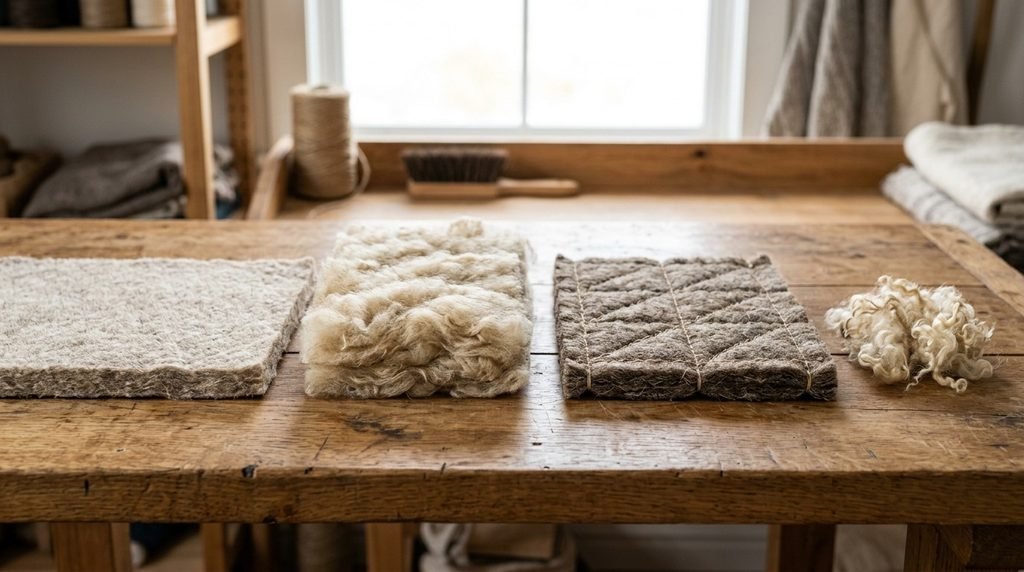
Most wool mats are based on sheep’s wool, although the exact composition varies.
A product may contain:
- Pure or predominantly wool fibers
- Blended natural fibers
- Synthetic reinforcing fibers
- Fabric or rubber backing
- Adhesives or binders
- Dyes or other treatments
This is one reason two products marketed as wool mats can behave very differently.
A dense felted mat may be firm and resistant to compression, while a loosely structured wool material may be softer and more absorbent. An insulation product may also have technical specifications that would be irrelevant for a decorative floor mat.
Why Wool’s Structure Matters
Wool is a natural protein fiber with a crimped structure. That structure can create small pockets of trapped air and contributes to wool’s thermal and moisture-related properties.
But there’s an important distinction between a property of wool fiber and the performance of a finished product.
For example, saying that wool can help with warmth doesn’t mean every wool mat is suitable for insulating a wall. A construction product needs to be engineered and labeled for that particular application.
That’s why the product specification should always come before the marketing description.
Where Are Wollmatten Used?
The broad term becomes much easier to understand when you look at the different jobs wool mats can perform.
1. Wool Mats for Home Interiors
Some wool mats are intended for indoor use as rugs, floor coverings, or protective surfaces.
Wool can be appealing in living spaces because it provides a naturally warm, soft textile surface and can contribute to a comfortable interior.
Before buying one for a high-traffic area, however, look at:
- Fiber composition
- Thickness
- Backing material
- Resistance to compression
- Cleaning instructions
- Expected traffic level
- Manufacturer’s recommended location
A beautiful wool mat designed for a quiet bedroom may not be the right choice for a busy entryway where it will encounter dirt, moisture, and heavy foot traffic.
2. Wollmatten for Gardening
This is where the subject becomes especially interesting for homeowners who grow vegetables, flowers, or ornamental plants.
Wool can be used as a garden mulch. U.S. university Extension research has investigated raw wool and wool pellets as alternatives for some gardening and agricultural applications.
South Dakota State University Extension reports that raw wool can form a covering over soil that reduces weed pressure. Its 2026 research also found raw wool to be a potentially useful weed-management strategy, while noting that more multi-season research is needed.
A wool-based garden mat works on a simple principle: a dense layer placed over the soil can reduce the amount of light reaching emerging weeds while still allowing water and air to move through some types of wool mat.
That makes wool mats potentially interesting around:
- Vegetable gardens
- Raised beds
- Flower beds
- Shrubs
- Container plants
- Newly established plantings
However, don’t assume that every wool mat is suitable for garden use. A decorative indoor mat may contain backing, adhesives, dyes, or other components that aren’t intended for soil contact.
Look specifically for a product manufactured for gardening.
3. Wool as a Garden Mulch
Loose wool and wool pellets are also being studied separately from manufactured mats.
South Dakota State University Extension notes that wool can provide nitrogen and improve water-holding capacity when used appropriately in gardens. Its guidance describes wool as a renewable natural material that can be used as mulch or incorporated into soil in pelletized form.
Research is still important here because results depend on the material, crop, application method, climate, and growing conditions.
In other words, wool shouldn’t be treated as a magical replacement for every conventional mulch.
A gardener should still consider whether the material fits the crop, soil, moisture conditions, and weed pressure.
4. Wool Mats for Insulation
Another meaning of wollmatten relates to technical insulation products.
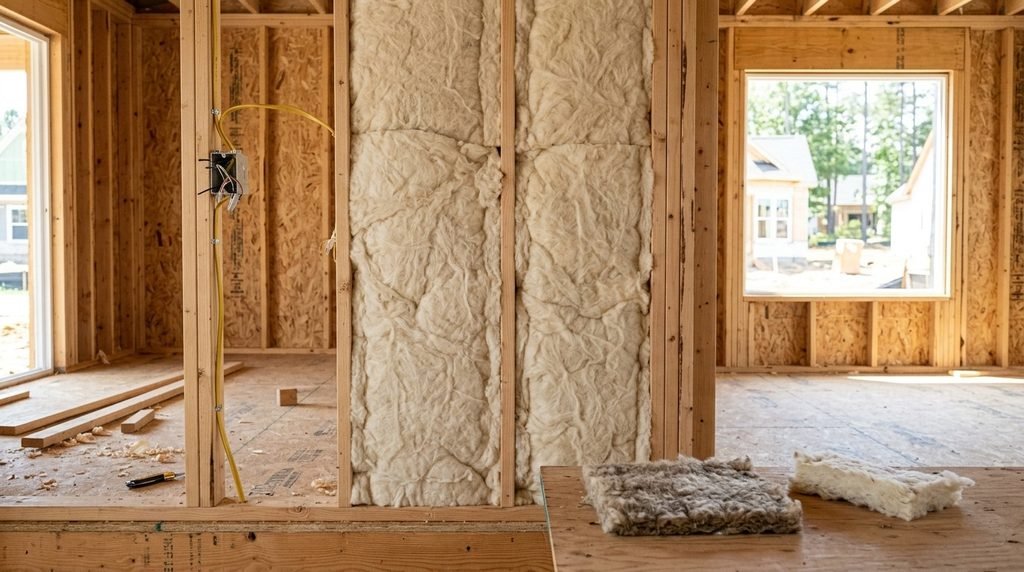
Sheep’s-wool insulation is available in forms such as batts, blankets, and other fiber products. The U.S. Department of Energy has documented sheep’s-wool batt insulation among insulation materials used in building applications.
This is very different from using an ordinary wool floor mat.
When wool is being considered for a wall, attic, ceiling, roof, or other building assembly, look for technical information such as:
- R-value
- Thickness
- Density
- Fire characteristics
- Moisture behavior
- Product dimensions
- Installation requirements
- Compatibility with the building assembly
- Applicable building requirements
The Department of Energy’s building guidance also emphasizes that insulation performance depends on proper installation and avoiding gaps or compression.
So never assume that a household wool mat can simply be placed inside a wall and treated as insulation.
5. Wool Mats for Sound and Acoustic Applications
Wool and felted fibers can also appear in acoustic products.
The basic idea is straightforward: a fibrous material can interact with sound energy and help reduce reflections in certain environments.
But “sound absorbing” and “soundproof” aren’t the same thing.
A wool mat might help reduce echoes within a room without preventing sound from traveling through a wall.
If acoustic performance is your goal, look for tested product specifications rather than relying on the material name alone.
Key Benefits of Wollmatten
The benefits depend heavily on the specific product, but wool-based mats can offer several useful characteristics.
| Factor | Potential Advantage | What to Check |
| Natural fiber | Wool is a renewable animal fiber | Exact material composition |
| Warmth | Wool can provide a warm, comfortable surface | Thickness and density |
| Gardening | Wool mulch can help suppress weeds | Intended garden use |
| Moisture interaction | Wool can interact with water vapor and retain moisture | Product construction and climate |
| Insulation | Sheep’s wool can be manufactured into insulation | Tested R-value and installation requirements |
| Comfort | Soft wool products can provide cushioning | Density and surface construction |
| Durability | Wool fiber can be resilient | Traffic, compression, and care requirements |
| End of life | Some untreated wool products can biodegrade | Backing, binders, coatings, and blends |
The key phrase is “potential advantage.”
A wool fiber’s natural properties don’t automatically transfer to every finished wool mat.
Potential Drawbacks and Limitations
Wool mats aren’t a universal solution.
Moisture Doesn’t Mean Waterproof
Wool can interact with moisture, but that doesn’t make a wool mat waterproof.
A garden product designed to handle outdoor conditions is very different from an indoor decorative mat.
If a wool mat will be exposed to repeated rain, irrigation, snow, or high humidity, check the manufacturer’s instructions before using it.
Not Every Wool Mat Is 100% Wool
The word “wool” on a product page doesn’t necessarily mean the entire item is made from wool.
A mat could contain synthetic fibers, backing, adhesives, coatings, or other materials.
If natural composition matters to you, read the complete materials list.
Wool Can Require Care
Some wool products need gentle cleaning and careful handling.
Before purchasing an indoor mat, determine whether it can be vacuumed normally, spot-cleaned, professionally cleaned, or washed.
Don’t assume that two wool products have identical care requirements.
Outdoor Exposure Can Change Performance
Sun, rain, repeated wetting and drying, soil contact, insects, and temperature changes can all affect natural fibers and finished products.
A wool garden mat specifically designed for outdoor use should be evaluated differently from a wool rug intended for a living room.
Garden Wool Isn’t a Substitute for Every Mulch
Wool mulch has promising applications, but it doesn’t eliminate the need for good garden management.
South Dakota State University research found that raw wool can reduce weed pressure, while also noting that heavy weed pressure can still present challenges in some situations.
That’s a useful reality check: a mulch can help without being a complete weed-control system.
How to Choose the Right Wollmatten
If you’re shopping for wool mats, start with the job rather than the material.
Ask yourself:
Where will the mat go?
Then ask:
What do I need it to accomplish?
That simple process prevents many buying mistakes.
What to Check Before Buying
Look at these specifications before comparing prices:
- Intended application
Make sure the manufacturer specifically recommends the product for your use. - Fiber composition
Check whether it is 100% wool or a blend. - Thickness
Thickness affects comfort, insulation potential, weight, and handling. - Density
A dense felt can perform very differently from a loose wool layer. - Backing
This matters particularly for flooring and outdoor applications. - Moisture resistance
Determine whether the product is appropriate for damp or outdoor conditions. - Cleaning requirements
Wool care varies significantly between products. - Fire performance
This is particularly important for building applications. - Dimensions
Measure the area first so you know how much material you’ll actually need. - Installation requirements
Technical products may require specific installation methods.
Wollmatten vs. Conventional Garden Mulch
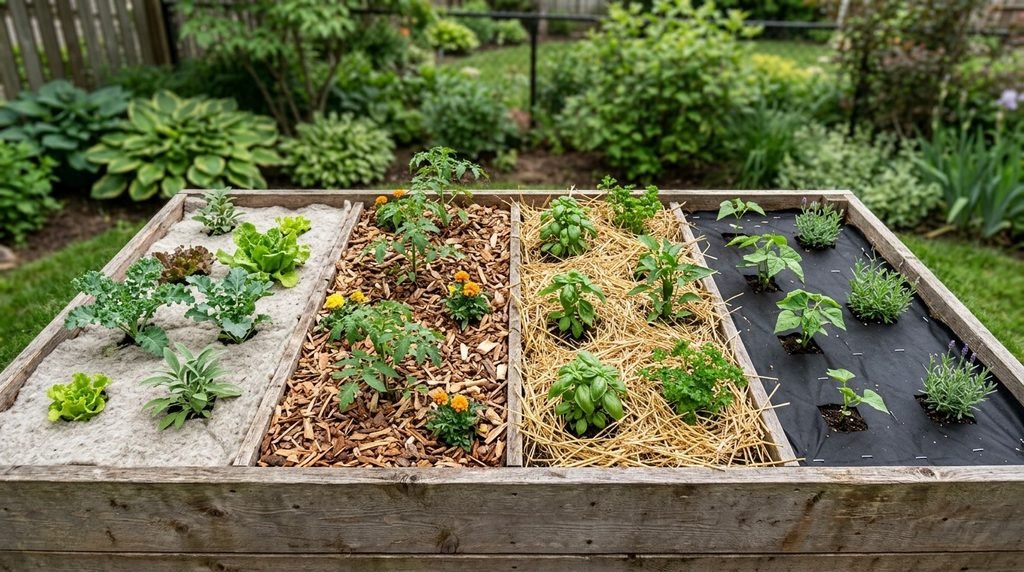
If you’re interested in wool mats because of gardening, it helps to compare the concept with familiar mulch options.
| Option | Main Purpose | Potential Strength | Main Consideration |
| Wool mat | Weed suppression and soil covering | Natural fiber and water permeability in suitable products | Availability and product cost |
| Wood chips | Soil covering and moisture conservation | Widely available | Can be bulky and slow to break down |
| Straw | Mulching around many garden crops | Lightweight and organic | Can contain weed seeds depending on source |
| Landscape fabric | Weed suppression | Long-lasting barrier options | Synthetic material and installation considerations |
| Compost | Soil improvement and organic matter | Adds organic material | Not primarily a weed barrier |
There isn’t one universally correct mulch.
The best option depends on the crop, climate, maintenance goals, availability, and how long you want the material to remain in place.
How to Use a Wool Garden Mat
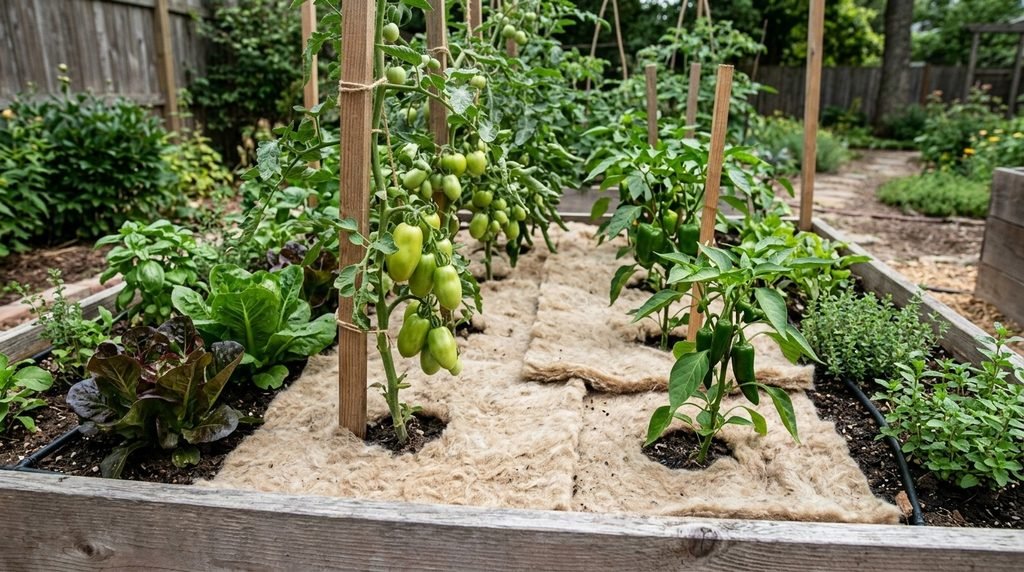
If you’ve purchased a wool mat specifically designed for gardening, follow the manufacturer’s instructions.
A typical installation process may look like this:
Step 1: Prepare the Area
Remove established weeds before placing the mat.
A weed barrier works best when you’re not simply covering a dense population of mature weeds and hoping they disappear.
Step 2: Prepare the Soil
Level the soil and make sure plants have appropriate growing conditions before installing the mat.
If you’re using the material around existing plants, leave enough room for the plant’s stem or trunk.
Step 3: Position the Mat
Lay the mat flat over the intended area.
Avoid creating large gaps between pieces where weeds can emerge.
Step 4: Secure It
Wind can lift lightweight materials, especially when they are newly installed.
Use an appropriate method recommended by the manufacturer.
Step 5: Monitor the Garden
Don’t install the mat and forget about it.
Check for:
- Weeds emerging around edges
- Material movement
- Excess moisture
- Dry soil
- Pest activity
- Deterioration of the mat
Good garden maintenance still matters.
U.S. Climate Considerations
A wool mat that works well in one part of the United States may behave differently somewhere else.
A gardener in Arizona may be primarily concerned with moisture conservation and heat. Someone in the Pacific Northwest may be more concerned about persistent moisture. A northern gardener may care more about winter protection and freeze-thaw conditions.
Consider:
- Average rainfall
- Irrigation frequency
- Summer heat
- Winter temperatures
- Soil drainage
- Humidity
- Growing season
- Local pest pressure
Don’t assume that a product demonstrated in one climate will perform identically in another.
This is particularly important when looking at gardening research. Research findings are valuable, but the growing conditions and application method still matter.
Common Mistakes to Avoid
Mistake 1: Assuming All Wollmatten Are the Same
They aren’t.
A wool floor mat, wool garden mat, and wool insulation batt can have very different construction and specifications.
Mistake 2: Buying Based Only on “100% Wool”
A high wool percentage can be attractive, but it doesn’t automatically tell you whether the product is right for your application.
Construction matters.
Mistake 3: Using an Indoor Mat Outdoors
An indoor decorative mat may not be engineered for prolonged exposure to rain, sunlight, soil, or temperature changes.
Choose a product specifically intended for outdoor use.
Mistake 4: Treating Wool Insulation Like a Regular Rug
Insulation must be selected and installed as part of a building assembly.
If you’re modifying walls, ceilings, attics, or other building components, check applicable local requirements and manufacturer installation instructions.
Mistake 5: Expecting a Garden Mat to Eliminate Every Weed
Even effective mulch can have gaps, edges, and areas where persistent weeds emerge.
Think of wool mulch as one component of weed management, not a guarantee of a weed-free garden.
Mistake 6: Ignoring the Backing
Two mats can have similar wool content but behave completely differently because of their backing.
Always check what’s underneath the wool.
Is Wollmatten a Sustainable Choice?
This question needs a little nuance.
Wool is a renewable natural fiber, and wool-based gardening products can offer an alternative to some synthetic materials. Some untreated wool products can also break down naturally.
But the sustainability of a finished product depends on more than the fiber itself.
Consider:
- How the wool was sourced
- Processing methods
- Transportation
- Synthetic content
- Backing materials
- Chemical treatments
- Expected lifespan
- Reusability
- End-of-life disposal
A 100% wool product isn’t automatically the most environmentally responsible option in every situation, and a blended product isn’t automatically a poor choice.
The full product life cycle matters.
Are Wool Mats Good for Gardens?
Short answer: They can be useful, particularly as mulch or weed-suppression material, but the product needs to be designed for garden use.
Research from South Dakota State University Extension supports wool’s potential as a garden mulch and reports benefits involving weed management, water conservation, and nutrient contribution. However, results vary with application and growing conditions, and ongoing research is still useful for understanding long-term performance.
For a homeowner, the practical takeaway is simple: if you’re interested in wool for the garden, choose a purpose-made horticultural product rather than repurposing an unknown indoor wool mat.
Are Wool Mats Good for Home Insulation?
Short answer: Purpose-made sheep’s-wool insulation can be used as a building insulation material, but an ordinary wool mat should not be treated as insulation.
The U.S. Department of Energy has documented sheep’s-wool batts among insulation materials. Performance depends on the product’s thermal properties, thickness, installation, and the building assembly.
For a real insulation project, compare tested specifications rather than relying on the general claim that “wool is insulating.”
If you’re working on an attic, wall, crawlspace, or other building assembly, also check applicable local requirements and manufacturer instructions.
Frequently Asked Questions About Wollmatten
What does wollmatten mean?
Wollmatten is a German term associated with wool mats. It is a broad description rather than the name of one standardized product. Depending on context, it can refer to different wool-based mats used in homes, gardens, insulation, and other applications.
What is the singular form of wollmatten?
The singular form is generally Wollmatte, while Wollmatten refers to multiple mats. The German word Matte means “mat,” and its plural form is Matten.
Are wollmatten made from 100% wool?
Not necessarily. Some wool mats may be made entirely from wool, while others contain synthetic fibers, backing materials, binders, dyes, or other components. Always check the manufacturer’s complete material specification.
Can wollmatten be used in the garden?
Some wool mats are specifically manufactured for gardening and can be used as mulch or weed-suppression material. Research from U.S. university Extension programs has found potential benefits from wool mulch, but performance depends on the material, application, crop, and growing conditions.
Can wool mats help control weeds?
Yes, certain wool mats can help suppress weeds by covering the soil and reducing light available to emerging weeds. They aren’t guaranteed to eliminate weeds, though, and persistent weeds can still emerge through gaps or under suitable conditions.
Are wool mats waterproof?
No. Wool’s ability to interact with moisture does not make a wool mat waterproof. If the product will be exposed to rain, irrigation, or high humidity, check its intended use and care instructions.
Can a wool mat be used as home insulation?
Only if it is specifically manufactured and rated for insulation use. Sheep’s-wool insulation products exist, but an ordinary household wool mat isn’t a substitute for a tested insulation product.
Are wool mats environmentally friendly?
They can have environmental advantages because wool is a renewable natural fiber, but the answer depends on the entire product. Blended fibers, synthetic backing, processing, transportation, treatments, lifespan, and disposal can all affect its overall environmental impact.
Final Takeaway
The most important thing to know about wollmatten is that the word describes a category rather than one particular product.
For homeowners and gardeners, wool mats can be relevant in several ways. Purpose-made garden mats may help suppress weeds, while wool can also be used in other horticultural applications. Purpose-made sheep’s-wool insulation is a separate technical category with different performance requirements.
Before buying, focus on the job, construction, material composition, thickness, density, moisture behavior, maintenance requirements, and manufacturer’s intended application.
That’s a much more reliable way to choose a wool mat than searching by the word wollmatten alone.
If you’re planning a broader home or garden project, Homework’s Daily can also serve as a useful place to explore practical home-improvement and gardening ideas—just make sure each recommendation fits the specific conditions of your project.










One Response